Thu, 02/28/2019 - 16:00

By Washington, D.C., Staff

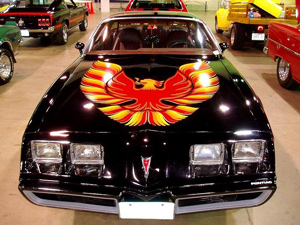
A version of SEMA model legislation (H.B. 39) to ease the process by which replica cars are titled and registered has been introduced in the Ohio House of Representatives.  The bill defines replica car as a motor vehicle that is constructed, assembled or modified as to replicate the make, model and model year of a motor vehicle that is at least 25 years old. Currently, there is no specific registration and titling class for replicas.

The bill is currently awaiting consideration in the House Transportation and Public Safety Committee.

For more information, visit https://www.semasan.com/legislative-alerts/ohio/ohio-introduces-legislation-ease-titling-and-registration-replica-cars.

For details, contact Christian Robinson at stateleg@sema.org.


Thu, 02/28/2019 - 15:58

By Washington, D.C., Staff

Legislation (S.F. 179) in Minnesota to aid the registration of certain decommissioned military vehicles as standard motor vehicles passed the Veterans and Military Affairs Finance and Policy Division and now awaits consideration on the Senate floor. A collector military vehicle is currently defined as a vehicle at least 20 years old, originally manufactured for the U.S. Armed Forces, and operated solely as a collector’s vehicle.

For more information, visit https://www.semasan.com/legislative-alerts/minnesota/update-minnesota-bill-aid-registration-decommissioned-military.

For details, contact Christian Robinson at stateleg@sema.org.

Thu, 02/28/2019 - 15:57

By Washington, D.C., Staff

Legislation (L.D. 821/H.P. 587) has been introduced in the Maine State Legislature to allow vehicles at least 15 model years old to be exempt from needing a certificate of title or certificate of salvage to register the vehicle. Under current law, only vehicles model-year 1995 or older are exempt from titling requirements. The bills currently await consideration in the Joint Committee on Transportation.

For more information, visit https://www.semasan.com/legislative-alerts/maine/maine-introduces-bills-further-exempt-older-vehicles-titling-requirements.

For details, contact Christian Robinson at stateleg@sema.org.

Thu, 02/28/2019 - 15:57

By Washington, D.C., Staff

Legislation (L.D. 821/H.P. 587) has been introduced in the Maine State Legislature to allow vehicles at least 15 model years old to be exempt from needing a certificate of title or certificate of salvage to register the vehicle. Under current law, only vehicles model-year 1995 or older are exempt from titling requirements. The bills currently await consideration in the Joint Committee on Transportation.

For more information, visit https://www.semasan.com/legislative-alerts/maine/maine-introduces-bills-further-exempt-older-vehicles-titling-requirements.

For details, contact Christian Robinson at stateleg@sema.org.

Thu, 02/28/2019 - 15:56

By Washington, D.C., Staff

Legislation (L.D. 822/H.P. 596) has been introduced in Maine to prohibit the sale of motor fuel with greater than 10% ethanol.  The bills currently await consideration in the Joint Committee on Environment and Natural Resources.

For more information, visit https://www.semasan.com/legislative-alerts/maine/maine-bills-limit-ethanol-sales-introduced.

For details, contact Christian Robinson at stateleg@sema.org.

Thu, 02/28/2019 - 15:50

By Washington, D.C., Staff

The U.S. Senate and House of Representatives passed a comprehensive public lands bill that packaged over 100 public lands, natural resources and water bills into a single measure. Senator Lisa Murkowski’s (R-AK) bipartisan “Natural Resources Management Act” (S. 47) passed both houses of Congress by wide margins and has been sent to President Trump for consideration. 

SEMA strongly supports the bill’s inclusion of the “California Desert Protection and Recreation Act,” which permanently designates six existing OHV areas, including Johnson Valley (expanded by 11,000 acres), Spangler Hills, El Mirage, Rasor, Dumont Dunes and Stoddard Valley.  The provision was sponsored by Rep. Paul Cook (R-CA) and Sen. Dianne Feinstein (D-CA) and would protect more than 200,000 acres of off-highway vehicle recreation areas in San Bernardino County. It also expands wilderness designations in the California desert, although it prohibits the Secretary of the Interior from closing any roads or trails that are currently open for motorized recreational access.

S. 47 also includes a provision to permanently designate federal lands within Emery County, Utah. While it would protect most existing OHV routes within the 217,00-acre San Raphael Swell, several trails were lost despite the efforts of SEMA and the off-road community. In total, the bill designates 617,000 acres of U.S. Bureau of Land Management and Forest Service lands as wilderness in the area.

Additional provisions in the public lands bill include:

  • Land and Water Conservation Fund (LWCF): The bill permanently authorizes the U.S. Treasury Department to collect funds from oil and gas leases and to deposit those revenues into the LWCF.  The bill also includes important reforms that will continue to expand recreational access to federal lands.
  • National Monuments: S. 47 designates four new national monuments totaling just 1,750 acres of federal land.
  • New Wilderness Designations: S. 47 designates roughly 700,000 acres of federal wilderness in California, Oregon and New Mexico. Most of the land was already designated as a Wilderness Study Area (WSA), a National Monument or an Area of Critical Environmental Concern, and treated as de facto wilderness.
  • Release of Federal Wilderness Study Areas: The bill releases 168,000 acres of land from the WSA designation, restoring multiple-use access to these lands.

For more information, contact Eric Snyder at erics@sema.org.

Thu, 02/28/2019 - 15:46

By Washington, D.C., Staff

President Trump has delayed a scheduled increase in tariffs on certain Chinese products, noting that U.S. and Chinese negotiators had made substantial progress in resolving trade disputes. Ten percent tariffs on $200 billion worth of Chinese goods that were scheduled to rise to 25% on March 2 have been postponed for an unfixed period of time. The 10% tariffs were imposed last September. The tariffs were in addition to 25% tariffs imposed on $50 billion worth of Chinese products.

“SEMA welcomes progress in the talks between the United States and China to resolve trade disputes,” said SEMA President and CEO Chris Kersting. “SEMA supports the administration’s efforts to address China’s unfair trading practices, but the use of tariffs as a negotiating tool has caused harm to many SEMA member companies.”

U.S. and Chinese officials are drafting six separate agreements that will cover agriculture, services, non-tariff barriers, currency, intellectual property rights and forced technology transfers, and cybersecurity.

In related news, the U.S. Trade Representative (USTR) will soon create an exclusion process for the tariffs imposed on the $200 billion worth of Chinese goods. Companies will be able to obtain an exclusion if they can demonstrate that the product is available only from China, that the duties will cause severe economic harm, and that the good is strategically important. The exclusion request process was mandated under the spending bill signed into law in late January to reopen the federal government. Companies were able to seek exclusions for the 25% tariffs imposed on the $50 billion worth of products but not the 10% tariffs. SEMA will provide a link to request an exclusion when it is published by the USTR.

To follow is a summary of the current tariffs and Harmonized Tariff Code listings.

Chinese Products: 25% tariffs have been imposed on $50 billion worth of Chinese imports, and 10% tariffs on another $200 billion worth of goods. The imposition dates for the $50 billion tariffs were staggered: July 6 for $34 billion and August 23 for $16 billion. Tariffs for the $200 billion in goods began on September 24, 2018.

$34 billion: 818 Harmonized Tariff Code listings, including miscellaneous metal and rubber parts for auto equipment, machinery, tools, measurement and medical devices: USTR China Tariff List 1

$16 billion: 279 Harmonized Tariff Code listings, including many types of plastics: USTR China Tariff List 2  

$200 billion: 5,745 Harmonized Tariff Code listings, including many auto parts, from engines and metal fasteners to tires, steering wheel components, rubber gaskets, transmission belts, brake pads, windshields and suspension springs:  USTR China Tariff List 3

For more information, contact Stuart Gosswein at stuartg@sema.org   

Thu, 02/28/2019 - 15:46

By Washington, D.C., Staff

President Trump has delayed a scheduled increase in tariffs on certain Chinese products, noting that U.S. and Chinese negotiators had made substantial progress in resolving trade disputes. Ten percent tariffs on $200 billion worth of Chinese goods that were scheduled to rise to 25% on March 2 have been postponed for an unfixed period of time. The 10% tariffs were imposed last September. The tariffs were in addition to 25% tariffs imposed on $50 billion worth of Chinese products.

“SEMA welcomes progress in the talks between the United States and China to resolve trade disputes,” said SEMA President and CEO Chris Kersting. “SEMA supports the administration’s efforts to address China’s unfair trading practices, but the use of tariffs as a negotiating tool has caused harm to many SEMA member companies.”

U.S. and Chinese officials are drafting six separate agreements that will cover agriculture, services, non-tariff barriers, currency, intellectual property rights and forced technology transfers, and cybersecurity.

In related news, the U.S. Trade Representative (USTR) will soon create an exclusion process for the tariffs imposed on the $200 billion worth of Chinese goods. Companies will be able to obtain an exclusion if they can demonstrate that the product is available only from China, that the duties will cause severe economic harm, and that the good is strategically important. The exclusion request process was mandated under the spending bill signed into law in late January to reopen the federal government. Companies were able to seek exclusions for the 25% tariffs imposed on the $50 billion worth of products but not the 10% tariffs. SEMA will provide a link to request an exclusion when it is published by the USTR.

To follow is a summary of the current tariffs and Harmonized Tariff Code listings.

Chinese Products: 25% tariffs have been imposed on $50 billion worth of Chinese imports, and 10% tariffs on another $200 billion worth of goods. The imposition dates for the $50 billion tariffs were staggered: July 6 for $34 billion and August 23 for $16 billion. Tariffs for the $200 billion in goods began on September 24, 2018.

$34 billion: 818 Harmonized Tariff Code listings, including miscellaneous metal and rubber parts for auto equipment, machinery, tools, measurement and medical devices: USTR China Tariff List 1

$16 billion: 279 Harmonized Tariff Code listings, including many types of plastics: USTR China Tariff List 2  

$200 billion: 5,745 Harmonized Tariff Code listings, including many auto parts, from engines and metal fasteners to tires, steering wheel components, rubber gaskets, transmission belts, brake pads, windshields and suspension springs:  USTR China Tariff List 3

For more information, contact Stuart Gosswein at stuartg@sema.org   

Thu, 02/28/2019 - 15:33

By SEMA Editors

SEMA ShowThe 2018 SEMA Show drew more than 70,000 domestic and international buyers.

Exhibitors that submit booth applications for the 2019 SEMA Show by Friday, March 29, are eligible to participate in the SEMA Show Priority Space Selection process. During the process, companies select the best locations—based on exhibitor seniority—for their SEMA Show displays.

The 2019 SEMA Show is scheduled for Tuesday–Friday, November 5–8, in Las Vegas. To participate in the Priority Space Selection Process, secure your booth space for 2019 by visiting www.SEMAShow.com/buyabooth.

The 2018 SEMA Show drew more than 70,000 domestic and international buyers. The displays are segmented into 12 sections, and a New Products Showcase featured nearly 3,000 newly introduced parts, tools and components.

Complete information about the 2019 SEMA Show is available at www.SEMAShow.com.


Thu, 02/28/2019 - 15:33

By SEMA Editors

SEMA ShowThe 2018 SEMA Show drew more than 70,000 domestic and international buyers.

Exhibitors that submit booth applications for the 2019 SEMA Show by Friday, March 29, are eligible to participate in the SEMA Show Priority Space Selection process. During the process, companies select the best locations—based on exhibitor seniority—for their SEMA Show displays.

The 2019 SEMA Show is scheduled for Tuesday–Friday, November 5–8, in Las Vegas. To participate in the Priority Space Selection Process, secure your booth space for 2019 by visiting www.SEMAShow.com/buyabooth.

The 2018 SEMA Show drew more than 70,000 domestic and international buyers. The displays are segmented into 12 sections, and a New Products Showcase featured nearly 3,000 newly introduced parts, tools and components.

Complete information about the 2019 SEMA Show is available at www.SEMAShow.com.