

The Hot Rod Industry Alliance (HRIA) is one of many SEMA councils—groups dedicated to specific segments of the automotive specialty-equipment industry. Jeffrey Major, chairman of the legislative sub-committee within HRIA, shares details on the primary functions of HRIA.
Thu, 05/02/2019 - 11:02
Thu, 05/02/2019 - 11:02
The Hot Rod Industry Alliance (HRIA) is one of many SEMA councils—groups dedicated to specific segments of the automotive specialty-equipment industry. Jeffrey Major, chairman of the legislative sub-committee within HRIA, shares details on the primary functions of HRIA.
Thu, 05/02/2019 - 11:02
The Hot Rod Industry Alliance (HRIA) is one of many SEMA councils—groups dedicated to specific segments of the automotive specialty-equipment industry. Jeffrey Major, chairman of the legislative sub-committee within HRIA, shares details on the primary functions of HRIA.
Thu, 05/02/2019 - 10:52
Compiled by SEMA Editors
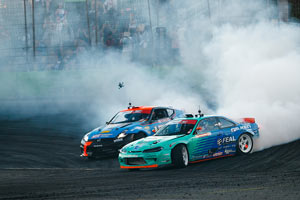 Odi Bakchis took his second win of the season in Orlando. |
Bakchis Increases 2019 Formula DRIFT Lead With Second Win at Orlando Round
Coming into the second round of the 2019 Formula DRIFT season in Orlando, Florida, for the AutoZone Scorched presented by Black Magic, Aurimas “Odi” Bakchis had taken the win in the Formula DRIFT Black Magic Pro Championship at the opening round in Long Beach, California. Orlando would also see the first round of the Formula DRIFT Link ECU Pro 2 Championship. The field has a different look from last season with the top three drivers (Travis Reeder, Dylan Hughes and Sebastien Gauthier) promoted to the Pro category. In the final, Chris Forsberg seemed hesitant off the line and didn’t get great proximity to Bakchis, but it didn’t matter because Forsberg retired from the second run after a rear tire was “de-beaded.” This gifted Odi his second win of the season and solidified his position at the top of the 2019 Formula DRIFT Black Magic Pro Championship. For full results, visit the Formula DRIFT website.
The 2019 Formula DRIFT series continues May 9–11 in Atlanta for the O’Reilly Auto Parts Road to the Championship presented by Permatex. It will include the third round of the Formula DRIFT Black Magic Pro Championship and the second round of the Formula DRIFT Link ECU Pro 2 Championship.
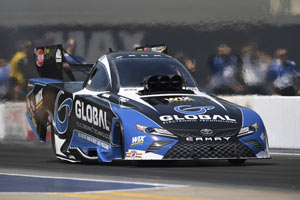 Shawn Langdon powered his Global Electronics Technology Toyota Camry Funny Car to a run of 4.125 seconds at 305.08 mph. |
Langdon Gets First Funny Car Victory at NGK Spark Plugs NHRA Four-Wide Nationals
Shawn Langdon picked up his first Funny Car win at the 10th annual NGK Spark Plugs NHRA Four-Wide Nationals to become only the second driver in history to win in both the Top Fuel and Funny Car categories at zMAX Dragway. He is the 17th driver in NHRA history to secure victories in both categories. Steve Torrence (Top Fuel) and Andrew Hines (Pro Stock Motorcycle) were also victors in their respective NHRA Mello Yello Drag Racing Series categories. Langdon clinched his first Funny Car victory when he powered his Global Electronics Technology Toyota Camry Funny Car to a run of 4.125 seconds at 305.08 mph. Reigning world champion Torrence piloted his Capco Contractors Top Fuel dragster to the winner’s circle for the first time this season with his pass of 3.778 at 323.19 taking out Leah Pritchett, Clay Millican and Terry McMillen. Millican came in second. In Pro Stock Motorcycle, Hines won with his run of 6.831 at 198.17 on his Screamin' Eagle Vance & Hines Harley-Davidson Street Rod to pick up his 50th career victory and is the first rider in NHRA history to make it to this milestone. He faced teammate Eddie Krawiec, Hector Arana Jr. and Ryan Oehler in the final round. Krawiec was the runner-up in the category. The NHRA Mello Yello Drag Racing Series travels to Atlanta next week for the Arby’s NHRA Southern Nationals, May 3–5, for the seventh race of the 2019 season.
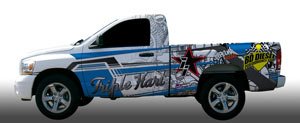 Lavon Miller’s former ’06 RAM 3500 will be piloted by Josh Scruggs for the 2019 diesel drag-race season. | |
Hot Shot’s Secret Announces New Sponsorship for Josh Scruggs
Josh Scruggs of Triple Hart Repair and Fab in Harrisonburg, Virginia, is the new owner of the Firepunk Diesel truck formerly owned by three-time Ultimate Callout Challenge (UCC) champion Lavon Miller. This truck is well known for setting records at the Diesel Power Challenge, NHRDA drag strips and sled-pull competitions, and for achieving a 4.97 at 151 mph Pro-Street record at Outlaw Diesel Super Series (ODSS.) Now this ’06 RAM 3500 will be piloted by Scruggs for the 2019 diesel drag-race season. Hot Shot’s Secret will continue to support Scruggs for the 2019 season.
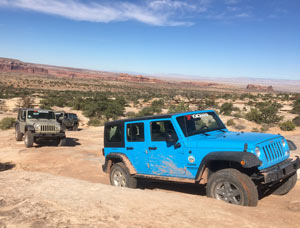 Yokohama Tire and Canyonlands Jeep Adventures have extended their off-road partnership. |
Yokohama Tire Extends Partnership With Canyonlands Jeep Adventures
Yokohama Tire and Canyonlands Jeep Adventures have extended their decade-long off-road partnership. Moab, Utah-based Canyonlands Jeep Adventures offers off-roading enthusiasts a chance to hit trails in Jeeps riding on Yokohama’s durable, all-terrain GEOLANDAR tires.
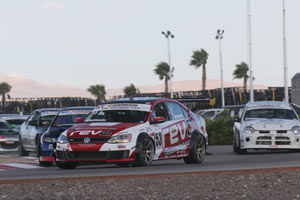 In the Super Touring class, Reto Baumann in his Revo/Current Graphix Volkswagen Jetta GLI grabbed his second win. |
Rydquist Wins in GT at Las Vegas; Baumann Wins Super Touring
In the Super Touring class at the inaugural weekend of the 2019 United States Touring Car Championship (USTCC) at Las Vegas, Swiss driver Reto Baumann in his Revo/Current Graphix Volkswagen Jetta GLI grabbed his second win so far over third-place finisher Larry Bani’s GoGoGear.com/Konig Wheels BMW M3 and second-place finisher Mike Sekhon’s ARG Motorsports BMW M3. Swedish driver Carl Rydquist had an easy victory in the Myraceshop.com/Ridetech FFR GTM after his closest rival Rob Harper’s AP Racing Chevrolet Corvette had issues and had to start from the back. In the Sportsman class, Dutch driver Pete Bovenberg took the win in the Rota Wheels/Supertech Honda Civic. Dan Zargham finished second in the Stevens Creek Didge SRT4, while Michael McColligan grabbed third place on the last lap in the Idemitsu/Raybestos Mazda RX8. Baumann also grabbed Plastex Top Rookie honors along the way as the highest placing rookie. The Top Team award went to the MBO Motorsports Team’s Pete Bovenberg and Dan Zargham, who came first and second in the Sportsman class.
For more racing news, visit the Performance Racing Industry (PRI) website.
Thu, 05/02/2019 - 10:47
By SEMA Editors
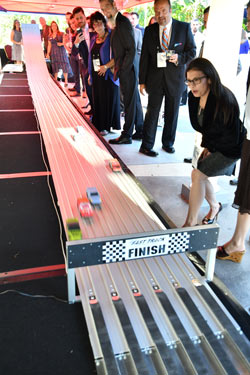 The SEMA Cares Pinewood Drag Races will take place in conjunction with the Installation & Gala, Friday, July 26, at the Anaheim Marriott in Anaheim, California. |
The 2019 Pinewood Drag Racing season is now here. Each year, hundreds of SEMA-member companies step up to generously sponsor pinewood cars, with 100% of the proceeds going to qualified SEMA Cares charities. To learn more and register, visit www.sema.org/pinewood.
Once again held in conjunction with the SEMA Installation & Gala, the SEMA Cares Pinewood Drag Races will take place Friday, July 26, at the Anaheim Marriott in Anaheim, California. The finals are held during the cocktail reception, shortly before the banquet begins.
SEMA members can race either a car or truck in three classes: Build It For Me (BIFM), Stock and Unlimited. Members can either sponsor child-built cars and trucks in the BIFM or Stock class, or they can build and enter their own SEMA-supplied stock car or truck. Stock-class racing usually garners the most entries with a typical speed of 3.2 sec. on a 50-ft. track. For hardcore speed enthusiasts, the Unlimited class has only one rule—that one item from the stock kit be used. Cars in this class run sub-3 sec., and many of the past top builders include some of the most recognized names in the industry.
SEMA Cares Pinewood Drag Races special features include the annual HRIA Builders Challenge and the Council Cup. Watch as some of the biggest names in hot rodding build state-of-the-art custom pinewoods that will be raced and then auctioned off, with all of the proceeds going to SEMA Cares. Council members are invited to come out and challenge their peers for the opportunity to win the coveted Council Cup. The more cars or trucks fielded by each council member, the greater their chances of winning.
Now in its third year, the Industry Cup Challenge features five divisions where sponsoring companies race child-built pinewood cars. Each division crowns a winning company, which then goes on to represent that division in an all-out industry race to No. 1. The industry challengers each have a limited number of entrants in the following divisions: warehouse distributors, manufacturers, media groups, rep agencies and service providers. The champion can display the trophy for a year with its company name engraved among the winners. It must then be returned, in a Stanley Cup-style tradition, as it will be up for grabs again at the next Pinewood Drag Races, where the company will have a chance to defend its title. The donation cost is $1,000 per sponsoring company. The standard pinewood build rules apply to all competing vehicles. Vehicles are randomly assigned and the race is officiated by SEMA Cares volunteers.
Proceeds from the races will benefit SEMA Cares charities, including The Austin Hatcher Foundation, Childhelp and Victory Junction. Childhelp assists abused and neglected children by providing counseling and programs in a safe and secure living environment. Victory Junction provides a camp experience for children with chronic medical conditions or serious illnesses who otherwise would not be able to go. The Austin Hatcher Foundation’s mission is to erase the effects of pediatric cancer and optimize each child’s quality of life through essential specialized intervention beginning at the time of diagnosis and continuing throughout survivorship.
Sponsoring a SEMA Cares Pinewood Drag Races car or truck is easy and rewarding. Help a child in need today!
Register for the Installation & Gala at www.sema.org/gala.
Thu, 05/02/2019 - 10:47
By SEMA Editors
The SEMA Cares Pinewood Drag Races will take place in conjunction with the Installation & Gala, Friday, July 26, at the Anaheim Marriott in Anaheim, California. |
The 2019 Pinewood Drag Racing season is now here. Each year, hundreds of SEMA-member companies step up to generously sponsor pinewood cars, with 100% of the proceeds going to qualified SEMA Cares charities. To learn more and register, visit www.sema.org/pinewood.
Once again held in conjunction with the SEMA Installation & Gala, the SEMA Cares Pinewood Drag Races will take place Friday, July 26, at the Anaheim Marriott in Anaheim, California. The finals are held during the cocktail reception, shortly before the banquet begins.
SEMA members can race either a car or truck in three classes: Build It For Me (BIFM), Stock and Unlimited. Members can either sponsor child-built cars and trucks in the BIFM or Stock class, or they can build and enter their own SEMA-supplied stock car or truck. Stock-class racing usually garners the most entries with a typical speed of 3.2 sec. on a 50-ft. track. For hardcore speed enthusiasts, the Unlimited class has only one rule—that one item from the stock kit be used. Cars in this class run sub-3 sec., and many of the past top builders include some of the most recognized names in the industry.
SEMA Cares Pinewood Drag Races special features include the annual HRIA Builders Challenge and the Council Cup. Watch as some of the biggest names in hot rodding build state-of-the-art custom pinewoods that will be raced and then auctioned off, with all of the proceeds going to SEMA Cares. Council members are invited to come out and challenge their peers for the opportunity to win the coveted Council Cup. The more cars or trucks fielded by each council member, the greater their chances of winning.
Now in its third year, the Industry Cup Challenge features five divisions where sponsoring companies race child-built pinewood cars. Each division crowns a winning company, which then goes on to represent that division in an all-out industry race to No. 1. The industry challengers each have a limited number of entrants in the following divisions: warehouse distributors, manufacturers, media groups, rep agencies and service providers. The champion can display the trophy for a year with its company name engraved among the winners. It must then be returned, in a Stanley Cup-style tradition, as it will be up for grabs again at the next Pinewood Drag Races, where the company will have a chance to defend its title. The donation cost is $1,000 per sponsoring company. The standard pinewood build rules apply to all competing vehicles. Vehicles are randomly assigned and the race is officiated by SEMA Cares volunteers.
Proceeds from the races will benefit SEMA Cares charities, including The Austin Hatcher Foundation, Childhelp and Victory Junction. Childhelp assists abused and neglected children by providing counseling and programs in a safe and secure living environment. Victory Junction provides a camp experience for children with chronic medical conditions or serious illnesses who otherwise would not be able to go. The Austin Hatcher Foundation’s mission is to erase the effects of pediatric cancer and optimize each child’s quality of life through essential specialized intervention beginning at the time of diagnosis and continuing throughout survivorship.
Sponsoring a SEMA Cares Pinewood Drag Races car or truck is easy and rewarding. Help a child in need today!
Register for the Installation & Gala at www.sema.org/gala.
Thu, 05/02/2019 - 10:47
By SEMA Editors
The SEMA Cares Pinewood Drag Races will take place in conjunction with the Installation & Gala, Friday, July 26, at the Anaheim Marriott in Anaheim, California. |
The 2019 Pinewood Drag Racing season is now here. Each year, hundreds of SEMA-member companies step up to generously sponsor pinewood cars, with 100% of the proceeds going to qualified SEMA Cares charities. To learn more and register, visit www.sema.org/pinewood.
Once again held in conjunction with the SEMA Installation & Gala, the SEMA Cares Pinewood Drag Races will take place Friday, July 26, at the Anaheim Marriott in Anaheim, California. The finals are held during the cocktail reception, shortly before the banquet begins.
SEMA members can race either a car or truck in three classes: Build It For Me (BIFM), Stock and Unlimited. Members can either sponsor child-built cars and trucks in the BIFM or Stock class, or they can build and enter their own SEMA-supplied stock car or truck. Stock-class racing usually garners the most entries with a typical speed of 3.2 sec. on a 50-ft. track. For hardcore speed enthusiasts, the Unlimited class has only one rule—that one item from the stock kit be used. Cars in this class run sub-3 sec., and many of the past top builders include some of the most recognized names in the industry.
SEMA Cares Pinewood Drag Races special features include the annual HRIA Builders Challenge and the Council Cup. Watch as some of the biggest names in hot rodding build state-of-the-art custom pinewoods that will be raced and then auctioned off, with all of the proceeds going to SEMA Cares. Council members are invited to come out and challenge their peers for the opportunity to win the coveted Council Cup. The more cars or trucks fielded by each council member, the greater their chances of winning.
Now in its third year, the Industry Cup Challenge features five divisions where sponsoring companies race child-built pinewood cars. Each division crowns a winning company, which then goes on to represent that division in an all-out industry race to No. 1. The industry challengers each have a limited number of entrants in the following divisions: warehouse distributors, manufacturers, media groups, rep agencies and service providers. The champion can display the trophy for a year with its company name engraved among the winners. It must then be returned, in a Stanley Cup-style tradition, as it will be up for grabs again at the next Pinewood Drag Races, where the company will have a chance to defend its title. The donation cost is $1,000 per sponsoring company. The standard pinewood build rules apply to all competing vehicles. Vehicles are randomly assigned and the race is officiated by SEMA Cares volunteers.
Proceeds from the races will benefit SEMA Cares charities, including The Austin Hatcher Foundation, Childhelp and Victory Junction. Childhelp assists abused and neglected children by providing counseling and programs in a safe and secure living environment. Victory Junction provides a camp experience for children with chronic medical conditions or serious illnesses who otherwise would not be able to go. The Austin Hatcher Foundation’s mission is to erase the effects of pediatric cancer and optimize each child’s quality of life through essential specialized intervention beginning at the time of diagnosis and continuing throughout survivorship.
Sponsoring a SEMA Cares Pinewood Drag Races car or truck is easy and rewarding. Help a child in need today!
Register for the Installation & Gala at www.sema.org/gala.
Thu, 05/02/2019 - 10:40
The 10th Annual Exhibitor Summit will take place in Las Vegas, Monday, June 17–Wednesday, June 19. Application deadline is Monday, June 3.
Thu, 05/02/2019 - 10:40
The 10th Annual Exhibitor Summit will take place in Las Vegas, Monday, June 17–Wednesday, June 19. Application deadline is Monday, June 3.
Thu, 05/02/2019 - 10:36
Compiled by SEMA Editors
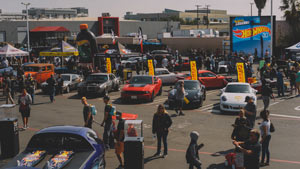 The Hot Wheels Legends Tour is making 18 stops looking for cars that embody Hot Wheels’ standards for performance and design. |
Hot Wheels Legends Tour Returns
The Hot Wheels Legends Tour—a national traveling car show searching for a lifesize custom car worthy of being made into a Hot Wheels toy car—is currently underway. The tour kicked off in Miami last month and will make 18 stops looking for cars that embody Hot Wheels’ standards for performance and design. The winning vehicle will also be inducted into the Hot Wheels Garage of Legends. At each stop, fans will show off their custom builds to a team of judges consisting of Hot Wheels designers, automotive experts and influencers, who will select one finalist based on the criteria of authenticity, creativity and garage spirit. At the end of the tour, one finalist from each of the 18 stops will win a trip to the 2019 SEMA Show in Las Vegas, where their custom creations will be judged side-by-side to determine which one will be made into a die-cast car sold around the world. Upcoming stops include Bentonville (May 11), Charlotte (May 25), Philadelphia (June 1), New York City (June 15), Detroit (June 29), Chicago (July 13), St. Louis (July 27), Denver (August 10), Seattle (August 24), Phoenix (September 7), San Jose (September 21), San Diego (October 5) and Los Angeles (October 19). The tour will also make a special stop at Hot Wheels headquarters in El Segundo, California, May 18, to celebrate the brand’s 51st birthday. International stops will be announced later in 2019.
To learn more about how the Hot Wheels Legends Tour, visit www.HotWheels.com and follow #HotWheelsLegendsTour.
Truck Hero Inc. Announces Acquisition of Backrack Truck Racks
Truck Hero Inc. has announced the strategic acquisition of Backrack LLC, marking Truck Hero’s 14th acquisition since its formation in 2007. The transaction terms were not disclosed.
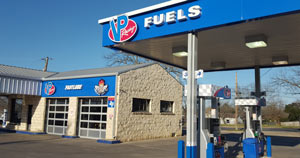 VP Racing Fuels Inc. has opened its first-ever VP Fastlube quick lube center in Fredricksburg, Texas. |
VP Racing Fuels Opens First-Ever VP Fastlube Oil Change Center
VP Racing Fuels Inc. has announced the opening of its first-ever VP Fastlube quick lube centers in Fredricksburg, Texas. VP Fastlube offers a credit card program with low rates, a preferred supplier program and savings on bulk oils.
LIFT and Center for Automotive Research Seek to Optimize New Joining Methods for Auto Industry
Lightweight Innovations for Tomorrow, a national manufacturing innovation institute operated by the American Lightweight Materials Manufacturing Innovation Institute (ALMMII), has announced a new project with the Center for Automotive Research (CAR) to test and evaluate mixed-material joining technologies. This project, part of LIFT’s Fast Forge program, is led by LIFT and CAR, and partners include CAR’s Coalition for Lightweighting Materials (CALM) working group and LIFT members. The project team will test various joining technologies and recommend the most optimal ones for specific material combinations. The results of this study will be published in the public domain and shared at various industry events, thereby increasing awareness and reducing the technology qualification barrier. The project, valued at $500,000, will take place in four phases to be completed by October 31. The three phases include data collection, survey and application-specific technology selections; computer-aided simulation studies; coupon-level testing; and ranking of technologies for each material combination for specific applications, including front structure, underbody, roof, body sides, rear-end and closures. More information on how to submit project ideas can be found at www.lift.technology/lift-fast-forge.
 Tommi Viita |
Marx Buscemi Eisbrenner Group Hires Tommi Viita as Graphic and Digital Designer
Marx Buscemi Eisbrenner Group (MBE Group), a full-service marketing communications agency, has hired Tommi Viita as a graphic and digital designer. Viita joins MBE Group after several years at ArcticFX Graphics LLC, as senior graphic designer and assistant brand manager. During his time with ArcticFX Graphics, Viita designed advertising and branding campaigns for the powersports aftermarket. He also worked as a freelance graphic designer starting in 2016 and has extensive experience with print production and client relations. At MBE Group, he will design traditional and digital advertising campaigns, product packaging, lead brand identity and web design projects and will collaborate on client branding and advertising programs.
Rancho Sponsors Multiple High School Auto Shops Through 2019 SEMA High School Vehicle Build Program
Rancho has sponsored the automotive programs at C.D. Hylton High School in Woodbridge, Virginia, and R.L. Turner High School in Carrollton, Texas, through the 2019 SEMA High School Vehicle Build Program—a new education and youth-engagement program aimed at increasing automotive customization curriculum in high-school automotive technology programs nationwide. Each school received a Rancho 3.5-in. short-arm system, Rancho upper control arms (front/rear), Rancho RS9000XL adjustable shocks and a Rancho RS5000 steering stabilizer for their respective Jeep Wrangler TJ project builds. Students building the ’02 Jeep Wrangler TJ Sport at C.D. Hylton High School are completing a frame-off restoration. The automotive program at R.L. Turner High School plans to fully customize its ’04 Jeep Wrangler TJ. The five vehicles utilized in this SEMA program will be completed by the end of the 2019 school year and sold, with the proceeds to be reinvested in next year’s SEMA High School Vehicle Build Program. For more information about the SEMA High School Vehicle Build Program, visit the program’s website.
Fourth Annual DEI Cruise-In Co-sponsored by the City of Avon Lake Scheduled for June 15
DEI and the City of Avon Lake, Ohio, have announced the fourth annual DEI Cruise-In. This year’s event is scheduled for Saturday, June 15, from 4:00 p.m.–8:00 p.m., and will be held again at Weiss Baseball Fields located at 33401 Webber Rd., across from DEI headquarters. Free to the public, this event will feature an array of custom cars, trucks and motorcycles, vintage first responder and military vehicles, race cars and the Bernie Moreno Exotic and Luxury vehicle row. Proceeds from T-shirt sales will benefit Valor Home of Lorain County, a transitional housing program for homeless male veterans that serves 100,000 people each year.
Have some company news you would like to share? Let us know and the news may appear in an upcoming issue of SEMA eNews. Send your items for consideration to editors@sema.org.