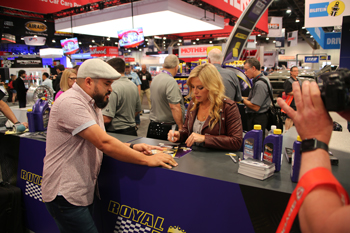
Thu, 08/01/2019 - 12:53

SEMA News—August 2019

INDUSTRY NEWS

Fast Facts

Bob KlimmBob Klimm

Veteran Falken sales executive Bob Klimm was promoted to director of sales for the company’s commercial division. Klimm moves from truck and bus radial (TBR) division manager into the director role for the North American market, where he will lead the company’s commercial tire growth. The Dallas native was responsible for establishing Falken’s entry into the TBR business. Led by Klimm, Falken expanded its commercial sales efforts and allowed it to reach new customers and gain market share.

Paul Marks
Paul Marks

Stertil-Koni USA announced that Paul Marks, operations manager, retired after 21 years of service with the company. Marks played a substantial part in the company’s development, having overseen Stertil-Koni’s key operations and logistics associated with the delivery, receipt and shipping of its heavy-duty vehicle lifting systems and shop equipment. Doug Frakes joined the company as an operations specialist. In his new post, Frakes will work closely with a broad range of audiences, chiefly the company’s North American distributor network, sales personnel and Stertil-Koni manufacturing locations in the United States and Europe. His prime mission is to process and ship vehicle lift equipment and accessory orders to distributors and customers across North America.

Gregg Bashur was named the new CFO at Covercraft Industries LLC. He joins Covercraft during a period of expansion that includes the marine and recreational vehicle markets as well as an enhanced presence in the automotive market. Prior to joining Covercraft, Bashur served in various CFO and finance leadership roles with privately held and public companies in manufacturing and distribution, including Honeywell, Thermo Fisher Scientific and Collins Aerospace. The newly appointed CFO will be based at the corporate home office in Pauls Valley, Oklahoma.

Mary Kay Bryja
Mary Kay Bryja

Firestone Industrial Products Company LLC (FSIP) announced that Mary Kay Bryja, former manager of marketing, was named director of Ride-Rite, FSIP, to appoint employees to new leadership roles based on their expertise and vision for the business moving forward. Bryja will lead marketing and sales initiatives for the Ride-Rite business in addition to identifying growth opportunities. She also oversees engineering initiatives for the business. FSIP also announced that Emily Poladian, former director of fleet sales, truck, bus and retread tires (TBR), was named president of the company. Poladian will oversee all aspects of the FSIP business. She brings more than 20 years of experience in the industrial products industry, having previously served as managing director for the firm’s Asia strategic business unit.

Tiffany Dorin
Tiffany Dorin

Battery-Biz, an employee-owned manufacturer of automotive accessories, congratulated Tiffany Dorin on her re-election as an official select committee member of the SEMA Businesswomen’s Network. The organization is a dynamic group of professionals representing the women of SEMA. Dorin was first elected to the committee in July 2015 for a two-year term and was then re-elected in 2017. Her most recent re-election will mark Dorin’s third term and will extend through 2021.

APC Automotive Technologies LLC has announced the appointment of Tribby Warfield as its CEO and James McCoy as its COO. The addition of these key senior executives further builds out the company’s leadership team following the merger of AP Emissions and Centric Parts in 2017. Warfield comes to APC with experience in the automotive and industrial markets. McCoy brings more than 25 years of diversified experience, including lean manufacturing and automotive and industrial products to the APC Automotive Technologies management team.

Liz White
Liz White

Covercraft Industries announced the addition of sales professional Liz White as the new ADCO national sales manager. White will work with dealers and distributors across the country to strengthen ADCO’s position as a market leader in the recreational vehicle protective cover marketplace. Additionally, she will manage ADCO’s Premier Dealer network.

Total Seal Piston Rings has been sold to an investment group led by Promus Equity Partners, Jon S. Vesely and Total Seal President Matt Hartford. The sale was finalized June 7, and released in a joint statement by Joey Moriarty, son of founder Joe Moriarty, Promus Equity Partners, Vesely and Hartford. Hartford served as vice president of the company since joining Total Seal in 1998 and is now the CEO and president. He previously was a nuclear engineer in the U.S. Navy.


Thu, 08/01/2019 - 12:51

SEMA News—August 2019

LEGISLATIVE AND TECHNICAL AFFAIRS

By Stuart Gosswein

FEDERAL UPDATE

Tariffs
As of press time, U.S. and Chinese officials were seeking to reach agreement on trade talks that would result in lowering the U.S./China trade deficit and deterring cyber theft of intellectual property by the Chinese government and companies.

Tariffs—Automobiles and Auto Parts: The U.S. Department of Commerce (DOC) sent President Trump the results of its investigation on whether imported automobiles and auto parts pose a threat to U.S. national security. A decision on whether to impose tariffs, originally due in May, was postponed until November. President Trump wanted to give U.S. negotiators six months to reach new trade agreements with the European Union and Japan.

The administration’s options include imposing global tariffs of as much as 25%, limiting the tariffs to certain countries and products, or no tariffs. The DOC investigation applies to all types of cars and parts, including new cars, classic cars, OEM parts and specialty auto parts.

In delaying the tariffs, President Trump cited findings from the DOC report, which has not been made public. The report notes concerns about increases in the volume of automobile and auto parts imports over the past three decades along with unease about foreign markets such as the European Union (EU) and Japan that have imposed significant barriers to U.S. automotive exports. The report found that a continued contraction of the “American-owned automotive industry…will significantly impede the United States’ ability to develop technologically advanced products that are essential to our ability to maintain technological superiority to meet defense requirements.” Examples provided include research and development on engine and powertrain technology and light-weight material advancements.

SEMA is part of the Driving American Jobs Coalition, a group representing the entire scope of the auto industry, including OEMs, dealers, suppliers and the aftermarket. While the coalition supports the Trump Administration’s efforts to create fair trade, it has stated that the investigation has resulted in prolonged uncertainty for the 10 million Americans whose livelihoods depend on the U.S. auto industry. The coalition noted that the additional six-month delay only increases uncertainty as businesses contend with higher production costs, lower sales and profit margins, and retaliatory actions by U.S. trading partners.

Tariffs—China: As of press time, U.S. and Chinese officials were seeking to reach agreement on trade talks that would result in lowering the U.S./China trade deficit and deterring cyber theft of intellectual property by the Chinese government and companies. In May, the Trump Administration raised tariffs from 10%–25% imposed on $200 billion worth of Chinese imports. The so-called List 3 group of Chinese imports includes hundreds of auto part categories.

The Trump Administration had already imposed 25% tariffs on $50 billion worth of Chinese imports in July and August 2018. List 1 and List 2 goods include some miscellaneous metal and rubber parts for auto equipment, machinery, tools and measurement devices. In turn, China imposed retaliatory tariffs on $60 billion worth of U.S. goods, mostly agriculture but including some vehicle parts. If talks are unsuccessful, President Trump has threatened to impose 25% tariffs on any Chinese products not already subject to the surcharge.

Tariffs—Steel and Aluminum: The United States reached agreement with Canada and Mexico to exempt those countries from global steel and aluminum tariffs as of mid-May. The United States imposed tariffs on steel (25%) and aluminum (10%) in June 2018, citing national security concerns. Argentina, Australia, Brazil and South Korea were exempt under trade agreements. The tariffs apply to processed raw materials (steel/aluminum plate, sheets, bars, etc.) but not finished products (e.g., wheels, exhausts, etc.).

An investigation conducted by the DOC found that U.S. dependence on foreign steel and aluminum posed a threat to national security. The DOC cited excess global production, especially in China, which had reduced prices and resulted in the closure of many U.S. factories.

The agreement to exempt Canada and Mexico from the metal tariffs will boost prospects for the U.S. Congress to ratify the U.S.-Mexico-Canada Agreement (USMCA), which would replace the North American Free Trade Agreement. The United States may reimpose tariffs on steel or aluminum if there is a meaningful surge in imports from Canada or Mexico.

Record Retention—Vehicle and Tire Manufacturers: The National Highway Traffic Safety Administration is proposing to require manufacturers of motor vehicles, tires and child-restraint systems to retain records for 10 years rather than five. Information covered includes warranty claims, consumer complaints, field reports, and other records concerning alleged and proven motor vehicle or motor vehicle equipment defects and malfunctions that may be related to motor vehicle safety. There is no change in the record retention requirements for motor vehicle equipment manufacturers, who must retain for five years the underlying “early-warning reporting” records of a claim or notice involving a death. Equipment manufacturers must also retain records for customer satisfaction campaigns, consumer advisories, recalls or other activities involving the repair or replacement of vehicles or equipment.

STATE UPDATE

Delaware—Street Rods: The Delaware legislature passed a bill easing the process for registering a street rod in the state. The bill now goes to Governor John Carney for approval. The legislation changes the definition of a street rod from a vehicle manufactured before ’70 to a vehicle 25 years old or older. The bill also removes the requirement that a street rod’s tires be covered by fenders.

Hawaii—Military Vehicles: The Hawaii legislature passed a bill allowing for the titling and registration of former military vehicles. The bill now goes to Governor David Ige for enactment into law. Currently, former military vehicles are not allowed to be registered or titled for on-road use in the state.

Hawaii—Motorsports: Companion resolutions offered in Hawaii advocating for the construction of a new racetrack on the island of Oahu failed to pass before Hawaii’s legislature adjourned for 2019. The Hawaiian racing community lost motorsports facilities on Oahu more than a decade ago.

Texas
Texas—Assembled Vehicles: Governor Greg Abbott signed into law legislation to create a specific registration and titling class for assembled vehicles, including kit cars, dune buggies and former military vehicles. The law will provide guidance to the Texas Department of Motor Vehicles on how to treat assembled vehicles. Before passage, there was no specific registration and titling class for certain assembled vehicles such as dune buggies.

Iowa—License Plates: Several bills introduced in 2019 failed to pass both chambers of the Iowa legislature prior to the adjournment of the session. The Senate Transportation Committee failed to consider a bill allowing for the display of a single license plate on the rear of a vehicle. Similarly, an amended version of a bill allowing vehicles 25 years old and older to display a single license was passed by the Senate but failed to be approved by the House.

Maine—Ethanol: Maine Governor Janet Mills signed a bill into law allowing the sale of ethanol-free gasoline statewide. Governor Mills vetoed legislation prohibiting the sale of motor fuel containing greater than 10% ethanol.

Nevada—Military Vehicles: Legislation allowing for the titling and registration of retired military vehicles passed out of committee in the Nevada Assembly. Currently, retired military vehicles are not allowed to be registered or titled for use on highways in the state. The bill will now be up for a final vote on the assembly floor.

Tennessee—Antique Vehicles: Legislation to allow antique vehicles to be driven up to 5,000 mi. per year for general transportation failed to pass before the Tennessee legislature adjourned for 2019. Under current law, antique vehicles may be driven to and from club activities, exhibits, tours and parades; for the purpose of testing the operation of and obtaining repairs; and for general transportation only on Saturday and Sunday. The bills are eligible to be reconsidered during next year’s legislative session.

Thu, 08/01/2019 - 12:51

SEMA News—August 2019

LEGISLATIVE AND TECHNICAL AFFAIRS

By Stuart Gosswein

FEDERAL UPDATE

Tariffs
As of press time, U.S. and Chinese officials were seeking to reach agreement on trade talks that would result in lowering the U.S./China trade deficit and deterring cyber theft of intellectual property by the Chinese government and companies.

Tariffs—Automobiles and Auto Parts: The U.S. Department of Commerce (DOC) sent President Trump the results of its investigation on whether imported automobiles and auto parts pose a threat to U.S. national security. A decision on whether to impose tariffs, originally due in May, was postponed until November. President Trump wanted to give U.S. negotiators six months to reach new trade agreements with the European Union and Japan.

The administration’s options include imposing global tariffs of as much as 25%, limiting the tariffs to certain countries and products, or no tariffs. The DOC investigation applies to all types of cars and parts, including new cars, classic cars, OEM parts and specialty auto parts.

In delaying the tariffs, President Trump cited findings from the DOC report, which has not been made public. The report notes concerns about increases in the volume of automobile and auto parts imports over the past three decades along with unease about foreign markets such as the European Union (EU) and Japan that have imposed significant barriers to U.S. automotive exports. The report found that a continued contraction of the “American-owned automotive industry…will significantly impede the United States’ ability to develop technologically advanced products that are essential to our ability to maintain technological superiority to meet defense requirements.” Examples provided include research and development on engine and powertrain technology and light-weight material advancements.

SEMA is part of the Driving American Jobs Coalition, a group representing the entire scope of the auto industry, including OEMs, dealers, suppliers and the aftermarket. While the coalition supports the Trump Administration’s efforts to create fair trade, it has stated that the investigation has resulted in prolonged uncertainty for the 10 million Americans whose livelihoods depend on the U.S. auto industry. The coalition noted that the additional six-month delay only increases uncertainty as businesses contend with higher production costs, lower sales and profit margins, and retaliatory actions by U.S. trading partners.

Tariffs—China: As of press time, U.S. and Chinese officials were seeking to reach agreement on trade talks that would result in lowering the U.S./China trade deficit and deterring cyber theft of intellectual property by the Chinese government and companies. In May, the Trump Administration raised tariffs from 10%–25% imposed on $200 billion worth of Chinese imports. The so-called List 3 group of Chinese imports includes hundreds of auto part categories.

The Trump Administration had already imposed 25% tariffs on $50 billion worth of Chinese imports in July and August 2018. List 1 and List 2 goods include some miscellaneous metal and rubber parts for auto equipment, machinery, tools and measurement devices. In turn, China imposed retaliatory tariffs on $60 billion worth of U.S. goods, mostly agriculture but including some vehicle parts. If talks are unsuccessful, President Trump has threatened to impose 25% tariffs on any Chinese products not already subject to the surcharge.

Tariffs—Steel and Aluminum: The United States reached agreement with Canada and Mexico to exempt those countries from global steel and aluminum tariffs as of mid-May. The United States imposed tariffs on steel (25%) and aluminum (10%) in June 2018, citing national security concerns. Argentina, Australia, Brazil and South Korea were exempt under trade agreements. The tariffs apply to processed raw materials (steel/aluminum plate, sheets, bars, etc.) but not finished products (e.g., wheels, exhausts, etc.).

An investigation conducted by the DOC found that U.S. dependence on foreign steel and aluminum posed a threat to national security. The DOC cited excess global production, especially in China, which had reduced prices and resulted in the closure of many U.S. factories.

The agreement to exempt Canada and Mexico from the metal tariffs will boost prospects for the U.S. Congress to ratify the U.S.-Mexico-Canada Agreement (USMCA), which would replace the North American Free Trade Agreement. The United States may reimpose tariffs on steel or aluminum if there is a meaningful surge in imports from Canada or Mexico.

Record Retention—Vehicle and Tire Manufacturers: The National Highway Traffic Safety Administration is proposing to require manufacturers of motor vehicles, tires and child-restraint systems to retain records for 10 years rather than five. Information covered includes warranty claims, consumer complaints, field reports, and other records concerning alleged and proven motor vehicle or motor vehicle equipment defects and malfunctions that may be related to motor vehicle safety. There is no change in the record retention requirements for motor vehicle equipment manufacturers, who must retain for five years the underlying “early-warning reporting” records of a claim or notice involving a death. Equipment manufacturers must also retain records for customer satisfaction campaigns, consumer advisories, recalls or other activities involving the repair or replacement of vehicles or equipment.

STATE UPDATE

Delaware—Street Rods: The Delaware legislature passed a bill easing the process for registering a street rod in the state. The bill now goes to Governor John Carney for approval. The legislation changes the definition of a street rod from a vehicle manufactured before ’70 to a vehicle 25 years old or older. The bill also removes the requirement that a street rod’s tires be covered by fenders.

Hawaii—Military Vehicles: The Hawaii legislature passed a bill allowing for the titling and registration of former military vehicles. The bill now goes to Governor David Ige for enactment into law. Currently, former military vehicles are not allowed to be registered or titled for on-road use in the state.

Hawaii—Motorsports: Companion resolutions offered in Hawaii advocating for the construction of a new racetrack on the island of Oahu failed to pass before Hawaii’s legislature adjourned for 2019. The Hawaiian racing community lost motorsports facilities on Oahu more than a decade ago.

Texas
Texas—Assembled Vehicles: Governor Greg Abbott signed into law legislation to create a specific registration and titling class for assembled vehicles, including kit cars, dune buggies and former military vehicles. The law will provide guidance to the Texas Department of Motor Vehicles on how to treat assembled vehicles. Before passage, there was no specific registration and titling class for certain assembled vehicles such as dune buggies.

Iowa—License Plates: Several bills introduced in 2019 failed to pass both chambers of the Iowa legislature prior to the adjournment of the session. The Senate Transportation Committee failed to consider a bill allowing for the display of a single license plate on the rear of a vehicle. Similarly, an amended version of a bill allowing vehicles 25 years old and older to display a single license was passed by the Senate but failed to be approved by the House.

Maine—Ethanol: Maine Governor Janet Mills signed a bill into law allowing the sale of ethanol-free gasoline statewide. Governor Mills vetoed legislation prohibiting the sale of motor fuel containing greater than 10% ethanol.

Nevada—Military Vehicles: Legislation allowing for the titling and registration of retired military vehicles passed out of committee in the Nevada Assembly. Currently, retired military vehicles are not allowed to be registered or titled for use on highways in the state. The bill will now be up for a final vote on the assembly floor.

Tennessee—Antique Vehicles: Legislation to allow antique vehicles to be driven up to 5,000 mi. per year for general transportation failed to pass before the Tennessee legislature adjourned for 2019. Under current law, antique vehicles may be driven to and from club activities, exhibits, tours and parades; for the purpose of testing the operation of and obtaining repairs; and for general transportation only on Saturday and Sunday. The bills are eligible to be reconsidered during next year’s legislative session.

Thu, 08/01/2019 - 12:51

SEMA News—August 2019

LEGISLATIVE AND TECHNICAL AFFAIRS

By Stuart Gosswein

FEDERAL UPDATE

Tariffs
As of press time, U.S. and Chinese officials were seeking to reach agreement on trade talks that would result in lowering the U.S./China trade deficit and deterring cyber theft of intellectual property by the Chinese government and companies.

Tariffs—Automobiles and Auto Parts: The U.S. Department of Commerce (DOC) sent President Trump the results of its investigation on whether imported automobiles and auto parts pose a threat to U.S. national security. A decision on whether to impose tariffs, originally due in May, was postponed until November. President Trump wanted to give U.S. negotiators six months to reach new trade agreements with the European Union and Japan.

The administration’s options include imposing global tariffs of as much as 25%, limiting the tariffs to certain countries and products, or no tariffs. The DOC investigation applies to all types of cars and parts, including new cars, classic cars, OEM parts and specialty auto parts.

In delaying the tariffs, President Trump cited findings from the DOC report, which has not been made public. The report notes concerns about increases in the volume of automobile and auto parts imports over the past three decades along with unease about foreign markets such as the European Union (EU) and Japan that have imposed significant barriers to U.S. automotive exports. The report found that a continued contraction of the “American-owned automotive industry…will significantly impede the United States’ ability to develop technologically advanced products that are essential to our ability to maintain technological superiority to meet defense requirements.” Examples provided include research and development on engine and powertrain technology and light-weight material advancements.

SEMA is part of the Driving American Jobs Coalition, a group representing the entire scope of the auto industry, including OEMs, dealers, suppliers and the aftermarket. While the coalition supports the Trump Administration’s efforts to create fair trade, it has stated that the investigation has resulted in prolonged uncertainty for the 10 million Americans whose livelihoods depend on the U.S. auto industry. The coalition noted that the additional six-month delay only increases uncertainty as businesses contend with higher production costs, lower sales and profit margins, and retaliatory actions by U.S. trading partners.

Tariffs—China: As of press time, U.S. and Chinese officials were seeking to reach agreement on trade talks that would result in lowering the U.S./China trade deficit and deterring cyber theft of intellectual property by the Chinese government and companies. In May, the Trump Administration raised tariffs from 10%–25% imposed on $200 billion worth of Chinese imports. The so-called List 3 group of Chinese imports includes hundreds of auto part categories.

The Trump Administration had already imposed 25% tariffs on $50 billion worth of Chinese imports in July and August 2018. List 1 and List 2 goods include some miscellaneous metal and rubber parts for auto equipment, machinery, tools and measurement devices. In turn, China imposed retaliatory tariffs on $60 billion worth of U.S. goods, mostly agriculture but including some vehicle parts. If talks are unsuccessful, President Trump has threatened to impose 25% tariffs on any Chinese products not already subject to the surcharge.

Tariffs—Steel and Aluminum: The United States reached agreement with Canada and Mexico to exempt those countries from global steel and aluminum tariffs as of mid-May. The United States imposed tariffs on steel (25%) and aluminum (10%) in June 2018, citing national security concerns. Argentina, Australia, Brazil and South Korea were exempt under trade agreements. The tariffs apply to processed raw materials (steel/aluminum plate, sheets, bars, etc.) but not finished products (e.g., wheels, exhausts, etc.).

An investigation conducted by the DOC found that U.S. dependence on foreign steel and aluminum posed a threat to national security. The DOC cited excess global production, especially in China, which had reduced prices and resulted in the closure of many U.S. factories.

The agreement to exempt Canada and Mexico from the metal tariffs will boost prospects for the U.S. Congress to ratify the U.S.-Mexico-Canada Agreement (USMCA), which would replace the North American Free Trade Agreement. The United States may reimpose tariffs on steel or aluminum if there is a meaningful surge in imports from Canada or Mexico.

Record Retention—Vehicle and Tire Manufacturers: The National Highway Traffic Safety Administration is proposing to require manufacturers of motor vehicles, tires and child-restraint systems to retain records for 10 years rather than five. Information covered includes warranty claims, consumer complaints, field reports, and other records concerning alleged and proven motor vehicle or motor vehicle equipment defects and malfunctions that may be related to motor vehicle safety. There is no change in the record retention requirements for motor vehicle equipment manufacturers, who must retain for five years the underlying “early-warning reporting” records of a claim or notice involving a death. Equipment manufacturers must also retain records for customer satisfaction campaigns, consumer advisories, recalls or other activities involving the repair or replacement of vehicles or equipment.

STATE UPDATE

Delaware—Street Rods: The Delaware legislature passed a bill easing the process for registering a street rod in the state. The bill now goes to Governor John Carney for approval. The legislation changes the definition of a street rod from a vehicle manufactured before ’70 to a vehicle 25 years old or older. The bill also removes the requirement that a street rod’s tires be covered by fenders.

Hawaii—Military Vehicles: The Hawaii legislature passed a bill allowing for the titling and registration of former military vehicles. The bill now goes to Governor David Ige for enactment into law. Currently, former military vehicles are not allowed to be registered or titled for on-road use in the state.

Hawaii—Motorsports: Companion resolutions offered in Hawaii advocating for the construction of a new racetrack on the island of Oahu failed to pass before Hawaii’s legislature adjourned for 2019. The Hawaiian racing community lost motorsports facilities on Oahu more than a decade ago.

Texas
Texas—Assembled Vehicles: Governor Greg Abbott signed into law legislation to create a specific registration and titling class for assembled vehicles, including kit cars, dune buggies and former military vehicles. The law will provide guidance to the Texas Department of Motor Vehicles on how to treat assembled vehicles. Before passage, there was no specific registration and titling class for certain assembled vehicles such as dune buggies.

Iowa—License Plates: Several bills introduced in 2019 failed to pass both chambers of the Iowa legislature prior to the adjournment of the session. The Senate Transportation Committee failed to consider a bill allowing for the display of a single license plate on the rear of a vehicle. Similarly, an amended version of a bill allowing vehicles 25 years old and older to display a single license was passed by the Senate but failed to be approved by the House.

Maine—Ethanol: Maine Governor Janet Mills signed a bill into law allowing the sale of ethanol-free gasoline statewide. Governor Mills vetoed legislation prohibiting the sale of motor fuel containing greater than 10% ethanol.

Nevada—Military Vehicles: Legislation allowing for the titling and registration of retired military vehicles passed out of committee in the Nevada Assembly. Currently, retired military vehicles are not allowed to be registered or titled for use on highways in the state. The bill will now be up for a final vote on the assembly floor.

Tennessee—Antique Vehicles: Legislation to allow antique vehicles to be driven up to 5,000 mi. per year for general transportation failed to pass before the Tennessee legislature adjourned for 2019. Under current law, antique vehicles may be driven to and from club activities, exhibits, tours and parades; for the purpose of testing the operation of and obtaining repairs; and for general transportation only on Saturday and Sunday. The bills are eligible to be reconsidered during next year’s legislative session.

Thu, 08/01/2019 - 12:51

SEMA News—August 2019

LEGISLATIVE AND TECHNICAL AFFAIRS

By Colby Martin

Our Best Allies: Your Customers

SAN
In addition to sales opportunities, every customer interaction represents a chance for your company to empower a voter who can help sway vehicle-related legislative measures locally.

It should come as no surprise that new proposals threatening cars and trucks can be of significant concern to automotive enthusiasts, who face the task of customizing and preserving classic cars while staying within evolving legal limits. History has shown that even well-intended bills can have a detrimental effect on the automotive community—but it’s also true that focused constituent awareness can often make a difference.

Our first line of defense against policies that impact enthusiasts comes from SEMA’s government affairs office, which monitors federal and state regulatory activity and through the SEMA Action Network (SAN), helps coordinate awareness at the grassroots level. A recent example pertains to exhaust modifications in the state of California, a birthplace of car culture, where a new state law (A.B. 1824) took effect last year. Signed by then-Governor Jerry Brown in June of 2018, A.B. 1824 amended how law enforcement officers treat violations for exhaust noise. Pursuant to the law, a vehicle cited for exhaust noise perceived as excessive no longer receives an order to repair the vehicle. Instead, violations now result in an immediate fine.

SAN, a nationwide partnership of car clubs and industry members, communicated with California enthusiasts to push for a fair solution to the law, advocating for a legislative fix to reinstitute law enforcement’s discretion to issue “fix-it” tickets. Subsequently, California Assembly members Jim Frazier and Tim Grayson introduced legislation (A.B. 390) to repeal the law. At press time, A.B. 390 was awaiting further consideration in the California Assembly, having passed the Transportation Committee without opposition, thanks to a large outpouring of support from enthusiasts who make up SAN membership.

Other examples of regulations impacting car enthusiasts include mandates for ethanol-blended fuel, narrowing of “classic car” designations and the requirement for front license plates, to name just a few.

Effective government happens when energized, motivated citizens take action. Electronic messages, social media and mobile devices have made it easier for voices at the grassroots level to be heard and provide a particularly useful way to gauge public interest on political matters. Notably, bad bills have been killed in multiple states less than 24 hours after objections were raised by resident vehicle owners.

SEMA’s team in Washington, D.C., is focused on protecting the automotive specialty-equipment industry against negative measures, but they can’t do it alone. It takes voters to keep lawmakers in check. SEMA-member companies have enthusiast voters in front of them on a daily basis, so informing customers on issues impacting their vehicles and giving them the chance to speak is vital.

Encourage your customers to stay informed on legislative initiatives at the state and federal levels by visiting www.semasan.com/join. There is no cost or obligation to learn how to participate in the legislative process and help shape a bill’s future.

Thu, 08/01/2019 - 12:51

SEMA News—August 2019

LEGISLATIVE AND TECHNICAL AFFAIRS

By Colby Martin

Our Best Allies: Your Customers

SAN
In addition to sales opportunities, every customer interaction represents a chance for your company to empower a voter who can help sway vehicle-related legislative measures locally.

It should come as no surprise that new proposals threatening cars and trucks can be of significant concern to automotive enthusiasts, who face the task of customizing and preserving classic cars while staying within evolving legal limits. History has shown that even well-intended bills can have a detrimental effect on the automotive community—but it’s also true that focused constituent awareness can often make a difference.

Our first line of defense against policies that impact enthusiasts comes from SEMA’s government affairs office, which monitors federal and state regulatory activity and through the SEMA Action Network (SAN), helps coordinate awareness at the grassroots level. A recent example pertains to exhaust modifications in the state of California, a birthplace of car culture, where a new state law (A.B. 1824) took effect last year. Signed by then-Governor Jerry Brown in June of 2018, A.B. 1824 amended how law enforcement officers treat violations for exhaust noise. Pursuant to the law, a vehicle cited for exhaust noise perceived as excessive no longer receives an order to repair the vehicle. Instead, violations now result in an immediate fine.

SAN, a nationwide partnership of car clubs and industry members, communicated with California enthusiasts to push for a fair solution to the law, advocating for a legislative fix to reinstitute law enforcement’s discretion to issue “fix-it” tickets. Subsequently, California Assembly members Jim Frazier and Tim Grayson introduced legislation (A.B. 390) to repeal the law. At press time, A.B. 390 was awaiting further consideration in the California Assembly, having passed the Transportation Committee without opposition, thanks to a large outpouring of support from enthusiasts who make up SAN membership.

Other examples of regulations impacting car enthusiasts include mandates for ethanol-blended fuel, narrowing of “classic car” designations and the requirement for front license plates, to name just a few.

Effective government happens when energized, motivated citizens take action. Electronic messages, social media and mobile devices have made it easier for voices at the grassroots level to be heard and provide a particularly useful way to gauge public interest on political matters. Notably, bad bills have been killed in multiple states less than 24 hours after objections were raised by resident vehicle owners.

SEMA’s team in Washington, D.C., is focused on protecting the automotive specialty-equipment industry against negative measures, but they can’t do it alone. It takes voters to keep lawmakers in check. SEMA-member companies have enthusiast voters in front of them on a daily basis, so informing customers on issues impacting their vehicles and giving them the chance to speak is vital.

Encourage your customers to stay informed on legislative initiatives at the state and federal levels by visiting www.semasan.com/join. There is no cost or obligation to learn how to participate in the legislative process and help shape a bill’s future.

Thu, 08/01/2019 - 12:51

SEMA News—August 2019

LEGISLATIVE AND TECHNICAL AFFAIRS

By Colby Martin

Our Best Allies: Your Customers

SAN
In addition to sales opportunities, every customer interaction represents a chance for your company to empower a voter who can help sway vehicle-related legislative measures locally.

It should come as no surprise that new proposals threatening cars and trucks can be of significant concern to automotive enthusiasts, who face the task of customizing and preserving classic cars while staying within evolving legal limits. History has shown that even well-intended bills can have a detrimental effect on the automotive community—but it’s also true that focused constituent awareness can often make a difference.

Our first line of defense against policies that impact enthusiasts comes from SEMA’s government affairs office, which monitors federal and state regulatory activity and through the SEMA Action Network (SAN), helps coordinate awareness at the grassroots level. A recent example pertains to exhaust modifications in the state of California, a birthplace of car culture, where a new state law (A.B. 1824) took effect last year. Signed by then-Governor Jerry Brown in June of 2018, A.B. 1824 amended how law enforcement officers treat violations for exhaust noise. Pursuant to the law, a vehicle cited for exhaust noise perceived as excessive no longer receives an order to repair the vehicle. Instead, violations now result in an immediate fine.

SAN, a nationwide partnership of car clubs and industry members, communicated with California enthusiasts to push for a fair solution to the law, advocating for a legislative fix to reinstitute law enforcement’s discretion to issue “fix-it” tickets. Subsequently, California Assembly members Jim Frazier and Tim Grayson introduced legislation (A.B. 390) to repeal the law. At press time, A.B. 390 was awaiting further consideration in the California Assembly, having passed the Transportation Committee without opposition, thanks to a large outpouring of support from enthusiasts who make up SAN membership.

Other examples of regulations impacting car enthusiasts include mandates for ethanol-blended fuel, narrowing of “classic car” designations and the requirement for front license plates, to name just a few.

Effective government happens when energized, motivated citizens take action. Electronic messages, social media and mobile devices have made it easier for voices at the grassroots level to be heard and provide a particularly useful way to gauge public interest on political matters. Notably, bad bills have been killed in multiple states less than 24 hours after objections were raised by resident vehicle owners.

SEMA’s team in Washington, D.C., is focused on protecting the automotive specialty-equipment industry against negative measures, but they can’t do it alone. It takes voters to keep lawmakers in check. SEMA-member companies have enthusiast voters in front of them on a daily basis, so informing customers on issues impacting their vehicles and giving them the chance to speak is vital.

Encourage your customers to stay informed on legislative initiatives at the state and federal levels by visiting www.semasan.com/join. There is no cost or obligation to learn how to participate in the legislative process and help shape a bill’s future.

Thu, 08/01/2019 - 12:46

By SEMA Editors

New Products Showcase
Exhibitors can take advantage of the New Products Showcase by entering a qualified product for free.

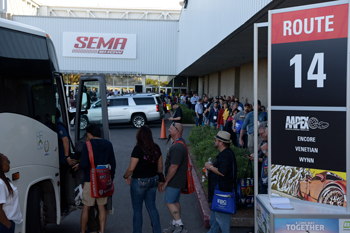
With more than 3,000 credentialed members of the media and more than 2,000 exhibitors attending the SEMA Show each year, getting the attention of reporters can be challenging. A good media strategy, along with a well-executed trade-show plan, can generate increased product awareness and lead to profitable sales.

Of course, every exhibitor is unique, and results will vary from company to company. Nevertheless, key strategies for SEMA Show exhibitors include:

  • Post press releases in the SEMA Show Online Media Center: By posting news releases in the SEMA Show Online Media Center, you ensure that reporters looking for Show-related news do not miss out on your story. Posting to the Online Media Center can also generate coverage from SEMA’s publications and social media outlets. Post your release today.
  • Enter the New Products Showcase: Exhibitors can take advantage of the New Products Showcase by entering a qualified product for free. Providing a detailed description of that product can generate additional exposure and drive traffic to the booth. The Showcase often generates additional coverage in SEMA publications and online. Enter a product now.
  • Have someone dedicated to media efforts: Having an outside agency/consultant has many benefits, especially since they typically have media-relations experience and resources. However, exhibitors can still be successful by keeping their media relations in-house. The key is to assign someone the responsibility of managing the media program and to not treat it as a secondary thought. While your primary business is getting the product ready and selling to buyers, making the media a priority will lead to top results.
  • Targeted media outreach: Media at the SEMA Show cover an array of market segments, including motorsports, off-road, mobile electronics and more. Reach out to media targeted to your market and industry. Conduct web-based research and audit to identify relevant media who covered the SEMA Show in previous years and reporters who would potentially be interested in your story.
  • Pitch to media before the SEMA Show opens: Reporters are often contacted months before the SEMA Show and offered story ideas, images, facts and access to high-level company executives. Invite publications that are planning special SEMA Show editions, under embargo, to individual briefings with company executives in advance of the Show opening.
  • Create a comprehensive press kit: Knowing that thousands of media outlets will be at the SEMA Show, develop a comprehensive press kit to distribute onsite at the event. In addition to having press kits available to reporters in the booth, exhibitors are able to place press kits and releases in the official SEMA Show Media Center at no cost.

To learn more about all of the PR opportunities available for exhibitors, visit the Exhibitor Services Manual or contact an account rep at sales@sema.org or 909-396-0289.

Thu, 08/01/2019 - 12:46

By SEMA Editors

New Products Showcase
Exhibitors can take advantage of the New Products Showcase by entering a qualified product for free.

With more than 3,000 credentialed members of the media and more than 2,000 exhibitors attending the SEMA Show each year, getting the attention of reporters can be challenging. A good media strategy, along with a well-executed trade-show plan, can generate increased product awareness and lead to profitable sales.

Of course, every exhibitor is unique, and results will vary from company to company. Nevertheless, key strategies for SEMA Show exhibitors include:

  • Post press releases in the SEMA Show Online Media Center: By posting news releases in the SEMA Show Online Media Center, you ensure that reporters looking for Show-related news do not miss out on your story. Posting to the Online Media Center can also generate coverage from SEMA’s publications and social media outlets. Post your release today.
  • Enter the New Products Showcase: Exhibitors can take advantage of the New Products Showcase by entering a qualified product for free. Providing a detailed description of that product can generate additional exposure and drive traffic to the booth. The Showcase often generates additional coverage in SEMA publications and online. Enter a product now.
  • Have someone dedicated to media efforts: Having an outside agency/consultant has many benefits, especially since they typically have media-relations experience and resources. However, exhibitors can still be successful by keeping their media relations in-house. The key is to assign someone the responsibility of managing the media program and to not treat it as a secondary thought. While your primary business is getting the product ready and selling to buyers, making the media a priority will lead to top results.
  • Targeted media outreach: Media at the SEMA Show cover an array of market segments, including motorsports, off-road, mobile electronics and more. Reach out to media targeted to your market and industry. Conduct web-based research and audit to identify relevant media who covered the SEMA Show in previous years and reporters who would potentially be interested in your story.
  • Pitch to media before the SEMA Show opens: Reporters are often contacted months before the SEMA Show and offered story ideas, images, facts and access to high-level company executives. Invite publications that are planning special SEMA Show editions, under embargo, to individual briefings with company executives in advance of the Show opening.
  • Create a comprehensive press kit: Knowing that thousands of media outlets will be at the SEMA Show, develop a comprehensive press kit to distribute onsite at the event. In addition to having press kits available to reporters in the booth, exhibitors are able to place press kits and releases in the official SEMA Show Media Center at no cost.

To learn more about all of the PR opportunities available for exhibitors, visit the Exhibitor Services Manual or contact an account rep at sales@sema.org or 909-396-0289.

Thu, 08/01/2019 - 12:46

By SEMA Editors

New Products Showcase
Exhibitors can take advantage of the New Products Showcase by entering a qualified product for free.

With more than 3,000 credentialed members of the media and more than 2,000 exhibitors attending the SEMA Show each year, getting the attention of reporters can be challenging. A good media strategy, along with a well-executed trade-show plan, can generate increased product awareness and lead to profitable sales.

Of course, every exhibitor is unique, and results will vary from company to company. Nevertheless, key strategies for SEMA Show exhibitors include:

  • Post press releases in the SEMA Show Online Media Center: By posting news releases in the SEMA Show Online Media Center, you ensure that reporters looking for Show-related news do not miss out on your story. Posting to the Online Media Center can also generate coverage from SEMA’s publications and social media outlets. Post your release today.
  • Enter the New Products Showcase: Exhibitors can take advantage of the New Products Showcase by entering a qualified product for free. Providing a detailed description of that product can generate additional exposure and drive traffic to the booth. The Showcase often generates additional coverage in SEMA publications and online. Enter a product now.
  • Have someone dedicated to media efforts: Having an outside agency/consultant has many benefits, especially since they typically have media-relations experience and resources. However, exhibitors can still be successful by keeping their media relations in-house. The key is to assign someone the responsibility of managing the media program and to not treat it as a secondary thought. While your primary business is getting the product ready and selling to buyers, making the media a priority will lead to top results.
  • Targeted media outreach: Media at the SEMA Show cover an array of market segments, including motorsports, off-road, mobile electronics and more. Reach out to media targeted to your market and industry. Conduct web-based research and audit to identify relevant media who covered the SEMA Show in previous years and reporters who would potentially be interested in your story.
  • Pitch to media before the SEMA Show opens: Reporters are often contacted months before the SEMA Show and offered story ideas, images, facts and access to high-level company executives. Invite publications that are planning special SEMA Show editions, under embargo, to individual briefings with company executives in advance of the Show opening.
  • Create a comprehensive press kit: Knowing that thousands of media outlets will be at the SEMA Show, develop a comprehensive press kit to distribute onsite at the event. In addition to having press kits available to reporters in the booth, exhibitors are able to place press kits and releases in the official SEMA Show Media Center at no cost.

To learn more about all of the PR opportunities available for exhibitors, visit the Exhibitor Services Manual or contact an account rep at sales@sema.org or 909-396-0289.