Sat, 08/01/2020 - 13:44

SEMA News—August 2020

LEGISLATIVE AND TECHNICAL AFFAIRS

By Stuart Gosswein

FEDERAL UPDATE

RPM Act
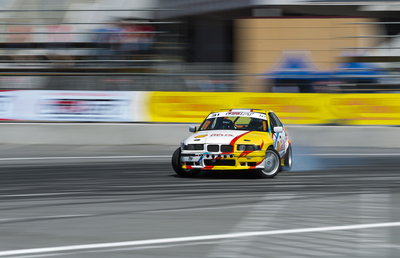
RPM Act: The Recognizing the Protection of Motorsports (RPM) Act clarifies that the Clean Air Act allows motor vehicles to be converted into dedicated race cars and that it is legal to produce, sell and install race parts for those vehicles. As Congress prepares to come back into session in September, the RPM Act enters a critical period. The legislation has strong bipartisan support, including 60 co-sponsors for the House bill (H.R. 5434) and 29 co-sponsors for the Senate bill (S. 2602), but lawmakers in Congress need to hear from SEMA members about why the bill is important to motorsports parts businesses in order to enact the bill into law in 2020. To contact your lawmakers and request their support, visit www.sema.org/rpm. Photo courtesy: Divin Serhiy/Shutterstock.com

Tariffs: SEMA continues to call for tariff relief during COVID-19 as part of the Americans for Free Trade (AFT) coalition. The AFT first requested a temporary suspension of tariff collections so that companies could preserve cash and pay other bills. When the administration rejected the request, the coalition then sought an extended deferral of collections on all tariffs. To date, no decision has been made on the second request. In related news, the U.S. Trade Representative (USTR) continues to process requests by companies to be excluded from the Section 301 tariffs on Chinese imports. The requests are based on economic hardship and lack of product availability from other supply sources. The USTR has denied many requests, but exclusions that are granted are not company-specific. Rather, the exclusion applies to all imports under the Harmonized Tariff Schedule listing number, although the benefit may be narrowly applied to products with similar technical specifications and uses.

STATE UPDATE

Oklahoma—License Plates: The Oklahoma House of Representatives failed to pass SEMA-opposed legislation that would have required front and rear license plates on all vehicles prior to a required legislative deadline. Vehicles are currently required to display only a single, rear-mounted license plate.

Pennsylvania—Motorsports: The Pennsylvania House Committee on State Government passed SEMA-supported legislation that would allow outdoor recreational activities, including motorsports, to resume immediately under certain conditions. The bill now awaits consideration by the entire House of Representatives. Pennsylvania’s emergency business closure order currently does not allow any recreational activity businesses, such as spectator sports, to operate.

COVID-19 Updates

SEMA Website Provides Guidance on Business Reopenings

SEMA is reviewing daily the resources available to members for addressing COVID-19 to ensure that they are up to date, accurate, and address current business challenges. The focus and goal of the Coronavirus Updates & Resources webpage (www.sema.org/coronavirus) has shifted toward reopening and making plans to move forward. The resources include the latest information on which businesses can reopen state by state, guidance and best practices for businesses to safely reopen, and keeping members informed on the latest federal relief programs.

One of the first features the website provided was a guide to how each state defined “essential” businesses that would be allowed to remain open as the pandemic began and most other “nonessential” businesses were told to close their doors. Beginning in late April, governors began to release their plans for how and when their states would allow businesses to reopen.

Utah
Maintenance Backlog on Federal Land: The U.S. Senate has announced plans to hold a vote on S. 3422, the Great American Outdoors Act (GAOA), a bill that is critically important to revitalizing America’s outdoor recreation industry. The GAOA would dedicate $9.5 billion over five years to address the maintenance backlog on federally owned lands by creating a national parks and public land legacy restoration fund. The bill would also appropriate $900 million annually to the Land and Water Conservation Fund (LWCF) and allocate 70% of the funds to the National Park Service, 10% to the Forest Service, 10% to the Fish and Wildlife Service, 5% to the Bureau of Land Management, and 5% to the Bureau of Indian Education. Full funding of the LWCF will help to address the infrastructure needs facing public lands and waters, such as improving trails, roads, docks, campgrounds and more. Addressing deferred maintenance on public lands will create jobs, revitalize communities, and provide Americans with access to open spaces. SEMA and 30 other national associations that comprise the Outdoor Recreation Roundtable (ORR) are calling on the U.S. Congress to pass the bill. ORR is also working with the U.S. Department of the Interior, the U.S. Forest Service and state agencies to underscore the importance of reopening lands for recreation while making reasonable modifications to protect public health, such as opening trails while keeping visitor centers closed.

The SEMA state-by-state resource was updated to reflect this shift, and it now provides each state’s “Roadmap to Reopening” plan set forth by the governor as well as a specific list of the current businesses allowed to reopen in each state. While many SEMA-member companies were considered essential and allowed to remain in operation, the updated resource also provided state-specific links and information such as mask-wearing requirements for open businesses.

SEMA staff members have been closely monitoring government and industry guidance for reopening safely. SEMA created a section on the website with links to those documents. The published guidelines and best practices compiled for the website include the Alliance for Automotive Innovation and Original Equipment Suppliers Association “Health and Safety Resources,” Lear Corp.’s “Safe Work Playbook,” the White House “Guidelines for Opening America,” the Center for Health Security’s “Guidance for Governors: Principles for a Phased Reopening,” and the EPA and CDC “Guidance for Cleaning and Disinfecting Workplaces.”

SEMA continues to track the federal government’s response to the pandemic and provide the most current information on loan programs such as the U.S. Small Business Administration’s Paycheck Protection Program (PPP) and emergency loan initiative. SEMA has provided free webinars that can be downloaded at any time to explain the programs. SEMA also provided a webinar on understanding federal regulations governing sick and family leave, unemployment benefits and other key
labor laws.

SEMA has conducted regular surveys that provide the association with valuable information on how each company is being affected by COVID-19. This input has been invaluable in helping SEMA identify ways to help its members.

The last few months have brought new challenges to many in the business community, and SEMA members are no exception. However, as the world adapts to the new normal, businesses reopen, and people go back to work, SEMA will continue to provide updated and current resources to help our members navigate these unprecedented times. Please do not hesitate to contact the SEMA team if you have specific questions or if there is anything we can do to help.

Sat, 08/01/2020 - 13:44

SEMA News—August 2020

LEGISLATIVE AND TECHNICAL AFFAIRS

By Stuart Gosswein

FEDERAL UPDATE

RPM Act
RPM Act: The Recognizing the Protection of Motorsports (RPM) Act clarifies that the Clean Air Act allows motor vehicles to be converted into dedicated race cars and that it is legal to produce, sell and install race parts for those vehicles. As Congress prepares to come back into session in September, the RPM Act enters a critical period. The legislation has strong bipartisan support, including 60 co-sponsors for the House bill (H.R. 5434) and 29 co-sponsors for the Senate bill (S. 2602), but lawmakers in Congress need to hear from SEMA members about why the bill is important to motorsports parts businesses in order to enact the bill into law in 2020. To contact your lawmakers and request their support, visit www.sema.org/rpm. Photo courtesy: Divin Serhiy/Shutterstock.com

Tariffs: SEMA continues to call for tariff relief during COVID-19 as part of the Americans for Free Trade (AFT) coalition. The AFT first requested a temporary suspension of tariff collections so that companies could preserve cash and pay other bills. When the administration rejected the request, the coalition then sought an extended deferral of collections on all tariffs. To date, no decision has been made on the second request. In related news, the U.S. Trade Representative (USTR) continues to process requests by companies to be excluded from the Section 301 tariffs on Chinese imports. The requests are based on economic hardship and lack of product availability from other supply sources. The USTR has denied many requests, but exclusions that are granted are not company-specific. Rather, the exclusion applies to all imports under the Harmonized Tariff Schedule listing number, although the benefit may be narrowly applied to products with similar technical specifications and uses.

STATE UPDATE

Oklahoma—License Plates: The Oklahoma House of Representatives failed to pass SEMA-opposed legislation that would have required front and rear license plates on all vehicles prior to a required legislative deadline. Vehicles are currently required to display only a single, rear-mounted license plate.

Pennsylvania—Motorsports: The Pennsylvania House Committee on State Government passed SEMA-supported legislation that would allow outdoor recreational activities, including motorsports, to resume immediately under certain conditions. The bill now awaits consideration by the entire House of Representatives. Pennsylvania’s emergency business closure order currently does not allow any recreational activity businesses, such as spectator sports, to operate.

COVID-19 Updates

SEMA Website Provides Guidance on Business Reopenings

SEMA is reviewing daily the resources available to members for addressing COVID-19 to ensure that they are up to date, accurate, and address current business challenges. The focus and goal of the Coronavirus Updates & Resources webpage (www.sema.org/coronavirus) has shifted toward reopening and making plans to move forward. The resources include the latest information on which businesses can reopen state by state, guidance and best practices for businesses to safely reopen, and keeping members informed on the latest federal relief programs.

One of the first features the website provided was a guide to how each state defined “essential” businesses that would be allowed to remain open as the pandemic began and most other “nonessential” businesses were told to close their doors. Beginning in late April, governors began to release their plans for how and when their states would allow businesses to reopen.

Utah
Maintenance Backlog on Federal Land: The U.S. Senate has announced plans to hold a vote on S. 3422, the Great American Outdoors Act (GAOA), a bill that is critically important to revitalizing America’s outdoor recreation industry. The GAOA would dedicate $9.5 billion over five years to address the maintenance backlog on federally owned lands by creating a national parks and public land legacy restoration fund. The bill would also appropriate $900 million annually to the Land and Water Conservation Fund (LWCF) and allocate 70% of the funds to the National Park Service, 10% to the Forest Service, 10% to the Fish and Wildlife Service, 5% to the Bureau of Land Management, and 5% to the Bureau of Indian Education. Full funding of the LWCF will help to address the infrastructure needs facing public lands and waters, such as improving trails, roads, docks, campgrounds and more. Addressing deferred maintenance on public lands will create jobs, revitalize communities, and provide Americans with access to open spaces. SEMA and 30 other national associations that comprise the Outdoor Recreation Roundtable (ORR) are calling on the U.S. Congress to pass the bill. ORR is also working with the U.S. Department of the Interior, the U.S. Forest Service and state agencies to underscore the importance of reopening lands for recreation while making reasonable modifications to protect public health, such as opening trails while keeping visitor centers closed.

The SEMA state-by-state resource was updated to reflect this shift, and it now provides each state’s “Roadmap to Reopening” plan set forth by the governor as well as a specific list of the current businesses allowed to reopen in each state. While many SEMA-member companies were considered essential and allowed to remain in operation, the updated resource also provided state-specific links and information such as mask-wearing requirements for open businesses.

SEMA staff members have been closely monitoring government and industry guidance for reopening safely. SEMA created a section on the website with links to those documents. The published guidelines and best practices compiled for the website include the Alliance for Automotive Innovation and Original Equipment Suppliers Association “Health and Safety Resources,” Lear Corp.’s “Safe Work Playbook,” the White House “Guidelines for Opening America,” the Center for Health Security’s “Guidance for Governors: Principles for a Phased Reopening,” and the EPA and CDC “Guidance for Cleaning and Disinfecting Workplaces.”

SEMA continues to track the federal government’s response to the pandemic and provide the most current information on loan programs such as the U.S. Small Business Administration’s Paycheck Protection Program (PPP) and emergency loan initiative. SEMA has provided free webinars that can be downloaded at any time to explain the programs. SEMA also provided a webinar on understanding federal regulations governing sick and family leave, unemployment benefits and other key
labor laws.

SEMA has conducted regular surveys that provide the association with valuable information on how each company is being affected by COVID-19. This input has been invaluable in helping SEMA identify ways to help its members.

The last few months have brought new challenges to many in the business community, and SEMA members are no exception. However, as the world adapts to the new normal, businesses reopen, and people go back to work, SEMA will continue to provide updated and current resources to help our members navigate these unprecedented times. Please do not hesitate to contact the SEMA team if you have specific questions or if there is anything we can do to help.

Sat, 08/01/2020 - 13:44

SEMA News—August 2020

LEGISLATIVE AND TECHNICAL AFFAIRS

By Stuart Gosswein

FEDERAL UPDATE

RPM Act
RPM Act: The Recognizing the Protection of Motorsports (RPM) Act clarifies that the Clean Air Act allows motor vehicles to be converted into dedicated race cars and that it is legal to produce, sell and install race parts for those vehicles. As Congress prepares to come back into session in September, the RPM Act enters a critical period. The legislation has strong bipartisan support, including 60 co-sponsors for the House bill (H.R. 5434) and 29 co-sponsors for the Senate bill (S. 2602), but lawmakers in Congress need to hear from SEMA members about why the bill is important to motorsports parts businesses in order to enact the bill into law in 2020. To contact your lawmakers and request their support, visit www.sema.org/rpm. Photo courtesy: Divin Serhiy/Shutterstock.com

Tariffs: SEMA continues to call for tariff relief during COVID-19 as part of the Americans for Free Trade (AFT) coalition. The AFT first requested a temporary suspension of tariff collections so that companies could preserve cash and pay other bills. When the administration rejected the request, the coalition then sought an extended deferral of collections on all tariffs. To date, no decision has been made on the second request. In related news, the U.S. Trade Representative (USTR) continues to process requests by companies to be excluded from the Section 301 tariffs on Chinese imports. The requests are based on economic hardship and lack of product availability from other supply sources. The USTR has denied many requests, but exclusions that are granted are not company-specific. Rather, the exclusion applies to all imports under the Harmonized Tariff Schedule listing number, although the benefit may be narrowly applied to products with similar technical specifications and uses.

STATE UPDATE

Oklahoma—License Plates: The Oklahoma House of Representatives failed to pass SEMA-opposed legislation that would have required front and rear license plates on all vehicles prior to a required legislative deadline. Vehicles are currently required to display only a single, rear-mounted license plate.

Pennsylvania—Motorsports: The Pennsylvania House Committee on State Government passed SEMA-supported legislation that would allow outdoor recreational activities, including motorsports, to resume immediately under certain conditions. The bill now awaits consideration by the entire House of Representatives. Pennsylvania’s emergency business closure order currently does not allow any recreational activity businesses, such as spectator sports, to operate.

COVID-19 Updates

SEMA Website Provides Guidance on Business Reopenings

SEMA is reviewing daily the resources available to members for addressing COVID-19 to ensure that they are up to date, accurate, and address current business challenges. The focus and goal of the Coronavirus Updates & Resources webpage (www.sema.org/coronavirus) has shifted toward reopening and making plans to move forward. The resources include the latest information on which businesses can reopen state by state, guidance and best practices for businesses to safely reopen, and keeping members informed on the latest federal relief programs.

One of the first features the website provided was a guide to how each state defined “essential” businesses that would be allowed to remain open as the pandemic began and most other “nonessential” businesses were told to close their doors. Beginning in late April, governors began to release their plans for how and when their states would allow businesses to reopen.

Utah
Maintenance Backlog on Federal Land: The U.S. Senate has announced plans to hold a vote on S. 3422, the Great American Outdoors Act (GAOA), a bill that is critically important to revitalizing America’s outdoor recreation industry. The GAOA would dedicate $9.5 billion over five years to address the maintenance backlog on federally owned lands by creating a national parks and public land legacy restoration fund. The bill would also appropriate $900 million annually to the Land and Water Conservation Fund (LWCF) and allocate 70% of the funds to the National Park Service, 10% to the Forest Service, 10% to the Fish and Wildlife Service, 5% to the Bureau of Land Management, and 5% to the Bureau of Indian Education. Full funding of the LWCF will help to address the infrastructure needs facing public lands and waters, such as improving trails, roads, docks, campgrounds and more. Addressing deferred maintenance on public lands will create jobs, revitalize communities, and provide Americans with access to open spaces. SEMA and 30 other national associations that comprise the Outdoor Recreation Roundtable (ORR) are calling on the U.S. Congress to pass the bill. ORR is also working with the U.S. Department of the Interior, the U.S. Forest Service and state agencies to underscore the importance of reopening lands for recreation while making reasonable modifications to protect public health, such as opening trails while keeping visitor centers closed.

The SEMA state-by-state resource was updated to reflect this shift, and it now provides each state’s “Roadmap to Reopening” plan set forth by the governor as well as a specific list of the current businesses allowed to reopen in each state. While many SEMA-member companies were considered essential and allowed to remain in operation, the updated resource also provided state-specific links and information such as mask-wearing requirements for open businesses.

SEMA staff members have been closely monitoring government and industry guidance for reopening safely. SEMA created a section on the website with links to those documents. The published guidelines and best practices compiled for the website include the Alliance for Automotive Innovation and Original Equipment Suppliers Association “Health and Safety Resources,” Lear Corp.’s “Safe Work Playbook,” the White House “Guidelines for Opening America,” the Center for Health Security’s “Guidance for Governors: Principles for a Phased Reopening,” and the EPA and CDC “Guidance for Cleaning and Disinfecting Workplaces.”

SEMA continues to track the federal government’s response to the pandemic and provide the most current information on loan programs such as the U.S. Small Business Administration’s Paycheck Protection Program (PPP) and emergency loan initiative. SEMA has provided free webinars that can be downloaded at any time to explain the programs. SEMA also provided a webinar on understanding federal regulations governing sick and family leave, unemployment benefits and other key
labor laws.

SEMA has conducted regular surveys that provide the association with valuable information on how each company is being affected by COVID-19. This input has been invaluable in helping SEMA identify ways to help its members.

The last few months have brought new challenges to many in the business community, and SEMA members are no exception. However, as the world adapts to the new normal, businesses reopen, and people go back to work, SEMA will continue to provide updated and current resources to help our members navigate these unprecedented times. Please do not hesitate to contact the SEMA team if you have specific questions or if there is anything we can do to help.

Sat, 08/01/2020 - 12:49

SEMA News—August 2020

INDUSTRY NEWS

Photos courtesy SpiedBilde, Brian Williams. Reuse or reproduction without the copyright holder’s consent is prohibited.

’21 Chevy Suburban RST

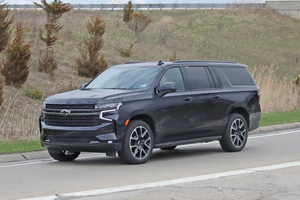
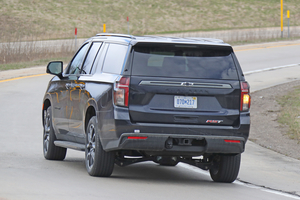
Here’s the upcoming ’21 Chevy Suburban RST, completely undisguised on the street and providing a first look.

The Suburban RST adds a street-inspired exterior design to the fullsize SUV, featuring a unique front and rear treatment. Inside, it is finished with RST-specific seats, which feature contrast-color stitching.

Standard power comes from the 5.3L V8, which packs 355 hp and 383 lb.-ft. of torque. The RST can also be equipped with the 3.0L I6 turbodiesel Duramax engine, which has 277 hp and 460 lb.-ft. of torque. Both engines will be mated to a 10-speed automatic.

GM originally planned to launch the ’21 Suburban in mid-2020, but it’s possible that the coronavirus pandemic could delay that timeline.
Chevy Suburban
Suburban

Porsche 911 GT3

The upcoming Porsche 911 GT3 builds on the grownup image of the 992 but packs more noticeable aerodynamic elements.

New air intakes adorn the nose of the supercar, along with a heavily revised front end. Visible at the rear are über-wide hips, whose eye-catching nature is surpassed only by the complex rear wing and, for the first time, the diffusor below the rear bumper.

The sole transmission should be an eight-speed dual-clutch unit, though Porsche may make a stick available at some point in the successor to the current GT3 Touring, which features a six-speed manual. Also available at some point will be a GT3 Cup racing variant and a hardcore GT3 RS.


Corvette
Bronco

Ferrari Portofino

A prototype for the facelifted Ferrari Portofino has been spied undergoing tests in Germany. The model saw the light of day in 2017, so 2021 could be just the right time for a makeover.

While the rear of the car appears to be unchanged so far, the front is definitely different from the latest model. It comes with a new bumper, a new grille and new “bandit” headlights (the latter resembling those of the Ferrari Roma).

Under the hood will be a new 620hp V8 turbo engine equipped with a new Euro 6.2d temp approval, thanks to the introduction of the particulate filter and many other details already seen in the Roma. A new fully digital interior and a new dual-clutch gearbox (transaxle) with eight gears instead of the previous seven should also be part of the game.
Ferrari
Ferrari


Sat, 08/01/2020 - 12:49

SEMA News—August 2020

INDUSTRY NEWS

Photos courtesy SpiedBilde, Brian Williams. Reuse or reproduction without the copyright holder’s consent is prohibited.

’21 Chevy Suburban RST

Here’s the upcoming ’21 Chevy Suburban RST, completely undisguised on the street and providing a first look.

The Suburban RST adds a street-inspired exterior design to the fullsize SUV, featuring a unique front and rear treatment. Inside, it is finished with RST-specific seats, which feature contrast-color stitching.

Standard power comes from the 5.3L V8, which packs 355 hp and 383 lb.-ft. of torque. The RST can also be equipped with the 3.0L I6 turbodiesel Duramax engine, which has 277 hp and 460 lb.-ft. of torque. Both engines will be mated to a 10-speed automatic.

GM originally planned to launch the ’21 Suburban in mid-2020, but it’s possible that the coronavirus pandemic could delay that timeline.
Chevy Suburban
Suburban

Porsche 911 GT3

The upcoming Porsche 911 GT3 builds on the grownup image of the 992 but packs more noticeable aerodynamic elements.

New air intakes adorn the nose of the supercar, along with a heavily revised front end. Visible at the rear are über-wide hips, whose eye-catching nature is surpassed only by the complex rear wing and, for the first time, the diffusor below the rear bumper.

The sole transmission should be an eight-speed dual-clutch unit, though Porsche may make a stick available at some point in the successor to the current GT3 Touring, which features a six-speed manual. Also available at some point will be a GT3 Cup racing variant and a hardcore GT3 RS.


Corvette
Bronco

Ferrari Portofino

A prototype for the facelifted Ferrari Portofino has been spied undergoing tests in Germany. The model saw the light of day in 2017, so 2021 could be just the right time for a makeover.

While the rear of the car appears to be unchanged so far, the front is definitely different from the latest model. It comes with a new bumper, a new grille and new “bandit” headlights (the latter resembling those of the Ferrari Roma).

Under the hood will be a new 620hp V8 turbo engine equipped with a new Euro 6.2d temp approval, thanks to the introduction of the particulate filter and many other details already seen in the Roma. A new fully digital interior and a new dual-clutch gearbox (transaxle) with eight gears instead of the previous seven should also be part of the game.
Ferrari
Ferrari


Sat, 08/01/2020 - 12:49

SEMA News—August 2020

INDUSTRY NEWS

Photos courtesy SpiedBilde, Brian Williams. Reuse or reproduction without the copyright holder’s consent is prohibited.

’21 Chevy Suburban RST

Here’s the upcoming ’21 Chevy Suburban RST, completely undisguised on the street and providing a first look.

The Suburban RST adds a street-inspired exterior design to the fullsize SUV, featuring a unique front and rear treatment. Inside, it is finished with RST-specific seats, which feature contrast-color stitching.

Standard power comes from the 5.3L V8, which packs 355 hp and 383 lb.-ft. of torque. The RST can also be equipped with the 3.0L I6 turbodiesel Duramax engine, which has 277 hp and 460 lb.-ft. of torque. Both engines will be mated to a 10-speed automatic.

GM originally planned to launch the ’21 Suburban in mid-2020, but it’s possible that the coronavirus pandemic could delay that timeline.
Chevy Suburban
Suburban

Porsche 911 GT3

The upcoming Porsche 911 GT3 builds on the grownup image of the 992 but packs more noticeable aerodynamic elements.

New air intakes adorn the nose of the supercar, along with a heavily revised front end. Visible at the rear are über-wide hips, whose eye-catching nature is surpassed only by the complex rear wing and, for the first time, the diffusor below the rear bumper.

The sole transmission should be an eight-speed dual-clutch unit, though Porsche may make a stick available at some point in the successor to the current GT3 Touring, which features a six-speed manual. Also available at some point will be a GT3 Cup racing variant and a hardcore GT3 RS.


Corvette
Bronco

Ferrari Portofino

A prototype for the facelifted Ferrari Portofino has been spied undergoing tests in Germany. The model saw the light of day in 2017, so 2021 could be just the right time for a makeover.

While the rear of the car appears to be unchanged so far, the front is definitely different from the latest model. It comes with a new bumper, a new grille and new “bandit” headlights (the latter resembling those of the Ferrari Roma).

Under the hood will be a new 620hp V8 turbo engine equipped with a new Euro 6.2d temp approval, thanks to the introduction of the particulate filter and many other details already seen in the Roma. A new fully digital interior and a new dual-clutch gearbox (transaxle) with eight gears instead of the previous seven should also be part of the game.
Ferrari
Ferrari


Sat, 08/01/2020 - 12:49

SEMA News—August 2020

INDUSTRY NEWS

Photos courtesy SpiedBilde, Brian Williams. Reuse or reproduction without the copyright holder’s consent is prohibited.

’21 Chevy Suburban RST

Here’s the upcoming ’21 Chevy Suburban RST, completely undisguised on the street and providing a first look.

The Suburban RST adds a street-inspired exterior design to the fullsize SUV, featuring a unique front and rear treatment. Inside, it is finished with RST-specific seats, which feature contrast-color stitching.

Standard power comes from the 5.3L V8, which packs 355 hp and 383 lb.-ft. of torque. The RST can also be equipped with the 3.0L I6 turbodiesel Duramax engine, which has 277 hp and 460 lb.-ft. of torque. Both engines will be mated to a 10-speed automatic.

GM originally planned to launch the ’21 Suburban in mid-2020, but it’s possible that the coronavirus pandemic could delay that timeline.
Chevy Suburban
Suburban

Porsche 911 GT3

The upcoming Porsche 911 GT3 builds on the grownup image of the 992 but packs more noticeable aerodynamic elements.

New air intakes adorn the nose of the supercar, along with a heavily revised front end. Visible at the rear are über-wide hips, whose eye-catching nature is surpassed only by the complex rear wing and, for the first time, the diffusor below the rear bumper.

The sole transmission should be an eight-speed dual-clutch unit, though Porsche may make a stick available at some point in the successor to the current GT3 Touring, which features a six-speed manual. Also available at some point will be a GT3 Cup racing variant and a hardcore GT3 RS.


Corvette
Bronco

Ferrari Portofino

A prototype for the facelifted Ferrari Portofino has been spied undergoing tests in Germany. The model saw the light of day in 2017, so 2021 could be just the right time for a makeover.

While the rear of the car appears to be unchanged so far, the front is definitely different from the latest model. It comes with a new bumper, a new grille and new “bandit” headlights (the latter resembling those of the Ferrari Roma).

Under the hood will be a new 620hp V8 turbo engine equipped with a new Euro 6.2d temp approval, thanks to the introduction of the particulate filter and many other details already seen in the Roma. A new fully digital interior and a new dual-clutch gearbox (transaxle) with eight gears instead of the previous seven should also be part of the game.
Ferrari
Ferrari


Sat, 08/01/2020 - 12:20

SEMA News—August 2020

BUSINESS

New Strategies for Automotive Print Publications

How Old-School Media Can Stay Competitive in the Digital Era

By Douglas McColloch

Publishing
A recent industry survey showed that more than 90% of Americans reported looking at a magazine within the previous six months, with respondents 35 and younger reporting an even higher engagement level.

Last December, Motor Trend Group—then North America’s premier publisher of automotive enthusiast magazines—announced that it was shuttering 19 of its remaining 22 print titles. In the announcement, company President and General Manager Alex Wellen provided a simple explanation.

“We need to be where our audience is,” Wellen said, and that audience no longer relied on traditional print media as its primary source of news and information. “Tens of millions of fans visit Motor Trend’s digital properties each month, with the vast majority of consumption on mobile and three out of every four visitors favoring digital content over print.”

With that, a print-centric media company that for decades had published dozens of iconic enthusiast titles such as Hot Rod, Truckin,’ Circle Track and Diesel Power had effectively transformed itself into an all-digital content producer. In turn, the news confirmed what many automotive industry professionals had long suspected: Twentieth Century marketing and messaging strategies that had relied heavily on print media were no longer operative in the 21st.

Or were they?

For this article, we contacted representatives of more than a dozen automotive media companies to learn how they have adapted to the changing landscape and to discover which marketing and communications strategies have worked best for them. What follows is a compilation of their insights.
Publishing
There was general agreement among our sources on the need for print magazines to build the capability to deliver content across a variety of platforms in a way that puts that platform to best use—long form for print, short form for digital, visuals for social media—with a unique look and feel to each.

Readership and Revenue: Making the Connections

For an industry long rumored to be near death, print magazines still possess a near-universal appeal among the general public. According to a 2019 survey published by MPA—the Association of Magazine Media, more than 90% of Americans reported having read at least one magazine within the previous six months—a figure that was consistent across all age groups. Among respondents under age 35, the percentage was slightly higher than
the median.

Additionally, 73% of respondents felt that reading a printed magazine (or book) was a more enjoyable experience than reading on an electronic device. Print magazines also enjoy a “pass-along” rate that e-zines don’t, with an average issue being read by 2.5 persons, according to Top Agency, a global public-relations and marketing firm.

“There are people who have screen fatigue and who just want to have the experience of immersing themselves in a physical product,” said Sean Holman, content director at MotorTrend Group and co-host of “The Truck Show Podcast.” “It’s no longer the right place for breaking news but rather a fantastic platform for those long-form stories with beautiful photography and exceptional storytelling.”

While the market for print magazines may have contracted overall, the 2019 MPA study showed that automotive influencers (defined as people who have extensive experience in the topic and whose advice on the topic is trusted by friends and family members) are more devoted to automotive print magazines than to any other form of automotive media, suggesting that there is still a loyal enthusiast core waiting to be served by print.

And all of our sources agreed that print still has a place in a media company’s business portfolio.

“Print isn’t dead—it has just been mismanaged and overleveraged throughout the years and has fallen out of favor due to the immediacy of digital, both in advertising and content,” Holman said. “Print is still one of the more highly engaging platforms, and if you can make the business model work, now is the time to gain market share.”

”Our strategy is to place content where our audience wants to engage with it,” said Sean Donohue, vice president of sales at Babcox Media. “We know that is still a monthly magazine for some segments, and it’s within e-newsletters, on websites, videos, podcasts and the like for others.”

Bo Sacks, president of Precision Media Group and an industry consultant, said that print will continue to have a soft spot in the hearts of many, adding that magazines in the future are likely to become collectors’ items—perhaps one of the last products made by craftsmen for an audience that appreciates such excellent work.

At the same time, Sacks said, printed products will take a back seat to the digital communication business because, at the end of the day, digital is and will be faster, timely and ubiquitous.

“Most magazine publishers have been relying on a centuries-old business plan,” Sacks said. “The idea was to develop content for a set of readers and get advertising to support the process. That worked until it didn’t, and it stopped being fully functional a decade ago. If you are still working with an antique business model a decade later, perhaps it is time to look around and change it.”

One editorial strategy that several sources found advisable for future success was for media companies to steer away from traditional general-interest publications in favor of so-called niche publishing, which means focusing a brand’s editorial aim on an underserved readership with coverage of a subject that isn’t readily available elsewhere. In fact, so-called special-interest magazines are the fastest-growing segment in the industry, according to a 2018
report published by Statista, a global data analysis firm.

Overland Journal is one such publication within the automotive sphere, and its success has mirrored the growth of the overlanding sector.

“Our circulation has increased more than 21% in the past 12 months,” said Publisher and Chairman Scott Brady. “Overlanding is one of the fastest growing segments in travel, automotive and outdoor, so our growth may not be representative of print as a medium but of the health of the segment.”

PublishingAccording to our sources, social media can be an effective tool to build a magazine’s brand identity, but publishers should take care to invest in more conventional promotional streams as well.

Print advertising revenue, while continuing to decline relative to digital, still generated more than $9 billion in 2019, according to a recent survey by data and research firm eMarketer. Additionally, more than 60% of total media-magazine advertising revenue and more than 85% of all circulation revenue was still generated by legacy print, according to a 2016 study conducted by PriceWaterhouseCoopers. A 2019 Statista survey reported aggregate annual revenues for U.S. print periodicals of $27.3 billion, suggesting that the industry still enjoys a respectable level of consumer support.

Sacks noted that business people and venture capitalists mistake a change in dominance for death, but it’s not equivalent to death.

“It just looks and feels that way after 600 years of domination,” he said. “Billions are still being made in print, and there will be billions made in print for the foreseeable future.”

One attribute that can make a print title attractive to advertisers is, in many cases, its reputation as a proven brand, though it’s not a universal attraction.

“It all depends on the advertiser,” said Turn 3 Media managing partner Joe Tripp, adding that many advertisers still want print because they trust it.

That attribute seems to be confirmed by the 2019 MPA survey, which found that traditional media enjoyed the highest levels of public trust as a source for accurate news and information with 65% approval, followed by search engines (63%), owned media (53%), social media (49%) and online-only media (43%). According to the same survey, magazine readers also tend to be more receptive to advertising and more brand-loyal than website visitors or TV viewers.

Another characteristic of print that should continue to attract advertisers is print’s appeal to a reader demographic with a healthy degree of disposable income. The MPA survey found that affluent enthusiasts (defined as individuals over 18 with incomes of more than $125,000 or households with combined incomes of more than $250,000) were more likely to rely on print magazines to keep them informed and entertained than on any other form of automotive media.

“We have known for some time that premium, archival print titles perform well, as they connect with a more affluent readership and are also shared or kept,” Brady concurred.

With so many media avenues available for advertisers and readers alike, monetizing print magazines in the digital age requires a flexible business model and a product that delivers value to readers.

“For print, we believe that it is essential to be 100% reader-focused,” Brady said. “In our case, that includes comprehensive and expensive product testing that has value in the same way that a Consumer Reports [evaluation] does. As a result, we can charge a premium subscription fee. In addition, we do not permit any form of advertorial in any of our outlets, which maintains reader trust.”

Publishing
It may be considered passé in some quarters, but a number of our sources mentioned podcasting as an effective, low-cost method to engage readers and build brand awareness for print titles.

Digital and Social Media as Part of the Business Model

One key to building and maintaining a viable print brand in a multimedia age is understanding how to position print content relative to other media streams within the publishing business.

Tripp put it succinctly: “Print is more for long-form, evergreen content, while digital is for breaking news, video and interactive media. Social media is attention-getting short-form content that people will engage with, and each form complements
the other.”

“Print should be inspirational, while digital should be aspirational.” Brady added.

Our sources also widely agreed that print magazines need to have a robust digital presence, with rich, engaging content available for PC, tablet and smartphone.

“Digital communication methods permit immediacy, which is something that print cannot compete with,” Brady noted.

Social media and e-newsletters can both be valuable marketing tools.

“They’re our most successful drivers of new users to content on our website,” Tripp said. “Once a reader sees the value in the content, many are easy to convert to seeing the value of a tactile, printed product.”

Knowing which social-media platforms to target is as important as having a social-media presence.

“As my brands are so visual, we focus primarily on Instagram,” Brady said. “We use all of the channels, but only as a marketing exercise.”

Holman noted that it’s really age-dependent.

“Younger audiences seem to gravitate toward Instagram,” he said. “Older audiences engage more on Facebook, and YouTube is a place for everyone.”

Tripp said that his business primarily uses Facebook for supporting its advertising clients and Twitter for news.

Social-media users also tend to be more drawn to automotive-magazine pages than non-magazine automotive pages when measured by levels of social engagement (defined as social media actions divided by publisher’s posts). According to the 2019 MPA survey, automotive magazine brands (e.g., Car & Driver, Hot Rod) generated nearly twice the amount of user engagement on Facebook as non-magazine brands (Autoblog, Edmunds). On Twitter, engagement was two-and-a-half times greater, and 31 times greater on Instagram. But Brady also cautioned against relying too heavily on social media for
brand promotion.

“The primary issue is that you do not own the distribution model or the reader,” he noted. “You are playing entirely in someone else’s sandbox, which is not a model I find appropriate for a media company that produces original content. The possible exception to this would be video, if the content is a pay-per-view model such as Netflix or Amazon.”

Sacks reminded publishers not to overlook older, more conventional brand-building methods.

“As strange as it may seem, you get readers two ways,” he said. “One is word of mouth from happy readers or clients, and the other is traditional marketing, depending on the type of product you have. The best regional magazines spend a fortune on TV, radio and newspaper inserts. Why? Because they work. That may seem old school, but I know too many publishers who have spent wisely, and it is working. The old adage is still true: You have to spend money to make money.”

Among other forms of digital media, video consumption continues to be on the rise, according to Donohue.

“As a result, we’re placing significant resources serving our audience with a variety of video and broadcast solutions,” he said. “We opened a garage studio and training center late last year and are utilizing our space and technology to produce valuable content for our markets as well as digital opportunities for our advertisers to drive engagement.”

A number of our sources also mentioned podcasting as an effective and economical way to engage readers online.

“It seems to be a new space where you can extend the storytelling and go deeper into a subject to capture those readers who really want more,” Holman said.

Another recommended key to success for publishers going forward is using modern analytics tools to understand the different behaviors of magazine readers and digital-media users to best optimize engagement.

“We use traditional survey methodology and advanced analytics to gain deeper insights and make predictions about where content or advertising messages will perform best,” Donohue said. “We listen to our audience, recognizing that even across our portfolio, consumption habits may vary, which could mean adjusting our content delivery plans and advertiser recommendations by brand.”

Holman added that content needs to be platform-agnostic, and print needs to be one of multiple pillars of distribution.

“The danger is in creating the exact same content for online versus print,” he said. “A single story should be formatted, adjusted and tweaked so there is a version of the story that is optimized for each destination.”

For magazines to thrive, however, our sources uniformly agreed that producing the highest-quality content was an essential part of the business model.

“If you haven’t created unique and addictive content for your niche, the decline will continue to accelerate,” Sacks advised. “There is no longer any room to print fluff. The content has to have a purpose and relevancy to the reader, or they will go elsewhere. It is that simple and that hard to do. Print isn’t dead or dying, but it is evolving from a commodity to a luxury. As a luxury, there will be much less of it, but what is left will be of extremely high quality in both the physical product and the editorial content.”

Holman believes that there will come a point “where quality print will be en vogue again, both by readers who need time away from their screens and by advertisers who realize that the print option isn’t as noisy of a space to compete in anymore, has better engagement, and allows them to get their message out to a qualified audience.”

To that end, today’s print publishers should strive for, as Tripp explained, “a targeted focus for a passionate audience; rich, authentic content that both informs and entertains; and cross-platform continuity that allows readers to consume content on their terms, wherever and whenever they want. Content and context are king.”

Publishing
A simple and cost-effective brand-building tool, the SEMA Show Magazine Bin Program puts publishers directly in touch with the more than 150,000 industry pros who attend the Show each year.

About the SEMA Show Magazine Bin Program

One additional resource that magazine publishers can utilize to build brand awareness within the aftermarket is the SEMA Show Magazine Bin Program. More than a decade old, the program allows publishers to display their magazines at the Show in exchange for nominal advertising promotion, and more than 100 titles, both foreign and domestic, participate in any given year, making their brands available to the more than 150,000 industry professionals who attend annually.

Domestic publications interested in getting more information or participating in the program can visit www.SEMAShow.com/domestic-bin-program. International publications interested in getting more information or participating in the program can visit www.SEMAShow.com/international-ad-trade-out.

Sat, 08/01/2020 - 11:50

SEMA News—August 2020

REQUIRED READING

By Juan Torres

Young and Innovative

Since 2013, the SEMA Launch Pad program has given young entrepreneurs, students and business owners age 18–39 an opportunity to launch their products into the $44.6 billion automotive aftermarket industry. The top 15 participants in this year’s program have moved on to the online voting stage of the competition (www.sema.org/launchpad).

In addition to pitching their products at the annual SEMA Show before a panel of iconic judges, the top-five vote-getters often benefit from media interest and attention. Below are some of the publications that have covered the competition, which awards the winner a prize package that includes $10,000 and exhibit space at the annual SEMA Show.
 

Telegraph HeraldTelegraph

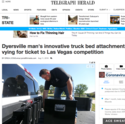
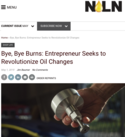
Reporter Erica Lyons wrote a piece on Wesley Poole, president of Forged Authority. Thanks to his company’s modular frame-rail, which can accommodate a number of attachments in seconds with a single pin, Poole was a top-10 finalist in the 2019 Launch Pad competition.


National Oil and Lube News

Oil and Lube News

Toby Chess has penned installments of his “Kool Tools” article for several years now, and it’s a report that members of the collision industry eagerly await each year. At the 2019 SEMA Show, Chess teamed with Kye Yeung and Amber Alley to walk the entire floor and find tools that could save shops time and money.


Traction

Traction

Hot Rod editor Johnny Hunkins’ new-products report from last year’s SEMA Show was picked up by MSN, giving maximum exposure to the 30-plus parts highlighted in the article. Hunkins went as far as predicting the types of products he’d expect to see at the 2020 Show.


Heard on Social Media

“BuiltRight Industries, the 2019 SEMA Launch Pad winner, is making 3-D-printed face shields to help with the coronavirus effort.”Auto Care Week/The Greensheet, via Twitter

“At the @SEMASHOW Launch Pad product competition today in Las Vegas, Reid Lunde earned $10,000 for his weatherproof Kaizen Relay product.”—Fender Bender, via Twitter

“SEMA has recognized Dyme PSI as a semifinalist in the 2020 SEMA Young Executive Network (YEN) Launch Pad competition alongside 14 of the most innovative companies in the United States.”Motorsporters, via Facebook

“The Launch Pad is a competition designed to help and support young entrepreneurs in the automotive aftermarket. All 15 semifinalists will receive complimentary SEMA memberships.”—12 Volt News, via Twitter


Sat, 08/01/2020 - 11:47

SEMA News—August 2020

INTERNATIONAL

Selling to Saudi Arabian Buyers

Meeting New Testing Requirements

By Linda Spencer

Saudi Buyers Chart
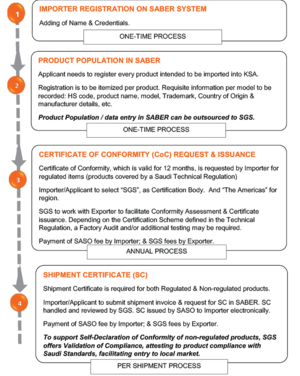
SALEEM-SABER certificate of conformity issuance flow chart.

Selling product to Saudi customers or want to begin doing so? Distributors are reporting increased Saudi customs enforcement for imported products. From toys to cosmetics to automotive aftermarket products, every shipment imported into Saudi Arabia is required to be accompanied by the correct documentation.

The Saudi government has begun enforcing a new product safety program known as SALEEM, and U.S. suppliers have begun hearing of these new requirements from their distributors as a result. During a March trip to Riyadh and Dammam, Saudi Arabia, SEMA News learned that local distributors were struggling to learn the new system and were concerned about the costs associated with complying.

SEMA recently sponsored a webinar to provide U.S. manufacturers with information on the program. Joel Molina, international trade specialist at the North America office of conformity assessment body SGS, spoke at the webinar on the details. SGS is one of the testing agencies approved by the Saudi government. (Molina’s contact information is included at the end of this article along with a link to all six assessment bodies.) Below are some details of the program.

  • The compliance conformity program is known by the name SALEEM, and the electronic platform in which products are registered is known as SABER.
  • The Saudi Standards, Metrology and Quality Organization (SASO) is the standard-setting body for a wide range of products, including auto parts, and is the lead agency on the SABER SALEEM program.
  • On the opposite page is a list of products covered by technical standards. If your products are on the list, third-party testing is required. If your products are not on the list, it is recommended that you double-check that this is the case with a certification body. (A list of approved certification bodies and a list of regulated products by HS code are available on the www.sema.org/international webpages.) The certification body can work with SASO to confirm if a technical regulation exists for your product.
  • Third-party testing is required on regulated products. Only a Saudi-government-approved testing agency can be used. In addition, certain aftermarket products require a factory audit.
  • The government specifically notes that many auto parts are not covered, including chassis, engines, differentials and gear boxes.
  • If it is confirmed that your products are not covered by a technical regulation, a self-certification by the importer is sufficient. So called “non-regulated products” do not require the services of a technical body but rather the completion of a self-certification form by the importer.
  • SABER is the online portal used to register both regulated and unregulated products and the required shipping documents for all imports. Once the Saudi distributor registers the company on the SABER portal (only a Saudi-based business can enter the required information onto the online system), all products to be imported are to be registered as well. This task may be performed directly by the importer or by hiring the certifying body to do so. The portal can be accessed by importers, SASO-approved certification bodies and Saudi customs officials.
  • Many U.S. suppliers arrange for the testing and thus own the data, and its contents can be kept proprietary, shared only with government officials. The U.S. manufacturer selects one or more distributors as desired, with each needing to register on the SABER site but if the manufacturer handled the testing authorized importers can refer to the completed test data. Conversely, if a distributor arranges the test, each distributor carrying the U.S. supplier’s product will need to arrange its own testing.
  • There are four standards that cover most but not all specialty automotive product technical regulations: auto spare parts, lubricants, tires and batteries.
  • To submit a regulated product for importation, the importer initiates the certification request by first registering the product(s) into the SABER system, including product details and the appropriate HS code, and selecting the chosen SASO-approved certification body to carry out any required third-party testing. If the product meets the requirements of the technical regulation, an approval certificate is issued and the importer is then issued a shipment certificate. Each shipment requires a unique shipping certificate. The entire process is done online through the SABER system.
  • Regulations: https://saber.sa/home/regulations.
  • Approved certifying bodies: The SASO SABER website lists six approved testing agencies with a North American presence. The list is located at https://saber.sa/home/cborganizations.

Selected Automotive Products Covered Under Saudi Technical Regulations

AirbagsElectric WiringPulleys
AlarmsEngine CoolantRadiators
AlternatorsFilters–AirRearview Mirrors
Ball JointsFilters–FuelRims
BatteriesFilters–OilSeat Belts
BeltsGlass–WindshieldShock Absorbers
Brake LiningsHead SupportSpark Plugs
BumpersIgnition CoilsTie Rods
Child-Restraint SystemsLightingTires
Control ArmsLubricantsWheel Bearings
Door Locks and Door HingesMotor OilWindow Washing Systems

*This list was compiled by SEMA, drawing from relevant Saudi technical regulations. If your product does not appear on this list, confirm with a compliance body. SGS is one such entity. The full list of the six approved bodies is available at www.saber.sa.

SABER SALEEM Resources

Joel Molina
International Trade Specialist
SGS North America Inc.
305-639-0028
joel.molina@sgs.com
www.sgs.com

The full list of the six Saudi government-approved certifying bodies is available at www.saber.sa. More information on the Saudi SABER SALEEM system, including a recording of a recent SEMA webinar on the testing requirements, is available at www.sema.org/international. For questions, contact Linda Spencer at lindas@sema.org.

Upcoming SEMA International Programs

Overseas Business Development Trips:

  • SEMA Middle East (Abu Dhabi, United Arab Emirates/Riyadh, Saudi Arabia), March–April 2021
  • SEMA Australia (Melbourne, Australia), May 2021
  • SEMA Nordic (Stockholm, Sweden), September 2–7, 2021

2020 SEMA Show:

  • International Networking
  • International Roundtables, Monday, November 2
  • International Happy Hour, Wednesday, November 4

2020 PRI Trade Show:

  • International Networking
  • International Happy Hour, Friday, December 11
  • International Roundtable, Friday, December 11