Compiled by SEMA Editors
The NHRA Lucas Oil Drag Racing Series returns to action, May 15–17, with events in Division 2 at Atlanta Dragway and Division 4 at Alamo City Motorplex, after a hiatus stemming from the COVID-19 global pandemic. |
|
NHRA Announces Tentative Revised 2020 Lucas Oil Drag Racing Series Schedule
The NHRA Lucas Oil Drag Racing Series returns to action, May 15–17, with events in Division 2 at Atlanta Dragway and Division 4 at Alamo City Motorplex, after a hiatus stemming from the COVID-19 global pandemic. The National Trail Raceway will feature double the sportsman racing action as it hosts a Division 3 points meet July 16–17 directly followed by the JEGS NHRA SPORTSnationals, July 18-19. The 2020 season will conclude for the Lucas Oil Drag Racing Series in Las Vegas, November 5–8. In addition to the five divisional events that took place prior to the suspension, the revised schedule includes 41 divisional events scheduled to take place after the series return in May for a total of 46 divisional events in 2020. There will also be 24 total regional events featuring the 260-mph Top Alcohol Dragster and Top Alcohol Funny Car classes during the 2020 campaign. View the schedule of events.
LIQUI MOLY Enters World Touring Car Cup WTCR Alongside Hyundai
LIQUI MOLY will enter the World Touring Car Cup WTCR at the side of Hyundai Motorsports. LIQUI MOLY has been at home in touring car sport for more than 10 years. Initially in the World Touring Car Championship WTCC and then, since its establishment in 2015, in the TCR series, always in partnership with the Engstler racing team. LIQUI MOLY is now taking the next step into the World Touring Car Cup WTCR together with the team. There, Engstler will compete as the Hyundai works team. In two Hyundai i30 N TCRs, Dutch WTCR veteran Nicky Catsburg and German TCR talent Luca Engstler will fight for the title. This cooperation is reflected firstly in the visible presence on the vehicles and secondly in the fact that the two Hyundai i30 N TCRs run on LIQUI MOLY oil.
Holley Announces New Date For LS Fest West 2020
Due to the coronavirus, Holley LS Fest West in Las Vegas will now be held the weekend of June 12–14, 2020, under the night lights of the Las Vegas Motor Speedway. All currently registered participants and spectators who have their tickets will carry over to the new date. If anyone is registered, but cannot attend on the new date, their money will be refunded. For more information, contact lsfest@holley.com.
INDYCAR Releases Revised 2020 Schedule
The NTT INDYCAR Series announced several calendar updates following the cancellation of the Detroit Grand Prix due to the COVID-19 pandemic. Two previously scheduled events will become doubleheaders, along with the addition of a third weekend of racing at the Indianapolis Motor Speedway (IMS). With these additions, there are 15 races on the 2020 INDYCAR calendar—an increase of one event from the 14 races announced March 26. INDYCAR’s established events at Iowa Speedway and WeatherTech Raceway Laguna Seca will become doubleheaders. The Iowa 300 event weekend will add a race Friday, July 17, along with the previously scheduled race Saturday, July 18. The Firestone Grand Prix of Monterey event weekend will now feature a race Saturday, September 19, in addition to the previously scheduled race Sunday, September 20. Race fans also will be treated to a third INDYCAR event with the INDYCAR Harvest GP on the IMS road course taking place Saturday, October 3. This event is in addition to the GMR Grand Prix, already scheduled for Saturday, July 4, and the 104th Running of the Indianapolis 500 on Sunday, August 23. View the updated 2020 NTT INDYCAR Series schedule.
Revised Schedule for 2020 SCORE World Desert Championship
SCORE International has announced its revised 2020 racing schedule. The three rounds of the revised 2020 SCORE World Desert Championship will be the SCORE Baja 500 (June 17–21), the SCORE San Felipe 250 (September 16–20) and the season-ending SCORE Baja 1000 (November 17–22). For additional information, visit the SCORE website at www.score-international.com.
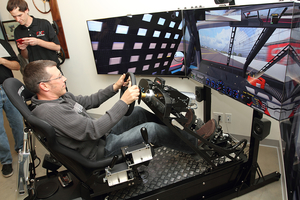
The National Auto Sport Association has announced the creation of two new racing leagues it will host on iRacing. |
|
National Auto Sport Association Launches Inaugural Sim Racing Leagues on iRacing
The National Auto Sport Association has announced the creation of two new racing leagues it will host on iRacing. The inaugural 2020 season will have two leagues with 10 races per league that run every other Tuesday night through August. Additionally, there will be up to $13,000 in cash prizes available to Pro League drivers as well as real life contingency prizes. Longtime NASA partners Toyo Tires and Hawk Performance have kicked in to pay out contingency dollars in each of our new Sim Leagues. These “real dollars” will help virtual racers get back on track with NASA as soon as we can safely host events. Additionally, Competition Motorsport has stepped up to provide each inaugural league winner with a OMP TRS-E racing seat. Lastly, each 2020 league winner will get a free entry to any regional NASA event of their choosing providing a true racing ladder for sim-to-reality racing. Contingency rules for each program will be published shortly.
The inaugural NASA Club Sim Racing League will run the first and third Tuesday night of each month, kicking off on Tuesday, April 7, at Circuit of The Americas, and running through Tuesday, August 18. All NASA members with iRacing can run in the Club League for free. Select events will be live-streamed with commentary and will be on the NASA Facebook page for all to enjoy the action. The inaugural NASA Pro Sim Racing League will run the second and fourth Tuesday nights, beginning Tuesday, April 14, at Circuit of the Americas, through Tuesday, August 25. Each race will feature cash prizes available to current NASA members. View the full schedule for the Club and Pro Sim Racing Leagues.
Mast Motorsports Acquires Magnitude Performance
Mast Motorsports has announced the acquisition of Magnitude Performance. Jason Youd, founder of Magnitude Performance, will be named CEO of Mast Motorsports. He will manage all aspects of Mast Motorsports and support Mast Powertrain as managing director. According to the company, as part of Mast Technologies group, Mast Motorsports and Magnitude Performance will continue advanced development for motorsports products and technologies.
SpeedVideo has entered into a broadcast partnership with the automotive event series Street Car Super Nationals (SCSN) to live stream the Las Vegas and St. Louis events through 2022. |
|
SpeedVideo.com Announces Multi-Year Agreement to Broadcast Street Car Super Nationals at Las Vegas And St. Louis
SpeedVideo has entered into a broadcast partnership with the automotive event series Street Car Super Nationals (SCSN) to live stream the Las Vegas and St. Louis events through 2022. The COMP Cams Street Car Super Nationals 16 is coming to SpeedVideo, November 19–22, live from The Strip at the Las Vegas Motor Speedway. The festival of speed is expected to draw more than 500 cars in 16 classes with everything from eighth-mile grudge cars to quarter-mile Pro Mods and everything in between. Summer Speed Spectacular featuring the Street Car Super Nationals will take place August 14–15, live from St. Louis. Viewers can catch the full live event coverage and action of the COMP Cams Street Car Super Nationals 16 and the Summer Speed Spectacular featuring the Street Car Super Nationals events in live HD available on www.speedvideo.com for annual or monthly subscribers.
Yamaha’s GNCC University Scheduled to Return for 2020
Yamaha Motor Corp.’s annual Grand National Cross Country (GNCC) University is scheduled to return to Snowshoe Mountain Resort in West Virginia June 24–26, during the 2020 GNCC series. While the racing season has been postponed, Yamaha plans to bring back the educational hands-on event for up-and-coming racers when the race series resumes. A panel of current and past Yamaha racing champions and professionals will instruct as many as 80 total students in either ATV- or motorcycle-related sessions. XC1 Pro ATV rider Johnny Gallagher will lead this year’s Yamaha Racing ATV instructors, along with five-time GNCC XC1 Pro ATV champion and current undefeated series leader Walker Fowler and 12-time WXC ATV champion Traci Pickens. The two-wheel class will be led by seven-time AMA National Enduro Champion and AmPro Yamaha Racing team owner Randy Hawkins, five-time AMA National Hare Scramble Champion Jason Raines, XC1 Open Pro motorcycle rider Layne Michael, XC2 250 Pro motorcycle rider Michael Witkowski, along with the WXC bike competitors Rachael Archer and current unbeaten series leader Becca Sheets. Reservations are on a first-come, first-serve basis with 80 openings evenly split between ATV and motorcycle disciplines. Tuition for GNCC University starts at $300 per student. To view the entire Proven Off-Road ATV, SxS, and Off-Road Motorcycle lineup and learn more, visit www.yamahamotorsports.com.
For more racing news, visit the Performance Racing Industry (PRI) website.