SEMA Virtual Education remains committed to empowering industry professionals by sharing innovative strategies, information and learning through new and engaging webinars.
Mark your calendar for the following upcoming webinars and stay tuned to SEMA eNews as additional sessions are announced throughout the year. For a comprehensive library of upcoming and on-demand sessions that members can access anytime, visit www.sema.org/virtual-education.
Thursday, April 8 – Vehicle Landscape: Which Cars and Trucks are Hot? Track: Trends & Research Series: SEMA Industry Insight Series
Learn about the current vehicle landscape and emerging trends and opportunities in the automotive aftermarket industry as the SEMA Market Research team provides an overview of what vehicles are currently on the road, shifts in new vehicle sales and trends, and the hottest car and truck models for customization in the industry—followed by a live Q&A with the webinar speakers.
Wednesday, April 14 - Facebook Live Chat featuring Chris Blair, presented by SEMA YEN Track: Industry Talks
Tune in to a Facebook Live Chat featuring Chris Blair, executive vice president and general manager of World Wide Technology Raceway. Since joining WWTR in 2012, Blair has overseen the growth and development of the once-shuttered St. Louis track from a 150-acre, racing-only complex to a multi-purpose entertainment venue in excess of 600 acres. As host of the Facebook Live, Blair will discuss steps racetracks have taken to overcome the state lockdowns and their plans moving forward.
Wednesday, April 21 - Tire Knowledge 301: Common Causes of Balancing Process Errors and How to Avoid Them Track: Industry Segments, Powered by SEMA Councils and Networks Series: Wheel and Tire Industry Insights, Powered by WTC
Understanding causes for vehicle vibration and the mechanics of balanced vs. unbalanced tires is critical for helping tire professionals ensure their customers have a smooth ride, even tire wear and proper tire weight distribution around their vehicle. Learn about the common causes of balancing process errors, how to avoid them, and best practices to minimize customer vibration complaints.
With more than five weeks to go before the SEMA Show space agreement deadline, Show management reports that more than 1,000 exhibitors have already been confirmed for the 2021 event. The news is significant, and underscores the work that Las Vegas and its businesses are doing to welcome back large-venue events like the SEMA Show.
The Las Vegas Convention Center's newly constructed West Hall, a 1.4-million square feet facility, was completed in January, and will house exhibitors from the Restyling & Car Care Accessories, Powersports & Utility Vehicles, and Truck, SUV & Off-Road sections.
As the city continues to ramp back up to host events, the buzz among exhibitors anticipating the return of the in-person SEMA Show for 2021 has increased significantly.
“People are eager to get back to the SEMA Show and reestablish their in-person connections with colleagues and customers,” said Vice President of Events Tom Gattuso. “The groundswell of excitement among exhibitors increases each day, and the Show is the ‘Main Event’ that the industry is looking forward to in 2021.”
The 2021 SEMA Show is a little more than seven months away, and Show management continues to work closely with the convention center authorities and the state of Nevada to help deliver the best SEMA Show ever.
SEMA Show Dates to Remember
The Exhibitor Services Manual (ESM) will be live in May. The ESM contains all of the forms and applications required to prepare for the Show: feature vehicles, new products, booth vehicles, celebrity appearances, etc.
Deadline to submit Exhibit Space Rental Application and deposit is May 7.
SEMA Show Space Selection: June 7, 2021-June 23, 2021.
SEMA’s On-Demand Virtual Education library includes comprehensive presentations, insightful discussions and short videos that teach, inform, inspire and entertain automotive specialty-equipment professionals.
The library is filled with recordings of previous live sessions, which are now available on-demand for SEMA members to access at their convenience. Below are some of the most popular sessions. For a complete list of sessions and registration information, visit www.sema.org/virtual-education.
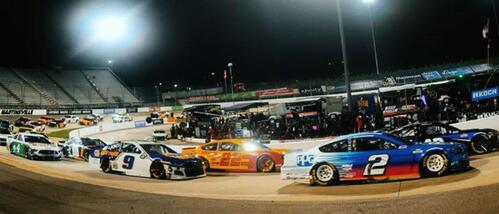
Martinsville Speedway and Richmond Raceway have announced that
they will host a limited amount of fans in the grandstands when
NASCAR visits in 2021.
Limited Fans for NASCAR Races at Martinsville, Richmond
A pair of speedways in Virginia have announced that they will host a limited amount of fans in the grandstands when NASCAR visits in 2021. Martinsville Speedway will allow a reduced number of fans throughout its first-ever three-race weekend of night races, April 8–10. The half-mile short track is set to host the Virginia is for Racing Lovers 200 NASCAR Whelen Modified Tour race on Thursday, April 8, followed by the Cook Out 250 NASCAR Xfinity Series Dash 4 Cash race on Friday, April 9, and the Blue-Emu Maximum Pain Relief 500 NASCAR Cup Series race on Saturday, April 10.
Richmond Raceway, celebrating its 75th anniversary, will also host a reduced number of fans for the Toyota Spring Race Weekend, April 17-18. The short track will host the ToyotaCare 250 NASCAR Camping World Truck Series on Saturday, April 17, followed by the Toyota Owners 400 NASCAR Cup Series race on Sunday, April 18. It will be the first time the track has hosted fans in 18 months. For more information, visit martinsvillespeedway.com and richmondraceway.com.
Formula Americas Announces Two Key Members
Formula Americas Super GP has added two key hires. Ian Brown has been appointed as the chief engineer, while C.M. Land will serve as technical director/crew chief for the championship series. The Formula Americas Super GP Championship presented by Pirelli is a professional, arrive and drive, open-wheel competition with visits to Palm Beach International Raceway, Homestead-Miami Speedway, Charlotte Motor Speedway and Road America.
Permatex Promotes Eva Pitts to Director of Sales for Traditional and International Business
Permatex has promoted Eva Pitts to director of sales. In her new role, Pitts will manage Permatex’s traditional and international businesses, driving continued growth through strong sales programs, new product initiatives, and customer partnerships. Pitts joined Permatex’s parent company, ITW, in 2015 as brand manager for Rain-X wiper blades and appearance products with the car care division in Houston. She was promoted to group brand manager in 2017 and oversaw the launch of Rain-X Silicone AdvantEdge wipers blades. In 2019, Pitts transitioned into operations with the engine repair division, where she served as quality and EHS manager at Permatex’s Solon, Ohio, facility. Prior to joining ITW, Pitts worked in brand management at The Boston Beer Company.
Yamaha Delivers Essential Support to Public Lands for Outdoor Recreation
Yamaha Motor Corp. USA has announced the completion of the 2020 Yamaha Outdoor Access Initiative (OAI) grant cycle with funding decisions for the fourth quarter. In total, Yamaha granted more than $350,000 in 2020 while supplying essential support to public lands providing vital access to outdoor recreation across the country. The Yamaha OAI program continues to lead the powersports industry in providing direct monetary support to grassroots efforts helping to protect, expand and improve entry to public spaces off-road for motorized recreation.
“The pressure on public lands during the pandemic has been enormous due to people finding solace outdoors. Their adventures gave off-road enthusiasts a much-needed breather from the stress we’ve all experienced over the past year,” said Steve Nessl, Yamaha’s Motorsports marketing manager. “Public land belongs to everyone and we all have a responsibility to take care of it. Yamaha is proud to continue supporting our riders’ favorite outdoor activities, including OHV riding, hunting, camping and fishing, through the Outdoor Access Initiative.”
The fourth quarter 2020 Yamaha OAI grants totaling more than $90,000 were awarded to the following organizations:
Blue Ribbon Coalition – Pocatello, Idaho
East Branch Sno-Rovers & ATV Club – Medway, Maine
Idaho Single Track Alliance – Idaho Falls, Idaho
Reno Area Dirtriders – Reno, Nevada
Swampsiders Snowmobile Club – Bigfork, Minnesota
For more than 12 years, Yamaha has issued quarterly grants to non-profit organizations supporting the needs of riding groups, outdoor enthusiasts, land stewardship organizations and public land managers to improve access to public land for outdoor recreation. Since inception, Yamaha contributed over $4.5 million in aid to more than 380 projects across the nation.
The deadline for submission to the second quarter 2021 funding cycle for the Yamaha Outdoor Access Initiative is June 30, 2021, and applications must be postmarked by then. Submission guidelines and applications are available at YamahaOAI.com. Connect with Yamaha on social media via @YamahaOutdoors or search any of the following hashtags on all platforms: #Yamaha #YamahaOAI #REALizeYourAdventure #ProvenOffRoad.
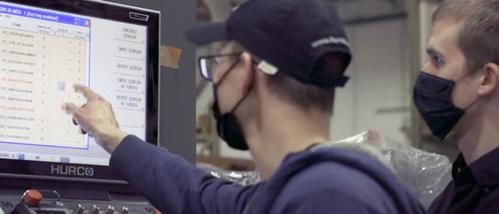
The Hurco Field Service Apprenticeship (FSA) is a two-year program,
beginning with a 12-week industry training that merges hands-on
training and repair of CNC machines with classroom materials.
Hurco North America Announces New Apprenticeship Program
Hurco North America has announced the launch of a new apprenticeship program. The Field Service Apprenticeship (FSA) is a two-year program, beginning with a 12-week industry training that merges hands-on training and repair of CNC machines with classroom materials. While candidates with a degree or working toward one are encouraged to apply, candidates who are mechanically inclined with no industry or engineering experience are also encouraged to apply for the FSA.
Field service engineers will ultimately be ambassadors for Hurco Companies, Inc.—working to provide technical support, training and service of state-of-the-art CNC machines at customers’ facilities across the country. Continuous training on emerging technologies in CNC controls, robot integration, 5-axis machine, and multi-spindle lathe installation, repair, and applications will also be provided after completion of the apprenticeship. The FSA program will take place at Hurco’s headquarters in Indianapolis. For more information, visit hurco.com/apprentice.
QA1 Acquires Gerst Tubular Suspensions
QA1 has announced the expansion of its classic Mopar suspension line with the acquisition of Gerst Tubular Suspension, a manufacturer of coil-over systems for classic Dodge, Plymouth and Chrysler platforms. Gerst has produced classic Mopar coil-over systems, including Mopar A, B & E body systems, and D-100 truck systems, for nearly a decade. The acquisition pairs Gerst’s Mopar products with the manufacturing capability and distribution of QA1, the provider of suspension solutions for American musclecars. QA1’s facility in Lakeville, Minnesota, enables expanded and efficient production.
DPI Off-Road Brands Acquires J.T.’s Parts & Accessories Inc.
DPI Off-Road Brands has announced the acquisition of J.T.’s Parts & Accessories Inc.—the manufacturer of the Nitro Gear & Axle brand. J.T.’s Parts & Accessories and Nitro Gear & Axle will operate as a division of DPI Off-Road Brands. Nitro Gear & Axle offers ring-and-pinion sets, semi- and full-float rear axles, C-Clip rear axles, front axles, full and mini spools, pinion yokes and more. The brand was one of the first to offer one-part-number front and rear gear packages and has won three SEMA Global Media Awards in 2016 for its UAZ 5.14 ratio gears. DPI Off-Road Brands includes Daystar Products International, Performance Accessories, Tuff Country, Leveling Solutions, Revtek, VooDoo Offroad, MCE Fenders, and HCT.
Yokohama Tire Corp. (YTC) has announced several organizational changes, including Jeff Barna’s promotion to president and CEO. Barna, a managing officer of Yokohama Rubber (YRC), joined YTC as COO in 2017, and was named president of YTC in 2018. This latest promotion will allow Barna greater oversight of YTC’s U.S.-based operations, including the Yokohama Development Center America (YDCA) in Cornelius, North Carolina.
Shinichi Takimoto, the senior managing officer of YRC and current CEO of YTC, will retain his role as chairman of YTC, as well as president and CEO of Yokohama Corporation of North America (YCNA), chairman of Yokohama Tire Canada (YTV), and chairman of Yokohama Tire Mexico (YTMX).
Additional organizational changes include the following:
Takehisa Morimoto is the new chairman and president of Yokohama Tire Manufacturing Mississippi (YTMM). Morimoto, who formerly held a role at Yokohama’s consumer tire plant in Salem, Virginia, and is currently president of Yokohama Tire Manufacturing Thailand (YTMT), replaces Hikomitsu Noji, who will return to YRC as a senior advisor.
Tom Kenny, currently the senior director of research and development at YDCA, has been promoted to vice president of YDCA. Kenny will now report directly to Barna.
Jeremy Kahrs has been promoted from the director of technical services at YDCA to senior director of technical services. Kahrs will continue to report to Kenny.
Have some company news you would like to share? Let us know and the news may appear in an upcoming issue of SEMA eNews. Send your items for consideration to editors@sema.org.
Proposal submissions are now being accepted that reflect current
trends, ideas and discoveries within the automotive aftermarket and
performance racing industries.
SEMA and PRI provide an unparalleled platform for innovative thinkers to share their ideas, technologies and industry expertise. Education proposal submissions are now being accepted that reflect current trends, ideas and discoveries within the automotive aftermarket and performance racing industries.
Program Audiences (but not limited to): Automotive small business owners, racing businesses, team owners, managers and employees.
Topics of Interest (but not limited to): Business Management, Sales & Marketing, Advanced Vehicle Technology, Trends & Research, Sponsorship, Building Brands/Branding, Digital Marketing and Industry Segment Specific Topics.
2021 SEMA-PRI Year-Round Virtual Education
Program Details: In an effort to provide further value to members, SEMA and PRI are building a robust virtual education program that members can take advantage of year-round. If selected, SEMA will schedule your session according to availability.
2021 SEMA Show Education (Submission Deadline: February 4, 2021)
Show Details: November 1-5, 2021, Las Vegas Convention Center, Las Vegas
2021 PRI Show Education (Submission Deadline: April 4, 2021)
Show Details: December 9-11, 2021, Indiana Convention Center, Indianapolis
To be considered for an education seminar, submit your proposal by selecting “Create Proposal” below.
To resume a proposal, enter your login details below under “Manage Existing Proposal” to pick up where you left off.
For more information on the selection process, how to navigate through the submission process or frequently asked questions click here to view the Speaker FAQ sheet. (opens new window)
If you have an idea for a topic that would benefit the industry, we’d like to hear from you!
SEMA eNews highlights new products from industry companies each week. To have your product considered for upcoming issues, send product press releases to editors@sema.org.
Edge Products
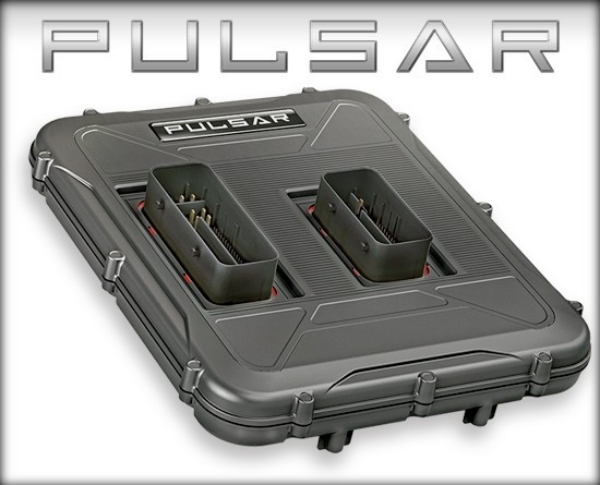
L5P Duramax Pulsar V3
The all-new, redesigned, L5P Duramax Pulsar V3 now supports up to the ’21 model year, building on the potential of the original Pulsar for L5P, and features an entirely redesigned performance strategy.
Pulsar now adjusts four major components to build power safely: injection pulse width, injection timing, fuel rail pressure, and airflow. We’ve also revamped our shift strategy for improved shifting across the board. The new V3 performance strategy adds 50% more power as compared to the original with up to 135 hp and 293 TQ to the tires.
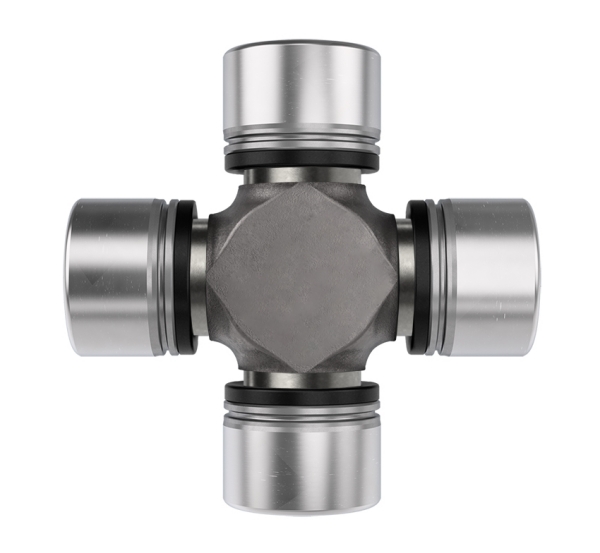
Dana Incorporated has added new SPL 140SFX service-free u-joints for medium-duty applications to its complete portfolio of Spicer Life Series service-free u-joints for commercial vehicles.
The new Spicer SPL140SFX eliminates the zerk hole lube drill and tap, and includes a tube of Spicer ultra-premium synthetic grease that is compatible with all NLGI-2 greases and professional-grade quality, even at high temperatures. Once the grease is applied, the SPL140SFX is lubricated for the life of the u-joint, resulting in less maintenance, reduced downtime, and lower overall operational costs over time.
DENSO
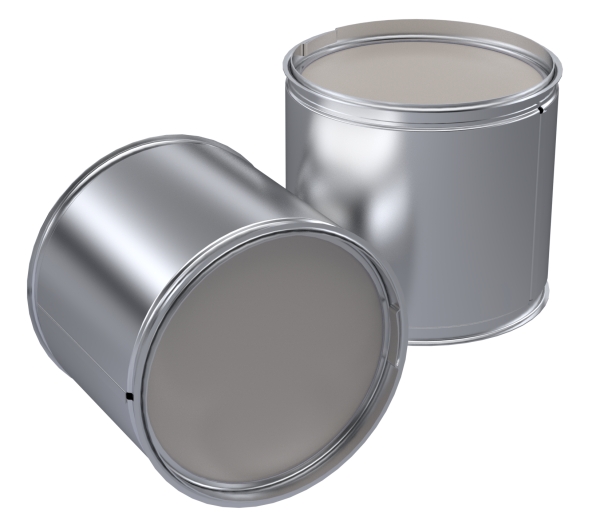
PowerEdge DPFs and DOCs for 2007-Newer Class 8 Trucks
DENSO Products and Services Americas Inc. (DPAM), an affiliate of leading global mobility supplier DENSO Corp., has expanded its PowerEdge brand of diesel particulate filters (DPFs) and diesel oxidation catalysts (DOCs) to cover nearly all ’07 and newer Class 8 trucks on the road today. Premium PowerEdge diesel aftertreatment products increase fuel efficiency while cutting emissions by trapping soot, a byproduct of diesel engines.
The expanded PowerEdge Diesel Aftertreatment line now features 70 DPFs offering more than 98% coverage of the market and 92 DOCs with more than 80% coverage for a total of 162 part numbers, nearly double the 2020 program. DPFs capture 85% of particulates from truck exhaust, and the capture rate is even higher when DPFs are used in combination with DOCs.
All PowerEdge DPFs and DOCs for the heavy-duty market are backed by a three-year/unlimited mileage warranty. All units come with the gaskets, clamps or hardware required for true plug-and-play installation. DENSO covers the shipping costs when four or more units are shipped together.
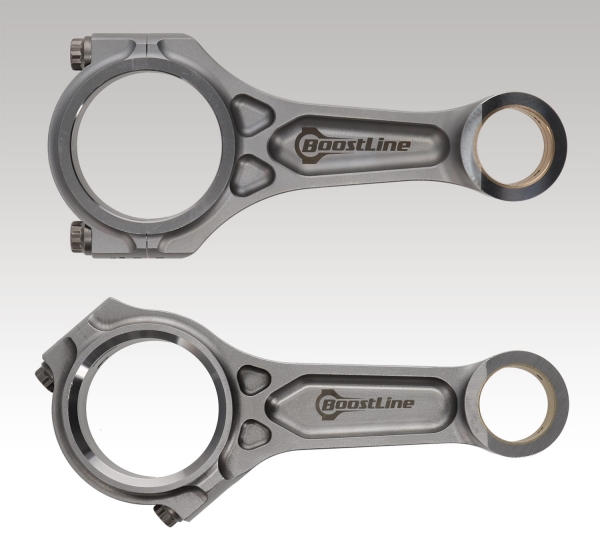
Owners of ’02-’12 Chevy/GM pickups equipped with the 6.6L Duramax engine, as well as those with ’89-’12 Dodge/Ram pickups with 5.9 or 6.7L Cummins engines, can turn to Boostline’s new diesel connecting rods to handle serious increases in power and boost.
Forged from ultra-strong 4340 steel alloy, these rods feature Boostline’s patented 3-pocket design that provides a 60% improvement in bending strength and a 20% stress reduction compared to conventional H-beam designs. The rods are fitted with 12mm ARP2000 fasteners that are rated at 220,000 psi tensile strength, and the larger diameter contributes to a 23% greater clamping force than with 7/16-in. ARP2000 bolts.
Extensively dyno-tested with sustained loads in excess of 2,000 lb.-ft. torque, these new Boostline connecting rods are proven reliable in high boost applications. Manufactured to exceptionally close tolerances, the rods are QC checked for consistency by means of a 25-point CMM inspection.
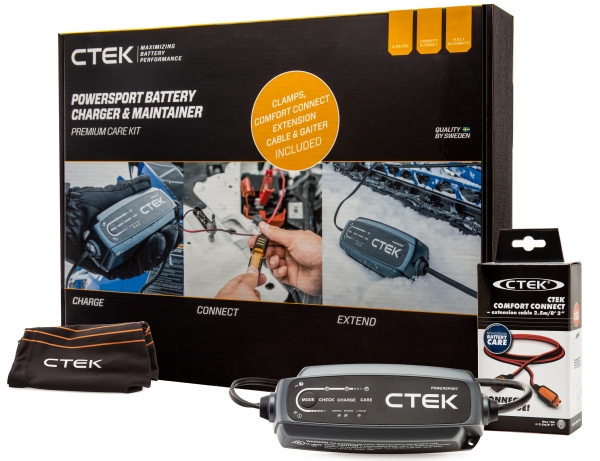
Whether you’re hitting the open road on a motorcycle, heading off-road on an ATV, or hitting the wave on a jet ski, CTEK’s new POWERSPORT Kit makes sure your battery is charged and ready to go.
The new CTEK POWERSPORT Kit contains a CT5 POWERSPORT battery charger and maintainer, a CTEK Comfort Connect 8.2-ft. quick-connect extension cable, and a CTEK-branded neck gaiter.
CTEK’s CT5 POWERSPORT is specifically designed for powersport vehicles. The CT5 POWERSPORT is a 12-volt, 2.3-amp battery charger and maintainer. With dedicated programs for lead-acid and lithium (12V LiFePO4) batteries, you can get the best performance out of your powersport vehicle whether you’re on land, water, snow or ice.
The charger is splash and dustproof, designed to protect vehicle electronics and non-sparking, reverse polarity protected and short-circuit proof.
In addition, the CTEK Comfort Connect 8.2-ft. cable included in the POWERSPORT Kit extends the reach of your charger meaning you can still charge your powersport vehicle even if it’s tucked away at the back of your garage or shop.
The CTEK neck gaiter is a POWERSPORT Kit exclusive and unavailable for purchase elsewhere. The neck gaiter can help protect your face and neck from the elements while riding.
The SDC Data Excellence recognizes the companies that have worked with SDC to recreate and relaunch industry-leading product data sets. Here are products from current SDC members that have achieved data excellence.
AMP Research
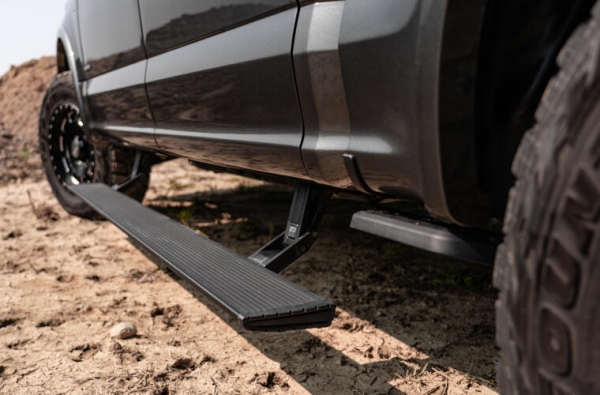
Powerstep Extreme Running Board
The PowerStep Xtreme is for extreme conditions for those owners who live and work in challenging environments. Made specifically for extreme environments, sub-zero winters, mud-caked rockers; AMP Research PowerStep Xtreme is designed to hold up to the extreme because of its dual motors. It is built extra powerful to hold up to the demands.
Hi-Lift
Patriot Edition Jack (Supporting The Hope For The Warriors Foundation)
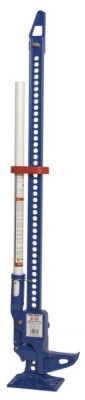
The Hi-Lift Patriot Edition Jack is an all-cast jack constructed with cast iron components for ultimate strength and durability. A portion of the proceeds for every Hi-Lift Patriot Edition Jack sold goes to Hope for the Warriors—a national nonprofit organization in the United States that provides assistance to combat wounded service members, their families and families of those killed in action.
The Hi-Lift Patriot Edition Jack features a blue powder coated finish with zinc-plated hardware, white, powder-coated two-piece handle and socket is durable and red Handle-Keeper.
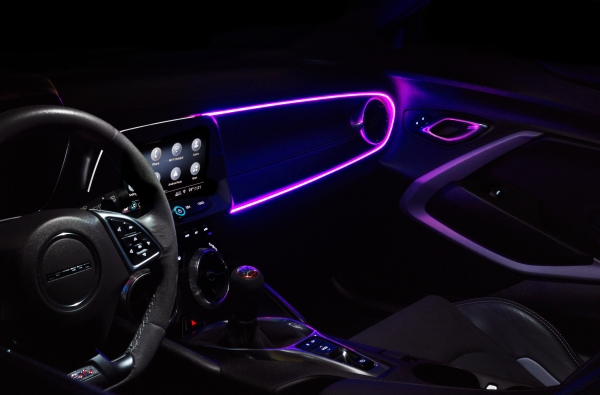
A market leader in innovative LED lighting solutions has announced the launch of its new fiber-optic dash kits. The special side-ring fiber optic cables have an integrated edge to make installation easy on any vehicle. This integrated edge is inserted between interior body panels in your vehicle including door panels, dashboard, headliner, console and more. The fiber can even be stitched into fabric on custom upholstery. This is a universal product and is simple to install in most cases.
Over the past few weeks, Congress has seen an outpouring of support for the “Recognizing the Protection of Motorsports Act” (RPM Act). The racing community and the motorsports parts industry have blanketed Congressional offices with nearly 900,000 letters in support of the RPM Act. SEMA thanks everyone who has taken time to submit a letter to their lawmakers, as it is imperative that members of Congress are reminded that they must act to protect racing from EPA overreach. Please keep up the momentum, tell Congress to Save Our Racecars.
SEMA is currently working with the RPM Act’s strongest supporters in Congress to officially reintroduce the bill in a way that maximizes its chances of becoming law. We are also working with congressional offices that support the RPM Act to find other pathways to enact it. Last week, six U.S. Senators requested that the Senate Environment and Public Works Committee include the RPM Act in the highway bill, which must become law before the current authorization expires on September 31, 2021.
Passing the RPM Act is SEMA’s top federal legislative priority, as federal statute must clarify that it is legal to make emissions-related changes to a street vehicle for the purpose of converting it into a dedicated racecar. The RPM Act confirms that it is legal to manufacture, sell and install race parts. The legislation would also reverse the EPA’s interpretation that the Clean Air Act (CAA) does not allow a motor vehicle designed for street use—including a car, truck, or motorcycle—to be converted into a dedicated racecar. This American tradition was unquestioned for nearly 50 years until 2015 when the EPA took the position that converted vehicles must remain emissions-compliant, even though they are no longer driven on public streets or highways.
For details, contact Eric Snyder at erics@sema.org.
On March 18, 2021, the California Coastal Commission voted unanimously to abolish off-highway vehicles (OHV) at California’s Oceano Dunes State Vehicular Recreation Area (SVRA). The action was opposed by organizations representing the off-roading community, including SEMA and the SEMA Action Network (SAN), along with car clubs and individual enthusiasts. The Commission also voted to speed up the timetable for ending OHV access, from five years to three years.
The OHV community is reviewing options to address the action, including filing a lawsuit. Two California agencies with jurisdiction over Oceano Dunes have reached different conclusions on OHV access. The Commission cites environmental concerns as a reason to not renew the permit it issued more than 40 years ago granting OHV access. On the other hand, the California Department of Parks and Recreation (State Parks) which manages the area in collaboration with the California Off-Highway Motor Vehicle Recreation Commission, is currently reviewing public comments to its proposed Public Works Plan (PWP) for long-range management of the SVRA to include continued OHV access. The deadline for submitting comments on the draft PWP is April 19, 2021.
Oceano Dunes SVRA encompasses nearly 3,600 acres along the Pacific Ocean near San Luis Obispo, of which OHV use is now limited to 1,500 acres or less. Oceano Dunes became a state OHV park in 1974 and is the only such park on California’s coast. It has been enjoyed by outdoor enthusiasts from across the country for decades under a permit first issued by the Commission in 1982.
OHV recreation is an important contributor to the local economy. While bringing pleasure to thousands of enthusiasts, the monies spent at area stores, motels, restaurants and gas stations support jobs and generate tax revenues. SEMA will continue to fight to keep Oceano Dunes as an OHV recreation resource.
For more information, contact Christian Robinson at christianr@sema.org.


 SEMA Virtual Education remains committed to empowering industry professionals by sharing innovative strategies, information and learning through new and engaging webinars.
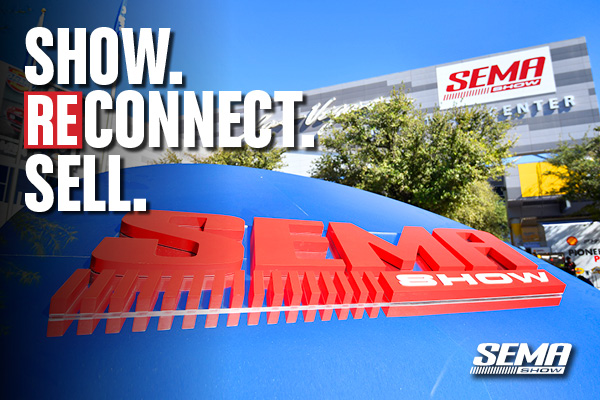 With more than five weeks to go before the SEMA Show space agreement deadline, Show management reports that more than 1,000 exhibitors have already been confirmed for the 2021 event. The news is significant, and underscores the work that Las Vegas and its businesses are doing to welcome back large-venue events like the SEMA Show.
 SEMA’s On-Demand Virtual Education library includes comprehensive presentations, insightful discussions and short videos that teach, inform, inspire and entertain automotive specialty-equipment professionals.