Thu, 03/24/2016 - 13:10

By SEMA Washington, D.C., Staff
wv
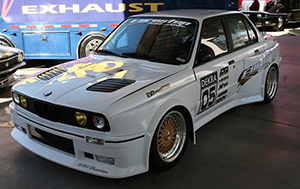
The West Virginia Legislature approved a West Virginia House Concurrent Resolution to urge the U.S. Environmental Protection Agency (EPA) to allow the conversion of vehicles originally designed for on-road use into racecars.

A West Virginia House Concurrent Resolution to urge the U.S. Environmental Protection Agency (EPA) to allow the conversion of vehicles originally designed for on-road use into racecars was approved by the West Virginia Legislature. The pending EPA regulation would also make the sale of certain products for use on such vehicles illegal. The resolution recognizes that while the Clean Air Act prohibits certain modifications to motor vehicles, it is clear that vehicles built or modified for racing, and not used on the streets, are not the “motor vehicles” that Congress intended to regulate. The resolution also recognizes that this proposed EPA regulation represents overreaching by the agency, runs contrary to the law and defies decades of racing activity where EPA has acknowledged and allowed conversion of vehicles. 

For details, contact Steve McDonald at stevem@sema.org.


Thu, 03/24/2016 - 13:10

By SEMA Washington, D.C., Staff

wv
The West Virginia Legislature approved a West Virginia House Concurrent Resolution to urge the U.S. Environmental Protection Agency (EPA) to allow the conversion of vehicles originally designed for on-road use into racecars.

A West Virginia House Concurrent Resolution to urge the U.S. Environmental Protection Agency (EPA) to allow the conversion of vehicles originally designed for on-road use into racecars was approved by the West Virginia Legislature. The pending EPA regulation would also make the sale of certain products for use on such vehicles illegal. The resolution recognizes that while the Clean Air Act prohibits certain modifications to motor vehicles, it is clear that vehicles built or modified for racing, and not used on the streets, are not the “motor vehicles” that Congress intended to regulate. The resolution also recognizes that this proposed EPA regulation represents overreaching by the agency, runs contrary to the law and defies decades of racing activity where EPA has acknowledged and allowed conversion of vehicles. 

For details, contact Steve McDonald at stevem@sema.org.


Thu, 03/24/2016 - 13:07

By SEMA Washington, D.C., Staff

ca
Legislation was introduced to require new-car dealers to provide purchasers a written statement declaring it is illegal for manufacturers or dealers to void a warranty or deny coverage because aftermarket or recycled parts were installed, or because someone other than the dealer performed service.

Legislation was introduced to require new-car dealers to provide purchasers a written statement declaring it is illegal for manufacturers or dealers to void a warranty or deny coverage because aftermarket or recycled parts were installed, or because someone other than the dealer performed service. 

The bill will be sent to the Assembly Committee on Privacy and Consumer Protection for consideration. Consumers are generally unaware of the rights afforded them under the law and many are forced to absorb the costs for repairs that were properly covered under the warranty. This bill would simply provide that consumers be made aware in ten-point boldface type of these basic rights. 

For more information, visit the SEMA Action Network website. For details, contact Steve McDonald at stevem@sema.org.


Thu, 03/24/2016 - 13:07

By SEMA Washington, D.C., Staff

ca
Legislation was introduced to require new-car dealers to provide purchasers a written statement declaring it is illegal for manufacturers or dealers to void a warranty or deny coverage because aftermarket or recycled parts were installed, or because someone other than the dealer performed service.

Legislation was introduced to require new-car dealers to provide purchasers a written statement declaring it is illegal for manufacturers or dealers to void a warranty or deny coverage because aftermarket or recycled parts were installed, or because someone other than the dealer performed service. 

The bill will be sent to the Assembly Committee on Privacy and Consumer Protection for consideration. Consumers are generally unaware of the rights afforded them under the law and many are forced to absorb the costs for repairs that were properly covered under the warranty. This bill would simply provide that consumers be made aware in ten-point boldface type of these basic rights. 

For more information, visit the SEMA Action Network website. For details, contact Steve McDonald at stevem@sema.org.


Thu, 03/24/2016 - 13:07

By SEMA Washington, D.C., Staff

ca
Legislation was introduced to require new-car dealers to provide purchasers a written statement declaring it is illegal for manufacturers or dealers to void a warranty or deny coverage because aftermarket or recycled parts were installed, or because someone other than the dealer performed service.

Legislation was introduced to require new-car dealers to provide purchasers a written statement declaring it is illegal for manufacturers or dealers to void a warranty or deny coverage because aftermarket or recycled parts were installed, or because someone other than the dealer performed service. 

The bill will be sent to the Assembly Committee on Privacy and Consumer Protection for consideration. Consumers are generally unaware of the rights afforded them under the law and many are forced to absorb the costs for repairs that were properly covered under the warranty. This bill would simply provide that consumers be made aware in ten-point boldface type of these basic rights. 

For more information, visit the SEMA Action Network website. For details, contact Steve McDonald at stevem@sema.org.


Thu, 03/24/2016 - 13:07

By SEMA Washington, D.C., Staff

ca
Legislation was introduced to require new-car dealers to provide purchasers a written statement declaring it is illegal for manufacturers or dealers to void a warranty or deny coverage because aftermarket or recycled parts were installed, or because someone other than the dealer performed service.

Legislation was introduced to require new-car dealers to provide purchasers a written statement declaring it is illegal for manufacturers or dealers to void a warranty or deny coverage because aftermarket or recycled parts were installed, or because someone other than the dealer performed service. 

The bill will be sent to the Assembly Committee on Privacy and Consumer Protection for consideration. Consumers are generally unaware of the rights afforded them under the law and many are forced to absorb the costs for repairs that were properly covered under the warranty. This bill would simply provide that consumers be made aware in ten-point boldface type of these basic rights. 

For more information, visit the SEMA Action Network website. For details, contact Steve McDonald at stevem@sema.org.


Thu, 03/24/2016 - 13:05

By SEMA Washington, D.C., Staff

The National Highway Traffic Safety Administration (NHTSA) and virtually all of the major automakers have agreed to voluntarily install automatic emergency braking (AEB) systems on all new cars by 2022 and heavier SUVs and pickups by 2024. AEB systems use lasers, radar and/or cameras to sense potential collision hazards. The system can make a sound warning to the driver and then proactively activate the brakes if necessary. Studies indicate that AEB systems have the potential to prevent accidents or reduce the severity by as much as 50%. The systems are already available on a number of vehicles. 

For more information, contact Stuart Gosswein at stuartg@sema.org.

Thu, 03/24/2016 - 13:05

By SEMA Washington, D.C., Staff

The National Highway Traffic Safety Administration (NHTSA) and virtually all of the major automakers have agreed to voluntarily install automatic emergency braking (AEB) systems on all new cars by 2022 and heavier SUVs and pickups by 2024. AEB systems use lasers, radar and/or cameras to sense potential collision hazards. The system can make a sound warning to the driver and then proactively activate the brakes if necessary. Studies indicate that AEB systems have the potential to prevent accidents or reduce the severity by as much as 50%. The systems are already available on a number of vehicles. 

For more information, contact Stuart Gosswein at stuartg@sema.org.

Thu, 03/24/2016 - 13:05

By SEMA Washington, D.C., Staff

The National Highway Traffic Safety Administration (NHTSA) and virtually all of the major automakers have agreed to voluntarily install automatic emergency braking (AEB) systems on all new cars by 2022 and heavier SUVs and pickups by 2024. AEB systems use lasers, radar and/or cameras to sense potential collision hazards. The system can make a sound warning to the driver and then proactively activate the brakes if necessary. Studies indicate that AEB systems have the potential to prevent accidents or reduce the severity by as much as 50%. The systems are already available on a number of vehicles. 

For more information, contact Stuart Gosswein at stuartg@sema.org.

Thu, 03/24/2016 - 12:57

By SEMA Washington, D.C., Staff

utah
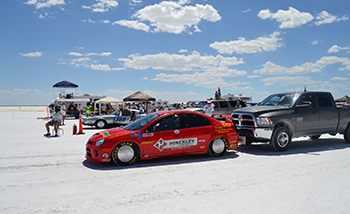
For motorsports enthusiasts, the Bonneville Salt Flats is hallowed ground. From the first speed record in 1914 through present day, thousands of records have been broken in many automobile, truck and motorcycle classes.

A SEMA-supported resolution urging the U.S. Bureau of Land Management (BLM) to restore the Bonneville Salt Flats was approved by the Utah House and Senate and signed by Gov. Gary Herbert. The resolution calls attention to the deterioration of the Bonneville Salt Flats and urges the BLM to work with the Save the Salt Coalition, Utah Alliance and other concerned stakeholders to formulate a plan to restore the Bonneville Salt Flats International Speedway. The resolution also urges the U.S. Congress to take action to restore safe racing conditions.    

Listed on the National Register of Historic Places, the Bonneville Salt Flats is an awe-inspiring geologic phenomenon. For motorsports enthusiasts, it is hallowed ground. From the first speed record in 1914 through present day, thousands of records have been broken in many automobile, truck and motorcycle classes.

Nearly all of the racing events were cancelled in 2014 and 2015 due to rain and salt surface degradation. However, there was a silver lining, as major players with a vested interest in Bonneville pledged to work together toward its restoration.

“Although concerns about deterioration at Bonneville have existed for decades, this is the first time officials representing government, industry and racers are sitting at the same table to discuss solutions,” said Doug Evans, chairman of the Save the Salt Coalition. “We are finally at the starting line in the race to save Bonneville.”

The Utah state resolution is a next step in those efforts. Although it has a broad mandate without funding, it is a clear directive that will help spur action.

“Bonneville is a national treasure,” said Louise Noeth, spokesperson for Save the Salt Coalition and Utah Alliance. “The resolution is a love letter from the people, leadership and administration of the state of Utah directing this treasure be saved.”

The Coalition and Alliance are finalizing comprehensive recommendations for restoring Bonneville. Although the goal will take many years to achieve, the starting flag is being dropped in 2016.

For more information, visit www.savethesalt.org or contact stuartg@sema.org.