Compiled by SEMA Editors
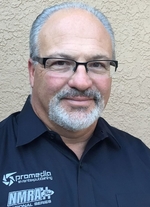
Jim Campisano |
|
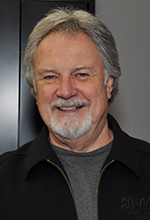
Jim Campisano Joins ProMedia Sales Team
ProMedia Events & Publishing has announced that 30-year industry veteran Jim Campisano has joined ProMedia as director of sales. Effective immediately, Campisano will work closely with the ProMedia sales staff and Race Pages editor Mike Galimi and Fastest Street Car editor Steve Baur. Campisano’s career in the automotive industry began as a copy editor in the late ’80s after a five-year stint as a sportswriter. From there, he joined the Muscle Mustangs & Fast Fords (MMFF) team as editor and editorial director, where he grew the magazine into one of the largest Ford publications in the world. During his time at MMFF, Campisano realized the need for a winter Ford-only race in a warm climate, and the “Fun Ford Weekend” series was born. Campisano campaigned an SVT Mustang Cobra project car in the Modular Motor class and it was this series that spawned the NMRA Spring Break Shootout in Bradenton, Florida—now in its 23rd year. After 13 years with MMFF, Campisano moved over to Super Chevy magazine, where he spearheaded three project car builds that were auctioned off for charity with $880,000 in proceeds going to the Armed Forces Foundation. In 2011, Campisano and his Super Chevy team were presented the Armed Forces Foundation Patriot of the Year award. Prior to joining ProMedia, Campisano worked as editorial director for RTM TV—producers of several automotive shows, such as “Engine Power,” “Detroit Muscle” and “Xtreme Off-Road.”
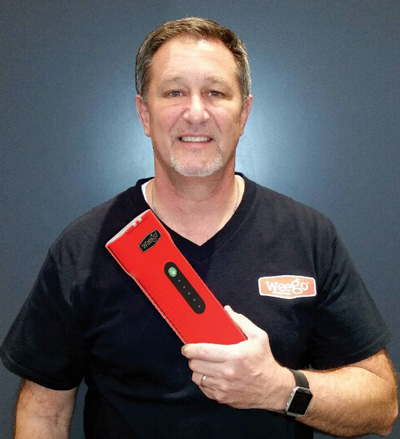
Todd Roberson |
|
Todd W. Roberson Joins Weego
Weego has hired Todd W. Roberson as the company’s new national sales manager. In this role, Roberson is responsible for business development and sales management for the automotive, marine, outdoor, powersports, e-commerce and industrial channels. Roberson’s hire reflects the growth of Weego and the company’s confidence in the future of the portable power category.
Meguiar’s Expands Partnership With Barrett-Jackson
Meguiar’s has announced it will expand its partnership with automotive auction house Barrett-Jackson. The expanded partnership will rebrand Barrett-Jackson’s staging lanes as the Meguiar’s Staging Lanes, which will appear prominently in Barrett-Jackson’s televised coverage on Discovery and Velocity networks through the 2017 auction season, including the following events:
- Barrett-Jackson Scottsdale 2017, Scottsdale, Arizona, January 14–22, 2017
- Barrett-Jackson Palm Beach 2017, West Palm Beach, Florida, April 6–8, 2017
- Barrett-Jackson Northeast 2017, Uncassville, Connecticut, June 21–24, 2017
- Barrett-Jackson Las Vegas 2017, Las Vegas, October 19–21, 2017
Standout automobiles already scheduled for the season-opening Scottsdale, Arizona, event include: Aerosmith singer Steven Tyler’s ’12 Hennessey Venom GT Spyder, Don Prudhomme’s legendary ’72 Plymouth Barracuda “Snake II” Funny Car and the historic ’60 Chevrolet Engineering Research Vehicle (CERV) 1 prototype used by Chevrolet engineer Zora Arkus-Duntov as a technological test bed for the Chevrolet Corvette.
DENSO Announces New Senior Remanufacturing Engineer
DENSO Products and Services Americas Inc. has named D.J. “Dong Ju” Park senior manager of engineering and electrical operations at its Murrieta, California, remanufacturing plant. In the newly created position, Park is responsible for all engineering and design aspects of DENSO’s remanufacturing activities, including its growth initiatives to meet increasing market demand for remanufactured products in North America. Park joins DENSO with more than 20 years of experience as an electrical and mechanical engineer in both the original equipment and aftermarket segments of the automotive industry. His specialties include rotating electrical products and reverse engineering in remanufacturing. Park also has extensive administrative experience in product development, design, process improvement and quality assurance. Prior to joining DENSO, Park worked as a product engineering manager for BorgWarner Inc., where he served as a technical lead at the corporation’s fuel-efficiency technology center in Pendleton, Indiana, which specializes in alternative energy alternators, starters and hybrid motors that combine electrical power with gasoline-fueled systems.

Steffanie Savine |
|
Marx Group Names Steffanie Savine Vice President, Sales and Accounts
Marx Group has announced the promotion of Steffanie Savine to vice president, sales and accounts. Most recently serving as marketing director and account executive, Savine has been a part of Marx Group since 2013. In her new role, Savine is responsible for supervising current accounts and recruiting new business. Her 20 years of professional experience include 14 years in the automotive industry, specializing in both aftermarket and OE. Savine has worked for Tier 1 suppliers, as well as at the agency level. She works out of the new Marx Group Detroit-area office in Birmingham, Michigan. Savine plays an active role in the automotive industry. She is a member of Women in Auto Care, formerly the Car Care Council Women’s Board (WB), and the immediate past president of the Automotive Communications Council (ACC). She served a one-year term as ACC president from 2015–2016. Savine has served on the ACC’s board of governors since 2014, and in her current board role, she is communications track chair. Before joining Marx Group, Savine worked for Fras-le North America from 2003–2013. In her last assignment, she served as the company’s marketing and sales coordinator responsible for marketing research, strategy and tactical execution.
ICI Becomes Title Sponsor For “The Lifted Life” Season 3 on the Velocity Channel
“The Lifted Life” and Golden, Colorado-based Five R Trucks have announced Innovative Creations Inc. (ICI) as the title sponsor for Season 3 of the custom truck reality show. The partnership's inception was initially spurred by a collaboration for a Season 2 episode when ICI donated a Ford Raptor to be part of a charity fundraiser for Von Miller’s (of the Denver Broncos) foundation, Von’s Vision, which raised $65,000 for Denver-area kids who need corrective eyewear. The third season of “The Lifted Life” will premiere Saturday, February 18, at 10:00 a.m. (EST). The spring series will run for six episodes featuring multiple custom builds.
Drew Dawson
|
|
Joe Dease Retires From JohnDow Industries
As part of JohnDow Industries’ (JDI) strategic and long-term transition plan, Joseph Dease, president, recently announced his retirement to JDI’s leadership and team. Dease has held his position at the company since 1990. During Dease’s tenure, JohnDow saw substantial growth from a small automotive aftermarket manufacturer in Barberton, Ohio, to a major leader in the industry. Major expansions, acquisitions and new-product introductions have become the standards under Dease’s management. As part of the firm’s succession plan, Drew Dawson, executive vice president-operations will become JohnDow’s new president. Dawson has more than 30 years in the automotive aftermarket and brings a wealth of knowledge and experience to his new position at JDI. He has been in his current position for more than two years. His professional career began in 1986 with The Goodyear Tire & Rubber Company in Boston. In 1991, he left Goodyear and became co-owner and operator of Tire Source, now a collection of six independent tire and automotive service centers in Northeastern Ohio. Dawson plans to maintain his current ownership in these Tire Source locations.

Jeff Allen |
|
HUBB Welcomes Jeff Allen as Vice President of Channel Development
HUBB Filters has announced the hiring of Jeff Allen as its new vice president of channel development. Allen will report to HUBB CEO Scott Killips and will be responsible for developing strategies for the commercial and municipal fleet channels on a national basis, along with building out the company’s wholesale distribution strategy. Before joining HUBB, Allen was director of sales and marketing for Patch Rubber Company—a Myers Industries Company. He also has experience as a national accounts manager for Advance Auto Parts, where he managed relationships with national and strategic accounts, including Goodyear, CarMax, Meineke, ARI and Jiffy Lube. In addition, as director of fleet sales and national accounts at Williams Innovation, Allen led the commercial launch of TeleSwivel to the construction, telecom, utilities, equipment rental, energy and government fleet markets.
Transom Capital Group Acquires American Driveline Systems
Transom Capital Group has announced the acquisition of American Driveline Systems (ADS) from American Capital Ltd. ADS is the franchisor of the AAMCO and Cottman Transmission & Total Car Care brands. With nearly 700 franchisee-owned and -operated locations, AAMCO and Cottman Transmission operate in 47 states and three provinces.

Dominick Wycoff |
|
Dominick Wycoff Named President of Mickey Thompson Tires & Wheels
The Board of Directors of Max-Trac Tire Co. Inc. has elected Dominick Wycoff president, effective January 1. Wycoff, former vice president of business development for Mickey Thompson Tires & Wheels, succeeds Chris Barbara as president. He is responsible for leading and executing the strategic plan to continue to profitably grow the Mickey Thompson business. Wycoff has nearly 20 years of experience in the automotive industry. Prior to joining Mickey Thompson, Wycoff enjoyed a 17-year career with Terry’s Tire Town, where he held a number of leadership positions, including regional general manager and vice president of market development. Barbara has accepted a new role as director of dealer channel sales at Cooper Tire & Rubber Company.
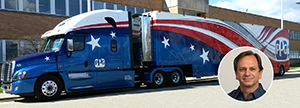
This year, PPG’s Keith MacDonald will guide the PPG show truck—a 75-ft. ’16 Freightliner Cascadia tractor-trailer rig—from coast to coast. |
|
PPG Announces 2017 Show Truck Appearance Schedule
PPG’s colorful show truck will begin its 2017 tour of America on March 10, with the Goodguys 8th Spring Nationals at WestWorld of Scottsdale, Arizona. It’s the first of 20 appearances the truck will make this year. The truck’s entire 2017 schedule of appearances include car, truck and hot-rod shows and events sponsored by the Goodguys Rod & Custom Association and other prominent automotive enthusiast groups. The show truck—a 75-ft. ’16 Freightliner Cascadia tractor-trailer rig—sports a paint scheme created by Steve Breakfield and his creative team at Motorhead Racing and Design Co., in Charlotte, North Carolina. The motif is reminiscent of the American flag’s stars and stripes. This year, PPG’s Keith MacDonald will guide the truck. A veteran driver with more than 30 years of on-the-road experience, MacDonald slides into the driver’s seat, taking over for the recently retired Chad Hook, who had been at the wheel since 1999. MacDonald will cover approximately 30,000–35,000 miles annually, steering the truck coast to coast. Visit PPG’s website to view the truck’s complete tour schedule.
Schiefer Chopshop Named Prestone Agency of Record
Prestone Products Corp. has appointed Schiefer Chopshop (SCS) as its integrated content and media agency of record. SCS was selected because of its leadership in content production, influencer engagement, digital marketing and creative strategy. The agency will be responsible for Prestone’s creative, content, social media, media buying, and TV and digital advertising. SCS will work closely with Prestone's PR agency of record, JMPR Public Relations, to execute integrated campaigns. SCS began its work with Prestone in November, launching the brand’s Facebook and Instagram accounts during the SEMA Show. SCS continued to oversee video and other social content during the 2016 Los Angeles Auto Show, at which Prestone sponsored The Garage—an area that showcased aftermarket products and services.
Monroe “Quick $30” Promotion Rewards Service Technicians for Monroe Quick-Strut Assembly Sales
Tenneco’s Monroe brand is offering service technicians a $30 Visa prepaid card incentive for each pair of qualifying Monroe Quick-Strut premium replacement assemblies sold during the Monroe “Quick $30” promotion. Until February 28, 2017, the scorecard promotion rewards service technicians for selling qualifying pairs of the all-in-one strut replacement solution. Completed scorecards and copies of sales invoices must be postmarked and mailed to Monroe promotion headquarters no later than March 31, 2017. Reward dollars are calculated based on qualifying product sales between January 1–February 28, 2017. Participants can earn up to $500 in rewards dollars through this promotion.
Have some company news you would like to share? Let us know and the news may appear in an upcoming issue of SEMA eNews. Send your items for consideration to editors@sema.org.