Thu, 03/30/2017 - 13:45

By SEMA Editors

fel pro
Team FEL-PRO’s Tulsa Technology Center from Broken Arrow, Oklahoma, came in first place with a qualifying time of 22:32.

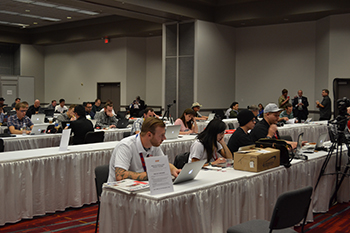
The Hot Rodders of Tomorrow (HROT) Engine Challenge’s third event of the 2017 season was held at Tarrant County College in Fort Worth, Texas, last weekend. Nine teams from four different schools competed with hopes of qualifying for the Dual National Championship, held later this year at the SEMA Show and PRI Trade Show.

At the Dual National Championship, every student who participates will have an opportunity to be awarded college scholarships between $25,000–$50,000 from five different colleges.

Two new schools participated in HROT for the first time—one team from Pontotoc Tech Center from Ada, Oklahoma, and three teams from Caddo Career & Tech Center from Shreveport, Louisiana.

Two teams qualified at the Tarrant County College Qualifier. Coming in second place was Team Be-Cool’s Jacksonville High School from Jacksonville, Arkansas, with the qualifying time of 29:09.

In first place was team FEL-PRO’s Tulsa Technology Center from Broken Arrow, Oklahoma. Their qualifying time was 22:32.

Two more Hot Rodders of Tomorrow competitions—the NMCA West Spring Nationals in Fontana, California, and the Coker Tire Chattanooga Cruise-In—will be held Saturday, April 1, giving another group of teams a chance to qualify for the National Dual Championships.

Visit www.hotroddersoftomorrow.com for more information and to view the complete results from last weekend.

Thu, 03/30/2017 - 13:45

By SEMA Editors

fel pro
Team FEL-PRO’s Tulsa Technology Center from Broken Arrow, Oklahoma, came in first place with a qualifying time of 22:32.

The Hot Rodders of Tomorrow (HROT) Engine Challenge’s third event of the 2017 season was held at Tarrant County College in Fort Worth, Texas, last weekend. Nine teams from four different schools competed with hopes of qualifying for the Dual National Championship, held later this year at the SEMA Show and PRI Trade Show.

At the Dual National Championship, every student who participates will have an opportunity to be awarded college scholarships between $25,000–$50,000 from five different colleges.

Two new schools participated in HROT for the first time—one team from Pontotoc Tech Center from Ada, Oklahoma, and three teams from Caddo Career & Tech Center from Shreveport, Louisiana.

Two teams qualified at the Tarrant County College Qualifier. Coming in second place was Team Be-Cool’s Jacksonville High School from Jacksonville, Arkansas, with the qualifying time of 29:09.

In first place was team FEL-PRO’s Tulsa Technology Center from Broken Arrow, Oklahoma. Their qualifying time was 22:32.

Two more Hot Rodders of Tomorrow competitions—the NMCA West Spring Nationals in Fontana, California, and the Coker Tire Chattanooga Cruise-In—will be held Saturday, April 1, giving another group of teams a chance to qualify for the National Dual Championships.

Visit www.hotroddersoftomorrow.com for more information and to view the complete results from last weekend.

Thu, 03/30/2017 - 13:37

supra

The Toyota Supra—a flagship sports car for the Japanese company—is expected to arrive to the market in 2018. The vehicle caught wears a little less camouflage than the prototype spied earlier on, showing the coupe’s overall contours, the massive front air intakes and the actual shape of the taillamps. This version of the car is a slightly smaller coupe with shorter overhangs and a more sharply sloped roofline compared to BMW’s side of the jointly-developed project, the Z5 roadster. There is also a small fixed rear wing at the back and a dual exhaust system, similar to the one on the GT86.

Judging by the camouflaged features up front, the production Supra will borrow the FT1 concept’s strong center nose, flanked by large air intakes. The long hood could be hiding a turbocharged BMW-sourced six-cylinder gas engine, some suggest. However, some reports also say Toyota’s engineers could install a hybrid system, as the company is currently developing a new hybrid turbo engine.

Probably the most interesting but dubious possible option comes from a 2014 report. Then, Japan’s Holiday Auto magazine reported Toyota could use a 2.0L four-cylinder turbo engine from BMW, supported by two electric motors in the front and one in the rear for a combined output of 354hp.

Regardless of what powers them, the BMW and Toyota reportedly target different audiences. The Z5 would be a pure sports car rather than the Z4’s more luxurious position. The Supra would be at the top of the Toyota brand’s lineup and could feature cutting-edge technology in addition to bold styling.

Magna Steyr is allegedly handling assembly of both models in Austria. Manufacturing reportedly starts in 2018 and that points to a debut in late 2017 or early in the following year.

supra

Photo credit: Brian Williams, SpiedBilde

Thu, 03/30/2017 - 13:37

supra

The Toyota Supra—a flagship sports car for the Japanese company—is expected to arrive to the market in 2018. The vehicle caught wears a little less camouflage than the prototype spied earlier on, showing the coupe’s overall contours, the massive front air intakes and the actual shape of the taillamps. This version of the car is a slightly smaller coupe with shorter overhangs and a more sharply sloped roofline compared to BMW’s side of the jointly-developed project, the Z5 roadster. There is also a small fixed rear wing at the back and a dual exhaust system, similar to the one on the GT86.

Judging by the camouflaged features up front, the production Supra will borrow the FT1 concept’s strong center nose, flanked by large air intakes. The long hood could be hiding a turbocharged BMW-sourced six-cylinder gas engine, some suggest. However, some reports also say Toyota’s engineers could install a hybrid system, as the company is currently developing a new hybrid turbo engine.

Probably the most interesting but dubious possible option comes from a 2014 report. Then, Japan’s Holiday Auto magazine reported Toyota could use a 2.0L four-cylinder turbo engine from BMW, supported by two electric motors in the front and one in the rear for a combined output of 354hp.

Regardless of what powers them, the BMW and Toyota reportedly target different audiences. The Z5 would be a pure sports car rather than the Z4’s more luxurious position. The Supra would be at the top of the Toyota brand’s lineup and could feature cutting-edge technology in addition to bold styling.

Magna Steyr is allegedly handling assembly of both models in Austria. Manufacturing reportedly starts in 2018 and that points to a debut in late 2017 or early in the following year.

supra

Photo credit: Brian Williams, SpiedBilde

Thu, 03/30/2017 - 13:37

supra

The Toyota Supra—a flagship sports car for the Japanese company—is expected to arrive to the market in 2018. The vehicle caught wears a little less camouflage than the prototype spied earlier on, showing the coupe’s overall contours, the massive front air intakes and the actual shape of the taillamps. This version of the car is a slightly smaller coupe with shorter overhangs and a more sharply sloped roofline compared to BMW’s side of the jointly-developed project, the Z5 roadster. There is also a small fixed rear wing at the back and a dual exhaust system, similar to the one on the GT86.

Judging by the camouflaged features up front, the production Supra will borrow the FT1 concept’s strong center nose, flanked by large air intakes. The long hood could be hiding a turbocharged BMW-sourced six-cylinder gas engine, some suggest. However, some reports also say Toyota’s engineers could install a hybrid system, as the company is currently developing a new hybrid turbo engine.

Probably the most interesting but dubious possible option comes from a 2014 report. Then, Japan’s Holiday Auto magazine reported Toyota could use a 2.0L four-cylinder turbo engine from BMW, supported by two electric motors in the front and one in the rear for a combined output of 354hp.

Regardless of what powers them, the BMW and Toyota reportedly target different audiences. The Z5 would be a pure sports car rather than the Z4’s more luxurious position. The Supra would be at the top of the Toyota brand’s lineup and could feature cutting-edge technology in addition to bold styling.

Magna Steyr is allegedly handling assembly of both models in Austria. Manufacturing reportedly starts in 2018 and that points to a debut in late 2017 or early in the following year.

supra

Photo credit: Brian Williams, SpiedBilde

Thu, 03/30/2017 - 13:37

supra

The Toyota Supra—a flagship sports car for the Japanese company—is expected to arrive to the market in 2018. The vehicle caught wears a little less camouflage than the prototype spied earlier on, showing the coupe’s overall contours, the massive front air intakes and the actual shape of the taillamps. This version of the car is a slightly smaller coupe with shorter overhangs and a more sharply sloped roofline compared to BMW’s side of the jointly-developed project, the Z5 roadster. There is also a small fixed rear wing at the back and a dual exhaust system, similar to the one on the GT86.

Judging by the camouflaged features up front, the production Supra will borrow the FT1 concept’s strong center nose, flanked by large air intakes. The long hood could be hiding a turbocharged BMW-sourced six-cylinder gas engine, some suggest. However, some reports also say Toyota’s engineers could install a hybrid system, as the company is currently developing a new hybrid turbo engine.

Probably the most interesting but dubious possible option comes from a 2014 report. Then, Japan’s Holiday Auto magazine reported Toyota could use a 2.0L four-cylinder turbo engine from BMW, supported by two electric motors in the front and one in the rear for a combined output of 354hp.

Regardless of what powers them, the BMW and Toyota reportedly target different audiences. The Z5 would be a pure sports car rather than the Z4’s more luxurious position. The Supra would be at the top of the Toyota brand’s lineup and could feature cutting-edge technology in addition to bold styling.

Magna Steyr is allegedly handling assembly of both models in Austria. Manufacturing reportedly starts in 2018 and that points to a debut in late 2017 or early in the following year.

supra

Photo credit: Brian Williams, SpiedBilde

Thu, 03/30/2017 - 13:37

supra

The Toyota Supra—a flagship sports car for the Japanese company—is expected to arrive to the market in 2018. The vehicle caught wears a little less camouflage than the prototype spied earlier on, showing the coupe’s overall contours, the massive front air intakes and the actual shape of the taillamps. This version of the car is a slightly smaller coupe with shorter overhangs and a more sharply sloped roofline compared to BMW’s side of the jointly-developed project, the Z5 roadster. There is also a small fixed rear wing at the back and a dual exhaust system, similar to the one on the GT86.

Judging by the camouflaged features up front, the production Supra will borrow the FT1 concept’s strong center nose, flanked by large air intakes. The long hood could be hiding a turbocharged BMW-sourced six-cylinder gas engine, some suggest. However, some reports also say Toyota’s engineers could install a hybrid system, as the company is currently developing a new hybrid turbo engine.

Probably the most interesting but dubious possible option comes from a 2014 report. Then, Japan’s Holiday Auto magazine reported Toyota could use a 2.0L four-cylinder turbo engine from BMW, supported by two electric motors in the front and one in the rear for a combined output of 354hp.

Regardless of what powers them, the BMW and Toyota reportedly target different audiences. The Z5 would be a pure sports car rather than the Z4’s more luxurious position. The Supra would be at the top of the Toyota brand’s lineup and could feature cutting-edge technology in addition to bold styling.

Magna Steyr is allegedly handling assembly of both models in Austria. Manufacturing reportedly starts in 2018 and that points to a debut in late 2017 or early in the following year.

supra

Photo credit: Brian Williams, SpiedBilde

Thu, 03/30/2017 - 13:37

supra

The Toyota Supra—a flagship sports car for the Japanese company—is expected to arrive to the market in 2018. The vehicle caught wears a little less camouflage than the prototype spied earlier on, showing the coupe’s overall contours, the massive front air intakes and the actual shape of the taillamps. This version of the car is a slightly smaller coupe with shorter overhangs and a more sharply sloped roofline compared to BMW’s side of the jointly-developed project, the Z5 roadster. There is also a small fixed rear wing at the back and a dual exhaust system, similar to the one on the GT86.

Judging by the camouflaged features up front, the production Supra will borrow the FT1 concept’s strong center nose, flanked by large air intakes. The long hood could be hiding a turbocharged BMW-sourced six-cylinder gas engine, some suggest. However, some reports also say Toyota’s engineers could install a hybrid system, as the company is currently developing a new hybrid turbo engine.

Probably the most interesting but dubious possible option comes from a 2014 report. Then, Japan’s Holiday Auto magazine reported Toyota could use a 2.0L four-cylinder turbo engine from BMW, supported by two electric motors in the front and one in the rear for a combined output of 354hp.

Regardless of what powers them, the BMW and Toyota reportedly target different audiences. The Z5 would be a pure sports car rather than the Z4’s more luxurious position. The Supra would be at the top of the Toyota brand’s lineup and could feature cutting-edge technology in addition to bold styling.

Magna Steyr is allegedly handling assembly of both models in Austria. Manufacturing reportedly starts in 2018 and that points to a debut in late 2017 or early in the following year.

supra

Photo credit: Brian Williams, SpiedBilde

Thu, 03/30/2017 - 13:37

supra

The Toyota Supra—a flagship sports car for the Japanese company—is expected to arrive to the market in 2018. The vehicle caught wears a little less camouflage than the prototype spied earlier on, showing the coupe’s overall contours, the massive front air intakes and the actual shape of the taillamps. This version of the car is a slightly smaller coupe with shorter overhangs and a more sharply sloped roofline compared to BMW’s side of the jointly-developed project, the Z5 roadster. There is also a small fixed rear wing at the back and a dual exhaust system, similar to the one on the GT86.

Judging by the camouflaged features up front, the production Supra will borrow the FT1 concept’s strong center nose, flanked by large air intakes. The long hood could be hiding a turbocharged BMW-sourced six-cylinder gas engine, some suggest. However, some reports also say Toyota’s engineers could install a hybrid system, as the company is currently developing a new hybrid turbo engine.

Probably the most interesting but dubious possible option comes from a 2014 report. Then, Japan’s Holiday Auto magazine reported Toyota could use a 2.0L four-cylinder turbo engine from BMW, supported by two electric motors in the front and one in the rear for a combined output of 354hp.

Regardless of what powers them, the BMW and Toyota reportedly target different audiences. The Z5 would be a pure sports car rather than the Z4’s more luxurious position. The Supra would be at the top of the Toyota brand’s lineup and could feature cutting-edge technology in addition to bold styling.

Magna Steyr is allegedly handling assembly of both models in Austria. Manufacturing reportedly starts in 2018 and that points to a debut in late 2017 or early in the following year.

supra

Photo credit: Brian Williams, SpiedBilde

Thu, 03/30/2017 - 13:27

By Chad Simon

More than 2,000 businesses in the specialty-equipment market have already submitted booth applications, and are preparing to connect with an annual audience that includes more than 70,000 qualified buyers and 3,500 qualified media attendees.

The deadline to submit SEMA Show Booth Applications to participate in the Priority Selection Process—where companies choose a Show-floor location based on exhibitor seniority—is March 31.

Companies that submit 2017 SEMA Show Booth Applications after the March 31 deadline will select floor space when the Priority Selection Process concludes, May 19, on a space-availability basis. More than 2,000 businesses in the specialty-equipment market have already submitted booth applications, and are preparing to connect with an annual audience that includes more than 70,000 qualified buyers and 3,500 qualified media attendees.

The selection process, beginning May 1, provides exhibitors with the opportunity to secure the best location for their Show display.

On April 25, each company will be contacted via email with a booth selection date and time range. The email will be sent to the person listed as the exhibitor’s primary SEMA Show contact.

How To Be Prepared. About an hour prior to their selection time, exhibitors are encouraged to prepare by viewing the 2017 Show’s online floorpan. Updated every 30 minutes, exhibitors can see as the Show begins to take shape and monitor their desired section to gain a general idea of where they want to display.

When Check Email. On April 25, each primary contact should take time to check their email, including their “junk” folders. Companies that have not received a correspondence by April 27, or that want to change the primary Show contact listed on the application should email sales@sema.org or call 909-396-0289.

Make the Pick. During the exhibitor’s time to pick, a SEMA Show account representative will call the primary SEMA Show contact and help locate and assign the exhibit space that best suits the company’s needs.

The 2017 SEMA Show is scheduled for Tuesday–Friday, October 31–November 3, in Las Vegas. There’s still time to participate in the Priority Space Selection Process. Secure booth space for 2017 now by visiting www.SEMAShow.com/buyabooth.