Thu, 11/01/2018 - 14:31

By SEMA Editors

EatonEaton’s new aftermarket performance ring-and pinion sets increase horsepower, performance.

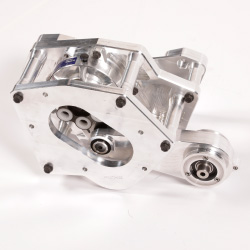
Eaton has introduced a new automotive aftermarket performance ring-and-pinion product line that provides vehicle enthusiasts the opportunity to choose from a variety of options and configurations to increase vehicle performance and improve horsepower. The gear sets come in two varieties—street and competition—and can be ordered with an optional isotropic Super Finish process, which coats the gears with a highly polished surface engineered to reduce friction, improve wear resistance, increase oil retention and eliminate the need for break-in. The reduction in friction can increase horsepower from 3% to 5%.

Eaton Performance ring-and-pinion gear sets are available in a wide range of axle ratios for Chrysler, Dana, Ford and General Motors axles.

All Eaton ring-and-pinion gear sets are made in the United States and feature:

  • Computer Numerical Controlled (CNC) cut teeth that improve gear meshing, reduce stress and ensure smooth engagement.
  • Rolled splines for additional tooth strength and longer life.
  • Computer controlled heat-treated steel for added durability.

Street series gear sets are made from high-quality 8620 or 4320 steel that provides long life under daily-use conditions, while competition series gear sets are composed of high-quality 9310 steel for the higher-impact resistance needed when competing at the track. The optional Super Finish is available on all Eaton ring-and-pinion gear sets.

To celebrate the releases of its new product line, Eaton is offering a mail-in rebate for all Eaton Performance product purchases made between November 1 and December 31, 2018.

For details on the rebate, and a complete list of available applications and part numbers, consumers can visit their local Eaton Performance distributor, go to www.eatonpartsonline.com/ringandpinion or call 800-328-3850.

Thu, 11/01/2018 - 14:00

By SEMA Editors

hunterThe SmartWeight Pro is equipped with a no-touch wheel measurement system that allows the technician to determine weight placement using laser vision, simplifying the balancing process.

Hunter Engineering Company showcased its SmartWeight Pro at the 2018 SEMA Show in its booth #41013. SmartWeight Pro is Hunter’s latest intuitive, mid-range wheel balancer that offers upscale, premium features.

The wheel balancer is equipped with a no-touch wheel-measurement system that allows the technician to determine weight placement using laser vision, simplifying the balancing process. Hunter’s patented software—SmartWeight technology—is designed to help improve balance, minimize weight usage and maximize productivity.

SmartWeight Pro offers a user-friendly interface with single-knob navigation, 3-D graphics, and on-the-job training that covers basic techniques and advanced procedures in multiple languages. Additional key features include CenteringCheck, which ensures proper centering, and a space-saving hood design that allows the machine to be installed against the wall, maximizing shop space.


Thu, 11/01/2018 - 14:00

By SEMA Editors

hunterThe SmartWeight Pro is equipped with a no-touch wheel measurement system that allows the technician to determine weight placement using laser vision, simplifying the balancing process.

Hunter Engineering Company showcased its SmartWeight Pro at the 2018 SEMA Show in its booth #41013. SmartWeight Pro is Hunter’s latest intuitive, mid-range wheel balancer that offers upscale, premium features.

The wheel balancer is equipped with a no-touch wheel-measurement system that allows the technician to determine weight placement using laser vision, simplifying the balancing process. Hunter’s patented software—SmartWeight technology—is designed to help improve balance, minimize weight usage and maximize productivity.

SmartWeight Pro offers a user-friendly interface with single-knob navigation, 3-D graphics, and on-the-job training that covers basic techniques and advanced procedures in multiple languages. Additional key features include CenteringCheck, which ensures proper centering, and a space-saving hood design that allows the machine to be installed against the wall, maximizing shop space.


Thu, 11/01/2018 - 13:47

By SEMA Editors

HondaThis year’s Type R comes in 200 lbs. lighter compared to last year’s car.

Following last year’s successful run in showroom stock form, the Team Honda Research West (THR-W) racing team announced its return to the 25 Hours of Thunderhill this year with an upgraded Honda Civic Type R.

The vehicle, on display in American Honda Motor Co. booth #24887 in Central Hall, benefits from numerous race-bred improvements, including 380hp, race-ready brakes and suspension, and engine modifications, such as an Injen custom intake system, Hondata ECU tuning and a racing down pipe and custom titanium exhaust system by RV-6.

New aerodynamics include a THR-W front splitter, a Honda Genuine Accessories full carbon rear wing and Seibon carbon-fiber hood and hatch. This year’s Type R comes in 200 lbs. lighter compared to last year’s car.


Thu, 11/01/2018 - 13:47

By SEMA Editors

HondaThis year’s Type R comes in 200 lbs. lighter compared to last year’s car.

Following last year’s successful run in showroom stock form, the Team Honda Research West (THR-W) racing team announced its return to the 25 Hours of Thunderhill this year with an upgraded Honda Civic Type R.

The vehicle, on display in American Honda Motor Co. booth #24887 in Central Hall, benefits from numerous race-bred improvements, including 380hp, race-ready brakes and suspension, and engine modifications, such as an Injen custom intake system, Hondata ECU tuning and a racing down pipe and custom titanium exhaust system by RV-6.

New aerodynamics include a THR-W front splitter, a Honda Genuine Accessories full carbon rear wing and Seibon carbon-fiber hood and hatch. This year’s Type R comes in 200 lbs. lighter compared to last year’s car.


Thu, 11/01/2018 - 13:06

By SEMA Editors

MoparThe ’68 Dodge “Super Charger” Concept is adapted to accommodate the Hellephant engine, enabling the car to slam 1,000 hp to the pavement through a stock T-6060 manual six-speed Dodge Challenger SRT Hellcat transmission.

Mopar revealed a brand-new HEMI-engine-powered “Hellephant” 426 Supercharged Mopar Crate HEMI engine, which turns the crank at 1,000 hp and 950 lb.-ft. of torque, at its press conference during the 2018 SEMA Show. The press briefing also included the unveiling of the ’68 Dodge “Super Charger” Concept, which highlights the Hellephant 426 Supercharged Crate HEMI engine assembly and kit.

The Hellephant engine hits the 1,000hp mark via bulked-up displacement, with 4 in. of stroke and bore specs at 4.125 in. An improved supercharger with a high-efficiency rotor is mounted on the all-aluminum block, which provides huge weight savings to keep the Hellephant light. The all-aluminum block, used in Mopar Dodge Challenger Drag Pak race vehicles that dominated the 2018 NHRA Factory Stock Showdown class, was configured for the street in close collaboration with Mopar and engineers from the motorsports world.

The engine and kit’s Hellephant logo and name call out the 426 HEMI engine, first introduced in ’64 and nicknamed the “elephant” engine for its power and size, as well as the 707hp Mopar “Hellcrate” engine kit, revealed at last year’s SEMA Show.

The complete engine assembly includes a water pump, flywheel, front sump oil pan, supercharger with throttle body, fuel injectors and coil packs. The first-ever 1,000hp crate engine assembly offered by an OEM can be paired with the Mopar Hellephant 426 Supercharged Mopar Crate HEMI Engine Kit for relatively simple plug-and-play by experienced installers. The engine assembly and kit are designed for installation on pre-’76 street and off-road vehicles.

Additional Hellephant 426 Supercharged Mopar Crate HEMI engine features include valve covers imported from the Dodge Challenger SRT Hellcat Redeye and valvetrain, valves, locks and retainers pulled from the Dodge Challenger SRT Demon. The engine build includes a special high-lift cam and custom-forged pistons. The Hellephant 426 Supercharged Mopar Crate HEMI engine kit includes a powertrain control module (PCM), power distribution center, engine wiring harness, chassis harness, accelerator pedal, ground jumper, oxygen sensors, charge air temperature sensors, fuel pump control module and cam bus interface device. 

As with the Hellcrate engine, Mopar will also offer an essential Front End Accessory Drive (FEAD) kit, which includes an alternator, power-steering pump, belts, pulleys and more, and is among additional engine accessory hardware components available to assist in installing the Hellephant.

The Hellephant 426 Supercharged Mopar Crate HEMI engine assembly and kit will be available in the first quarter of 2019. 

’68 Dodge “Super Charger” Concept

The ’68 Dodge Charger is reimagined with modern elements from the current Dodge Charger SRT and the Dodge Challenger SRT lineup to create a unique package for showcasing the Mopar brand’s new Hellephant 426 Supercharged Mopar Crate HEMI engine and kit.

The ’68 Dodge “Super Charger” Concept is adapted to accommodate the Hellephant engine, enabling the car to slam 1,000 hp to the pavement through a stock T-6060 manual six-speed Dodge Challenger SRT Hellcat transmission.

The custom De Grigio Grey Metallic classic ’68 Dodge Charger, which is marking its 50th anniversary in 2018, feeds the Hellephant fresh air through a supersized hood scoop modeled on that of the Dodge Challenger SRT Demon. The hood features fiberglass construction on the outside with inner-steel construction inside carried over from the original vehicle. The ’68 Charger’s pop-up headlamp design is tweaked to plant Dodge Challenger SRT Hellcat headlamps permanently behind the grille. The original’s door handles and drip rails are shaved away, creating a clean, streamlined appearance. Front door vent windows are removed and replaced with a one-piece side glass. The ’71 Duster mirrors add a more modern appearance.

The ’68 Dodge Super Charge” Concept assumes a wide body stance due to front and rear fiberglass wheel flares painted in the De Grigio Grey Metallic body color. The front wheels push forward 2 in. to accommodate the flares and shorten the Charger’s overhang, extending the classic’s wheelbase from 117 in. to 119 in. Front wheels are stock 20x11-in. Devil’s rims pulled from the Challenger SRT Hellcat, while the rears are upsized 21x12-in. custom-milled aluminum Devil’s wheels. The body drops 2.5 in. in the rear and 3.5 in. in the front to hug the pavement. Six-piston Brembos deliver a stopping-power advantage over the ’68 brakes.

Custom fiberglass front and rear bumpers are flushed up and shortened cross-car to provide an integrated design. The custom fiberglass front chin splitter takes influence from the Demon, while the custom rear spoiler is inspired by the modern Charger R/T. The trunk key cylinder lock is shaved and the Satin Black fuel door embellished with a custom-milled aluminum “Hellephant” medallion. Vehicle graphics and badging are Satin Black vinyl decals, including the Hellephant logo on the front fenders, “Super Charger” badging above the doors and classic tail stripes at the rear.
The lower exhaust tips are eliminated and replaced with Alfa Romeo Stelvio 5-in. dual-walled exhaust tips re-engineered to run through the taillamp housing. The brake lights have been reconfigured with LED lights that glow around the exhaust tips.

Inside, door panels and interior trim are Satin Black with the Hellephant milled medallion applied on the upper door panels. The Dodge Viper steering wheel also carries the Hellephant medallion at its center. The instrument panel insert is the same De Grigio Grey Metallic body color and the dash is customized with a full array of Mopar gauges.

The body-color center console holds a manual shifter from the Dodge Challenger SRT Hellcat, as well as the ignition button and toggle switches for the headlamps, wipers, fog lights and hazard lights. The stock front seats have been replaced with Dodge Viper seats re-wrapped in Alcantara leather accented with red stitching and are fitted with four-point Sabelt black racing harnesses. The Dodge Challenger SRT Demon seat delete option opens up the rear and also sheds weight while making space for a custom 2-in. roll cage designed to follow the profile and harmonize with the shape of the day light opening (DLO). A Challenger SRT Demon net allows for storage of racing equipment, such as helmets and gloves. A black Challenger SRT Hellcat carpet covers the rear of the interior, while the front features custom floor mats modified from the current Charger SRT and Mopar pedal kits for the Challenger.

Thu, 11/01/2018 - 13:06

By SEMA Editors

MoparThe ’68 Dodge “Super Charger” Concept is adapted to accommodate the Hellephant engine, enabling the car to slam 1,000 hp to the pavement through a stock T-6060 manual six-speed Dodge Challenger SRT Hellcat transmission.

Mopar revealed a brand-new HEMI-engine-powered “Hellephant” 426 Supercharged Mopar Crate HEMI engine, which turns the crank at 1,000 hp and 950 lb.-ft. of torque, at its press conference during the 2018 SEMA Show. The press briefing also included the unveiling of the ’68 Dodge “Super Charger” Concept, which highlights the Hellephant 426 Supercharged Crate HEMI engine assembly and kit.

The Hellephant engine hits the 1,000hp mark via bulked-up displacement, with 4 in. of stroke and bore specs at 4.125 in. An improved supercharger with a high-efficiency rotor is mounted on the all-aluminum block, which provides huge weight savings to keep the Hellephant light. The all-aluminum block, used in Mopar Dodge Challenger Drag Pak race vehicles that dominated the 2018 NHRA Factory Stock Showdown class, was configured for the street in close collaboration with Mopar and engineers from the motorsports world.

The engine and kit’s Hellephant logo and name call out the 426 HEMI engine, first introduced in ’64 and nicknamed the “elephant” engine for its power and size, as well as the 707hp Mopar “Hellcrate” engine kit, revealed at last year’s SEMA Show.

The complete engine assembly includes a water pump, flywheel, front sump oil pan, supercharger with throttle body, fuel injectors and coil packs. The first-ever 1,000hp crate engine assembly offered by an OEM can be paired with the Mopar Hellephant 426 Supercharged Mopar Crate HEMI Engine Kit for relatively simple plug-and-play by experienced installers. The engine assembly and kit are designed for installation on pre-’76 street and off-road vehicles.

Additional Hellephant 426 Supercharged Mopar Crate HEMI engine features include valve covers imported from the Dodge Challenger SRT Hellcat Redeye and valvetrain, valves, locks and retainers pulled from the Dodge Challenger SRT Demon. The engine build includes a special high-lift cam and custom-forged pistons. The Hellephant 426 Supercharged Mopar Crate HEMI engine kit includes a powertrain control module (PCM), power distribution center, engine wiring harness, chassis harness, accelerator pedal, ground jumper, oxygen sensors, charge air temperature sensors, fuel pump control module and cam bus interface device. 

As with the Hellcrate engine, Mopar will also offer an essential Front End Accessory Drive (FEAD) kit, which includes an alternator, power-steering pump, belts, pulleys and more, and is among additional engine accessory hardware components available to assist in installing the Hellephant.

The Hellephant 426 Supercharged Mopar Crate HEMI engine assembly and kit will be available in the first quarter of 2019. 

’68 Dodge “Super Charger” Concept

The ’68 Dodge Charger is reimagined with modern elements from the current Dodge Charger SRT and the Dodge Challenger SRT lineup to create a unique package for showcasing the Mopar brand’s new Hellephant 426 Supercharged Mopar Crate HEMI engine and kit.

The ’68 Dodge “Super Charger” Concept is adapted to accommodate the Hellephant engine, enabling the car to slam 1,000 hp to the pavement through a stock T-6060 manual six-speed Dodge Challenger SRT Hellcat transmission.

The custom De Grigio Grey Metallic classic ’68 Dodge Charger, which is marking its 50th anniversary in 2018, feeds the Hellephant fresh air through a supersized hood scoop modeled on that of the Dodge Challenger SRT Demon. The hood features fiberglass construction on the outside with inner-steel construction inside carried over from the original vehicle. The ’68 Charger’s pop-up headlamp design is tweaked to plant Dodge Challenger SRT Hellcat headlamps permanently behind the grille. The original’s door handles and drip rails are shaved away, creating a clean, streamlined appearance. Front door vent windows are removed and replaced with a one-piece side glass. The ’71 Duster mirrors add a more modern appearance.

The ’68 Dodge Super Charge” Concept assumes a wide body stance due to front and rear fiberglass wheel flares painted in the De Grigio Grey Metallic body color. The front wheels push forward 2 in. to accommodate the flares and shorten the Charger’s overhang, extending the classic’s wheelbase from 117 in. to 119 in. Front wheels are stock 20x11-in. Devil’s rims pulled from the Challenger SRT Hellcat, while the rears are upsized 21x12-in. custom-milled aluminum Devil’s wheels. The body drops 2.5 in. in the rear and 3.5 in. in the front to hug the pavement. Six-piston Brembos deliver a stopping-power advantage over the ’68 brakes.

Custom fiberglass front and rear bumpers are flushed up and shortened cross-car to provide an integrated design. The custom fiberglass front chin splitter takes influence from the Demon, while the custom rear spoiler is inspired by the modern Charger R/T. The trunk key cylinder lock is shaved and the Satin Black fuel door embellished with a custom-milled aluminum “Hellephant” medallion. Vehicle graphics and badging are Satin Black vinyl decals, including the Hellephant logo on the front fenders, “Super Charger” badging above the doors and classic tail stripes at the rear.
The lower exhaust tips are eliminated and replaced with Alfa Romeo Stelvio 5-in. dual-walled exhaust tips re-engineered to run through the taillamp housing. The brake lights have been reconfigured with LED lights that glow around the exhaust tips.

Inside, door panels and interior trim are Satin Black with the Hellephant milled medallion applied on the upper door panels. The Dodge Viper steering wheel also carries the Hellephant medallion at its center. The instrument panel insert is the same De Grigio Grey Metallic body color and the dash is customized with a full array of Mopar gauges.
The body-color center console holds a manual shifter from the Dodge Challenger SRT Hellcat, as well as the ignition button and toggle switches for the headlamps, wipers, fog lights and hazard lights. The stock front seats have been replaced with Dodge Viper seats re-wrapped in Alcantara leather accented with red stitching and are fitted with four-point Sabelt black racing harnesses. The Dodge Challenger SRT Demon seat delete option opens up the rear and also sheds weight while making space for a custom 2-in. roll cage designed to follow the profile and harmonize with the shape of the day light opening (DLO). A Challenger SRT Demon net allows for storage of racing equipment, such as helmets and gloves. A black Challenger SRT Hellcat carpet covers the rear of the interior, while the front features custom floor mats modified from the current Charger SRT and Mopar pedal kits for the Challenger.

Thu, 11/01/2018 - 11:06

By SEMA Editors

FordSpeedKore Performance Group worked with multi-platinum country music superstar Brantley Gilbert for its new Ford F-150 project, which debuted in the Ford booth at the 2018 SEMA Show.

SpeedKore Performance Group worked with multi-platinum country music superstar Brantley Gilbert for its new Ford F-150 project, which debuted at the 2018 SEMA Show. The relationship formed when SpeedKore president Jim Kacmarcik, who is also a partner in Given Music Publishing with Cindy Owen, was introduced to Scott Borchetta, president/CEO of Big Machine Label Group. 

Known for its pro-touring conversions of early-model musclecars and lightweight carbon-fiber body conversions for modern performance cars, such as the Ford Mustang and Dodge Challenger series, SpeedKore participated in its first-ever truck build, which was first revealed to Gilbert at a special pop-up concert October 14, at Bridgestone Arena in Nashville, Tennessee.

Modifying the F-150 started with the SpeedKore design team, who created a more aggressive appearance. Their renderings were transformed into CAD data, which led to machined patterns and molds for the pre-preg carbon-fiber body pieces. These included the SpeedKore carbon-fiber fenders, front spoiler and splitter. The same aerospace-grade material was used for the mirror covers, brake ducts, cab panels and tailgate applique. Even the door and tailgate handles were reproduced in carbon fiber, as were the tips for the Ford Performance exhaust system.

Once all the parts were pulled from the SpeedKore autoclave and fitted to the ’18 Ford F-150, the truck went into the SpeedKore paint booth for its two-tone PPG charcoal finish and clearcoat over the exposed carbon fiber.

Other exterior upgrades include signature SpeedKore illuminated badging. This technique was previously seen in the carbon fiber on the company’s Hellcat conversions and has now been applied to the badging on the F-150 as well.

Custom touches include Gilbert’s name spelled out in billet lettering on the tailgate as well as his logo on the doors and leather seats. The cargo bed features a custom aluminum guitar and amp rack. 

The custom F-150 also features a Ford Performance/Roush supercharger and cold-air intake on the 5.0L V8 engine, plus a Ford Performance exhaust system. The truck is fully equipped with an upgraded brake package, suspension and wheels. This includes stopping ability provided by Brembo BM-8 eight-piston calipers with 16.2-in. drilled rotors up front, and four-piston GT rear calipers with 15-in. drilled rotors. High-speed stability has been enhanced by a MaxTrac lowering kit using drop spindles and a rear spring flip kit as well as Crown Suspension front springs. It allowed the truck to be lowered 5 in. front and 7 in. rear to fully exploit the 305/40 R22 Pirelli Scorpion tires fitted to 22x10-in. HRE TR105 forged, monoblock wheels at all four corners. The wheels were finished in metallic bronze to contrast the paintwork and harmonize with the custom interior.

The new upholstery features Bomber distressed European coffee brown leather with French stitching and carbon-fiber highlights. It was created by Gabe’s Custom Interiors.

The SpeedKore Ford F-150 can be found in the main Ford booth #22000 in Central Hall.

Thu, 11/01/2018 - 11:06

By SEMA Editors

FordSpeedKore Performance Group worked with multi-platinum country music superstar Brantley Gilbert for its new Ford F-150 project, which debuted in the Ford booth at the 2018 SEMA Show.

SpeedKore Performance Group worked with multi-platinum country music superstar Brantley Gilbert for its new Ford F-150 project, which debuted at the 2018 SEMA Show. The relationship formed when SpeedKore president Jim Kacmarcik, who is also a partner in Given Music Publishing with Cindy Owen, was introduced to Scott Borchetta, president/CEO of Big Machine Label Group. 

Known for its pro-touring conversions of early-model musclecars and lightweight carbon-fiber body conversions for modern performance cars, such as the Ford Mustang and Dodge Challenger series, SpeedKore participated in its first-ever truck build, which was first revealed to Gilbert at a special pop-up concert October 14, at Bridgestone Arena in Nashville, Tennessee.

Modifying the F-150 started with the SpeedKore design team, who created a more aggressive appearance. Their renderings were transformed into CAD data, which led to machined patterns and molds for the pre-preg carbon-fiber body pieces. These included the SpeedKore carbon-fiber fenders, front spoiler and splitter. The same aerospace-grade material was used for the mirror covers, brake ducts, cab panels and tailgate applique. Even the door and tailgate handles were reproduced in carbon fiber, as were the tips for the Ford Performance exhaust system.

Once all the parts were pulled from the SpeedKore autoclave and fitted to the ’18 Ford F-150, the truck went into the SpeedKore paint booth for its two-tone PPG charcoal finish and clearcoat over the exposed carbon fiber.

Other exterior upgrades include signature SpeedKore illuminated badging. This technique was previously seen in the carbon fiber on the company’s Hellcat conversions and has now been applied to the badging on the F-150 as well.

Custom touches include Gilbert’s name spelled out in billet lettering on the tailgate as well as his logo on the doors and leather seats. The cargo bed features a custom aluminum guitar and amp rack. 

The custom F-150 also features a Ford Performance/Roush supercharger and cold-air intake on the 5.0L V8 engine, plus a Ford Performance exhaust system. The truck is fully equipped with an upgraded brake package, suspension and wheels. This includes stopping ability provided by Brembo BM-8 eight-piston calipers with 16.2-in. drilled rotors up front, and four-piston GT rear calipers with 15-in. drilled rotors. High-speed stability has been enhanced by a MaxTrac lowering kit using drop spindles and a rear spring flip kit as well as Crown Suspension front springs. It allowed the truck to be lowered 5 in. front and 7 in. rear to fully exploit the 305/40 R22 Pirelli Scorpion tires fitted to 22x10-in. HRE TR105 forged, monoblock wheels at all four corners. The wheels were finished in metallic bronze to contrast the paintwork and harmonize with the custom interior.

The new upholstery features Bomber distressed European coffee brown leather with French stitching and carbon-fiber highlights. It was created by Gabe’s Custom Interiors.

The SpeedKore Ford F-150 can be found in the main Ford booth #22000 in Central Hall.

Thu, 11/01/2018 - 11:05
 
Group Vice President, Toyota Division Marketing Ed Laukes talks about introducing the Tundra Pie Pro at the 2018 SEMA Show.