Sun, 09/01/2019 - 13:06

SEMA News—September 2019

EVENTS

By SEMA Editors

Managing Media at the SEMA Show

Media
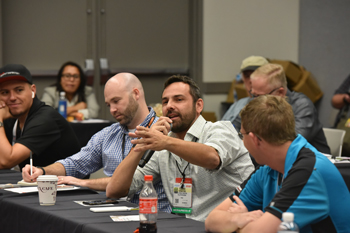
More than 3,000 members of the media will attend the 2019 SEMA Show. Larger press conferences such as this one require a great deal of planning. Fortunately, there are simpler opportunities to engage with content producers.

More than 3,000 members of the media will attend the 2019 SEMA Show. They will represent all manner of publications—large and small, domestic and international, printed and electronic—and can sometimes provide a meaningful boost to a new-product launch or a brand’s image. In a recent survey, in fact, 42% of exhibitors told us that they measure success based on media exposure from the Show. If you’re one of those exhibitors, here are some best-practices tips for keeping your media interactions productive and efficient.

Have a Press Kit Ready: One key to managing media inquiries is to prepare product news in advance. Your media kit should consist of high-resolution images of your products along with descriptions, contact information, and a brief company description. (Video clips are appropriate for electronic media.) Most editorial workers these days seem to prefer that this information be supplied on a flash drive. The SEMA Media Center, which will be located in room S219 on the Skybridge of the Las Vegas Convention Center, offers a free place for exhibitors to showcase media kits with easy access for content generators to browse.

New Products Showcase
In addition to attracting buyers, participation in the New Products Showcase also functions to bring media to your booth—and may result in winning a new-product award.

Enter the New Products Showcase: In addition to serving as a magnet for buyers, the New Products Showcase is an ideal way to attract media attention. Every product is professionally photographed and posted to a searchable, media-accessible webpage, which makes for an easy shortcut to use by writers and editors. Entering a product into the New Products Showcase also opens the door to awards, including the Global Media Awards that are specifically aimed at international media.

Invite Key Media: Scheduling media visits in advance can allow exhibitors to maximize the opportunity to promote while controlling the amount of time devoted to media attention. While it never hurts to provide a bit of hospitality such as a snack, water or a branded trinket, the primary purpose should be to provide the media attendee with a significant, newsworthy opportunity that is relevant to his/her publication, ideally prepared in advance with your press kit on a thumb drive. Consider offering exclusive news to journalists who reach a key audience.

Media
For TORA (formerly LTAA) members, there is a Monday afternoon media event that allows exhibitors to engage media members. These high-quality conversations can be very productive, as they are likely to be less rushed than booth interactions during a busy Show. 

Post to the Exhibitor Press Releases Page: Another way to build pre-Show media awareness is to post Show-related announcements to the free media bulletin board at www.SEMAShow.com/press. The board is widely viewed by media attending the show as a way to discover products, events and vehicles that may be right for their publications.

Build Your Media List: Especially if you are new to the industry, collect business cards and contact info from your media visitors for future use. Many writers and content generators move from one publication to another, so it’s best to try to establish personal relationships with as many as possible. Keep notes of your brief conversations, and follow up when you return to your office.

Exhibit Monday Media Day: For members of the Truck & Off-Road Alliance (TORA, formerly the Light Truck Accessories Alliance), there is a Monday afternoon media event that allows exhibitors to engage media members. These high-quality conversations can be very productive, as they are likely to be less rushed than booth interactions during a busy Show. Interested exhibitors should contact TORA select committee members for details (visit www.sema.org/tora).

Sun, 09/01/2019 - 13:06

SEMA News—September 2019

EVENTS

By SEMA Editors

Managing Media at the SEMA Show

Media
More than 3,000 members of the media will attend the 2019 SEMA Show. Larger press conferences such as this one require a great deal of planning. Fortunately, there are simpler opportunities to engage with content producers.

More than 3,000 members of the media will attend the 2019 SEMA Show. They will represent all manner of publications—large and small, domestic and international, printed and electronic—and can sometimes provide a meaningful boost to a new-product launch or a brand’s image. In a recent survey, in fact, 42% of exhibitors told us that they measure success based on media exposure from the Show. If you’re one of those exhibitors, here are some best-practices tips for keeping your media interactions productive and efficient.

Have a Press Kit Ready: One key to managing media inquiries is to prepare product news in advance. Your media kit should consist of high-resolution images of your products along with descriptions, contact information, and a brief company description. (Video clips are appropriate for electronic media.) Most editorial workers these days seem to prefer that this information be supplied on a flash drive. The SEMA Media Center, which will be located in room S219 on the Skybridge of the Las Vegas Convention Center, offers a free place for exhibitors to showcase media kits with easy access for content generators to browse.

New Products Showcase
In addition to attracting buyers, participation in the New Products Showcase also functions to bring media to your booth—and may result in winning a new-product award.

Enter the New Products Showcase: In addition to serving as a magnet for buyers, the New Products Showcase is an ideal way to attract media attention. Every product is professionally photographed and posted to a searchable, media-accessible webpage, which makes for an easy shortcut to use by writers and editors. Entering a product into the New Products Showcase also opens the door to awards, including the Global Media Awards that are specifically aimed at international media.

Invite Key Media: Scheduling media visits in advance can allow exhibitors to maximize the opportunity to promote while controlling the amount of time devoted to media attention. While it never hurts to provide a bit of hospitality such as a snack, water or a branded trinket, the primary purpose should be to provide the media attendee with a significant, newsworthy opportunity that is relevant to his/her publication, ideally prepared in advance with your press kit on a thumb drive. Consider offering exclusive news to journalists who reach a key audience.

Media
For TORA (formerly LTAA) members, there is a Monday afternoon media event that allows exhibitors to engage media members. These high-quality conversations can be very productive, as they are likely to be less rushed than booth interactions during a busy Show. 

Post to the Exhibitor Press Releases Page: Another way to build pre-Show media awareness is to post Show-related announcements to the free media bulletin board at www.SEMAShow.com/press. The board is widely viewed by media attending the show as a way to discover products, events and vehicles that may be right for their publications.

Build Your Media List: Especially if you are new to the industry, collect business cards and contact info from your media visitors for future use. Many writers and content generators move from one publication to another, so it’s best to try to establish personal relationships with as many as possible. Keep notes of your brief conversations, and follow up when you return to your office.

Exhibit Monday Media Day: For members of the Truck & Off-Road Alliance (TORA, formerly the Light Truck Accessories Alliance), there is a Monday afternoon media event that allows exhibitors to engage media members. These high-quality conversations can be very productive, as they are likely to be less rushed than booth interactions during a busy Show. Interested exhibitors should contact TORA select committee members for details (visit www.sema.org/tora).

Sun, 09/01/2019 - 12:58

SEMA News—September 2019

INDUSTRY NEWS

By Fredy Ramirez

CRP
AAE Steering System Components is updating its logo.

CRP Automotive Launches New AAE Brand Identity

CRP Automotive developed and launched a new brand-identity campaign, including an updated logo, for its AAE Steering System Components brand. The new logo is part of a complete branding update for AAE products to further associate the brand as a part of the CRP Automotive family.

The AAE logo redesign features a stylized, lower-case AAE acronym above the phrase “Steering Specialists.” The lowercase AAE is in line with the CRP Automotive brand, while the inclusion of “Steering Specialists” ensures that customers clearly recognize the product group.

In addition to the redesigned logo, the new brand identity also features a full marketing toolkit that includes a wide variety of MarCom elements.

Mahle
Dr. Otmar Scharrer (center), Mahle’s head of corporate research and advance engineering, accepted a European Association of Aftermarket Suppliers Innovation Award 2019 for the Mahle e-compressor.

Mahle e-Compressor Wins Environment Award

An electric air-conditioning compressor from Mahle was recognized by the European Association of Automotive Suppliers with an Innovation Award 2019. Mahle prevailed in a field of 63 competitors to win the prize in the environment category. Dr. Otmar Scharrer, head of corporate research and advanced engineering, accepted the accolade at an award ceremony in Brussels/Belgium.

Mahle’s e-compressor is the result of a cooperative project within the Mahle Group that has spanned disciplines, business areas and national borders. In addition to the e-compressors themselves, Mahle develops and produces the electric drives they require as well as the electronics and software.

Yokohama
Yokohama Tire announced that it has partnered with Crandon International Raceway, making Yokohama the official tire of the off-road facility.

Yokohama Tire Named Official Tire of Crandon International Raceway

Yokohama Tire announced that it has partnered with Crandon International Raceway, making Yokohama the official tire of the off-road facility. The agreement begins at the upcoming Crandon Forest County Potawatomi Community Brush Run races and includes the rebranding of the track’s red-and-white barn as well as other track signage and on-site hospitality.

Yokohama is also supporting several trucks in the expanding Pro 2 category of the upcoming 2019 Lucas Oil Midwest Short Course League season. Yokohama’s Geolandar M/T G003 tire will be on several Pro 2 entries, including 2011 Crandon Amsoil Cup winner Chad Hord.

Warren Mault
Warren Mault

Northwood University’s Automotive Aftermarket Advisory Board Establishes Warren Mault Scholarship

The Automotive Aftermarket Advisory Board of Northwood University has established a scholarship to honor the distinguished career of Warren Mault, senior advancement director of Northwood University.

A graduate of the university, Mault began his professional career in 1980 as an administrative assistant to the cofounder of Northwood, Arthur E. Turner. He subsequently held several positions at the university throughout his career, including assistant to the president; national alumni director; director of annual giving; and his current role of senior advancement director. Mault also serves as a member of the selection committee for the Northwood University Outstanding Alumni Achievement Award and the Northwood Athletic Hall of Fame.

The Warren Mault Honorary Scholarship will be awarded to a deserving student planning a career in the automotive aftermarket. Qualified candidates must be entering or attending a full-time, post-secondary program at an accredited two-year or four-year college or university, or an ASE/NATEF-certified automotive vocational school.

Sun, 09/01/2019 - 12:54

SEMA News—September 2019

FROM THE HILL

By Eric Snyder

Friends in High Places

Congressional Caucus Grows in 2019

In the halls of Congress, success is often directly related to the size of your rolodex. The more friends you have in your corner, the more likely you are to get things accomplished. With the automotive specialty aftetmarket industry continuing to grow, having a powerful voice in the nation’s capital is critical to keeping that engine running smoothly. Thanks to the Congressional Automotive Performance and Motorsports Caucus, the industry is connected with some of the most important contacts in Washington—the politicians.

The American auto industry celebrated its centennial in 1996. To mark the occasion, SEMA helped form the Congressional Automotive Performance and Motorsports Caucus to pay tribute to America’s love affair with the car and motorsports. More than two decades later, the caucus continues to raise the industry’s profile in the nation’s capital.

Today, the bipartisan caucus is helmed by Representatives Bill Posey (R-FL) and Sanford Bishop (D-GA) in the U.S. House of Representatives and Senators Richard Burr (R-NC) and Jon Tester (D-MT) in the U.S. Senate. Thanks to their leadership, a dozen new members have recently registered their support for the industry by joining the Caucus.

Jim Baird

Jim Baird (R-IN)

Freshman Congressman Jim Baird brings a strong private-sector background along with military and government service to the House of Representatives, as he previously served as an Indiana state legislator, a Putnam County (Indiana) commissioner, a farmer, and a small-business owner. He is also a Vietnam veteran.

Rep. Baird is a lifelong resident of the Putnam County area, just west of Indianapolis. He was a second lieutenant in the Army, earning two purple hearts and a bronze star. He went on to earn both his bachelor’s and master’s degrees from Purdue University and his doctorate in animal science from the University of Kentucky.

Ted Budd

Ted Budd (R-NC)

Rep. Ted Budd is currently serving in his second term representing North Carolina’s 13th Congressional District, which spans five counties between Statesville and Greensboro. Prior to running for Congress in 2016, he helped to manage his family’s landscaping supply and janitorial businesses and owned a gun shop and an indoor shooting range. Rep. Budd earned an MBA from Wake Forest University and a master’s in leadership from Dallas Theological Seminary.

Gil Cisneros

Gil Cisneros (D-CA)

Freshman Congressman Gil Cisneros represents California’s 39th District, which is home to SEMA’s Diamond Bar headquarters. A first-time elected official, Rep. Cisneros served 10 years in the Navy, reaching the rank of lieutenant commander. He served in the Persian Gulf during Operation Desert Shield and later worked as a shipping and production manager for Frito-Lay. Rep. Cisneros has a bachelor’s degree from George Washington University, an MBA from Regis University, and a master’s from Brown University.

Henry Cuellar

Henry Cuellar (D-TX)

Rep. Henry Cuellar is currently serving in his eighth term representing Texas’ 28th Congressional District, which stretches from San Antonio to Laredo. He is one of the most bipartisan members of the House of Representatives and is an original RPM Act cosponsor. Rep. Cuellar has a J.D. and a PhD from the University of Texas, a master’s from Texas A&M International University, and a bachelor’s from Georgetown. Prior to coming to Washington, Cuellar was a college professor and a lawyer, and he served as Texas’ Secretary of State and in the state legislature.

Paul Gosar

Paul Gosar (R-AZ)

Rep. Paul Gosar is serving in his fifth term representing Arizona’s 4th Congressional District, which stretches from the Phoenix suburbs west to the California border. Rep. Gosar owned and operated a dental practice in Flagstaff, Arizona, for 25 years. He is a member of the Natural Resources Committee and the Oversight and Reform Committee.

Josh Gottenheimer

Josh Gottheimer (D-NJ)

Rep. Josh Gottheimer represents New Jersey’s 5th Congressional District, which spans from the New York suburbs all the way to the Pennsylvania border. Rep. Gottheimer is the co-chair of the bipartisan Problem Solvers Caucus, which is comprised of 24 democrats and 24 republicans who work together to find areas of agreement on key issues, including cutting taxes, eliminating unnecessary regulations, making health care more affordable, and upgrading U.S. infrastructure.

Rep. Gottheimer is a graduate of the University of Pennsylvania, studied at Oxford and has a J.D. from Harvard Law School. Prior to running for Congress in 2016, he worked for the Ford Motor Company, Microsoft and the Federal Communications Commission. He also created a nonprofit that expanded access to high-speed internet for low-income students in New Jersey.

George Holding

George Holding (R-NC)

U.S. Rep. George Holding was first elected to Congress in 2012, where he serves on the powerful Ways and Means Committee. Born and raised in Raleigh, North Carolina, Rep. Holding received his bachelor’s and law degrees at nearby Wake Forest University. Before his election to Congress, he served as a U.S. Attorney for the Eastern District of North Carolina.

David Joyce

Dave Joyce (R-OH)

Originally from the Cleveland area, U.S. Rep. Dave Joyce was first elected to the House of Representatives in 2012. In Congress Rep. Joyce serves on the Appropriations Committee, where he is the ranking member of the Subcommittee on Interior, Environment and Related Agencies, which has jurisdiction over the U.S. Department of the Interior and the U.S. Environmental Protection Agency. Prior to his service in Congress, Rep. Joyce was a prosecutor in Geauga County, Ohio.

Roger Marshall

Roger Marshall (R-KS)

A physician by trade, U.S. Rep. Roger Marshall defeated incumbent Rep. Tim Hueslskamp (R-KS) in the Republican primary en route to his election to Congress in 2016. Originally from El Dorado, Kansas, Rep. Marshall attended Kansas State University as an undergraduate and medical student. Today, he serves on the House Science, Space and Technology Committee and the Agriculture Committee.

John Moolenaar

John Moolenaar (R-MI)

After serving in Michigan’s state legislature for 13 years, U.S. Rep. John Moolenaar was elected to represent the Great Lake state in Congress in 2014. Originally from Midland, Michigan, Rep. Moolenaar worked as a chemist before hearing the call to public office. He serves on the powerful Appropriations Committee.

Steve Stivers

Steve Stivers (R-OH)

U.S. Rep. Steve Stivers came to Washington, D.C., as part of the Republican electoral wave in 2010. Originally from Ripley, Ohio, Rep. Stivers received both a bachelor’s degree and an MBA from Ohio State University and currently serves in the Ohio Army National Guard. He serves on the House Financial Services Committee.

Mike Waltz

Mike Waltz (R-FL)

Freshman Congressman Mike Waltz is a combat-decorated Green Beret and a former White House and Pentagon policy advisor. Originally from Boynton Beach, Florida, Rep. Waltz also co-founded a national defense business, growing it to more than 400 employees. He serves on the Science, Space and Technology Committee and the Armed Services Committee.

To learn more about the Congressional Automotive Performance and Motorsports Caucus or how to recruit your elected representative, contact Director of State Government Affairs and SEMA PAC Christian Robinson at christianr@sema.org.

SEMA PAC Redline Club Spotlight: Lori and Jay Ramsey
Lori and Jay RamseyLori and Jay Ramsey are the owners of Hypertech Vehicular Performance, which is based in Bartlett, Tennessee. The Ramseys joined the SEMA PAC Redline Club in 2018.

“SEMA PAC provides a means to inform and educate bureaucrats and politicians that performance does not mean pollution and that aftermarket producers support safety and the environment,” the Ramseys said. “We believe that consumers drive markets, not government rebates or subsidies. Consumers need freedom of choice, and our industry provides choices that make automobiles fun again. The SEMA PAC is our industry advocate, protecting our industry and consumers with choices that benefits car enthusiast and owners alike.”

SEMA PAC helps you keep pace by supporting the candidates and lawmakers in Washington, D.C., who understand the importance of what SEMA members do. For more information on SEMA PAC, contact Christian Robinson at 202-794-8279 or christianr@sema.org.


Sun, 09/01/2019 - 12:54

SEMA News—September 2019

FROM THE HILL

By Eric Snyder

Friends in High Places

Congressional Caucus Grows in 2019

In the halls of Congress, success is often directly related to the size of your rolodex. The more friends you have in your corner, the more likely you are to get things accomplished. With the automotive specialty aftetmarket industry continuing to grow, having a powerful voice in the nation’s capital is critical to keeping that engine running smoothly. Thanks to the Congressional Automotive Performance and Motorsports Caucus, the industry is connected with some of the most important contacts in Washington—the politicians.

The American auto industry celebrated its centennial in 1996. To mark the occasion, SEMA helped form the Congressional Automotive Performance and Motorsports Caucus to pay tribute to America’s love affair with the car and motorsports. More than two decades later, the caucus continues to raise the industry’s profile in the nation’s capital.

Today, the bipartisan caucus is helmed by Representatives Bill Posey (R-FL) and Sanford Bishop (D-GA) in the U.S. House of Representatives and Senators Richard Burr (R-NC) and Jon Tester (D-MT) in the U.S. Senate. Thanks to their leadership, a dozen new members have recently registered their support for the industry by joining the Caucus.

Jim Baird

Jim Baird (R-IN)

Freshman Congressman Jim Baird brings a strong private-sector background along with military and government service to the House of Representatives, as he previously served as an Indiana state legislator, a Putnam County (Indiana) commissioner, a farmer, and a small-business owner. He is also a Vietnam veteran.

Rep. Baird is a lifelong resident of the Putnam County area, just west of Indianapolis. He was a second lieutenant in the Army, earning two purple hearts and a bronze star. He went on to earn both his bachelor’s and master’s degrees from Purdue University and his doctorate in animal science from the University of Kentucky.

Ted Budd

Ted Budd (R-NC)

Rep. Ted Budd is currently serving in his second term representing North Carolina’s 13th Congressional District, which spans five counties between Statesville and Greensboro. Prior to running for Congress in 2016, he helped to manage his family’s landscaping supply and janitorial businesses and owned a gun shop and an indoor shooting range. Rep. Budd earned an MBA from Wake Forest University and a master’s in leadership from Dallas Theological Seminary.

Gil Cisneros

Gil Cisneros (D-CA)

Freshman Congressman Gil Cisneros represents California’s 39th District, which is home to SEMA’s Diamond Bar headquarters. A first-time elected official, Rep. Cisneros served 10 years in the Navy, reaching the rank of lieutenant commander. He served in the Persian Gulf during Operation Desert Shield and later worked as a shipping and production manager for Frito-Lay. Rep. Cisneros has a bachelor’s degree from George Washington University, an MBA from Regis University, and a master’s from Brown University.

Henry Cuellar

Henry Cuellar (D-TX)

Rep. Henry Cuellar is currently serving in his eighth term representing Texas’ 28th Congressional District, which stretches from San Antonio to Laredo. He is one of the most bipartisan members of the House of Representatives and is an original RPM Act cosponsor. Rep. Cuellar has a J.D. and a PhD from the University of Texas, a master’s from Texas A&M International University, and a bachelor’s from Georgetown. Prior to coming to Washington, Cuellar was a college professor and a lawyer, and he served as Texas’ Secretary of State and in the state legislature.

Paul Gosar

Paul Gosar (R-AZ)

Rep. Paul Gosar is serving in his fifth term representing Arizona’s 4th Congressional District, which stretches from the Phoenix suburbs west to the California border. Rep. Gosar owned and operated a dental practice in Flagstaff, Arizona, for 25 years. He is a member of the Natural Resources Committee and the Oversight and Reform Committee.

Josh Gottenheimer

Josh Gottheimer (D-NJ)

Rep. Josh Gottheimer represents New Jersey’s 5th Congressional District, which spans from the New York suburbs all the way to the Pennsylvania border. Rep. Gottheimer is the co-chair of the bipartisan Problem Solvers Caucus, which is comprised of 24 democrats and 24 republicans who work together to find areas of agreement on key issues, including cutting taxes, eliminating unnecessary regulations, making health care more affordable, and upgrading U.S. infrastructure.

Rep. Gottheimer is a graduate of the University of Pennsylvania, studied at Oxford and has a J.D. from Harvard Law School. Prior to running for Congress in 2016, he worked for the Ford Motor Company, Microsoft and the Federal Communications Commission. He also created a nonprofit that expanded access to high-speed internet for low-income students in New Jersey.

George Holding

George Holding (R-NC)

U.S. Rep. George Holding was first elected to Congress in 2012, where he serves on the powerful Ways and Means Committee. Born and raised in Raleigh, North Carolina, Rep. Holding received his bachelor’s and law degrees at nearby Wake Forest University. Before his election to Congress, he served as a U.S. Attorney for the Eastern District of North Carolina.

David Joyce

Dave Joyce (R-OH)

Originally from the Cleveland area, U.S. Rep. Dave Joyce was first elected to the House of Representatives in 2012. In Congress Rep. Joyce serves on the Appropriations Committee, where he is the ranking member of the Subcommittee on Interior, Environment and Related Agencies, which has jurisdiction over the U.S. Department of the Interior and the U.S. Environmental Protection Agency. Prior to his service in Congress, Rep. Joyce was a prosecutor in Geauga County, Ohio.

Roger Marshall

Roger Marshall (R-KS)

A physician by trade, U.S. Rep. Roger Marshall defeated incumbent Rep. Tim Hueslskamp (R-KS) in the Republican primary en route to his election to Congress in 2016. Originally from El Dorado, Kansas, Rep. Marshall attended Kansas State University as an undergraduate and medical student. Today, he serves on the House Science, Space and Technology Committee and the Agriculture Committee.

John Moolenaar

John Moolenaar (R-MI)

After serving in Michigan’s state legislature for 13 years, U.S. Rep. John Moolenaar was elected to represent the Great Lake state in Congress in 2014. Originally from Midland, Michigan, Rep. Moolenaar worked as a chemist before hearing the call to public office. He serves on the powerful Appropriations Committee.

Steve Stivers

Steve Stivers (R-OH)

U.S. Rep. Steve Stivers came to Washington, D.C., as part of the Republican electoral wave in 2010. Originally from Ripley, Ohio, Rep. Stivers received both a bachelor’s degree and an MBA from Ohio State University and currently serves in the Ohio Army National Guard. He serves on the House Financial Services Committee.

Mike Waltz

Mike Waltz (R-FL)

Freshman Congressman Mike Waltz is a combat-decorated Green Beret and a former White House and Pentagon policy advisor. Originally from Boynton Beach, Florida, Rep. Waltz also co-founded a national defense business, growing it to more than 400 employees. He serves on the Science, Space and Technology Committee and the Armed Services Committee.

To learn more about the Congressional Automotive Performance and Motorsports Caucus or how to recruit your elected representative, contact Director of State Government Affairs and SEMA PAC Christian Robinson at christianr@sema.org.

SEMA PAC Redline Club Spotlight: Lori and Jay Ramsey
Lori and Jay RamseyLori and Jay Ramsey are the owners of Hypertech Vehicular Performance, which is based in Bartlett, Tennessee. The Ramseys joined the SEMA PAC Redline Club in 2018.

“SEMA PAC provides a means to inform and educate bureaucrats and politicians that performance does not mean pollution and that aftermarket producers support safety and the environment,” the Ramseys said. “We believe that consumers drive markets, not government rebates or subsidies. Consumers need freedom of choice, and our industry provides choices that make automobiles fun again. The SEMA PAC is our industry advocate, protecting our industry and consumers with choices that benefits car enthusiast and owners alike.”

SEMA PAC helps you keep pace by supporting the candidates and lawmakers in Washington, D.C., who understand the importance of what SEMA members do. For more information on SEMA PAC, contact Christian Robinson at 202-794-8279 or christianr@sema.org.


Sun, 09/01/2019 - 12:54

SEMA News—September 2019

FROM THE HILL

By Eric Snyder

Friends in High Places

Congressional Caucus Grows in 2019

In the halls of Congress, success is often directly related to the size of your rolodex. The more friends you have in your corner, the more likely you are to get things accomplished. With the automotive specialty aftetmarket industry continuing to grow, having a powerful voice in the nation’s capital is critical to keeping that engine running smoothly. Thanks to the Congressional Automotive Performance and Motorsports Caucus, the industry is connected with some of the most important contacts in Washington—the politicians.

The American auto industry celebrated its centennial in 1996. To mark the occasion, SEMA helped form the Congressional Automotive Performance and Motorsports Caucus to pay tribute to America’s love affair with the car and motorsports. More than two decades later, the caucus continues to raise the industry’s profile in the nation’s capital.

Today, the bipartisan caucus is helmed by Representatives Bill Posey (R-FL) and Sanford Bishop (D-GA) in the U.S. House of Representatives and Senators Richard Burr (R-NC) and Jon Tester (D-MT) in the U.S. Senate. Thanks to their leadership, a dozen new members have recently registered their support for the industry by joining the Caucus.

Jim Baird

Jim Baird (R-IN)

Freshman Congressman Jim Baird brings a strong private-sector background along with military and government service to the House of Representatives, as he previously served as an Indiana state legislator, a Putnam County (Indiana) commissioner, a farmer, and a small-business owner. He is also a Vietnam veteran.

Rep. Baird is a lifelong resident of the Putnam County area, just west of Indianapolis. He was a second lieutenant in the Army, earning two purple hearts and a bronze star. He went on to earn both his bachelor’s and master’s degrees from Purdue University and his doctorate in animal science from the University of Kentucky.

Ted Budd

Ted Budd (R-NC)

Rep. Ted Budd is currently serving in his second term representing North Carolina’s 13th Congressional District, which spans five counties between Statesville and Greensboro. Prior to running for Congress in 2016, he helped to manage his family’s landscaping supply and janitorial businesses and owned a gun shop and an indoor shooting range. Rep. Budd earned an MBA from Wake Forest University and a master’s in leadership from Dallas Theological Seminary.

Gil Cisneros

Gil Cisneros (D-CA)

Freshman Congressman Gil Cisneros represents California’s 39th District, which is home to SEMA’s Diamond Bar headquarters. A first-time elected official, Rep. Cisneros served 10 years in the Navy, reaching the rank of lieutenant commander. He served in the Persian Gulf during Operation Desert Shield and later worked as a shipping and production manager for Frito-Lay. Rep. Cisneros has a bachelor’s degree from George Washington University, an MBA from Regis University, and a master’s from Brown University.

Henry Cuellar

Henry Cuellar (D-TX)

Rep. Henry Cuellar is currently serving in his eighth term representing Texas’ 28th Congressional District, which stretches from San Antonio to Laredo. He is one of the most bipartisan members of the House of Representatives and is an original RPM Act cosponsor. Rep. Cuellar has a J.D. and a PhD from the University of Texas, a master’s from Texas A&M International University, and a bachelor’s from Georgetown. Prior to coming to Washington, Cuellar was a college professor and a lawyer, and he served as Texas’ Secretary of State and in the state legislature.

Paul Gosar

Paul Gosar (R-AZ)

Rep. Paul Gosar is serving in his fifth term representing Arizona’s 4th Congressional District, which stretches from the Phoenix suburbs west to the California border. Rep. Gosar owned and operated a dental practice in Flagstaff, Arizona, for 25 years. He is a member of the Natural Resources Committee and the Oversight and Reform Committee.

Josh Gottenheimer

Josh Gottheimer (D-NJ)

Rep. Josh Gottheimer represents New Jersey’s 5th Congressional District, which spans from the New York suburbs all the way to the Pennsylvania border. Rep. Gottheimer is the co-chair of the bipartisan Problem Solvers Caucus, which is comprised of 24 democrats and 24 republicans who work together to find areas of agreement on key issues, including cutting taxes, eliminating unnecessary regulations, making health care more affordable, and upgrading U.S. infrastructure.

Rep. Gottheimer is a graduate of the University of Pennsylvania, studied at Oxford and has a J.D. from Harvard Law School. Prior to running for Congress in 2016, he worked for the Ford Motor Company, Microsoft and the Federal Communications Commission. He also created a nonprofit that expanded access to high-speed internet for low-income students in New Jersey.

George Holding

George Holding (R-NC)

U.S. Rep. George Holding was first elected to Congress in 2012, where he serves on the powerful Ways and Means Committee. Born and raised in Raleigh, North Carolina, Rep. Holding received his bachelor’s and law degrees at nearby Wake Forest University. Before his election to Congress, he served as a U.S. Attorney for the Eastern District of North Carolina.

David Joyce

Dave Joyce (R-OH)

Originally from the Cleveland area, U.S. Rep. Dave Joyce was first elected to the House of Representatives in 2012. In Congress Rep. Joyce serves on the Appropriations Committee, where he is the ranking member of the Subcommittee on Interior, Environment and Related Agencies, which has jurisdiction over the U.S. Department of the Interior and the U.S. Environmental Protection Agency. Prior to his service in Congress, Rep. Joyce was a prosecutor in Geauga County, Ohio.

Roger Marshall

Roger Marshall (R-KS)

A physician by trade, U.S. Rep. Roger Marshall defeated incumbent Rep. Tim Hueslskamp (R-KS) in the Republican primary en route to his election to Congress in 2016. Originally from El Dorado, Kansas, Rep. Marshall attended Kansas State University as an undergraduate and medical student. Today, he serves on the House Science, Space and Technology Committee and the Agriculture Committee.

John Moolenaar

John Moolenaar (R-MI)

After serving in Michigan’s state legislature for 13 years, U.S. Rep. John Moolenaar was elected to represent the Great Lake state in Congress in 2014. Originally from Midland, Michigan, Rep. Moolenaar worked as a chemist before hearing the call to public office. He serves on the powerful Appropriations Committee.

Steve Stivers

Steve Stivers (R-OH)

U.S. Rep. Steve Stivers came to Washington, D.C., as part of the Republican electoral wave in 2010. Originally from Ripley, Ohio, Rep. Stivers received both a bachelor’s degree and an MBA from Ohio State University and currently serves in the Ohio Army National Guard. He serves on the House Financial Services Committee.

Mike Waltz

Mike Waltz (R-FL)

Freshman Congressman Mike Waltz is a combat-decorated Green Beret and a former White House and Pentagon policy advisor. Originally from Boynton Beach, Florida, Rep. Waltz also co-founded a national defense business, growing it to more than 400 employees. He serves on the Science, Space and Technology Committee and the Armed Services Committee.

To learn more about the Congressional Automotive Performance and Motorsports Caucus or how to recruit your elected representative, contact Director of State Government Affairs and SEMA PAC Christian Robinson at christianr@sema.org.

SEMA PAC Redline Club Spotlight: Lori and Jay Ramsey
Lori and Jay RamseyLori and Jay Ramsey are the owners of Hypertech Vehicular Performance, which is based in Bartlett, Tennessee. The Ramseys joined the SEMA PAC Redline Club in 2018.

“SEMA PAC provides a means to inform and educate bureaucrats and politicians that performance does not mean pollution and that aftermarket producers support safety and the environment,” the Ramseys said. “We believe that consumers drive markets, not government rebates or subsidies. Consumers need freedom of choice, and our industry provides choices that make automobiles fun again. The SEMA PAC is our industry advocate, protecting our industry and consumers with choices that benefits car enthusiast and owners alike.”

SEMA PAC helps you keep pace by supporting the candidates and lawmakers in Washington, D.C., who understand the importance of what SEMA members do. For more information on SEMA PAC, contact Christian Robinson at 202-794-8279 or christianr@sema.org.


Sun, 09/01/2019 - 10:36

SEMA News—September 2019

EVENTS

Six Exhibitor Tips

Steps You Can Take Now to Attract Buyers

By Mike Imlay

Show floor
With more than 60,000 buyers set to flood the SEMA Show floor in Las Vegas, November 5–8, now is the time for exhibitors to focus on a few simple but effective tips to help ensure success.

The good news for 2019 SEMA Show exhibitors is that the trade-only event is on track to draw more than 60,000 buyers, a large percentage of whom are already deciding which companies they will see. With the Show’s opening just weeks away on Tuesday, November 5, this is the critical point for first-time and veteran exhibitors alike to make sure that their booths and Show strategies are ready to go.

“The one thing you don’t want to do is arrive unprepared,” advised SEMA Vice President of Events Tom Gattuso. “Don’t fall for the myth that simply having a booth will guarantee success in a sea of buyers. In other words, you don’t want to just stand in your booth each day like a fisherman hoping to snag passing buyers into your boat. Rather, you want to devise a plan to connect with them starting now—and that plan should include predetermined goals against which you’ll measure your success. For some companies, it will be increasing brand awareness. For others, it might be attracting a specific number of buyers or generating a certain number of leads and converting a given percentage after the Show.

“The most successful strategies, however, will be built around the fact that buyers principally come to the SEMA Show to discover new and innovative products, so structuring your goals, booth and activities around that concept will reap the greatest rewards. Fortunately, SEMA’s Show department has developed some tried-and-true tools and tips that exhibitors can implement during this lead-up period to the Show.”

Show floor
Knowing that new products grab buyer attention, it’s best to orient your booth around one fresh centerpiece item or a few bestsellers. Free from the clutter, these products will serve as “conversation starters.”

1. The Exhibitor Services Manual Is Your Friend

When it comes to return on investment, staying on top of booth logistics, hitting deadlines on time and knowing “where to go for what” are all basic to controlling Show costs. Even more importantly, having your booth up, ready and operating efficiently each day frees you and your staff to spend more time with buyers in a less-frenzied professional atmosphere. To help exhibitors with all the Show-planning particulars, SEMA makes a complete (and free) Exhibitor Services Manual (ESM) available online at www.SEMAShow.com/esm.

“The ESM is an invaluable resource, especially for first-time exhibitors,” Gattuso explained. “It’s the first place to look for answers to every conceivable question about exhibiting. It contains comprehensive information about services and related resources, along with our timeline of price incentives designed to save exhibitors significant money. Our Show staff updates the manual constantly, and you can often simply Google your question for a link to the appropriate ESM section.”

2. Entice Buyers With Some Pre-Show Marketing

“Our buyer surveys indicate that more than two-thirds of them come to the Show already armed with a list of exhibitors they want to see, so reaching out early is another key to success,” Gattuso advised. “Make sure that your information is up-to-date in the online floorplan, and email your buyers where they can find you at the Show along with announcements of what you plan to showcase. Maybe put a sticker on your invoices or anything else you can think of to let them know.

“One free and especially powerful strategy for attracting buyers is to leverage the SEMA Show Online Media Center. Each year, more than 3,000 media representatives attend the Show in search of product and trend stories, and connecting with them will also connect you with buyers. Use the Online Media Center to announce your booth location, what products you’ll be releasing or displaying, any booth vehicles, demonstrations or promotions you have planned, or anything else newsworthy. In fact, some of the most successful exhibitors put out six to a dozen different media alerts and then reinforce those messages through Facebook, Instagram, Twitter and other social media.”

Upload your latest news, media tip-offs and product releases now and throughout the Show at www.SEMAShow.com/press.

New Products
Entering at least one new or featured product into the New Products Showcase is possibly the single best way to lead buyers directly to your booth. Yet too many businesses make the mistake of neglecting this valuable tool. 

3. Enter the New Products Showcase

“The New Products Showcase is among the top marketing freebies the SEMA Show offers, and it’s the number-one destination for buyers and media,” Gattuso said. “Yet a surprising number of exhibitors fail to consider this simple but highly effective tool for attracting qualified buyers. We view the Showcase as a sort of Show within the Show. Buyers like seeing things up close, and this is the one stop where they can quickly discover your products, scan them using an app, and get an instant map to your booth. In fact, more than half of SEMA Show buyers report making their product discoveries through the Showcase.”

The first product entry to the Showcase is free, with additional entries costing just $75 each when submitted before Friday, October 11, and $150 each thereafter. There’s no limit to how many products a company can display, and even if your company doesn’t have a new product, you can enter one or more featured products as well.

“Those might be your bestsellers or products that are especially attractive for buyers,” Gattuso explained. “Tracking our buyers each year, we’ve found that such products are just as popular as new items, so there’s really no excuse not to enter at least one product for buyers to see.”

Moreover, the Showcase has long-term advantages, since every product is photographed and featured in SEMA publications later and made available to media year-round via the SEMA Show website. The high-quality images are also available for use in your own company media and advertising. For additional entry information and display guidelines, go to
www.SEMAShow.com/new-product-rules.

Show floor
Buyers don’t spend money on the Show floor. They spend time. Make it count with a quick, memorable pitch about your company and what your products can do for them and end users.

4. Review Your Booth Layout

The few remaining weeks before the SEMA Show are also a good time to review your booth plan.

“The Show floor can become a confusion of people, so preparation is essential,” Gattuso said. “I always recommend prototyping your booth beforehand at your place of business. At a minimum, map everything out with masking tape on the floor. Make sure that everyone and everything in your booth has a specific reason to be there, and rehearse who will stand where and what they will do. Statistically, booth dimensions don’t correlate to sales. Properly utilized, smaller spaces are just as effective as larger ones.

“Look at everything through a buyer’s eyes. The keyword is ‘discoverability.’ We know that 80% of buyers are drawn to a product display. Show vehicles, demonstrations and well-known industry personalities are also attention-grabbers. Even if you make 100 different items, the best strategy is to build your booth around just one centerpiece product, or at most a few bestsellers. Whatever’s on display should serve as a conversation starter to then expand on everything else you do. The point is to set up your booth so that someone immediately sees and gets it. That’s how you catch them during a one-minute stop-and-stare. It gives them that nudge to come talk to you.”

Key Exhibitor Resources at a Glance

Exhibitor Services Manual (ESM)
www.SEMAShow.com/esm

New Products Showcase

SEMA Show Online Media Center
www.SEMAShow.com/press

During the Show

  • Exhibitors’ Show Floor Managers are issued on-site.
  • The SEMA Show Management is available in the Show Office for any on-site questions or concerns. Telephone 702-943-3505 (Show hours only). That number is found on the back of every exhibitor badge. Your account representative as well as an intellectual property attorney can also be reached on-site through the Show Office.

5. Know Your Customer, Practice Your Pitch

Along with finalizing your booth design, now is the time to determine who your customer is and how you will prioritize leads. Create a customer description and develop one-, three- and five-minute versions of your basic sales pitch to appeal to them. Each version of your pitch should quickly outline what your company does, where it fits in the larger industry, and how your products or services benefit the buyer. Practice them in your mock setting until they become rote.

“If you look at each Show day as a series of five-minute conversations with buyers, that means 93 conversations a day for a total of 372 conversations by the end of week—and that’s without breaks,” Gattuso explained. “Obviously, meeting your goal means maximizing those conversations, making every minute count. You can’t afford to be winging your talking points there on the SEMA Show floor. You want your pitch to be as good Tuesday morning when the Show opens as Friday afternoon when the Show ends.

“Succinctly telling your story, sharing your vision and summing up what makes your products discernibly different from those of the competition makes you memorable to buyers. That is important, since 84% of buyers plan to buy up to 12 months after the Show from the exhibitors that have impressed them. They may not buy on the spot, but if you make an immediate impact and follow through, you dramatically increase your chances of a conversion. That said, you’ll still want to benchmark your progress toward your goals at the end of each Show day. If you find that you need to rearrange your booth displays or hone your pitch, by all means do so.”

6. SEMA Is Here to Help

“The SEMA Show can at times feel overwhelming, especially for first-time exhibitors,” Gattuso said. “Realize that our entire SEMA staff is invested in your business. We really do see ourselves as your support network before, during and after the Show. That network includes people such as your SEMA account representative, our SEMA Show sales operations and registration experts, an on-site intellectual property rights attorney, your floor manager, and our Show department staff both on-site and at our headquarters in Diamond Bar, California. Don’t hesitate to turn to us for advice, explanations and assistance in solving problems or addressing concerns. A lot of exhibitors fall prey to the myth that they’ll get thrown into the Show and have to figure it all out themselves, but the truth is that you are not alone. We are here to help you be successful.”

Sun, 09/01/2019 - 10:36

SEMA News—September 2019

EVENTS

Six Exhibitor Tips

Steps You Can Take Now to Attract Buyers

By Mike Imlay

Show floor
With more than 60,000 buyers set to flood the SEMA Show floor in Las Vegas, November 5–8, now is the time for exhibitors to focus on a few simple but effective tips to help ensure success.

The good news for 2019 SEMA Show exhibitors is that the trade-only event is on track to draw more than 60,000 buyers, a large percentage of whom are already deciding which companies they will see. With the Show’s opening just weeks away on Tuesday, November 5, this is the critical point for first-time and veteran exhibitors alike to make sure that their booths and Show strategies are ready to go.

“The one thing you don’t want to do is arrive unprepared,” advised SEMA Vice President of Events Tom Gattuso. “Don’t fall for the myth that simply having a booth will guarantee success in a sea of buyers. In other words, you don’t want to just stand in your booth each day like a fisherman hoping to snag passing buyers into your boat. Rather, you want to devise a plan to connect with them starting now—and that plan should include predetermined goals against which you’ll measure your success. For some companies, it will be increasing brand awareness. For others, it might be attracting a specific number of buyers or generating a certain number of leads and converting a given percentage after the Show.

“The most successful strategies, however, will be built around the fact that buyers principally come to the SEMA Show to discover new and innovative products, so structuring your goals, booth and activities around that concept will reap the greatest rewards. Fortunately, SEMA’s Show department has developed some tried-and-true tools and tips that exhibitors can implement during this lead-up period to the Show.”

Show floor
Knowing that new products grab buyer attention, it’s best to orient your booth around one fresh centerpiece item or a few bestsellers. Free from the clutter, these products will serve as “conversation starters.”

1. The Exhibitor Services Manual Is Your Friend

When it comes to return on investment, staying on top of booth logistics, hitting deadlines on time and knowing “where to go for what” are all basic to controlling Show costs. Even more importantly, having your booth up, ready and operating efficiently each day frees you and your staff to spend more time with buyers in a less-frenzied professional atmosphere. To help exhibitors with all the Show-planning particulars, SEMA makes a complete (and free) Exhibitor Services Manual (ESM) available online at www.SEMAShow.com/esm.

“The ESM is an invaluable resource, especially for first-time exhibitors,” Gattuso explained. “It’s the first place to look for answers to every conceivable question about exhibiting. It contains comprehensive information about services and related resources, along with our timeline of price incentives designed to save exhibitors significant money. Our Show staff updates the manual constantly, and you can often simply Google your question for a link to the appropriate ESM section.”

2. Entice Buyers With Some Pre-Show Marketing

“Our buyer surveys indicate that more than two-thirds of them come to the Show already armed with a list of exhibitors they want to see, so reaching out early is another key to success,” Gattuso advised. “Make sure that your information is up-to-date in the online floorplan, and email your buyers where they can find you at the Show along with announcements of what you plan to showcase. Maybe put a sticker on your invoices or anything else you can think of to let them know.

“One free and especially powerful strategy for attracting buyers is to leverage the SEMA Show Online Media Center. Each year, more than 3,000 media representatives attend the Show in search of product and trend stories, and connecting with them will also connect you with buyers. Use the Online Media Center to announce your booth location, what products you’ll be releasing or displaying, any booth vehicles, demonstrations or promotions you have planned, or anything else newsworthy. In fact, some of the most successful exhibitors put out six to a dozen different media alerts and then reinforce those messages through Facebook, Instagram, Twitter and other social media.”

Upload your latest news, media tip-offs and product releases now and throughout the Show at www.SEMAShow.com/press.

New Products
Entering at least one new or featured product into the New Products Showcase is possibly the single best way to lead buyers directly to your booth. Yet too many businesses make the mistake of neglecting this valuable tool. 

3. Enter the New Products Showcase

“The New Products Showcase is among the top marketing freebies the SEMA Show offers, and it’s the number-one destination for buyers and media,” Gattuso said. “Yet a surprising number of exhibitors fail to consider this simple but highly effective tool for attracting qualified buyers. We view the Showcase as a sort of Show within the Show. Buyers like seeing things up close, and this is the one stop where they can quickly discover your products, scan them using an app, and get an instant map to your booth. In fact, more than half of SEMA Show buyers report making their product discoveries through the Showcase.”

The first product entry to the Showcase is free, with additional entries costing just $75 each when submitted before Friday, October 11, and $150 each thereafter. There’s no limit to how many products a company can display, and even if your company doesn’t have a new product, you can enter one or more featured products as well.

“Those might be your bestsellers or products that are especially attractive for buyers,” Gattuso explained. “Tracking our buyers each year, we’ve found that such products are just as popular as new items, so there’s really no excuse not to enter at least one product for buyers to see.”

Moreover, the Showcase has long-term advantages, since every product is photographed and featured in SEMA publications later and made available to media year-round via the SEMA Show website. The high-quality images are also available for use in your own company media and advertising. For additional entry information and display guidelines, go to
www.SEMAShow.com/new-product-rules.

Show floor
Buyers don’t spend money on the Show floor. They spend time. Make it count with a quick, memorable pitch about your company and what your products can do for them and end users.

4. Review Your Booth Layout

The few remaining weeks before the SEMA Show are also a good time to review your booth plan.

“The Show floor can become a confusion of people, so preparation is essential,” Gattuso said. “I always recommend prototyping your booth beforehand at your place of business. At a minimum, map everything out with masking tape on the floor. Make sure that everyone and everything in your booth has a specific reason to be there, and rehearse who will stand where and what they will do. Statistically, booth dimensions don’t correlate to sales. Properly utilized, smaller spaces are just as effective as larger ones.

“Look at everything through a buyer’s eyes. The keyword is ‘discoverability.’ We know that 80% of buyers are drawn to a product display. Show vehicles, demonstrations and well-known industry personalities are also attention-grabbers. Even if you make 100 different items, the best strategy is to build your booth around just one centerpiece product, or at most a few bestsellers. Whatever’s on display should serve as a conversation starter to then expand on everything else you do. The point is to set up your booth so that someone immediately sees and gets it. That’s how you catch them during a one-minute stop-and-stare. It gives them that nudge to come talk to you.”

Key Exhibitor Resources at a Glance

Exhibitor Services Manual (ESM)
www.SEMAShow.com/esm

New Products Showcase

SEMA Show Online Media Center
www.SEMAShow.com/press

During the Show

  • Exhibitors’ Show Floor Managers are issued on-site.
  • The SEMA Show Management is available in the Show Office for any on-site questions or concerns. Telephone 702-943-3505 (Show hours only). That number is found on the back of every exhibitor badge. Your account representative as well as an intellectual property attorney can also be reached on-site through the Show Office.

5. Know Your Customer, Practice Your Pitch

Along with finalizing your booth design, now is the time to determine who your customer is and how you will prioritize leads. Create a customer description and develop one-, three- and five-minute versions of your basic sales pitch to appeal to them. Each version of your pitch should quickly outline what your company does, where it fits in the larger industry, and how your products or services benefit the buyer. Practice them in your mock setting until they become rote.

“If you look at each Show day as a series of five-minute conversations with buyers, that means 93 conversations a day for a total of 372 conversations by the end of week—and that’s without breaks,” Gattuso explained. “Obviously, meeting your goal means maximizing those conversations, making every minute count. You can’t afford to be winging your talking points there on the SEMA Show floor. You want your pitch to be as good Tuesday morning when the Show opens as Friday afternoon when the Show ends.

“Succinctly telling your story, sharing your vision and summing up what makes your products discernibly different from those of the competition makes you memorable to buyers. That is important, since 84% of buyers plan to buy up to 12 months after the Show from the exhibitors that have impressed them. They may not buy on the spot, but if you make an immediate impact and follow through, you dramatically increase your chances of a conversion. That said, you’ll still want to benchmark your progress toward your goals at the end of each Show day. If you find that you need to rearrange your booth displays or hone your pitch, by all means do so.”

6. SEMA Is Here to Help

“The SEMA Show can at times feel overwhelming, especially for first-time exhibitors,” Gattuso said. “Realize that our entire SEMA staff is invested in your business. We really do see ourselves as your support network before, during and after the Show. That network includes people such as your SEMA account representative, our SEMA Show sales operations and registration experts, an on-site intellectual property rights attorney, your floor manager, and our Show department staff both on-site and at our headquarters in Diamond Bar, California. Don’t hesitate to turn to us for advice, explanations and assistance in solving problems or addressing concerns. A lot of exhibitors fall prey to the myth that they’ll get thrown into the Show and have to figure it all out themselves, but the truth is that you are not alone. We are here to help you be successful.”

Sun, 09/01/2019 - 10:16

SEMA News—September 2019

LEGISLATIVE AND TECHNICAL AFFAIRS

By Stuart Gosswein

FEDERAL UPDATE

Delaware
Delaware—Street Rods: Delaware Governor John Carney signed into law a bill easing the process of registering a street rod by favorably changing the existing age and equipment requirements. The new law amends the definition of street rod from a vehicle manufactured before ’70 to one 25 years old or older. The law also removes the requirement that a street rod’s tires be covered by fenders.

Tariffs—Automobiles and Auto Parts: At press time, it was still unknown whether tariffs will be imposed on imported automobiles and auto parts. The tariffs may be bargaining chips as the U.S. negotiates new trade agreements with the European Union and Japan. President Trump provided negotiators until mid-November before deciding whether to impose tariffs and, if so, on which vehicles and parts. The results of a U.S. Department of Commerce investigation have not been made public, but it is known that the report expresses concern about increases in the volume of automobile and auto-parts imports over the past three decades, along with unease about foreign markets such as the European Union and Japan that have imposed significant barriers to U.S. automotive exports.

SEMA is part of the Driving American Jobs Coalition, a group representing the entire scope of the auto industry, including OEMs, dealers, suppliers and the aftermarket. While the coalition supports the Trump administration’s efforts to create fair trade, it opposes the threatened tariffs that create continued uncertainty as businesses contend with higher production costs, lower sales and profit margins, and retaliatory actions by U.S. trading partners.

Tariffs—China: As of press time, U.S. and Chinese officials were seeking to reach agreement on trade talks that would result in lowering the U.S./China trade deficit and deterring cyber theft of intellectual property by the Chinese government and companies. The Trump Administration had imposed 25% tariffs on $250 billion worth of Chinese imports under three separate listings.

Lists 1 and 2 cover $50 billion worth of goods, including some miscellaneous metal, rubber and plastic parts for auto equipment. List 3 imports include many auto parts, ranging from engines and metal fasteners to tires, brake pads and suspension springs. The U.S. government is accepting exclusion requests for List 3 products until September 30, 2019.

Any exclusions granted will be retroactive to September 2018, when the duties were first enacted, and the exclusion will be good for one year. The government is still reviewing requests previously submitted for Lists 1 and 2 tariffs. If a request is granted, it will apply to all imported products within the tariff subheading, not just those from the company making the request.

E15 Gasoline: The U.S. Environmental Protection Agency (EPA) issued a final rulemaking to allow gas stations around the country to sell E15 (gasoline that’s 15% ethanol) year-round. Previously, the EPA prohibited the sale of E15 between June 1 and September 15 due to fuel-volatility concerns that higher blends of ethanol combined with warmer temperatures may lead to increased ground-level ozone formation and smog.

It is unclear if the EPA’s rulemaking will be implemented immediately, since it will likely face court challenges. SEMA opposes an expansion of E15 sales, which the EPA is pursuing in order to achieve the Renewable Fuel Standard’s artificial mandates to blend large volumes of ethanol into gasoline sold in the United States. Ethanol, especially in higher concentrations such as E15, can cause damage to high-performance parts and vehicles manufactured prior to 2001.

Retirement Plan Legislation: The U.S. House of Representatives passed a bipartisan bill to expand retirement savings programs. The Setting Every Community Up for Retirement Enhancement (SECURE) Act represents the most comprehensive plan to modify retirement programs in more than a decade. The U.S. Senate is considering a similar bill.

The SECURE Act makes it easier for small businesses to join multiple employer plans by not requiring businesses to be affiliated. It also increases tax credits for small businesses adopting a retirement plan, permits part-time employees to enroll in 401(k) plans, increases the age when individuals must start withdrawing money from an IRA from 701/2 to 72, and protects employers offering annuities from liability if the insurance company administering the plan is not able to make payments.

While many of those provisions are favorable for small businesses and workers, SEMA is concerned by sections of the bill designed to offset the loss of revenue to the federal government, such as the amount of penalties imposed for paperwork filing errors.

Route 66 Centennial: The U.S. Senate Environment and Public Works Committee passed a bill to create a commission to recommend ways to commemorate the 100th anniversary of Route 66, which was completed in 1926 as the first all-paved U.S. highway. The Route 66 Centennial Commission Act creates a 19-person board, including governors of states through which the highway passed from Illinois to California. The commission will recommend ways to celebrate the anniversary, such as through writings, films and documentaries, education programs, artistic works and commemorative memorabilia.

Oklahoma
Oklahoma—Military Vehicles: Legislation to allow the titling of High-Mobility Multipurpose Wheeled Vehicles (HUMVEE or HMMWV) failed to pass before the Oklahoma legislature adjourned for 2019. The bills defined HUMVEE as a four-wheel-drive tactical military vehicle that can carry a wide variety of military hardware. By rule, each bill is eligible to be reconsidered during next year’s legislative session.

STATE UPDATE

Michigan—Military Vehicles: Legislation was introduced in the Michigan Senate to allow for the titling and registration of historic military surplus vehicles. The bill awaits consideration in the Transportation and Infrastructure Committee. A similar proposal passed the Michigan legislature last year but was vetoed by then-Governor Rick Snyder.

Missouri—Historic Vehicles: Legislation to allow historic vehicles to be issued license plates without an annual mileage restriction failed to pass before Missouri’s legislature adjourned for the year. In Missouri, a historic vehicle is defined as being 25 years old or older, owned solely as a collector’s item, and used only for exhibition and educational purposes. The law currently limits such vehicles to 1,000 miles of personal driving per year and requires owners to keep a log of miles driven.

Nebraska—License Plates: Legislation to require the issuance of only a single, rear-mounted license plate for all motor vehicles failed to pass before the Nebraska legislature adjourned for 2019. The bill is eligible to be reconsidered during next year’s legislative session.

Nevada—Military Vehicles: Nevada Governor Steve Sisolak signed into law legislation that allows for the titling and registration of retired military vehicles. The new law also authorizes the design and production of a specialty plate for those vehicles. Previously, such vehicles could not be titled or registered for use on highways in the state.

Rhode Island—License Plates: Legislation in Rhode Island to allow vehicles with year-of-manufacture tags to display a single license plate on the rear of the vehicle passed the Special Legislative Committee and now awaits consideration on the House floor.

Texas—License Plates: Companion bills requiring the issuance of only a single, rear-mounted license plate for all passenger cars and light trucks failed to pass before the Texas legislature adjourned for 2019. Under current law, such vehicles must display two license plates.

Sun, 09/01/2019 - 10:16

SEMA News—September 2019

LEGISLATIVE AND TECHNICAL AFFAIRS

By Stuart Gosswein

FEDERAL UPDATE

Delaware
Delaware—Street Rods: Delaware Governor John Carney signed into law a bill easing the process of registering a street rod by favorably changing the existing age and equipment requirements. The new law amends the definition of street rod from a vehicle manufactured before ’70 to one 25 years old or older. The law also removes the requirement that a street rod’s tires be covered by fenders.

Tariffs—Automobiles and Auto Parts: At press time, it was still unknown whether tariffs will be imposed on imported automobiles and auto parts. The tariffs may be bargaining chips as the U.S. negotiates new trade agreements with the European Union and Japan. President Trump provided negotiators until mid-November before deciding whether to impose tariffs and, if so, on which vehicles and parts. The results of a U.S. Department of Commerce investigation have not been made public, but it is known that the report expresses concern about increases in the volume of automobile and auto-parts imports over the past three decades, along with unease about foreign markets such as the European Union and Japan that have imposed significant barriers to U.S. automotive exports.

SEMA is part of the Driving American Jobs Coalition, a group representing the entire scope of the auto industry, including OEMs, dealers, suppliers and the aftermarket. While the coalition supports the Trump administration’s efforts to create fair trade, it opposes the threatened tariffs that create continued uncertainty as businesses contend with higher production costs, lower sales and profit margins, and retaliatory actions by U.S. trading partners.

Tariffs—China: As of press time, U.S. and Chinese officials were seeking to reach agreement on trade talks that would result in lowering the U.S./China trade deficit and deterring cyber theft of intellectual property by the Chinese government and companies. The Trump Administration had imposed 25% tariffs on $250 billion worth of Chinese imports under three separate listings.

Lists 1 and 2 cover $50 billion worth of goods, including some miscellaneous metal, rubber and plastic parts for auto equipment. List 3 imports include many auto parts, ranging from engines and metal fasteners to tires, brake pads and suspension springs. The U.S. government is accepting exclusion requests for List 3 products until September 30, 2019.

Any exclusions granted will be retroactive to September 2018, when the duties were first enacted, and the exclusion will be good for one year. The government is still reviewing requests previously submitted for Lists 1 and 2 tariffs. If a request is granted, it will apply to all imported products within the tariff subheading, not just those from the company making the request.

E15 Gasoline: The U.S. Environmental Protection Agency (EPA) issued a final rulemaking to allow gas stations around the country to sell E15 (gasoline that’s 15% ethanol) year-round. Previously, the EPA prohibited the sale of E15 between June 1 and September 15 due to fuel-volatility concerns that higher blends of ethanol combined with warmer temperatures may lead to increased ground-level ozone formation and smog.

It is unclear if the EPA’s rulemaking will be implemented immediately, since it will likely face court challenges. SEMA opposes an expansion of E15 sales, which the EPA is pursuing in order to achieve the Renewable Fuel Standard’s artificial mandates to blend large volumes of ethanol into gasoline sold in the United States. Ethanol, especially in higher concentrations such as E15, can cause damage to high-performance parts and vehicles manufactured prior to 2001.

Retirement Plan Legislation: The U.S. House of Representatives passed a bipartisan bill to expand retirement savings programs. The Setting Every Community Up for Retirement Enhancement (SECURE) Act represents the most comprehensive plan to modify retirement programs in more than a decade. The U.S. Senate is considering a similar bill.

The SECURE Act makes it easier for small businesses to join multiple employer plans by not requiring businesses to be affiliated. It also increases tax credits for small businesses adopting a retirement plan, permits part-time employees to enroll in 401(k) plans, increases the age when individuals must start withdrawing money from an IRA from 701/2 to 72, and protects employers offering annuities from liability if the insurance company administering the plan is not able to make payments.

While many of those provisions are favorable for small businesses and workers, SEMA is concerned by sections of the bill designed to offset the loss of revenue to the federal government, such as the amount of penalties imposed for paperwork filing errors.

Route 66 Centennial: The U.S. Senate Environment and Public Works Committee passed a bill to create a commission to recommend ways to commemorate the 100th anniversary of Route 66, which was completed in 1926 as the first all-paved U.S. highway. The Route 66 Centennial Commission Act creates a 19-person board, including governors of states through which the highway passed from Illinois to California. The commission will recommend ways to celebrate the anniversary, such as through writings, films and documentaries, education programs, artistic works and commemorative memorabilia.

Oklahoma
Oklahoma—Military Vehicles: Legislation to allow the titling of High-Mobility Multipurpose Wheeled Vehicles (HUMVEE or HMMWV) failed to pass before the Oklahoma legislature adjourned for 2019. The bills defined HUMVEE as a four-wheel-drive tactical military vehicle that can carry a wide variety of military hardware. By rule, each bill is eligible to be reconsidered during next year’s legislative session.

STATE UPDATE

Michigan—Military Vehicles: Legislation was introduced in the Michigan Senate to allow for the titling and registration of historic military surplus vehicles. The bill awaits consideration in the Transportation and Infrastructure Committee. A similar proposal passed the Michigan legislature last year but was vetoed by then-Governor Rick Snyder.

Missouri—Historic Vehicles: Legislation to allow historic vehicles to be issued license plates without an annual mileage restriction failed to pass before Missouri’s legislature adjourned for the year. In Missouri, a historic vehicle is defined as being 25 years old or older, owned solely as a collector’s item, and used only for exhibition and educational purposes. The law currently limits such vehicles to 1,000 miles of personal driving per year and requires owners to keep a log of miles driven.

Nebraska—License Plates: Legislation to require the issuance of only a single, rear-mounted license plate for all motor vehicles failed to pass before the Nebraska legislature adjourned for 2019. The bill is eligible to be reconsidered during next year’s legislative session.

Nevada—Military Vehicles: Nevada Governor Steve Sisolak signed into law legislation that allows for the titling and registration of retired military vehicles. The new law also authorizes the design and production of a specialty plate for those vehicles. Previously, such vehicles could not be titled or registered for use on highways in the state.

Rhode Island—License Plates: Legislation in Rhode Island to allow vehicles with year-of-manufacture tags to display a single license plate on the rear of the vehicle passed the Special Legislative Committee and now awaits consideration on the House floor.

Texas—License Plates: Companion bills requiring the issuance of only a single, rear-mounted license plate for all passenger cars and light trucks failed to pass before the Texas legislature adjourned for 2019. Under current law, such vehicles must display two license plates.