Sun, 03/01/2020 - 11:30

SEMA News—March 2020

NEW PRODUCTS

By Douglas McColloch

New Racing and Performance Products

The Latest Product Offerings From the 2019 SEMA Show

The performance products market—comprised of engine and drivetrain, electrical and ignition, intake and exhaust, cooling, safety and race gear—is one of the largest in the automotive aftermarket, with an estimated $10.63 billion in sales last year, according to the “2019 SEMA Market Report.” That reality was reflected last November at the 2019 SEMA Show’s New Products Showcase, where hundreds of new racing and performance-related products were on display.

Noteworthy among those offerings were the 2019 New Product Award winners: the Turbosmart Gen-V eWG60 Power-Gate 60 Electronic Wastegate (Performance-Racing) and Aeromotive’s Variable-Speed 5.0-GPM Brushless Fuel Pump (Performance-Street). Also garnering notice were the New Product Award runners-up: Lingenfelter’s Performance Engineering DI High-Flow Check Valve, and Nitrous Express’s Boost Cooler Ring (Performance-Racing) as well as Tire Stickers’ Cerebrum Smart Tire Sensor and U.S. Gear’s Ford 9-in. Stealth Series Ring & Pinion (Performance-Street.)

What follows is a listing of racing and performance parts that were on display at the 2019 New Products Showcase, along with insights and observations from a number of industry leaders.

View all of the racing and performance new products from the 2019 SEMA Show New Product Showcase.
ACAT Global LLC
High-Performance Metallic Catalytic Converter

Exclusive new technology that is said to outperform the competition’s catalytic converters. Designed to improve power output. Durable substrate with welded construction permits exhaust temperatures up to 1,200°C. Custom solutions up to 1,000 hp; Shell exterior temperature is lowered by up to 400°F.

248-705-9089
www.acatglobal.com

Advanced Fuel Dynamics
FlexLink Bluetooth E85 Flex Fuel Content Gauge

The FlexLink ethanol content gauge provides accurate fuel content via a 2.25-in. wireless analog gauge for users of the industry-standard GM/Continental flex fuel content sensor. FlexLink also adds data logging capabilities through a 5V input/output, providing both fuel content and fuel temperature data points for tuning and data collection.

866-902-3835
www.advancedfueldynamics.com
PN: FLXL-30003

Advanced Fuel Dynamics
FlexLink Bluetooth Virtual Ethanol Gauge With App

The FlexLink ethanol content gauge provides an accurate fuel content readout via an app for iOS or Android for users of the industry-standard GM/Continental flex fuel content sensor. FlexLink also adds data logging capabilities through a 5V input/output, providing both fuel content and fuel temperature data points for tuning and data collection.

866-902-3835
www.advancedfueldynamics.com
PN: FLXL-10003


Advanced Fuel Dynamics
Proflex Commander Pro Flex Fuel Manager

ProFlex Commander Pro is a plug-and-play adaptive flex fuel-management system specifically designed for aftermarket forced-induction and high-volume aftermarket injectors. The Commander Pro improves low-end injector management and provides more complete atomization for improved cold starts, idle and low-end performance when running E85 flex fuels.

866-902-3835
www.advancedfueldynamics.com
PN: PCP-10001

Advanced Fuel Dynamics
ProFlex Flex Fuel Kit for Holley Dominator ECU

The ProFlex Direct DF for standalone ECUs provides ethanol content-data integration for Holley Dominator and other standalone ECUs for use with the flex-fuel mapping available in the ECU’s base programming—making it easy to run E85 flex fuel with a Dominator and other standalone engine-management computers.

866-902-3835
www.advancedfueldynamics.com
PN: FLSA-60001


AFR—Air Flow Research
Magnum Econo BBC Cylinder Head

The new AFR 325cc BBC Magnum Econo cylinder heads come with an as-cast surface on the intake runners, exhaust runners and combustion chambers. Sold as a single piece, two are required per engine. They feature 2.250-in. intake valves, 1.880-in. exhaust valves, 122cc combustion chambers and a hydraulic roller spring package.

661-257-8124
www.airflowresearch.com
PN: 3001

Amsoil Inc.
Diesel Injector Clean + Cetane Boost

Combines the superior detergency and lubricity of Amsoil Diesel Injector Clean and the increased horsepower and cetane of Amsoil Cetane Boost in one convenient package.

715-392-7101
www.amsoil.com
PN: ADSPCN

Aeromotive Inc.
Phantom Triple 450-lph Drop-in Pump Assembly for ’05–’18 Chevy Truck

The Phantom triple 450 drop-in pump for ’05–’18 Chevy trucks enables three 450-lph pumps to be installed in the OEM location. Assembly provides power to each pump, one ORB-08 outlet, one ORB-8 return and one ORB-8 vent—along with patented Phantom bladder to control fuel slosh and starvation. Supports 2,400 hp forced-induction EFI on gas and 1,650 hp on E85.

913-647-7300
www.aeromotiveinc.com
PN: 18364

AFR—Air Flow Research
Mongoose Econo LS Cylinder Head

The new AFR 210cc LS Mongoose Econo cylinder heads come with an as-cast surface on the intake runners, exhaust runners and combustion chambers. Sold as a single piece, two are required per engine. They feature 2.020-in. intake valves 1.600-in. exhaust valves, 64cc combustion chambers and a hydraulic roller spring package.

661-257-8124
www.airflowresearch.com
PN: 1501

Amsoil Inc.
P.I. Performance Improver Gasoline Additive

Reformulated P.I. Performance Improver gasoline additive features improved cleaning properties and a capless-compatible bottle design.

715-392-7101
www.amsoil.com
PN: APICN

AFR—Air Flow Research
Eliminator Econo SBC Cylinder Head

The all-new AFR 195cc SBC Eliminator Econo cylinder heads feature an as-cast surface on the intake runners, exhaust runners and combustion chambers. Sold as a single piece, two are required per engine. They feature 2.020-in. intake valves, 1.600-in. exhaust valves, 64cc combustion chambers and a hydraulic roller spring package.

661-257-8124
www.airflowresearch.com
PN: 1001

AFR—Air Flow Research
Renegade Econo SBF Cylinder Head

The new AFR 185cc SBF Renegade Econo cylinder heads come with an as-cast surface on the intake runners, exhaust runners and combustion chambers. Sold as a single piece, two are required per engine. They feature 2.020-in. intake valves, 1.600-in. exhaust valves, 59cc combustion chambers and a hydraulic roller spring package.

661-257-8124
www.airflowresearch.com
PN: 1351

Amsoil Inc.
Signature-Series Max-Duty Synthetic 10W-30 Diesel Oil

Represents the top-tier of Amsoil protection and performance for diesel engines. Advanced synthetic technology provides outstanding extreme-temperature performance while minimizing oil consumption.

715-392-7101
www.amsoil.com
PN: DTT1G


ARP Inc.
Chevy 6.2L Gen 5 LT1/LT4 Custom Age Head Stud Kit

ARP Chevy 6.2L Gen 5 LT1/LT4 custom age head stud kit.

800-826-3045
www.arp-bolts.com
PN: 234-4347


ARP Inc.
Ford 5.2L Voodoo Head Stud Kit

ARP Ford 5.2L Voodoo head stud kit.

800-826-3045
www.arp-bolts.com
PN: 256-4303

ARP Inc.
Mark IV Block, Aluminum Head, Hex ARP Stainless-Steel Head Bolt Kit

ARP hex stainless head bolt kit for the Mark IV block, aluminum head.

800-826-3045
www.arp-bolts.com
PN: 435-3606


AST/Moton Suspension
Internal Two-Way Design

Non-remote two-way adjustable damper. Rebound adjustable, 12 clicks. Compression adjustable, 12 clicks. Easily accessible adjustment knobs. Features include 22mm shaft, large piston-rod diameter for more fluid displacement, adjustable gas pressure for added lifting force, large main piston for quick response. Meets most SCCA/NASA club race rules.

888-585-3335
www.motonsuspensionusa.com

View all of the racing and performance new products from the 2019 SEMA Show New Product Showcase.

Sun, 03/01/2020 - 11:30

SEMA News—March 2020

NEW PRODUCTS

By Douglas McColloch

New Racing and Performance Products

The Latest Product Offerings From the 2019 SEMA Show

The performance products market—comprised of engine and drivetrain, electrical and ignition, intake and exhaust, cooling, safety and race gear—is one of the largest in the automotive aftermarket, with an estimated $10.63 billion in sales last year, according to the “2019 SEMA Market Report.” That reality was reflected last November at the 2019 SEMA Show’s New Products Showcase, where hundreds of new racing and performance-related products were on display.

Noteworthy among those offerings were the 2019 New Product Award winners: the Turbosmart Gen-V eWG60 Power-Gate 60 Electronic Wastegate (Performance-Racing) and Aeromotive’s Variable-Speed 5.0-GPM Brushless Fuel Pump (Performance-Street). Also garnering notice were the New Product Award runners-up: Lingenfelter’s Performance Engineering DI High-Flow Check Valve, and Nitrous Express’s Boost Cooler Ring (Performance-Racing) as well as Tire Stickers’ Cerebrum Smart Tire Sensor and U.S. Gear’s Ford 9-in. Stealth Series Ring & Pinion (Performance-Street.)

What follows is a listing of racing and performance parts that were on display at the 2019 New Products Showcase, along with insights and observations from a number of industry leaders.

View all of the racing and performance new products from the 2019 SEMA Show New Product Showcase.

ACAT Global LLC
High-Performance Metallic Catalytic Converter

Exclusive new technology that is said to outperform the competition’s catalytic converters. Designed to improve power output. Durable substrate with welded construction permits exhaust temperatures up to 1,200°C. Custom solutions up to 1,000 hp; Shell exterior temperature is lowered by up to 400°F.

248-705-9089
www.acatglobal.com

Advanced Fuel Dynamics
FlexLink Bluetooth E85 Flex Fuel Content Gauge

The FlexLink ethanol content gauge provides accurate fuel content via a 2.25-in. wireless analog gauge for users of the industry-standard GM/Continental flex fuel content sensor. FlexLink also adds data logging capabilities through a 5V input/output, providing both fuel content and fuel temperature data points for tuning and data collection.

866-902-3835
www.advancedfueldynamics.com
PN: FLXL-30003

Advanced Fuel Dynamics
FlexLink Bluetooth Virtual Ethanol Gauge With App

The FlexLink ethanol content gauge provides an accurate fuel content readout via an app for iOS or Android for users of the industry-standard GM/Continental flex fuel content sensor. FlexLink also adds data logging capabilities through a 5V input/output, providing both fuel content and fuel temperature data points for tuning and data collection.

866-902-3835
www.advancedfueldynamics.com
PN: FLXL-10003


Advanced Fuel Dynamics
Proflex Commander Pro Flex Fuel Manager

ProFlex Commander Pro is a plug-and-play adaptive flex fuel-management system specifically designed for aftermarket forced-induction and high-volume aftermarket injectors. The Commander Pro improves low-end injector management and provides more complete atomization for improved cold starts, idle and low-end performance when running E85 flex fuels.

866-902-3835
www.advancedfueldynamics.com
PN: PCP-10001

Advanced Fuel Dynamics
ProFlex Flex Fuel Kit for Holley Dominator ECU

The ProFlex Direct DF for standalone ECUs provides ethanol content-data integration for Holley Dominator and other standalone ECUs for use with the flex-fuel mapping available in the ECU’s base programming—making it easy to run E85 flex fuel with a Dominator and other standalone engine-management computers.

866-902-3835
www.advancedfueldynamics.com
PN: FLSA-60001


AFR—Air Flow Research
Magnum Econo BBC Cylinder Head

The new AFR 325cc BBC Magnum Econo cylinder heads come with an as-cast surface on the intake runners, exhaust runners and combustion chambers. Sold as a single piece, two are required per engine. They feature 2.250-in. intake valves, 1.880-in. exhaust valves, 122cc combustion chambers and a hydraulic roller spring package.

661-257-8124
www.airflowresearch.com
PN: 3001

Amsoil Inc.
Diesel Injector Clean + Cetane Boost

Combines the superior detergency and lubricity of Amsoil Diesel Injector Clean and the increased horsepower and cetane of Amsoil Cetane Boost in one convenient package.

715-392-7101
www.amsoil.com
PN: ADSPCN

Aeromotive Inc.
Phantom Triple 450-lph Drop-in Pump Assembly for ’05–’18 Chevy Truck

The Phantom triple 450 drop-in pump for ’05–’18 Chevy trucks enables three 450-lph pumps to be installed in the OEM location. Assembly provides power to each pump, one ORB-08 outlet, one ORB-8 return and one ORB-8 vent—along with patented Phantom bladder to control fuel slosh and starvation. Supports 2,400 hp forced-induction EFI on gas and 1,650 hp on E85.

913-647-7300
www.aeromotiveinc.com
PN: 18364

AFR—Air Flow Research
Mongoose Econo LS Cylinder Head

The new AFR 210cc LS Mongoose Econo cylinder heads come with an as-cast surface on the intake runners, exhaust runners and combustion chambers. Sold as a single piece, two are required per engine. They feature 2.020-in. intake valves 1.600-in. exhaust valves, 64cc combustion chambers and a hydraulic roller spring package.

661-257-8124
www.airflowresearch.com
PN: 1501

Amsoil Inc.
P.I. Performance Improver Gasoline Additive

Reformulated P.I. Performance Improver gasoline additive features improved cleaning properties and a capless-compatible bottle design.

715-392-7101
www.amsoil.com
PN: APICN

AFR—Air Flow Research
Eliminator Econo SBC Cylinder Head

The all-new AFR 195cc SBC Eliminator Econo cylinder heads feature an as-cast surface on the intake runners, exhaust runners and combustion chambers. Sold as a single piece, two are required per engine. They feature 2.020-in. intake valves, 1.600-in. exhaust valves, 64cc combustion chambers and a hydraulic roller spring package.

661-257-8124
www.airflowresearch.com
PN: 1001

AFR—Air Flow Research
Renegade Econo SBF Cylinder Head

The new AFR 185cc SBF Renegade Econo cylinder heads come with an as-cast surface on the intake runners, exhaust runners and combustion chambers. Sold as a single piece, two are required per engine. They feature 2.020-in. intake valves, 1.600-in. exhaust valves, 59cc combustion chambers and a hydraulic roller spring package.

661-257-8124
www.airflowresearch.com
PN: 1351

Amsoil Inc.
Signature-Series Max-Duty Synthetic 10W-30 Diesel Oil

Represents the top-tier of Amsoil protection and performance for diesel engines. Advanced synthetic technology provides outstanding extreme-temperature performance while minimizing oil consumption.

715-392-7101
www.amsoil.com
PN: DTT1G


ARP Inc.
Chevy 6.2L Gen 5 LT1/LT4 Custom Age Head Stud Kit

ARP Chevy 6.2L Gen 5 LT1/LT4 custom age head stud kit.

800-826-3045
www.arp-bolts.com
PN: 234-4347


ARP Inc.
Ford 5.2L Voodoo Head Stud Kit

ARP Ford 5.2L Voodoo head stud kit.

800-826-3045
www.arp-bolts.com
PN: 256-4303

ARP Inc.
Mark IV Block, Aluminum Head, Hex ARP Stainless-Steel Head Bolt Kit

ARP hex stainless head bolt kit for the Mark IV block, aluminum head.

800-826-3045
www.arp-bolts.com
PN: 435-3606


AST/Moton Suspension
Internal Two-Way Design

Non-remote two-way adjustable damper. Rebound adjustable, 12 clicks. Compression adjustable, 12 clicks. Easily accessible adjustment knobs. Features include 22mm shaft, large piston-rod diameter for more fluid displacement, adjustable gas pressure for added lifting force, large main piston for quick response. Meets most SCCA/NASA club race rules.

888-585-3335
www.motonsuspensionusa.com

View all of the racing and performance new products from the 2019 SEMA Show New Product Showcase.

Sun, 03/01/2020 - 11:26

SEMA News—March 2020

INDUSTRY NEWS

Fast Facts

Truck Hero

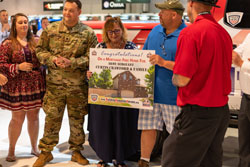
At Truck Hero’s first-ever SEMA Show media conference in 2019, two-time Purple Heart recipient Army Sergeant Curtis Crawford officially joined the Building Homes for Heroes (BHH) family and learned that he and his family would receive a mortgage-free home in Springfield, Missouri. The event took place in the Truck Hero booth. Sergeant Crawford is a highly decorated veteran, having received the Army Commendation Medal, the Army Achievement Medal, the National Defense Service Medal and more. To date, BHH has gifted 178 mortgage-free homes, with a goal of gifting 200 by the end of 2019 and 500 by 2025.

The Saleen Experience Center—a retail and lifestyle space in Shanghai, presented by supercar manufacturer Saleen—officially opened its doors in China. For the first time, customers in China will be able to see, experience and buy Saleen products. The Saleen Experience Center marks the latest in Saleen’s global business expansion through a partnership to produce and distribute vehicles in China with Jiangsu Saleen Automotive Technology Co.

Lubrication Specialties

Lubrication Specialties Inc. (LSI) recently announced the appointment of Nikki Stoughton as the company’s new director of marketing. Prior to her position at LSI, she worked first as a solutions marketing manager and then brand marketing manager for CAS, a division of the American Chemical Society, where she managed the company’s flagship brand SciFindern. Earlier, Stoughton worked as the marketing manager at Exceptional Innovation Inc.

Lorraine Stevenson of Stevenson’s Tire & Service Center LLC was recently awarded a ’19 Ford Mustang GT, sponsored by Standard Motor Products, through an Auto Plus Auto Parts performance promotion scratch-and-win contest. The promotion also offered opportunities to win a Disney family vacation for four, a NASCAR VIP trip for two and multiple $2,500 gift cards.

Yakima announced that it has completed an asset acquisition of Road Shower, an on-vehicle outdoor recreation water transport system. Through the acquisition, Yakima will take ownership of Road Shower’s intellectual property and existing inventory as it works to transition production to its own facilities. Following the launch or expansion of several key categories for Yakima, Road Shower offers utility and versatility to adventure campers, anglers, surfers, bikers, kayakers and those who want to keep their gear, their vehicles and themselves clean while out in the wild.

Toyo
Chad Stanley
Toyo
Sam Felberbaum
Toyo
Mike Graber

Toyo Tire U.S.A. Corp. announced the promotion of strategic business account development manager Chad Stanley to director of sales effective January 1, 2020. Stanley first joined Toyo Tires in February 2014, serving as regional sales manager covering the states of Colorado, Wyoming, Montana, Kansas, Nebraska and Missouri. Stanley’s promotion comes with other significant changes to the Toyo Tires sales structure. Sam Felberbaum, currently director of sales for the western division, will be Stanley’s counterpart as director of sales, southern division. In addition, Mike Snyder, who has served as director of sales for the eastern division, will become director of sales, auto dealer channel. All three directors of sales will report to Mike Graber, who assumed his new role as vice president of sales on January 1.

Polaris Inc. announced several changes to its senior leadership team. Current President of Motorcycles Steven Menneto has been named president of off road; Michael Dougherty, president of international, has been named president of motorcycles in addition to his role as president of international; and Chris Musso, president of off road, has been named to a new role as senior vice president of electrification strategy. All three leaders will continue to report to Polaris Chairman and CEO Scott Wine.

EnerSys announced that it is the recipient of the 2019 Allegiant Power Best in Sales award. Triumphing more than 32 competing companies from across the country, the transportation and specialty team accepted the accolade during the annual Allegiant Power Show, held October 3–6 in Washington, D.C. The award was earned by generating the most revenue during the three-day show. Since 2015, Allegiant Power has presented the Best in Sales award as a way of recognizing and thanking vendors for their commitment to the show and attendees.

Hurco Companies Inc. partnered with BMO Automation. The Hurco/BMO Automation partnership provides customers with a tested automation solution that requires minimal integration and is designed to increase productivity without disruption.

Sun, 03/01/2020 - 11:13

SEMA News—March 2020

BUSINESS

Attracting and Retaining Next-Generation Talent

Workplace Tactics You Can Adopt to Win Over Millennials

By Mike Imlay

Retail
Attracting and retaining next-generation talent to the industry is an increasingly urgent concern for aftermarket retailers and shops. Fortunately, there are some simple strategies that can help ensure that your young hires become collaborative, fulfilled and long-term members of your team.

One of the more pressing issues confronting today’s small-business shops is finding and attracting young talent. The case for winning over Millennials is obvious. As more industry retailers and shops come to rely on advanced technologies and social-media marketing, the need for employees adept in those areas will only grow. Plus, the industry overall is graying, meaning that the demand for new workers to replace retiring employees will also become more urgent with each passing year.

In that regard, the aftermarket shares the same boat with the rest of American industry. According to a recent Pew Research analysis, Millennials now comprise 35% of the U.S. labor force, making them the largest generation in the labor pool. Gen Xers followed closely, comprising roughly a third of Americans either working or looking for work, while Baby Boomers have fallen to just a quarter of the force. Moreover, while Millennial numbers will continue to climb, they are not likely to match the peak labor participation achieved by Boomers in the late ’90s. In other words, as they are retiring, Boomers are leaving a vacuum that will put young talent in even greater demand throughout every American business sector.

However, Millennials represent a “digital generation” that greatly differs both educationally and culturally from their predecessors. For example, the moon landing, television and an emphasis on self-sufficiency were major influencers for the Boomer generation. On the other hand, Google, the internet and higher degrees of parental involvement helped form the Millennial generation. For Boomers, new technology was a marvel that promised a brighter future. For Millennials, high technology is a fact of life. What’s more, experts say that there are also big differences in how each demographic communicates and defines working relationships.

JP Griffin Group, an employee-benefits consultancy, has identified four specific areas where Millennials differ from their older labor-force counterparts:

  • Performance Feedback: In general, older employees are happy to have a set list of goals, which they can accomplish on their own with minimal supervision. In contrast, Millennials prefer shared goals and seek informal feedback much more frequently.
  • Mentorship: The younger generation desires employers to develop and mentor their leadership skills.
  • Gratification: Boomers are accustomed to delayed gratification. Because of technology, Millennials have come to expect more immediate rewards from their efforts.
  • Flexibility: While older workers are used to eight-hour schedules with stricter start and end times, younger laborers find their work/life balance through more flexible schedules and casual working environments.

Note that none of this means Millennials are lazy, work less hard in the long run, or are uninterested in the automotive field.

“They just work differently because they were raised differently,” said Michael Lanza, manager of consulting services for Sherwin-Williams Automotive Finishes. “We can sit back and complain about it, or we can go out and find out what motivates these young people.”

In his 30 years associated with the repair and refinish sector of the aftermarket, Lanza has become an expert presenter on the topic, helping numerous shops to rethink their approach toward attracting and retaining next-gen talent.

For Lanza, it boils down to a simple proposition: “How do we say [to them] you can get out of college or not even go to college and work for Gap, or you can come into our industry and have a good life, a good career, make good money and be in demand?”

According to Lanza, the first step is to understand what this demographic seeks in a job. Many come fresh from school with high career expectations but are still searching to find their niche. Unfortunately, many also have inflated salary expectations. Demonstrating how your business can fit into their professional growth and training will go a long way toward incorporating them successfully into your workplace and can even help bridge any (mis)perceived salary gaps. To accomplish that, Lanza recommends the following strategies:

1) Build a Sense of Collaboration and Involvement

Clear communications of job responsibilities and mutually agreed-upon goals help gain loyalty and dedication from today’s young workers. Show them that they have a stake in the business. Share your goals for them and ask what their own professional goals are. Ask how they see themselves contributing to the business. Then develop a concrete game plan together.

“What this means is that I sit down with you at the beginning of the year and say, ‘This year, we want to accomplish these goals,’” Lanza explained. “‘I need my goals, and I want your goals too. I want to know what you professionally want to accomplish this year. Let’s build these goals together, which is beneficial to the shop and beneficial to you, because we have common goals and we can help each other grow.’”

2) Provide Regular, Ongoing Feedback

“Younger people are going to ask a lot more questions, and we’re not used to that, especially when our day is exploding,” Lanza explained. “But we’re going to have to find time to do that, because that’s the learning style this younger generation has grown up with. They crave feedback.”

While many workplaces rely on annual performance reviews with semi-annual progress reports, a friendly sit-down with young employees several times a year for feedback on agreed-upon goals makes for a better strategy. Don’t wait for reviews to address course corrections when the staffer appears to be having difficulties. (Again, the collaborative approach works best.) In fact, Lanza often advises that small businesses transform their entire culture to one in which management and staff both proactively show up each day armed with goals and priorities. Touching base weekly or even daily on goals and action items can be a game-changer overall and a time-saver in the long run.

3) Recognize and Encourage the Unique Talents That Millennials Already Possess

“This generation brings a lot of skills that are going to take our industry to the next level,” Lanza said. “We’re bringing in a new generation that’s used to computers and technology. Scanning vehicles and calibrating advanced computer and damage-avoidance systems will be a full-time role. So there is a place for them to segue into our industry.”

But that place is not necessarily being pegged into traditional job descriptions or rote assignments, Lanza emphasized.

“Sadly, the typical shop in our industry is very reactionary,” he said. “If you hire somebody who is not from the industry or who doesn’t have that ‘put your head down to the grind’ mentality and put them in a dysfunctional and broken environment, it’s going to be short term.”

The answer is to find ways to make the workplace more dynamic. Incorporate new communications systems and software. Rethink job descriptions and reporting structures. By embracing some of the newer ideas, technologies and organizational concepts that Millennials excel in, you’ll not only retain your new hires but also position your business for
greater success.

4) Offer Continual Growth Through Training and Education Opportunities

Millennials are highly motivated to grow, achieve and experience new things. They also do best when they see how their skills and contributions impact others in an organization, and vice versa. Exposing young employees to differing facets of your workplace through job rotation, cross training and mentorships helps them see the big picture and gain a sense of direction.

However, mentorships where the younger worker becomes a mere onlooker or a useless “gofer” will prove counterproductive. Remember: With this generation, the key word is “involvement.”

“My son-in-law is in the Coast Guard, which is different from the traditional military, where you go through basic training and then they put you in a unit,” Lanza observed. “Within the Coast Guard, you spend time with a unit exploring different jobs. Do I want to be a rescue swimmer? A military police officer? A rescue-boat pilot? You’re able to sample and experience different jobs. The Coast Guard then says, ‘Great, we’ll send you to school to learn how to do that.’

“What we do is build silos and put people in them, and all they know is what’s inside that silo. And they can’t improve their growth because they don’t have the understanding of what’s around or outside of that silo.”

In other words, let your young recruits see, sample and experience different roles within your organization. Help them hone the new skills they need to take themselves and your business to even higher levels. Communicate your goals to them, and collaborate with them on theirs. Ultimately, you’ll establish mutually rewarding relationships with your next-gen employees, which, after all, is what business is all about.

Sun, 03/01/2020 - 11:13

SEMA News—March 2020

BUSINESS

Attracting and Retaining Next-Generation Talent

Workplace Tactics You Can Adopt to Win Over Millennials

By Mike Imlay

Retail
Attracting and retaining next-generation talent to the industry is an increasingly urgent concern for aftermarket retailers and shops. Fortunately, there are some simple strategies that can help ensure that your young hires become collaborative, fulfilled and long-term members of your team.

One of the more pressing issues confronting today’s small-business shops is finding and attracting young talent. The case for winning over Millennials is obvious. As more industry retailers and shops come to rely on advanced technologies and social-media marketing, the need for employees adept in those areas will only grow. Plus, the industry overall is graying, meaning that the demand for new workers to replace retiring employees will also become more urgent with each passing year.

In that regard, the aftermarket shares the same boat with the rest of American industry. According to a recent Pew Research analysis, Millennials now comprise 35% of the U.S. labor force, making them the largest generation in the labor pool. Gen Xers followed closely, comprising roughly a third of Americans either working or looking for work, while Baby Boomers have fallen to just a quarter of the force. Moreover, while Millennial numbers will continue to climb, they are not likely to match the peak labor participation achieved by Boomers in the late ’90s. In other words, as they are retiring, Boomers are leaving a vacuum that will put young talent in even greater demand throughout every American business sector.

However, Millennials represent a “digital generation” that greatly differs both educationally and culturally from their predecessors. For example, the moon landing, television and an emphasis on self-sufficiency were major influencers for the Boomer generation. On the other hand, Google, the internet and higher degrees of parental involvement helped form the Millennial generation. For Boomers, new technology was a marvel that promised a brighter future. For Millennials, high technology is a fact of life. What’s more, experts say that there are also big differences in how each demographic communicates and defines working relationships.

JP Griffin Group, an employee-benefits consultancy, has identified four specific areas where Millennials differ from their older labor-force counterparts:

  • Performance Feedback: In general, older employees are happy to have a set list of goals, which they can accomplish on their own with minimal supervision. In contrast, Millennials prefer shared goals and seek informal feedback much more frequently.
  • Mentorship: The younger generation desires employers to develop and mentor their leadership skills.
  • Gratification: Boomers are accustomed to delayed gratification. Because of technology, Millennials have come to expect more immediate rewards from their efforts.
  • Flexibility: While older workers are used to eight-hour schedules with stricter start and end times, younger laborers find their work/life balance through more flexible schedules and casual working environments.

Note that none of this means Millennials are lazy, work less hard in the long run, or are uninterested in the automotive field.

“They just work differently because they were raised differently,” said Michael Lanza, manager of consulting services for Sherwin-Williams Automotive Finishes. “We can sit back and complain about it, or we can go out and find out what motivates these young people.”

In his 30 years associated with the repair and refinish sector of the aftermarket, Lanza has become an expert presenter on the topic, helping numerous shops to rethink their approach toward attracting and retaining next-gen talent.

For Lanza, it boils down to a simple proposition: “How do we say [to them] you can get out of college or not even go to college and work for Gap, or you can come into our industry and have a good life, a good career, make good money and be in demand?”

According to Lanza, the first step is to understand what this demographic seeks in a job. Many come fresh from school with high career expectations but are still searching to find their niche. Unfortunately, many also have inflated salary expectations. Demonstrating how your business can fit into their professional growth and training will go a long way toward incorporating them successfully into your workplace and can even help bridge any (mis)perceived salary gaps. To accomplish that, Lanza recommends the following strategies:

1) Build a Sense of Collaboration and Involvement

Clear communications of job responsibilities and mutually agreed-upon goals help gain loyalty and dedication from today’s young workers. Show them that they have a stake in the business. Share your goals for them and ask what their own professional goals are. Ask how they see themselves contributing to the business. Then develop a concrete game plan together.

“What this means is that I sit down with you at the beginning of the year and say, ‘This year, we want to accomplish these goals,’” Lanza explained. “‘I need my goals, and I want your goals too. I want to know what you professionally want to accomplish this year. Let’s build these goals together, which is beneficial to the shop and beneficial to you, because we have common goals and we can help each other grow.’”

2) Provide Regular, Ongoing Feedback

“Younger people are going to ask a lot more questions, and we’re not used to that, especially when our day is exploding,” Lanza explained. “But we’re going to have to find time to do that, because that’s the learning style this younger generation has grown up with. They crave feedback.”

While many workplaces rely on annual performance reviews with semi-annual progress reports, a friendly sit-down with young employees several times a year for feedback on agreed-upon goals makes for a better strategy. Don’t wait for reviews to address course corrections when the staffer appears to be having difficulties. (Again, the collaborative approach works best.) In fact, Lanza often advises that small businesses transform their entire culture to one in which management and staff both proactively show up each day armed with goals and priorities. Touching base weekly or even daily on goals and action items can be a game-changer overall and a time-saver in the long run.

3) Recognize and Encourage the Unique Talents That Millennials Already Possess

“This generation brings a lot of skills that are going to take our industry to the next level,” Lanza said. “We’re bringing in a new generation that’s used to computers and technology. Scanning vehicles and calibrating advanced computer and damage-avoidance systems will be a full-time role. So there is a place for them to segue into our industry.”

But that place is not necessarily being pegged into traditional job descriptions or rote assignments, Lanza emphasized.

“Sadly, the typical shop in our industry is very reactionary,” he said. “If you hire somebody who is not from the industry or who doesn’t have that ‘put your head down to the grind’ mentality and put them in a dysfunctional and broken environment, it’s going to be short term.”

The answer is to find ways to make the workplace more dynamic. Incorporate new communications systems and software. Rethink job descriptions and reporting structures. By embracing some of the newer ideas, technologies and organizational concepts that Millennials excel in, you’ll not only retain your new hires but also position your business for
greater success.

4) Offer Continual Growth Through Training and Education Opportunities

Millennials are highly motivated to grow, achieve and experience new things. They also do best when they see how their skills and contributions impact others in an organization, and vice versa. Exposing young employees to differing facets of your workplace through job rotation, cross training and mentorships helps them see the big picture and gain a sense of direction.

However, mentorships where the younger worker becomes a mere onlooker or a useless “gofer” will prove counterproductive. Remember: With this generation, the key word is “involvement.”

“My son-in-law is in the Coast Guard, which is different from the traditional military, where you go through basic training and then they put you in a unit,” Lanza observed. “Within the Coast Guard, you spend time with a unit exploring different jobs. Do I want to be a rescue swimmer? A military police officer? A rescue-boat pilot? You’re able to sample and experience different jobs. The Coast Guard then says, ‘Great, we’ll send you to school to learn how to do that.’

“What we do is build silos and put people in them, and all they know is what’s inside that silo. And they can’t improve their growth because they don’t have the understanding of what’s around or outside of that silo.”

In other words, let your young recruits see, sample and experience different roles within your organization. Help them hone the new skills they need to take themselves and your business to even higher levels. Communicate your goals to them, and collaborate with them on theirs. Ultimately, you’ll establish mutually rewarding relationships with your next-gen employees, which, after all, is what business is all about.

Sun, 03/01/2020 - 11:01

SEMA News—March 2020

INDUSTRY NEWS

By Douglas McColloch

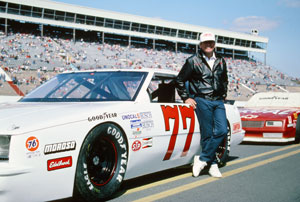
Bill SimpsonBill Simpson was an accomplished racer, finishing 13th at the 1974 Indy 500.

Motorsports Safety Pioneer Bill Simpson Passes Away

Bill Simpson, 79, motorsports safety pioneer, died December 16, 2019, after suffering a stroke. A class of 1988 SEMA Hall of Fame member and a 2003 Motorsports Hall of Fame inductee, Simpson drove dragsters and Indy cars, finishing 13th in the 1974 Indianapolis 500. After ending his career as a driver, he started Simpson Safety Products in his garage, and it grew into a business empire and helped reduce the fatality rate in all forms of racing.

Simpson started drag racing in the late ’50s and broke both arms in an accident when he was 18 years old. That led to his initial safety idea of mounting a parachute behind race cars to slow them down, an innovation that was adopted by the NHRA.

His big breakthrough came in the ’60s, when astronaut Pete Conrad introduced him to a fire-retardant material called Nomex. At the time, IndyCar, NASCAR and F1 drivers routinely lost their lives to fire because they either drove in a T-shirt or a uniform that provided minimal protection. Simpson began producing Nomex suits and, by 1967, 30 of the 33 starters at Indy were wearing them. From suits, Simpson branched out into gloves, shoes, seatbelts and helmets, and Simpson Safety Products were used worldwide.

The Indianapolis Motor Speedway (IMS) announced recently that a celebration of Simpson’s life is being planned for May 2020 at the IMS Museum.

Nordic
The Nordic region has long been a hotbed of drag racing, rally racing and drifting. The inaugural SEMA Nordic Business Development Program takes place August 29–September 2, 2020.

Registration Now Open for Inaugural SEMA Nordic Business Development Program

Join SEMA for the inaugural SEMA Nordic Business Development Program, to be held August 29–September 2, 2020, in Stockholm, Sweden. Participants will learn the potential for their products in this performance and classic-car paradise.

They will meet with top trade buyers who have enabled the half-century-old craze in Sweden and the surrounding countries of Norway, Finland and Denmark to restore and upgrade American classic cars. Performance is among the top upgrades sought for a range of vehicles, and the region is considered the headquarters for the European drag-racing championship as well as circuit racing, drag racing, rally racing and drifting. High disposable income coupled with a passion for personalization make this an attractive region for manufacturers.

SEMA Business Development Programs are low-cost, turnkey events that bring together SEMA-member manufacturers and buyers from key markets. Fees start at $4,150 per company, and for those who qualify, $750 in U.S. government grants help defray trip costs, including hotels, a tabletop display, meals and networking events. Flights are not included. Additional state funds are available, including $1,000 for qualified California-based companies.

For additional information, visit SEMA eNews for details or contact Linda Spencer at lindas@sema.org.

Retail Landscape
According to the latest “SEMA Retail Landscape Report,” 79% of specialty-automotive retailers expect online sales growth to have a significant impact on the industry over the next few years.

SEMA Market Research: Retailers Adapt to a Changing Landscape

Last year, nearly one-third of specialty-automotive parts sales were made online, and 79% of specialty-automotive retailers expect online sales growth to have a significant impact on the industry over the next few years. Changing consumer behavior is driving this growth. Customers now have more outlets than ever before to research specs, compare brands and purchase products.

As a result, many retailers are adapting to a customer base that is more informed about brands and products, more aware of price differences, and may be less loyal to any retailer. Nearly two-thirds of retailers have added or grown their social-media presence to reach more customers effectively. And 59% find that providing advice and expertise rather than competing on price offers a way to stand out in the market.

To learn more about the key challenges and opportunities specialty-automotive retailers are facing, download the latest “SEMA Retail Landscape Report” for free at www.sema.org/research.

SEMA School Program in Need of Industry-Branded Stickers

The SEMA CuSTEM Car Experience, which engages middle-school students by blending science, technology, engineering and mathematics (STEM) education with automotive customization, will kick off another season this year. The events, held in partnership with Championship Auto Shows, will take place in six different cities during the spring semester. Each event will bring in 450–500 students to experience a car show and design challenge to build their own custom car models.

SEMA is providing aluminum water bottles to each student and a sticker bar to customize their bottles. Aftermarket companies are invited to send stickers with their logos so the students can use them to customize their bottles. The students will walk away from the day with a fun and engaging automotive experience and a car-culture-branded giveaway.

Stickers can be sent to SEMA c/o Katie Hurst, 1575 S. Valley Vista Dr., Diamond Bar, CA 91765. Suggested amount is 300–500 (or more) stickers. For more information, email katieh@sema.org.

Sales Tax
SEMA has compiled resources for member companies that are impacted by the U.S. Supreme Court Wayfair decision.

SEMA Creates State Sales Tax Page to Answer Questions and Provide Resources

Many SEMA-member manufacturers, distributors and retailers have been impacted by the 2018 U.S. Supreme Court Wayfair decision, which allows states to require sales tax collections based solely on the volume of sales into that state (economic nexus). The Court overturned its 1992 Quill decision, which previously required a company to have a physical presence before it could be compelled to collect sales tax. SEMA has compiled resources to help companies understand whether Wayfair impacts their businesses and provide additional information to help them respond if necessary.

For more information, visit www.sema.org/state-sales-taxes.


Sun, 03/01/2020 - 10:57

SEMA News—March 2020

HERITAGE

By Drew Hardin

Big Cam at the Big Show

Photography Courtesy Bud Lang, Petersen Publishing Company Archive

Heritage

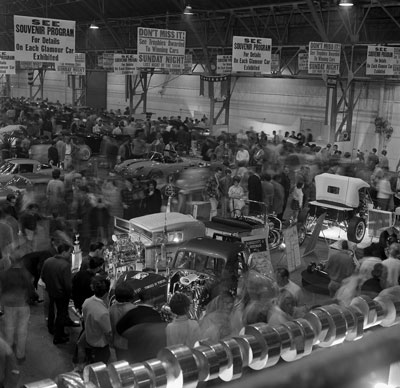
It’s February 1964 at the Grand National Roadster Show, and Petersen Publishing Company’s Bud Lang captures a rafters-eye view of crowds milling about some of the cars on display at the Oakland Exposition Building.

The ’64 Roadster Show was notable for a number of reasons. Customizer Dean Jeffries debuted his futuristic, bubble-topped Mantaray; and Don Tognotti (who would later run the show) won the America’s Most Beautiful Roadster trophy for his lavender ’14 Ford Model T dubbed the King T.

In the foreground of the photo is the Dorricott and Sheehan Fiat AA/Altered, its hood off to display the 421ci blown Pontiac mill that was stuffed into the tiny drag racer. The Altered would win the America’s Best Competition Car award at the show and later landed on the October 1964 cover of Rod & Custom.

And then there’s that camshaft. Though it looks like its size comes from a photographic composition trick of forced perspective, it is actually a giant camshaft—part of Ed Iskenderian’s Roadster Show display. The cam was more than 8 ft. long, its shaft made from a very thick cardboard tube with about an inch-thick wall. The “lobes” were made from Styrofoam covered in foil, and the ends were made from wood.

We should say “is” rather than “was,” because the mega cam still lives. It hung in Isky’s office for years and was just recently purchased by memorabilia collector/dealer Mike Goyda.

“It is substantial,” Goyda said of the cam, “and took two of us to carry it.”

Sun, 03/01/2020 - 10:53

SEMA News—March 2020

Market Research—Like GPS for Your Business

Chris Kersting

Chris Kersting

The need for this kind of information in our industry is considerable. The automotive specialty aftermarket has always required companies to adapt and innovate, and now at a more rapid pace than previously. Trends are emerging and receding; product offerings change more rapidly; and the ways specialty parts are marketed and purchased are also evolving over time.

To help businesses better navigate where they are today, where others are, and how best to get to a positive business outcome, the association’s market research team commissions and generates studies that both look at the industry as a whole and delve into specific sectors. The team also combs available outside data to tease out factors that would be relevant to the specialty-equipment industry in order to provide forward-looking data.

There are currently a number of new reports available for download, and SEMA provides them at no charge. One in particular—the monthly “SEMA Industry Indicators” report—looks at a wide range of factors, including new-vehicle sales, auto production statistics, consumer spending and overall economic growth, and it takes into account the strength of the U.S. dollar, interest rates and fuel prices.

As the new year opens, the most recent “SEMA Industry Indicators” report suggests that a broad recession does not appear imminent. Despite slower growth in the economy, American consumers remain optimistic, and underlying fundamentals, such as the labor market, are strong. However, 2019 was challenging for manufacturing. While ongoing uncertainties are beginning to resolve, global growth remains slow, and trade tensions remain high. These hurdles will likely continue to be obstacles in 2020. That said, one current trend toward a weaker dollar could be working on the plus side with regard to international trade.

Weighing these variables is not an exact science, but the SEMA market research team is always happy to work with members who have questions about how to interpret the data with regard to their own businesses.

Another newly released report, the “SEMA Retail Landscape Report,” dives into the ways in which retailers are facing and adapting to a range of business challenges. Today, our industry’s independent retailers are dealing with a rapidly changing business environment. Increased online competition and its effect on consumer expectations and behavior are key shifts with a widespread impact on retail. The “SEMA Retail Landscape Report” offers insights into where opportunities lie for retailers to adapt and become more effective. It paints a picture of how small retailers can stand out from bigger competitors and points to factors that retailers think will shape the industry moving forward.

Specifically, the study found that the majority of the more than 3,000 SEMA-member retailers are primed for continued growth. As long predicted, the internet and e-commerce are becoming normal aspects of doing business, with many brick-and-mortar specialty retailers selling products online or using the internet to advertise and promote their businesses.

Overall, our current research suggests that we can expect a mainly healthy economic year for American small businesses. While there are a few factors with the potential to alter this picture, it appears that the specialty aftermarket will benefit as consumer confidence remains positive.

I urge you to review the latest SEMA market reports, form your own conclusions and then utilize future SEMA reports to help adjust your plans accordingly. If you haven’t taken advantage of SEMA research, make it a habit to visit www.sema.org/research to download the latest studies and add another tool to help your business succeed and prosper.

The Specialty Equipment Market Association may be best known for producing the SEMA Show, but the association also provides a broad range of resources to the industry—often resources that might otherwise be unaffordable to a small business. One of the most important is the ongoing production of research developed to provide insights that help companies make well-informed business decisions—perhaps to guide expansion, make a course correction or add new product lines.

Sun, 03/01/2020 - 10:09

SEMA Member News—March 2020

By Ellen McKoy

Ron Alexander is associate professor of automotive technology at SUNY Morrisville, which offers two- and four-year automotive degree programs.

SEMA Student Programs Pave a Pathway to Aftermarket Careers

Activating the next-generation talent pool is a hot topic. To help inspire future influencers and innovators, SEMA offers resources designed to engage students and provide a pathway to careers in the automotive aftermarket.

The best-known program is the SEMA Memorial Scholarship Fund. Since its founding in 1984, the fund has awarded more than $2.5 million to 1,500-plus college students. Last year alone, SEMA awarded $272,000 to 97 individuals.

Over the years, SEMA has forged relationships with trade schools, colleges and universities known for their automotive-related curriculum through the scholarship program and other outreach efforts. Often, scholarship recipients have the opportunity to visit the SEMA Show.

Attending the Show for the first time is an eye-opening experience—a chance for students to talk to exhibitors, hand out résumés and be amazed by the scope of the specialty-equipment market. They also get to participate in the SEMA Student Program.

Career Day is an integral part of the Student Program. It gives participating exhibitors the chance to connect with bright, young prospects who potentially represent a future workforce. Last year’s event included more than 40 companies and was attended by more than 700 students and faculty.

For insights into how the SEMA programs benefit the students, SEMA Member News reached out to Ron Alexander, associate professor of automotive technology at SUNY Morrisville, and Dr. Jeff Jarvis, president of the University of Northwestern Ohio.

Optimizing Opportunities

Dr. Jeff Jarvis, president of the University of Northwestern Ohio, has been involved in SEMA education programs for nearly three decades.

SUNY Morrisville, part of the State University of New York, is located in rural Madison County. Established in 1908, the college offers more than 80 associate and bachelor’s degree programs as diverse as agriculture, business, social sciences, liberal arts and automotive technology. Automotive areas of study run the gamut.

“We have two- and four-year degree programs,” said Alexander, whose technology department is headed by Associate Professor Ray Grabowski. “We have an advanced-level bachelor’s in technology and a two-year associate’s degree option. The four-year option prepares students to work for OEMs and the aftermarket in research and development. Then there’s a bachelor of business administration degree in automotive management, two-year mechanic courses in automotive technology, and an associate’s degree in auto body.”

Students can also join the school’s automotive club, which hosts car shows and participates in the SEMA Show.

“Through our relationship with SEMA more than 10 years, we’ve brought third- and fourth-year students to the Show as part of the SEMA Student Program,” Alexander said. “It started out as an auto-club field trip, but it’s actually grown into curriculum.”

The for-credit elective is a basic introduction to the aftermarket.

“It’s a special-projects class,” he noted. “Of all the schools that attend the Student Program, we’re the only school that grants college credit for that experience.”

At the Show, students dress to impress—no T-shirts allowed. They visit the New Products Showcase, attend seminars, the new-products awards breakfast and the Young Executives Network reception. They interact with exhibitors and hand out résumés or business cards. At the end of each day, they share their experiences.

“We want the students to understand that this is a networking event, not just a car show, and it’s led to connections over the years,” Alexander said.

Those connections have led to plum jobs or internship opportunities. In one heartwarming example, Alexander recalled meeting a Morrisville graduate at the Show who was working the HMS Motorsport booth—a job he had landed through a prior Student Program connection. He also noted that MOPAR has hired graduates as eastern district managers—an opportunity that arose after MOPAR learned that there’s an East Coast college that offers four-year automotive degrees.

“Once that MOPAR connection was made, it’s been both an internship and a direct-hire opportunity,” Alexander said. “We’ve also made successful connections at Snap-On, Delphi, Borg Warner and others. All of those relationships were created through the SEMA Show.

“The Show has opened our eyes. As we start to develop courses and curriculum, it has broadened our perspective about the aftermarket industry, and it has opened doors to career opportunities for our students. The SEMA Student Program is of real value to both our students and our school.”

Tapping the Talent Pipeline

The University of Northwestern Ohio (UNOH) has a long-standing relationship with SEMA. Founded in 1920 in Lima, Ohio, UNOH is widely known for its automotive curriculum—especially its focus on performance and motorsports. Over the years, many students have earned SEMA scholarships or loan-forgiveness awards, including 12 awardees in 2019. A significant number of graduates have gone on to careers in the aftermarket industry.

“I’ve been personally involved with the SEMA education and the scholarship program for 27 years,” noted Jarvis, who at one time served on the SEMA Scholarship Committee. “I went back as far as I could in my records, and we’ve had over 120 scholarship winners through the years. We bring only scholarship winners to the Show and its education portion. I was surprised to see that about 35% of the scholarship winners have gone on to work directly for SEMA-member companies.”

UNOH consists of five colleges that offer 50 different majors and degree programs, including for business administration, marketing, accounting and, of course, automotive. Besides a bachelor’s degree in automotive management, there are more than a dozen automotive-related associate’s degree and diploma programs.

“One of our colleges is the College of Applied Technology, where we teach automotive diesel, high performance, robotics, alternate fuels and other programs,” Jarvis said. “We also have a sports marketing program as well as degrees in marketing and accounting—things that are not performance-based.”

Jarvis estimated that 20% of UNOH scholarship awardees now work for SEMA-member companies in marketing, sales or management.

“There are opportunities in the industry for those students, but most of the scholarship winners we’ve brought to the SEMA Show through the years have had the technical, hands-on experience,” he said.

In reflecting on the relationship between SEMA and UNOH, Jarvis credited an early-’90s meeting with former SEMA President Chuck Blum and Hall of Famer Harry Hibbler with helping to create a blueprint for the school’s motorsports program.

“Chuck, Harry and I sat down after a SEMA management conference in Phoenix and scratched out our high-performance program on a napkin,” Jarvis recalled. “I brought it back to our faculty, and we came out with the first-ever high-performance motorsports program in 1993. So SEMA and UNOH are intertwined, and in my opinion, it’s a fantastic relationship.”

Jarvis said that the Student Program at the Show that SEMA Manager of Student Programs Juliet Marshall oversees is an important part of the relationship, especially for students who are close to graduating and who get job offers in their chosen career paths.

“It’s a tribute to the industry and to SEMA for their tremendous support of the scholarship program,” Jarvis said. “It’s a home run for the young people. We love SEMA, and we love the SEMA-member companies for what they do to hire our graduates.”

Sun, 03/01/2020 - 10:09

SEMA Member News—March 2020

By Ellen McKoy

Ron Alexander is associate professor of automotive technology at SUNY Morrisville, which offers two- and four-year automotive degree programs.

SEMA Student Programs Pave a Pathway to Aftermarket Careers

Activating the next-generation talent pool is a hot topic. To help inspire future influencers and innovators, SEMA offers resources designed to engage students and provide a pathway to careers in the automotive aftermarket.

The best-known program is the SEMA Memorial Scholarship Fund. Since its founding in 1984, the fund has awarded more than $2.5 million to 1,500-plus college students. Last year alone, SEMA awarded $272,000 to 97 individuals.

Over the years, SEMA has forged relationships with trade schools, colleges and universities known for their automotive-related curriculum through the scholarship program and other outreach efforts. Often, scholarship recipients have the opportunity to visit the SEMA Show.

Attending the Show for the first time is an eye-opening experience—a chance for students to talk to exhibitors, hand out résumés and be amazed by the scope of the specialty-equipment market. They also get to participate in the SEMA Student Program.

Career Day is an integral part of the Student Program. It gives participating exhibitors the chance to connect with bright, young prospects who potentially represent a future workforce. Last year’s event included more than 40 companies and was attended by more than 700 students and faculty.

For insights into how the SEMA programs benefit the students, SEMA Member News reached out to Ron Alexander, associate professor of automotive technology at SUNY Morrisville, and Dr. Jeff Jarvis, president of the University of Northwestern Ohio.

Optimizing Opportunities

Dr. Jeff Jarvis, president of the University of Northwestern Ohio, has been involved in SEMA education programs for nearly three decades.

SUNY Morrisville, part of the State University of New York, is located in rural Madison County. Established in 1908, the college offers more than 80 associate and bachelor’s degree programs as diverse as agriculture, business, social sciences, liberal arts and automotive technology. Automotive areas of study run the gamut.

“We have two- and four-year degree programs,” said Alexander, whose technology department is headed by Associate Professor Ray Grabowski. “We have an advanced-level bachelor’s in technology and a two-year associate’s degree option. The four-year option prepares students to work for OEMs and the aftermarket in research and development. Then there’s a bachelor of business administration degree in automotive management, two-year mechanic courses in automotive technology, and an associate’s degree in auto body.”

Students can also join the school’s automotive club, which hosts car shows and participates in the SEMA Show.

“Through our relationship with SEMA more than 10 years, we’ve brought third- and fourth-year students to the Show as part of the SEMA Student Program,” Alexander said. “It started out as an auto-club field trip, but it’s actually grown into curriculum.”

The for-credit elective is a basic introduction to the aftermarket.

“It’s a special-projects class,” he noted. “Of all the schools that attend the Student Program, we’re the only school that grants college credit for that experience.”

At the Show, students dress to impress—no T-shirts allowed. They visit the New Products Showcase, attend seminars, the new-products awards breakfast and the Young Executives Network reception. They interact with exhibitors and hand out résumés or business cards. At the end of each day, they share their experiences.

“We want the students to understand that this is a networking event, not just a car show, and it’s led to connections over the years,” Alexander said.

Those connections have led to plum jobs or internship opportunities. In one heartwarming example, Alexander recalled meeting a Morrisville graduate at the Show who was working the HMS Motorsport booth—a job he had landed through a prior Student Program connection. He also noted that MOPAR has hired graduates as eastern district managers—an opportunity that arose after MOPAR learned that there’s an East Coast college that offers four-year automotive degrees.

“Once that MOPAR connection was made, it’s been both an internship and a direct-hire opportunity,” Alexander said. “We’ve also made successful connections at Snap-On, Delphi, Borg Warner and others. All of those relationships were created through the SEMA Show.

“The Show has opened our eyes. As we start to develop courses and curriculum, it has broadened our perspective about the aftermarket industry, and it has opened doors to career opportunities for our students. The SEMA Student Program is of real value to both our students and our school.”

Tapping the Talent Pipeline

The University of Northwestern Ohio (UNOH) has a long-standing relationship with SEMA. Founded in 1920 in Lima, Ohio, UNOH is widely known for its automotive curriculum—especially its focus on performance and motorsports. Over the years, many students have earned SEMA scholarships or loan-forgiveness awards, including 12 awardees in 2019. A significant number of graduates have gone on to careers in the aftermarket industry.

“I’ve been personally involved with the SEMA education and the scholarship program for 27 years,” noted Jarvis, who at one time served on the SEMA Scholarship Committee. “I went back as far as I could in my records, and we’ve had over 120 scholarship winners through the years. We bring only scholarship winners to the Show and its education portion. I was surprised to see that about 35% of the scholarship winners have gone on to work directly for SEMA-member companies.”

UNOH consists of five colleges that offer 50 different majors and degree programs, including for business administration, marketing, accounting and, of course, automotive. Besides a bachelor’s degree in automotive management, there are more than a dozen automotive-related associate’s degree and diploma programs.

“One of our colleges is the College of Applied Technology, where we teach automotive diesel, high performance, robotics, alternate fuels and other programs,” Jarvis said. “We also have a sports marketing program as well as degrees in marketing and accounting—things that are not performance-based.”

Jarvis estimated that 20% of UNOH scholarship awardees now work for SEMA-member companies in marketing, sales or management.

“There are opportunities in the industry for those students, but most of the scholarship winners we’ve brought to the SEMA Show through the years have had the technical, hands-on experience,” he said.

In reflecting on the relationship between SEMA and UNOH, Jarvis credited an early-’90s meeting with former SEMA President Chuck Blum and Hall of Famer Harry Hibbler with helping to create a blueprint for the school’s motorsports program.

“Chuck, Harry and I sat down after a SEMA management conference in Phoenix and scratched out our high-performance program on a napkin,” Jarvis recalled. “I brought it back to our faculty, and we came out with the first-ever high-performance motorsports program in 1993. So SEMA and UNOH are intertwined, and in my opinion, it’s a fantastic relationship.”

Jarvis said that the Student Program at the Show that SEMA Manager of Student Programs Juliet Marshall oversees is an important part of the relationship, especially for students who are close to graduating and who get job offers in their chosen career paths.

“It’s a tribute to the industry and to SEMA for their tremendous support of the scholarship program,” Jarvis said. “It’s a home run for the young people. We love SEMA, and we love the SEMA-member companies for what they do to hire our graduates.”