

SEMA News—December 2016
BUSINESS
Trends and Challenges for 2017
Council and Network Leaders Take a Look at What Lies Ahead
SEMA News spoke with SEMA’s council and network leaders to find out what’s in the pipeline for the coming year and to get their thoughts about the emerging trends and the challenges they can expect to face based on what their organizations are seeing in their respective marketplaces. Not surprisingly, many council and network chairs viewed the Recognizing the Protection of Motorsports (RPM) Act as essential to the continued viability of the automotive aftermarket industry.
Automotive Restoration Market Organization Chair: Erika Wiesman, Hydro-E-Lectric Inc.
 Erika Wiesman |
Our industry is changing more quickly than ever before, and technology is shaping the market. Advertising strategies have shifted to websites and social media, while within manufacturing, 3D printers can now print out a plastic model of our products.
Speaking with industry colleagues, we see continued moderate growth within the restoration market, which has expanded to include later-model cars. This provides an entry-level platform for incoming automotive hobbyists.
Currently, the most prominent task for the Automotive Restoration Market Organization (ARMO) is determining how data affects online sales. Showing our member businesses how important data is and why it is needed, then finding out what they need, can be time-consuming. Our members have to be on top of things at all times to stay ahead, because with the world at their fingertips, consumers are more knowledgeable than ever before.
As always, ARMO is keeping up with current legislative activities. Along with all SEMA councils, we’ve been supporting the Recognizing the Protection of Motorsports (RPM) Act to get politicians in Washington, D.C., to protect the motorsports industry. Recently, we are learning about and getting information to our members about California Proposition 65 and how it affects them.
Another challenge is youth engagement, which is always a concern with the restoration marketplace. We are an aging industry, and without the next generation taking interest in automotive restoration, it will lose its strength. We need young employees coming in; the average age of workers in an installation shop is 52. Also, we need young hobbyists. They are the real reason to continue.
Emerging Trends & Technology Network Chair: Regis Finn, ThyssenKrupp Bilstein of America
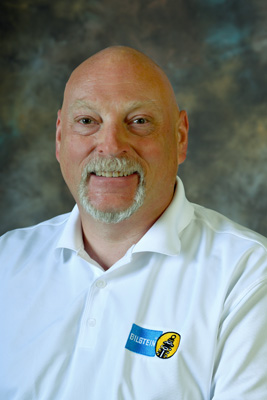 Regis Finn | |
A community for engineers, designers, programmers and product managers, the Emerging Trends and Technology Network (ETTN) now offers a number of member benefits. They include vehicle technology alerts; a resource guide; quick talks about new vehicle technology; a motorsports technology roundtable held in conjunction with the Motorsports Parts Manufacturers Council; an ETTN networking event at the SEMA Show; and three new awards designed to recognize engineers, designers, programmers and product managers.
Today, we are seeing more autonomous driving vehicles. With this trend comes more cutting-edge technology, which may affect SEMA-member companies and their product designs. Continued rapid changes in technology and legislation will remain a challenge for designers, programmers and engineers. They must stay on top of the changes via education and vehicle technology alerts.
To keep up on the latest vehicle trends, follow our monthly Vehicle Technology Alerts, which are housed on the SEMA Garage website (www.SEMAgarage.com), and can also be accessed through the ETTN homepage (www.sema.org/ettn).
Hot Rod Industry Alliance Chair: John McLeod, Classic Instruments
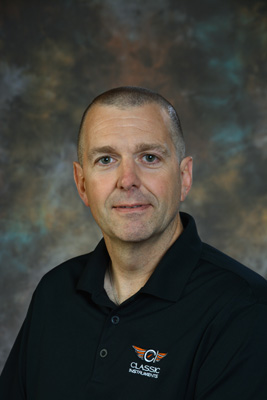 John McLeod |
HRIA is focused on youth involvement and education. We are working with high-school advisors to explain what skills our industry is looking for. Kids don’t have to want to be mechanics to participate. We also need engineers, accountants, assemblers, maintenance staff, human resources staff and sales and marketing professionals. We are so much more than hot-rod builders. We want to share our industry with people who have an interest in cars and see if we can ignite a spark so the youth can carry the torch for us into the future. The HRIA Pinewood Builders Challenge helps to bring a little fun and competition between both young and old.
On the education front, we are continuing to grow our Education Days, and have moved them to the National Street Rod Association (NSRA) Street Rod Nationals in Louisville, Kentucky. This proved to boost our class sizes and open our education sessions to all of our customers, not just dealers, and we are happy to announce it was a success. We have high hopes for its continued growth.
As for trends, industry trade shows offer improvements from last year. Autocross and performance vehicles are clearly the hot ticket across the board, and trucks are also growing. Hot rods continue to hold strong with new builds and updates to improve them and drive them more.
Truck and Off-Road Alliance Chair: Lee McGuire, Skyjacker Suspensions
 Lee McGuire |
The light-truck market should see busy times coming. With the launch of the brand-new 2017 Super Duty, there will be a flurry of new products hitting the market. Also affecting our group is the new ’17 Jeep Wrangler, which will lead to more new-product development, and a Jeep Wrangler pickup version is rumored to be not far behind.
As a council, we held an open meeting earlier this year to refocus on membership engagement. We hope to have more regional opportunities for members to connect.
We still have some concern over dealership hesitation to install aftermarket products, so we held taskforce discussions to see if there was a way to help overcome some of the communication barriers and talk more about the important role aftermarket accessories play on the dealership side.
Motorsports Parts Manufacturers Council Chair: Rich Barsamian, Advanced Clutch Technology
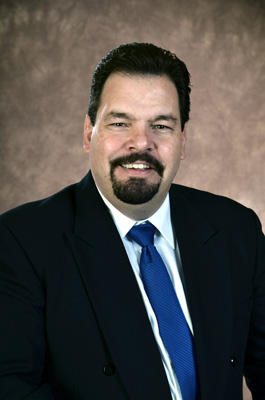 Rich Barsamian |
Late-model muscle and late-model engines transplanted into early musclecars are currently trending in our market. It is interesting to note that less-expensive classic performance products seem to sell much better than the higher-dollar performance products. However, performance sales are flat to slightly down this year with our member companies in general, and we anticipate that it will begin to grow again soon. Our industry always tends to react in this manner each election cycle.
We are currently facing two major opportunities. First, all SEMA members should support the RPM Act, which makes it clear, now and in the future, that modifying a street vehicle used solely for competition is legal and beyond the reach of U.S. Environmental Protection Agency regulations. Secondly, members should take advantage of the SEMA Emissions Compliance Center, which can assist product manufacturers in developing marketable, emissions-compliant products for on-road vehicles and ready them for store shelves.
To further improve business operations, manufacturers should supply more inventory to fill consumer demand through different sales channels, as drop shipping is important. Expanding product content-generating capabilities—including video, social media and photography—is essential to effectively communicate to customers and consumers alike.
Manufacturers Representative Network Chair: Vic Bennett, Gantt-Thomas & Associates Inc.
 Vic Bennett |
The Manufacturers Representative Network (MRN) is focused on continuing to serve the manufacturers’ representative community, vendor/manufacturers and customers. Our select committee has been working on Rep Match to connect vendors/manufacturers seeking representation to manufacturers’ representatives for specific parts of the country. Vendors/manufacturers and manufacturer’s representatives can go to www.sema.org/repmatch and sign up.
Another resource the MRN has utilized for the past two years is the Exhibitor’s Summit in Las Vegas—a fantastic event where every new exhibitor can learn all about the Show from setup to teardown. Our mission was to reach out to new exhibitors and connect with them on the selling and follow-up parts of the Show. We shared with them what a manufacturers’ representative was and how we could achieve success together.
Living in the Midwest, many of our customers’ businesses are affected by livestock ranching and crop farming. Currently, crop-farming prices for a bushel are trading at prices as low as they were in the ’90s. In addition, the struggling oil and gas markets continue to be a challenge for customers who sell into that business segment. Altogether, that adds up to a tough year. The concern is determining how many discretionary dollars will be spent on accessories or nonessential products.
With regard to ranching and farming, this is not the first time we have faced challenges similar to today’s. Many of our customers have been in business anywhere from 20 to 50 years, and one for 80 years, so they have faced similar challenges and have adjusted their businesses and continued to take care of their customers.
As for the industry, the RPM Act is a challenge for all of us. I would encourage readers to learn more about the RPM Act. Also, write to your congressional representatives and senators in support of the RPM Act. For more information visit www.sema.org/rpm.
Professional Restylers Organization Chair: Scott Wolin, Chicago Parts & Sound LLC
 Scott Wolin |
We are excited and optimistic for the coming year and future for all member companies of the Professional Restylers Organization (PRO). Low fuel prices and great deals offered at new-car dealerships are driving record sales numbers, and the used-car market is also strong. This leads to excellent accessory sales, and next year is also on target.
We are constantly working on developing new programs and marketing items for our PRO-member companies. Last June, we had a great PRO long-range planning meeting in Detroit, during which we visited M-City—a unique test facility for evaluating the capabilities of connected and automated vehicles and systems—located on the University of Michigan campus. We learned a great deal and got an inside look into how the automotive industry is preparing for the future. In addition, we had great breakout sessions that focused on three new initiatives to work on in the coming year, including identifying future products and markets, updating and improving the PRO Vehicle Accessorization flyer, and consumer and dealer education.
The world of automotive accessory electronics and technology is moving vehicles into a faster, cooler and connected lifestyle for today’s consumer. The focus is on greater safety, convenience, styling and connectivity. We continue to see strong growth in leather interiors, seat heaters and seat coolers, remote starts, and truck and Jeep products.
One of the key challenges for PRO is finding quality employees in all areas for our member companies. The pace of technology and changing trends in the automotive world are both potential challenges and concerns, but they will also present great opportunities for those PRO companies that are forward-thinking and prepared for the future.
Get involved with PRO to arm yourself with the tools to better prepare yourself and your employees to grow your business. I would suggest two excellent resources: our “PRO Sales Training Manual” and “PRO Business Development Guidebook.”
The networking opportunities for PRO restylers, manufacturers and distributors at our mid-year long-range planning meeting, PRO reception and general membership meeting at the SEMA Show pay great dividends in learning more about successful products and strategies to improve your business long-term.
SEMA Businesswomen’s Network Chair: Erin Gilhuly, Toyota Motor Sales North America
 Erin Gilhuly |
The automotive industry is enjoying healthy growth in all vehicle segments, which can only create more demand for customization and personalization. The SEMA Businesswomen’s Network (SBN) isn’t called on to answer specific industry questions. Our major initiatives focus on networking and recognition. Many of our members are still facing the “good ol’ boys” in the workplace and are perceived as “just girls.” SBN is working hard to dispel that thinking and provide women in the industry with the support and resources to grow their careers.
The aftermarket is starting to see a trend that impacted the original-equipment manufacturers (OEMs) a few years back—consolidation of companies. Companies are purchasing smaller ones both within and outside their segments. There is also an acquisition increase of e-commerce retail companies to go direct with the customer.
While not a concern for OEMs, the safety and technology found in new vehicles today and in the future will present a huge challenge to the aftermarket. Vehicles are becoming more and more sophisticated, with complex integrated systems. What will become of the aftermarket when changing engine performance and driving dynamics are no longer possible?
Wheel & Tire Council Chair: Joe Findeis, Wheel Consultants Inc.
 Joe Findeis |
Currently, the Wheel & Tire Council (WTC) is creating a series of guides to educate both the industry and consumers on the topics of ride/handling dynamics of plus sizing; wheel care/cleaning; and professional wheel installation. Guides will be compiled into a WTC tool kit and made available to members. Future projects will focus on what effects aftermarket wheels, tires and suspensions may have on modern vehicle technology.
The light-truck and Jeep off-road segment continues to be hot, whether for the active off-roader or for those simply going for the look. Wheel diameters of 18, 20 and 22 inches are the most popular. Wheel widths up to 10 inches are still the most common and are generally bolt-ons. But for the latest trend involving an extra-wide wheel with an extra-deep lip, widths of 12 to 14 inches with negative offsets are available to those willing to modify their vehicles for proper fit and clearance.
The flush-fitment category remains popular because it maximizes a vehicle’s profile and curb appeal while enhancing performance. Depending on the application, sizes can range from 15 to 19 inches, with 18 inches appearing to be the most popular at this time. Wheels are available in a variety of finishes, including gloss, matte, brushed and machined.
A major challenge the industry is facing is raising awareness to the potential effects aftermarket wheels, tires and suspension systems may have on today’s collision-avoidance and safety systems, such as collision warning, emergency-brake assist, rollover prevention, lane-departure warning and others.
Young Executives Network Chair: John Rosanbalm, Conklin Co. Inc.
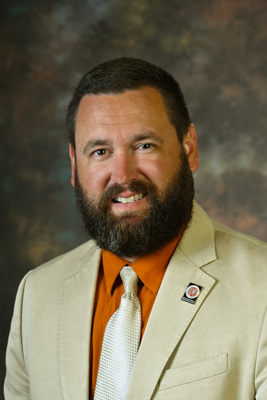 John Rosanbalm |
As a council, we have self-realized now more than ever that we need to create regional events. New opportunities for membership outreach equal multiple wins for the Young Executives Network (YEN) and SEMA as a whole. Just this year, SEMA granted the councils and networks the ability to hold unofficial events. This has spawned a great fact-finding expedition where we have learned more about what works and what doesn’t. It’s certainly still under development, as we have admittedly learned a lot, but what is key is the opportunity for YEN members to network regionally at events (not just at the SEMA Show). I would expect further expansion of this into 2017.
Within motor oils specifically, the market will soon have its work cut out. Consumer education will become vitally important due to the greater likelihood of using the wrong oil in the wrong vehicle. Heavy-duty engine oils (HDEO) are becoming increasingly available and recommended by OEMs in lower-viscosity grades—for example, 10W-30. These HDEO 10W-30s are much different from the typical 10W-30s on retail shelves.
Retailers primarily stock passenger car motor oils intended for gasoline engines and not fortified with the additives needed for diesel engines that call for an HDEO. The governing body over this change is the American Petroleum Institute, and additional information can be found on the back of the product label (called the “donut”) to help identify these different oils. The concern comes down to consumer education of these changes. They will need to look at the donut to see if a 10W-30 is labeled as a C-spec oil or an S-spec oil.
Beyond this change, the American Petroleum Institute is also breaking a long-standing precedence of backward compatibility. Although we in the aftermarket would argue that the removal of (or rather the limitation put onto) zinc-dialkyl-dithiophosphate leads to issues for older engines and the new oils not being backward compatible. The API is now releasing new specifications for oils that are not for use in older engines. This again is a consumer-education issue. The biggest questions now are: Who is responsible for educating, and who will be blamed for not educating enough once problems occur?
SEMA councils and networks offer members a variety of niche-specific programs and activities designed to provide educational and networking opportunities while promoting their particular market segment. For more information, visit www.sema.org/councils.