Thu, 10/12/2017 - 09:36

By SEMA Editors

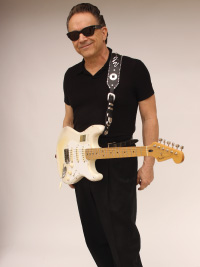
Celebrate the industry with your colleagues at the SEMA Show Industry Awards Banquet, featuring a formal sit-down dinner and entertainment from rock supergroup and fellow gearheads Billy F Gibbons, Jimmie Vaughan, Jeff Beck and Michael Anthony.

The four musicians will be backed by Vaughan’s Tilt-A-Whirl Band. While each is respected for his individual notable music contributions, they are also well-known as hot-rod enthusiasts, and each has an enviable stable of rods and customs.

“This is an extremely exciting opportunity to see four legendary musicians who are all ‘car guys’ play together at the SEMA Industry Awards Banquet,” said Chris Kersting, president and CEO. “It’s a rare, once-in-a-lifetime opportunity available only to Show attendees.”

The SEMA Industry Awards Banquet is the automotive specialty-equipment market’s premier awards ceremony where industry excellence and achievements are celebrated. Held annually on Thursday evening during the week of the SEMA Show, the event is the industry’s single largest gala attended by nearly 3,000 automotive icons, professionals, supporters and celebrities.

Tickets are still available to SEMA Showgoers and include a formal sit-down dinner. The program also includes the announcement of the SEMA Person of the Year, Manufacturer of the Year, WD of the Year, Rep Agency of the Year, and Gen-III Innovator of the Year awards, and pays tribute to this year’s SEMA Hall of Fame inductees—GiGi Carleton, Doug Evans and Barry Meguiar.

All SEMA Show exhibitors qualify to obtain a limited number of free tickets to the banquet. Tickets can also be purchased by any Showgoer at www.SEMAShow.com/awards-banquet.

GibbonsJeff Beck
Billy F GibbonsJeff Beck
Jimmie VaughanMichael Anthony
Thu, 10/12/2017 - 09:36

By SEMA Editors

Celebrate the industry with your colleagues at the SEMA Show Industry Awards Banquet, featuring a formal sit-down dinner and entertainment from rock supergroup and fellow gearheads Billy F Gibbons, Jimmie Vaughan, Jeff Beck and Michael Anthony.

The four musicians will be backed by Vaughan’s Tilt-A-Whirl Band. While each is respected for his individual notable music contributions, they are also well-known as hot-rod enthusiasts, and each has an enviable stable of rods and customs.

“This is an extremely exciting opportunity to see four legendary musicians who are all ‘car guys’ play together at the SEMA Industry Awards Banquet,” said Chris Kersting, president and CEO. “It’s a rare, once-in-a-lifetime opportunity available only to Show attendees.”

The SEMA Industry Awards Banquet is the automotive specialty-equipment market’s premier awards ceremony where industry excellence and achievements are celebrated. Held annually on Thursday evening during the week of the SEMA Show, the event is the industry’s single largest gala attended by nearly 3,000 automotive icons, professionals, supporters and celebrities.

Tickets are still available to SEMA Showgoers and include a formal sit-down dinner. The program also includes the announcement of the SEMA Person of the Year, Manufacturer of the Year, WD of the Year, Rep Agency of the Year, and Gen-III Innovator of the Year awards, and pays tribute to this year’s SEMA Hall of Fame inductees—GiGi Carleton, Doug Evans and Barry Meguiar.

All SEMA Show exhibitors qualify to obtain a limited number of free tickets to the banquet. Tickets can also be purchased by any Showgoer at www.SEMAShow.com/awards-banquet.

GibbonsJeff Beck
Billy F GibbonsJeff Beck
Jimmie VaughanMichael Anthony
Thu, 10/12/2017 - 09:33

By SEMA Washington, D.C., Staff

The U.S. Treasury Department reversed a 2016 proposal to limit family-owned businesses’ use of minority and marketability discounts when calculating the estate tax under Section 2704 of the Internal Revenue Code. SEMA joined with many other organizations in opposing the 2016 proposed rule. The regulation threatened to raise the estate tax for a family-owned business by 30% to 50%. The minority interest and marketability discounts recognize that family beneficiaries usually can’t sell the inherited income at the valued rate when it is a family-controlled business. 

For 2017, the lifetime exclusion against the federal estate tax is $5.49 million ($10.98 million for couples), with a maximum tax rate of 40%. 

For more information, contact Stuart Gosswein at stuartg@sema.org

Thu, 10/12/2017 - 09:33

By SEMA Washington, D.C., Staff

The U.S. Treasury Department reversed a 2016 proposal to limit family-owned businesses’ use of minority and marketability discounts when calculating the estate tax under Section 2704 of the Internal Revenue Code. SEMA joined with many other organizations in opposing the 2016 proposed rule. The regulation threatened to raise the estate tax for a family-owned business by 30% to 50%. The minority interest and marketability discounts recognize that family beneficiaries usually can’t sell the inherited income at the valued rate when it is a family-controlled business. 

For 2017, the lifetime exclusion against the federal estate tax is $5.49 million ($10.98 million for couples), with a maximum tax rate of 40%. 

For more information, contact Stuart Gosswein at stuartg@sema.org

Thu, 10/12/2017 - 09:33

By SEMA Washington, D.C., Staff

The U.S. Treasury Department reversed a 2016 proposal to limit family-owned businesses’ use of minority and marketability discounts when calculating the estate tax under Section 2704 of the Internal Revenue Code. SEMA joined with many other organizations in opposing the 2016 proposed rule. The regulation threatened to raise the estate tax for a family-owned business by 30% to 50%. The minority interest and marketability discounts recognize that family beneficiaries usually can’t sell the inherited income at the valued rate when it is a family-controlled business. 

For 2017, the lifetime exclusion against the federal estate tax is $5.49 million ($10.98 million for couples), with a maximum tax rate of 40%. 

For more information, contact Stuart Gosswein at stuartg@sema.org

Thu, 10/12/2017 - 09:27

By SEMA Washington, D.C., Staff

The U.S. House Natural Resources Committee passed SEMA-supported legislation that would limit the president’s authority to unilaterally designate national monuments. The "National Monument Creation and Protection Act" (H.R. 3990) would limit the size of future national monument designations, require approval of state and local government bodies for larger monument designations, cap the size of designations at 85,000 acres and narrow the criteria used to determine national monuments. 

The bill would specifically:

  • Limit the size of monument designations based on their size:
  1. 640 acres or less: presidents could unilaterally designate only these monuments.
  2. 641 and 5,000 acres: require a National Environmental Policy Act (NEPA) review.
  3. 5,001 to 10,000 acres: require an environmental assessment (EA) or environmental impact statement (EIS) in addition to a NEPA review.
  4. 10,001 to 85,000 acres: require either an EA or EIS, a NEPA review, and the approval of the county government, state legislature and governor in the impacted area.
  • Limit what objects qualify for monument protections, including relics, artifacts, fossils and skeletal remains, and certain previously constructed buildings.
  • Clarify the president's ability to reduce the size of a monument by up to 85,000 acres without congressional approval. Larger reductions would require the approval of the county government, state legislature and governor where the site is located and a NEPA review.

The issue is consequential since national monuments automatically prohibit new roads or trails for motorized vehicles and require a new land-management plan be drafted that could lead to more road closures. 

For more information, contact Eric Snyder at erics@sema.org.

Thu, 10/12/2017 - 09:27

By SEMA Washington, D.C., Staff

The U.S. House Natural Resources Committee passed SEMA-supported legislation that would limit the president’s authority to unilaterally designate national monuments. The "National Monument Creation and Protection Act" (H.R. 3990) would limit the size of future national monument designations, require approval of state and local government bodies for larger monument designations, cap the size of designations at 85,000 acres and narrow the criteria used to determine national monuments. 

The bill would specifically:

  • Limit the size of monument designations based on their size:
  1. 640 acres or less: presidents could unilaterally designate only these monuments.
  2. 641 and 5,000 acres: require a National Environmental Policy Act (NEPA) review.
  3. 5,001 to 10,000 acres: require an environmental assessment (EA) or environmental impact statement (EIS) in addition to a NEPA review.
  4. 10,001 to 85,000 acres: require either an EA or EIS, a NEPA review, and the approval of the county government, state legislature and governor in the impacted area.
  • Limit what objects qualify for monument protections, including relics, artifacts, fossils and skeletal remains, and certain previously constructed buildings.
  • Clarify the president's ability to reduce the size of a monument by up to 85,000 acres without congressional approval. Larger reductions would require the approval of the county government, state legislature and governor where the site is located and a NEPA review.

The issue is consequential since national monuments automatically prohibit new roads or trails for motorized vehicles and require a new land-management plan be drafted that could lead to more road closures. 

For more information, contact Eric Snyder at erics@sema.org.

Thu, 10/12/2017 - 09:27

By SEMA Washington, D.C., Staff

The U.S. House Natural Resources Committee passed SEMA-supported legislation that would limit the president’s authority to unilaterally designate national monuments. The "National Monument Creation and Protection Act" (H.R. 3990) would limit the size of future national monument designations, require approval of state and local government bodies for larger monument designations, cap the size of designations at 85,000 acres and narrow the criteria used to determine national monuments. 

The bill would specifically:

  • Limit the size of monument designations based on their size:
  1. 640 acres or less: presidents could unilaterally designate only these monuments.
  2. 641 and 5,000 acres: require a National Environmental Policy Act (NEPA) review.
  3. 5,001 to 10,000 acres: require an environmental assessment (EA) or environmental impact statement (EIS) in addition to a NEPA review.
  4. 10,001 to 85,000 acres: require either an EA or EIS, a NEPA review, and the approval of the county government, state legislature and governor in the impacted area.
  • Limit what objects qualify for monument protections, including relics, artifacts, fossils and skeletal remains, and certain previously constructed buildings.
  • Clarify the president's ability to reduce the size of a monument by up to 85,000 acres without congressional approval. Larger reductions would require the approval of the county government, state legislature and governor where the site is located and a NEPA review.

The issue is consequential since national monuments automatically prohibit new roads or trails for motorized vehicles and require a new land-management plan be drafted that could lead to more road closures. 

For more information, contact Eric Snyder at erics@sema.org.

Thu, 10/12/2017 - 09:23

By SEMA Washington, D.C., Staff

The U.S. House Natural Resources Committee passed five bills to reform the Endangered Species Act (ESA). The 40-year-old law has produced few tangible results beyond road and trail closures, restrictive land-use designations and lawsuits. While millions of acres of land have been set aside to protect threatened and endangered animals and plants, more money has been spent on lawyers and court expenses than wildlife management.

The House-passed bills include legislation that would:

  • Require the U.S. Fish and Wildlife Service (FWS) to consider the economic impact of adding a species as endangered or threatened when the agency makes listing decisions.
  • Require the FWS to make all data that is used as the basis for an ESA determination made available to impacted states.
  • Provide that non-native species in the United States cannot be treated as endangered or threatened under the ESA.
  • Require the Interior Department to reissue final rules to delist the gray wolf as a protected species in the western Great Lakes and Wyoming.
  • Limit billing rates awarded to lawyers and expert witnesses in ESA lawsuits to $125 per hour.

For more information, contact Eric Snyder at erics@sema.org.

Thu, 10/12/2017 - 09:23

By SEMA Washington, D.C., Staff

The U.S. House Natural Resources Committee passed five bills to reform the Endangered Species Act (ESA). The 40-year-old law has produced few tangible results beyond road and trail closures, restrictive land-use designations and lawsuits. While millions of acres of land have been set aside to protect threatened and endangered animals and plants, more money has been spent on lawyers and court expenses than wildlife management.

The House-passed bills include legislation that would:

  • Require the U.S. Fish and Wildlife Service (FWS) to consider the economic impact of adding a species as endangered or threatened when the agency makes listing decisions.
  • Require the FWS to make all data that is used as the basis for an ESA determination made available to impacted states.
  • Provide that non-native species in the United States cannot be treated as endangered or threatened under the ESA.
  • Require the Interior Department to reissue final rules to delist the gray wolf as a protected species in the western Great Lakes and Wyoming.
  • Limit billing rates awarded to lawyers and expert witnesses in ESA lawsuits to $125 per hour.

For more information, contact Eric Snyder at erics@sema.org.