Thu, 10/10/2019 - 08:41

Cadillac

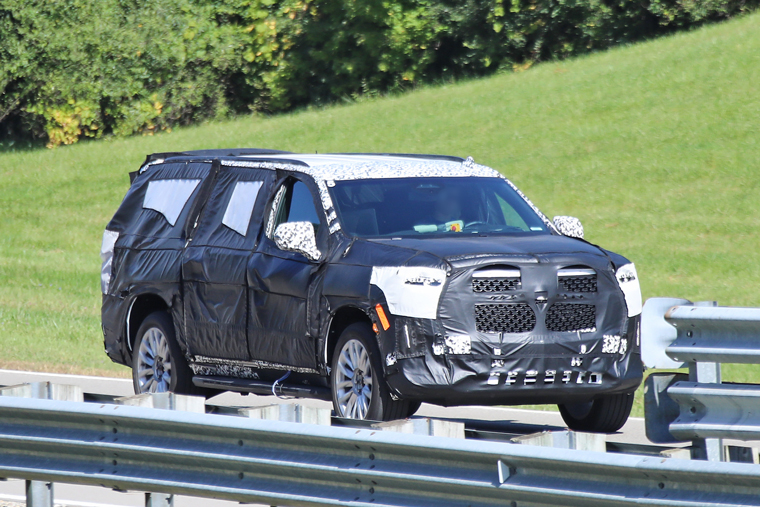
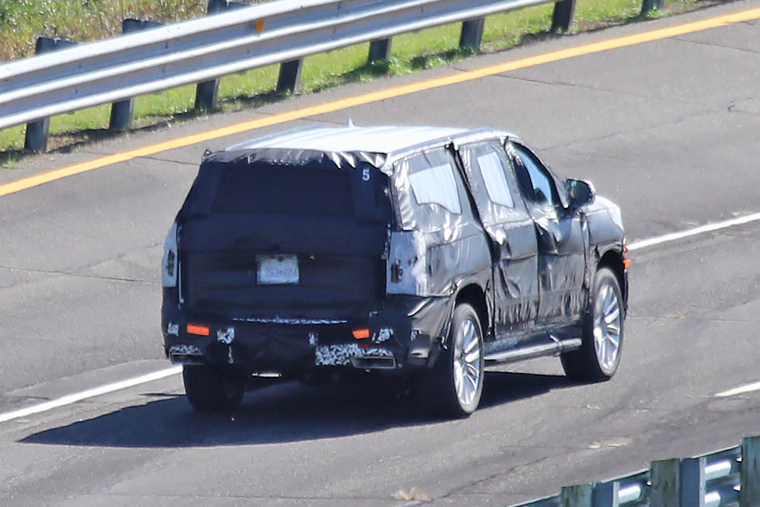
The upcoming ’21 Cadillac Escalade is still running in full camo, but engineers did remove an important part of the cladding—the covering over part of the front end, providing a first look at the production-intent grille.

As shown by the photos, the grille follows the general design pattern introduced by the Cadillac XT4 and CT5. Also take note of the size of this thing—the grille looks truly massive, giving the upcoming luxury SUV a great deal of presence on the road.

The next-gen Escalade is expected to launch for the ’21 model year. It will represent a complete redesign over the current model.

Cadillac

Photo credit: Brian Williams, SpiedBilde

Thu, 10/10/2019 - 08:41

Cadillac

The upcoming ’21 Cadillac Escalade is still running in full camo, but engineers did remove an important part of the cladding—the covering over part of the front end, providing a first look at the production-intent grille.

As shown by the photos, the grille follows the general design pattern introduced by the Cadillac XT4 and CT5. Also take note of the size of this thing—the grille looks truly massive, giving the upcoming luxury SUV a great deal of presence on the road.

The next-gen Escalade is expected to launch for the ’21 model year. It will represent a complete redesign over the current model.

Cadillac

Photo credit: Brian Williams, SpiedBilde

Thu, 10/10/2019 - 08:41

Cadillac

The upcoming ’21 Cadillac Escalade is still running in full camo, but engineers did remove an important part of the cladding—the covering over part of the front end, providing a first look at the production-intent grille.

As shown by the photos, the grille follows the general design pattern introduced by the Cadillac XT4 and CT5. Also take note of the size of this thing—the grille looks truly massive, giving the upcoming luxury SUV a great deal of presence on the road.

The next-gen Escalade is expected to launch for the ’21 model year. It will represent a complete redesign over the current model.

Cadillac

Photo credit: Brian Williams, SpiedBilde

Thu, 10/10/2019 - 08:12

By SEMA Washington, D.C., Staff

The U.S. Bureau of Land Management (BLM) has issued updated travel management plans for nine separate areas within the 2006 West Mojave Planning Area. The planning area covers 9.4 million acres of land of which about 3.1 million acres of public lands are administered by the BLM. The revised travel management plans impact motor-vehicle access and recreation along with livestock grazing. The plans cover 6,247 miles of off-highway vehicle (OHV) Open and Limited routes and 248 miles of OHV Closed routes that include non-motorized and nonmechanized use designations.

For more information, visit the BLM website.

Questions? Contact Stuart Gosswein at stuartg@sema.org.

Thu, 10/10/2019 - 08:12

By SEMA Washington, D.C., Staff

The U.S. Bureau of Land Management (BLM) has issued updated travel management plans for nine separate areas within the 2006 West Mojave Planning Area. The planning area covers 9.4 million acres of land of which about 3.1 million acres of public lands are administered by the BLM. The revised travel management plans impact motor-vehicle access and recreation along with livestock grazing. The plans cover 6,247 miles of off-highway vehicle (OHV) Open and Limited routes and 248 miles of OHV Closed routes that include non-motorized and nonmechanized use designations.

For more information, visit the BLM website.

Questions? Contact Stuart Gosswein at stuartg@sema.org.

Thu, 10/10/2019 - 08:12

By SEMA Washington, D.C., Staff

The U.S. Bureau of Land Management (BLM) has issued updated travel management plans for nine separate areas within the 2006 West Mojave Planning Area. The planning area covers 9.4 million acres of land of which about 3.1 million acres of public lands are administered by the BLM. The revised travel management plans impact motor-vehicle access and recreation along with livestock grazing. The plans cover 6,247 miles of off-highway vehicle (OHV) Open and Limited routes and 248 miles of OHV Closed routes that include non-motorized and nonmechanized use designations.

For more information, visit the BLM website.

Questions? Contact Stuart Gosswein at stuartg@sema.org.

Thu, 10/10/2019 - 08:04

By SEMA Washington, D.C., Staff

The U.S. Trade Representative (USTR) has processed additional requests for exclusions from the 25% tariffs imposed on Lists 1 and 2 imports from China. About 200 product lines were exempted, ranging from thermometers, tubes and adhesive tape, to a variety of DC electric motors. 

Many exclusion requests have yet to be processed by the USTR for List 1, List 2 and List 3 imports. For products not exempted, the 25% tariffs are scheduled to increase to 30% on October 15, 2019. Lists 1 and 2 goods are valued at $50 billion and include some miscellaneous metal and rubber parts for auto equipment, machinery, tools and measurement devices. List 3 covers about $200 billion worth of products, including many auto parts, from engines and metal fasteners to tires, transmission belts, brake pads and suspension springs.

View the products granted exemptions:

  • List 1: Implemented July 6, 2018: exclusion lasts until October 2, 2020.
  • List 2: Implemented August 23, 2018: exclusion lasts until October 2, 2020.

In other news, the U.S. government is imposing tariffs against the European Union for subsidies provided to Airbus that were ruled illegal by the World Trade Organization. It is a 15-year battle between Airbus and Boeing. While the United States was also found to have provided Boeing with illegal subsidies, the case was delayed for nine months, preventing the EU from enacting retaliatory tariffs until next year. The $7.5 billion in U.S. tariffs will take effect October 18. Tariffs of 10% will be imposed on large civil aircraft and 25% tariffs will be assessed on agricultural and other products. Imported motorcycles were on the initial proposed product list but have been removed from the final list.

Thu, 10/10/2019 - 08:04

By SEMA Washington, D.C., Staff

The U.S. Trade Representative (USTR) has processed additional requests for exclusions from the 25% tariffs imposed on Lists 1 and 2 imports from China. About 200 product lines were exempted, ranging from thermometers, tubes and adhesive tape, to a variety of DC electric motors. 

Many exclusion requests have yet to be processed by the USTR for List 1, List 2 and List 3 imports. For products not exempted, the 25% tariffs are scheduled to increase to 30% on October 15, 2019. Lists 1 and 2 goods are valued at $50 billion and include some miscellaneous metal and rubber parts for auto equipment, machinery, tools and measurement devices. List 3 covers about $200 billion worth of products, including many auto parts, from engines and metal fasteners to tires, transmission belts, brake pads and suspension springs.

View the products granted exemptions:

  • List 1: Implemented July 6, 2018: exclusion lasts until October 2, 2020.
  • List 2: Implemented August 23, 2018: exclusion lasts until October 2, 2020.

In other news, the U.S. government is imposing tariffs against the European Union for subsidies provided to Airbus that were ruled illegal by the World Trade Organization. It is a 15-year battle between Airbus and Boeing. While the United States was also found to have provided Boeing with illegal subsidies, the case was delayed for nine months, preventing the EU from enacting retaliatory tariffs until next year. The $7.5 billion in U.S. tariffs will take effect October 18. Tariffs of 10% will be imposed on large civil aircraft and 25% tariffs will be assessed on agricultural and other products. Imported motorcycles were on the initial proposed product list but have been removed from the final list.

Thu, 10/10/2019 - 08:04

By SEMA Washington, D.C., Staff

The U.S. Trade Representative (USTR) has processed additional requests for exclusions from the 25% tariffs imposed on Lists 1 and 2 imports from China. About 200 product lines were exempted, ranging from thermometers, tubes and adhesive tape, to a variety of DC electric motors. 

Many exclusion requests have yet to be processed by the USTR for List 1, List 2 and List 3 imports. For products not exempted, the 25% tariffs are scheduled to increase to 30% on October 15, 2019. Lists 1 and 2 goods are valued at $50 billion and include some miscellaneous metal and rubber parts for auto equipment, machinery, tools and measurement devices. List 3 covers about $200 billion worth of products, including many auto parts, from engines and metal fasteners to tires, transmission belts, brake pads and suspension springs.

View the products granted exemptions:

  • List 1: Implemented July 6, 2018: exclusion lasts until October 2, 2020.
  • List 2: Implemented August 23, 2018: exclusion lasts until October 2, 2020.

In other news, the U.S. government is imposing tariffs against the European Union for subsidies provided to Airbus that were ruled illegal by the World Trade Organization. It is a 15-year battle between Airbus and Boeing. While the United States was also found to have provided Boeing with illegal subsidies, the case was delayed for nine months, preventing the EU from enacting retaliatory tariffs until next year. The $7.5 billion in U.S. tariffs will take effect October 18. Tariffs of 10% will be imposed on large civil aircraft and 25% tariffs will be assessed on agricultural and other products. Imported motorcycles were on the initial proposed product list but have been removed from the final list.

Thu, 10/10/2019 - 07:44

By Della Domingo

MPMC
During the Media Trade Conference, manufacturers supply technical and product information with dozens of editorial staff from print and digital outlets in prescheduled, 30-minute meetings.

Journalists are invited to sign up for the 2020 Motorsports Parts Manufacturers Council (MPMC) Media Trade Conference, taking place Tuesday–Thursday, January 21–23, 2020, at the Embassy Suites Orange County Airport North in Santa Ana, California, where participating journalists will sit down in up to 42 (14 each day) private, uninterrupted meetings with executives from top motorsports parts manufacturers in the industry.

Company representatives come to the meetings prepared to discuss everything from their newest product lines, changes at their companies and industry trends during their meetings with editors. Additionally, afternoon lunches and breaks provide further opportunities for meetings and networking.

Media participation is free for all editorial representatives, making it the most affordable and efficient way for reporters to get detailed information specific to their audience’s needs and interests while gathering a year’s worth of editorial content.

Early registration guarantees that reporters will receive the best possible schedules prior to the event. Meetings are scheduled based on the companies that journalists select on their applications, so participants are encouraged to pay close attention to the companies they select. Journalists should also mark “Do Not Meet” for the companies outside of their editorial needs.

For questions regarding the event, visit SEMA’s website or contact Juan Torres, SEMA media relations specialist, at juant@sema.org or 909-978-6722.