Sun, 12/01/2019 - 10:56

SEMA News—December 2019

INDUSTRY NEWS

Photos courtesy SpiedBilde, Brian Williams. Reuse or reproduction without the copyright holder’s consent is prohibited.

McLaren 750LT Long Tail Mule

McLaren is understood to be readying a faster, lighter Long Tail version of the 720S for launch next year, and a prototype caught testing appears to confirm it.

Although this mule appears to be a standard 720S with some modifications, telltale cues include Gurney flaps and a substantially larger front splitter. Although the traditional Long Tail extended rear end doesn’t feature in this early mule, the extended spoiler plastered in tape suggests engineers are testing for such bodywork modifications prior to completing them.

McLaren has yet to confirm whether it will use the 750LT name for the Long Tail model, but a 750hp figure is expected.

McLaren
McLaren

’21 Jeep Grand Wagoneer Mule

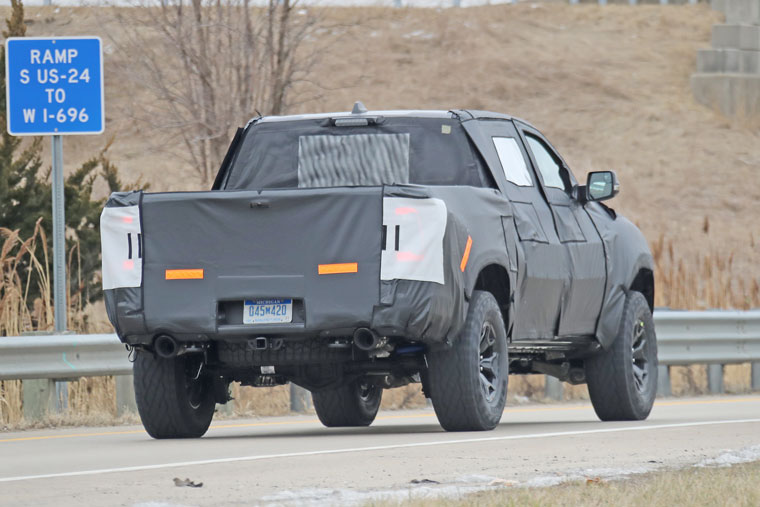
This is a mule for the ’21 Jeep Wagoneer, caught flexing in Death Valley, California. The Wagoneer and larger Grand Wagoneer will be based off the ’19 RAM 1500 platform.

Wagoneer models will get independent rear suspension for better ride as well as interior packaging to fit in a third-row seat. Adjustable ride height is also expected to be lifted from the RAM. It’s predicted that V6 and V8 engines will be offered, while a new inline-six with a turbo and 48-volt mild hybrid system is also expected to be introduced on the Jeep models. A plug-in hybrid variant is also projected after initial launch.

Expect to see the Wagoneer and Grand Wagoneer as early as spring 2020, likely at the New York Auto Show.


Jeep
Jeep

’20 C8 Corvette in Rapid Blue

Here’s the ’20 Chevy Corvette Stingray in Rapid Blue, providing a more complete look at the new color. The bright-blue hue is notably lighter than the Elkhart Lake Blue Metallic shared earlier.

The prototype seen here is wearing the optional Z51 performance package, has a body-color rear spoiler and the optional carbon-flash double five-spoke wheels. It was caught around the Milford Proving Grounds undergoing testing.

Corvette
Corvette
Sun, 12/01/2019 - 10:56

SEMA News—December 2019

INDUSTRY NEWS

Photos courtesy SpiedBilde, Brian Williams. Reuse or reproduction without the copyright holder’s consent is prohibited.

McLaren 750LT Long Tail Mule

McLaren is understood to be readying a faster, lighter Long Tail version of the 720S for launch next year, and a prototype caught testing appears to confirm it.

Although this mule appears to be a standard 720S with some modifications, telltale cues include Gurney flaps and a substantially larger front splitter. Although the traditional Long Tail extended rear end doesn’t feature in this early mule, the extended spoiler plastered in tape suggests engineers are testing for such bodywork modifications prior to completing them.

McLaren has yet to confirm whether it will use the 750LT name for the Long Tail model, but a 750hp figure is expected.

McLaren
McLaren

’21 Jeep Grand Wagoneer Mule

This is a mule for the ’21 Jeep Wagoneer, caught flexing in Death Valley, California. The Wagoneer and larger Grand Wagoneer will be based off the ’19 RAM 1500 platform.

Wagoneer models will get independent rear suspension for better ride as well as interior packaging to fit in a third-row seat. Adjustable ride height is also expected to be lifted from the RAM. It’s predicted that V6 and V8 engines will be offered, while a new inline-six with a turbo and 48-volt mild hybrid system is also expected to be introduced on the Jeep models. A plug-in hybrid variant is also projected after initial launch.

Expect to see the Wagoneer and Grand Wagoneer as early as spring 2020, likely at the New York Auto Show.


Jeep
Jeep

’20 C8 Corvette in Rapid Blue

Here’s the ’20 Chevy Corvette Stingray in Rapid Blue, providing a more complete look at the new color. The bright-blue hue is notably lighter than the Elkhart Lake Blue Metallic shared earlier.

The prototype seen here is wearing the optional Z51 performance package, has a body-color rear spoiler and the optional carbon-flash double five-spoke wheels. It was caught around the Milford Proving Grounds undergoing testing.

Corvette
Corvette
Sun, 12/01/2019 - 10:56

SEMA News—December 2019

INDUSTRY NEWS

Photos courtesy SpiedBilde, Brian Williams. Reuse or reproduction without the copyright holder’s consent is prohibited.

McLaren 750LT Long Tail Mule

McLaren is understood to be readying a faster, lighter Long Tail version of the 720S for launch next year, and a prototype caught testing appears to confirm it.

Although this mule appears to be a standard 720S with some modifications, telltale cues include Gurney flaps and a substantially larger front splitter. Although the traditional Long Tail extended rear end doesn’t feature in this early mule, the extended spoiler plastered in tape suggests engineers are testing for such bodywork modifications prior to completing them.

McLaren has yet to confirm whether it will use the 750LT name for the Long Tail model, but a 750hp figure is expected.

McLaren
McLaren

’21 Jeep Grand Wagoneer Mule

This is a mule for the ’21 Jeep Wagoneer, caught flexing in Death Valley, California. The Wagoneer and larger Grand Wagoneer will be based off the ’19 RAM 1500 platform.

Wagoneer models will get independent rear suspension for better ride as well as interior packaging to fit in a third-row seat. Adjustable ride height is also expected to be lifted from the RAM. It’s predicted that V6 and V8 engines will be offered, while a new inline-six with a turbo and 48-volt mild hybrid system is also expected to be introduced on the Jeep models. A plug-in hybrid variant is also projected after initial launch.

Expect to see the Wagoneer and Grand Wagoneer as early as spring 2020, likely at the New York Auto Show.


Jeep
Jeep

’20 C8 Corvette in Rapid Blue

Here’s the ’20 Chevy Corvette Stingray in Rapid Blue, providing a more complete look at the new color. The bright-blue hue is notably lighter than the Elkhart Lake Blue Metallic shared earlier.

The prototype seen here is wearing the optional Z51 performance package, has a body-color rear spoiler and the optional carbon-flash double five-spoke wheels. It was caught around the Milford Proving Grounds undergoing testing.

Corvette
Corvette
Sun, 12/01/2019 - 10:51

SEMA News—December 2019

INTERNET

By Joe Dysart

Hackers’ New Trick: Stealing Your Computing Processing Power

Hacker
Hackers have a new trick: stealing your computing processing power when you’re not looking.

In a marked shift from previous years, hackers are much more likely these days to be bent on stealing your computing processing power than embedding ransomware or other malware in your network, according to a March 2019 report from IBM (www.ibm.com/security/data-breach/threat-intelligence). That’s because it’s much safer for hackers to simply steal your computing processing power over the internet—and use it for mining crypto currencies such as Bitcoin—than to get involved in planting other criminal software on business and corporate networks, according to the report’s authors.

“One of the hottest commodities is computing power tied to the emergence of crypto currencies,” said Wendi Whitmore, global lead for IBM X-Force Incident Response and Intelligence Services. “That has led to corporate networks and consumer devices being secretly hijacked to mine for those digital currencies.”

Added Kevin Haley, director of Symantec Security Response: “Now you could be fighting for resources on your phone, computer or Internet of Things device as attackers use them for profit.”

All told, the number of computer users reportedly impacted by “Black Hat” mining was more than five million in 2018 (up from 2.7 million the prior year), according to a report from IT security firm Kapersky Lab (www.tinyurl.com/securelist-com-kaspersky). The number is most likely much higher, given that it’s often very difficult to detect when a Black Hat miner has actually infiltrated a network or computer.

The reports from IBM and Kapersky are an eye-opening shift in hacker tactics, given that so many corporations and individuals are currently fixated on preventing ransomware and other malware attacks and so few realize that hackers have now moved on to stealing computing processing power. One of the most vexing aspects of that theft—also known as crypto-jacking—is that it can be so clandestine.

Many hackers running the scam are often careful to steal computer-processing power only when a computer or smartphone is not in use. The most careful of them steal power during the off hours, when computers are on but people are most likely sleeping.

Other hackers are especially crafty in camouflaging mining programs as legitimate software. For example, Kapersky Labs has uncovered a mining program that looks like an Adobe product installed on your computing device—complete with a fake Adobe icon, a fake Adobe executable file and a fake Adobe digital signature, according to Evgeny Lopatin, a security expert at the IT firm.

“Malware, especially cryptominers, continually evolves to avoid detection, often hiding in memory or delivering malicious code directly into the memory of a system,” added Intel Security General Manager Jim Gordon.

The impact on individuals and companies overall can be significant. Computer power theft generally results in a slowdown in computing performance while the theft is underway, making it more difficult to work on your device and decreasing your overall productivity. Computers can also become unstable during a theft, and hackers hijacking computers for mining often have no qualms about driving computer processors and supporting systems at maximum speed, which often results in shortening the life of the devices or overheating their batteries.

That is why computers hijacked by Black Hat miners often have their fans running at full speed: The fans are trying to cool computer processors running hot at maximum speed.

In addition, the results of the thievery also show up in inflated electricity bills, and added costs show up for companies using cloud connections that are compromised by the thieves. Bills for CPU usage can be much higher.

“The massive profit incentive puts people, devices and organizations at risk,” said Mike Fey, president and COO of Symantec.

Unfortunately, the problem of computer processing theft will most likely be with us as long as crypto currencies such as Bitcoin, Ethereum and Monero remain popular, Haley added. That’s especially true when the values of crypto currencies soar.

While the early value of a Bitcoin was at times less than a penny in 2010, for example, the price of a single Bitcoin soared in value to $20,000 by 2018 (www.coindesk.com/price/bitcoin). The value has since dropped significantly, but the “coins” are still apparently worth thieving for even at that rate.

Hackers discovered the market for Black Hat mining as crypto currencies burgeoned and grew to rely on thousands of computers across the world to maintain their systems. Essentially, the currency systems need those networks to verify all the transactions associated with digital coin transactions and to perform overall auditing of their systems.

Scores of legitimate computer networks regularly perform that work and are paid in new digital crypto-currency “coins” after they complete a pre-agreed amount of auditing. That’s why the computer networks are called “miners.” They “mine” new crypto-currency coins by working as auditors for the crypto-currency systems.

Black Hat miners do the same work as their legitimate counterparts, with one major difference: Instead of using their own computer networks, Black Hat miners unleash malware onto the web that transforms thousands of computers, smartphones and other computer devices into a mining zombie network. Together, that stolen processing power is used to mine crypto currency.

IT security experts say that companies should currently be on the lookout for two types of Black Hat crypto-mining. The first comes in the same format as our old friend, malware. It’s generally secretly downloaded to a computerized device via a rogue link and executes as a working mining program at the hacker’s whim.

The second major form of Black Hat mining occurs while users surf the web. Surfers get hit when they visit a webpage that has been reprogrammed by a Black Hat miner. The thieving script injected into the page steals computer processing power as long as the user remains at the website.

In fact, millions of Android users were afflicted with this form of Black Hat mining in 2018, according to IT security firm Malwarebytes (www.tinyurl.com/malwarebytes-com-threat).

Fortunately, best practices for combating computer-processing power theft generally mirror those used by companies for protecting against other kinds of malware. Companies best prepared are those that have:

  • Gold-plated firewall systems.
  • IT network security software.
  • Regularly installed security updates for all software.
  • Employee education programs that train staff to beware of suspicious emails, suspicious websites and suspicious phone callers asking for passwords and other network access information.

“People need to expand their defenses or they will pay the price for someone else using their devices,” said Symantec’s Haley.

Individual computer users can further protect themselves by installing browser extensions that help protect against Black Hat mining, such as the following:

And they can also test to see if their web browsers have been corrupted by Black Hat miners with a free service from Opera Browser (www.cryptojackingtest.com).

Meanwhile, network administrators can use tools such as WhatsUp Gold, by Ipswitch (www.tinyurl.com/ipswitch-network). WhatsUp enables them to monitor for CPU usage spikes over time and set up alerts for when CPU usage exceeds a threshold. The app can also be specially tuned to monitor a network’s CPU usage during off hours—the witching hour for many Black Hat miners.

In some ways, this latest sleight of hand from hackers seems like so many others they’ve used to take advantage of everyday computer users. The only real difference this time is that it’s so insidious. With Black Hat mining, it could take months or even years for a company to discover that a hacker is taking small sips of its network computer-processing power when no one is looking.

Joe Dysart is an internet speaker and business consultant based in Manhattan.

646-233-4089

joe@joedysart.com

www.joedysart.com

Sun, 12/01/2019 - 10:51

SEMA News—December 2019

INTERNET

By Joe Dysart

Hackers’ New Trick: Stealing Your Computing Processing Power

Hacker
Hackers have a new trick: stealing your computing processing power when you’re not looking.

In a marked shift from previous years, hackers are much more likely these days to be bent on stealing your computing processing power than embedding ransomware or other malware in your network, according to a March 2019 report from IBM (www.ibm.com/security/data-breach/threat-intelligence). That’s because it’s much safer for hackers to simply steal your computing processing power over the internet—and use it for mining crypto currencies such as Bitcoin—than to get involved in planting other criminal software on business and corporate networks, according to the report’s authors.

“One of the hottest commodities is computing power tied to the emergence of crypto currencies,” said Wendi Whitmore, global lead for IBM X-Force Incident Response and Intelligence Services. “That has led to corporate networks and consumer devices being secretly hijacked to mine for those digital currencies.”

Added Kevin Haley, director of Symantec Security Response: “Now you could be fighting for resources on your phone, computer or Internet of Things device as attackers use them for profit.”

All told, the number of computer users reportedly impacted by “Black Hat” mining was more than five million in 2018 (up from 2.7 million the prior year), according to a report from IT security firm Kapersky Lab (www.tinyurl.com/securelist-com-kaspersky). The number is most likely much higher, given that it’s often very difficult to detect when a Black Hat miner has actually infiltrated a network or computer.

The reports from IBM and Kapersky are an eye-opening shift in hacker tactics, given that so many corporations and individuals are currently fixated on preventing ransomware and other malware attacks and so few realize that hackers have now moved on to stealing computing processing power. One of the most vexing aspects of that theft—also known as crypto-jacking—is that it can be so clandestine.

Many hackers running the scam are often careful to steal computer-processing power only when a computer or smartphone is not in use. The most careful of them steal power during the off hours, when computers are on but people are most likely sleeping.

Other hackers are especially crafty in camouflaging mining programs as legitimate software. For example, Kapersky Labs has uncovered a mining program that looks like an Adobe product installed on your computing device—complete with a fake Adobe icon, a fake Adobe executable file and a fake Adobe digital signature, according to Evgeny Lopatin, a security expert at the IT firm.

“Malware, especially cryptominers, continually evolves to avoid detection, often hiding in memory or delivering malicious code directly into the memory of a system,” added Intel Security General Manager Jim Gordon.

The impact on individuals and companies overall can be significant. Computer power theft generally results in a slowdown in computing performance while the theft is underway, making it more difficult to work on your device and decreasing your overall productivity. Computers can also become unstable during a theft, and hackers hijacking computers for mining often have no qualms about driving computer processors and supporting systems at maximum speed, which often results in shortening the life of the devices or overheating their batteries.

That is why computers hijacked by Black Hat miners often have their fans running at full speed: The fans are trying to cool computer processors running hot at maximum speed.

In addition, the results of the thievery also show up in inflated electricity bills, and added costs show up for companies using cloud connections that are compromised by the thieves. Bills for CPU usage can be much higher.

“The massive profit incentive puts people, devices and organizations at risk,” said Mike Fey, president and COO of Symantec.

Unfortunately, the problem of computer processing theft will most likely be with us as long as crypto currencies such as Bitcoin, Ethereum and Monero remain popular, Haley added. That’s especially true when the values of crypto currencies soar.

While the early value of a Bitcoin was at times less than a penny in 2010, for example, the price of a single Bitcoin soared in value to $20,000 by 2018 (www.coindesk.com/price/bitcoin). The value has since dropped significantly, but the “coins” are still apparently worth thieving for even at that rate.

Hackers discovered the market for Black Hat mining as crypto currencies burgeoned and grew to rely on thousands of computers across the world to maintain their systems. Essentially, the currency systems need those networks to verify all the transactions associated with digital coin transactions and to perform overall auditing of their systems.

Scores of legitimate computer networks regularly perform that work and are paid in new digital crypto-currency “coins” after they complete a pre-agreed amount of auditing. That’s why the computer networks are called “miners.” They “mine” new crypto-currency coins by working as auditors for the crypto-currency systems.

Black Hat miners do the same work as their legitimate counterparts, with one major difference: Instead of using their own computer networks, Black Hat miners unleash malware onto the web that transforms thousands of computers, smartphones and other computer devices into a mining zombie network. Together, that stolen processing power is used to mine crypto currency.

IT security experts say that companies should currently be on the lookout for two types of Black Hat crypto-mining. The first comes in the same format as our old friend, malware. It’s generally secretly downloaded to a computerized device via a rogue link and executes as a working mining program at the hacker’s whim.

The second major form of Black Hat mining occurs while users surf the web. Surfers get hit when they visit a webpage that has been reprogrammed by a Black Hat miner. The thieving script injected into the page steals computer processing power as long as the user remains at the website.

In fact, millions of Android users were afflicted with this form of Black Hat mining in 2018, according to IT security firm Malwarebytes (www.tinyurl.com/malwarebytes-com-threat).

Fortunately, best practices for combating computer-processing power theft generally mirror those used by companies for protecting against other kinds of malware. Companies best prepared are those that have:

  • Gold-plated firewall systems.
  • IT network security software.
  • Regularly installed security updates for all software.
  • Employee education programs that train staff to beware of suspicious emails, suspicious websites and suspicious phone callers asking for passwords and other network access information.

“People need to expand their defenses or they will pay the price for someone else using their devices,” said Symantec’s Haley.

Individual computer users can further protect themselves by installing browser extensions that help protect against Black Hat mining, such as the following:

And they can also test to see if their web browsers have been corrupted by Black Hat miners with a free service from Opera Browser (www.cryptojackingtest.com).

Meanwhile, network administrators can use tools such as WhatsUp Gold, by Ipswitch (www.tinyurl.com/ipswitch-network). WhatsUp enables them to monitor for CPU usage spikes over time and set up alerts for when CPU usage exceeds a threshold. The app can also be specially tuned to monitor a network’s CPU usage during off hours—the witching hour for many Black Hat miners.

In some ways, this latest sleight of hand from hackers seems like so many others they’ve used to take advantage of everyday computer users. The only real difference this time is that it’s so insidious. With Black Hat mining, it could take months or even years for a company to discover that a hacker is taking small sips of its network computer-processing power when no one is looking.

Joe Dysart is an internet speaker and business consultant based in Manhattan.

646-233-4089

joe@joedysart.com

www.joedysart.com

Sun, 12/01/2019 - 10:42

SEMA News—December 2019

By Chad Simon

EVENTS

Recognizing Leaders and Legends

The Industry Celebrates Its Trailblazers and Raises Money for SEMA Cares at the 2019 SEMA Installation & Gala

Installation & GalaAbout 500 members of the automotive specialty-parts industry attended the 2019 SEMA Installation & Gala, themed “Recognizing Leaders and Legends,” at the Anaheim Marriott in Anaheim, California, on July 26, to pay tribute to the specialty-equipment industry’s pioneers and dedicated volunteers.

About 500 members of the automotive specialty-parts industry attended the 2019 SEMA Installation & Gala, themed “Recognizing Leaders and Legends,” at the Anaheim Marriott in Anaheim, California, on July 26, to pay tribute to the specialty-equipment industry’s pioneers and dedicated volunteers.

Jarod DeAnda and the late Jessi Combs served as the evening’s emcees. Honorees included the SEMA Hall of Fame class of 2019—Bob Chandler, Bigfoot 4x4; Bruce Crower, Crower Cams & Equipment Co.; and Marla Moore, Legendary Companies.

The festivities kicked off with the Pinewood Drag Races—an annual fundraiser for SEMA Cares charities, including Childhelp, Victory Junction and Austin Hatcher Foundation for Pediatric Cancer. In addition to the Build-It-For-Me (BIFM) class, the races included the Council Cup, People’s Choice, several different industry classes and Industry Cup Challenge. Children living at the Childhelp facilities and Victory Junction campers built the vehicles for the BIFM class and donors sponsored their racecars for $95. This year, SEMA Cares raised a total of $43,355 for its three partner charities.

Shortly after the races ended, SEMA President and CEO Chris Kersting and Chairman of the Board Tim Martin took the stage to personally recognize the efforts of outgoing Board of Directors officials and welcome the incoming Board. They included:

Immediate Past Chair/Secretary:

  • Doug Evans of Crower Cams & Equipment Co. Inc. (outgoing)

Treasurer:

  • Peter Lehman of Granite Creek Capital Partners LLC (outgoing)

Board Members:

  • Kyle Fickler, Aeromotive Inc. (outgoing)
  • James Lawrence, Power Automedia (outgoing)

Chair-Elect:

  • James Lawrence, Power Automedia (incoming)

Manufacturer’s Category:

  • Kathryn Reinhardt of Pilot Automotive (incoming)
  • Melanie White of Hellwig Products (incoming)

Treasurer:

  • Kyle Fickler of Aeromotive Inc. (incoming)

Here’s a look at the pinewood leaderboard:

Council Cup

First Place: ETTN
Second Place: ARMO
Third Place: SBN

Build It For Me Class (cars and trucks built by kids)

First Place: James Holmes. Holmes Enterprises
Second Place: James Holmes. Holmes Enterprises
Third Place: Gregg Ovist, Geezup

People’s Choice

Gregg Ovist, Geezup

Unlimited:

First Place: Comp Performance Group
Second Place: Comp Performance Group
Third Place: Wes Mills, Mills Crafts

Stock:

First Place: Rebeca Olavarrieta, Roco 4x4—Average lap time: 2.6327
Second Place: Elena Gurganian, Piston Driven LLC—Average lap time: 2.6466
Third Place: Gregg Ovist, Geezup—Average lap time: 2.6616
Fourth Place: Car #6, Kevin Tanaka—Average lap time: 2.6592

Industry Cup Challenge

First Place Champion: PSKB Rep Firm, Bob Knight
Second Place: Car #13 Hellwig Products, Melanie White
Third Place: Car #1 All Pro Distributing, Mandi Woodell

Media Class: Motor Trend Network
Service Provider’s Class: E Tool Developers
Rep Agency Class: PSKB
Warehouse Distributor Class: All Pro Distributing
Manufacturer’s Class: Hellwig Products

While the racing is over, it’s not too late to make a direct donation to Childhelp and Victory Junction via SEMA Cares.

The following photos showcase activities from the 2019 SEMA Installation & Gala:

Hosts StageThe Gala was emceed by industry personalities Jarod DeAnda (right) and the late Jessi Combs.Chris KerstingSEMA President and CEO Chris Kersting welcomed attendees to the Installation & Gala.
Tim MartinNew SEMA Board Chairman Tim Martin took the stage to personally recognize the efforts of outgoing Board of Directors officials and welcome the incoming Board.Bob Chandler2019 SEMA Hall of Fame inductee Bob Chandler.


Crower FamilyThe family of Bruce Crower, who had passed away, accepted the SEMA Hall of Fame honor on his behalf.Marla Moore2019 SEMA Hall of Fame inductee Marla Moore.


Melanie WhiteSEMA Cares Chair Melanie White encouraged guests to sponsor a Pinewood car to help raise money for children’s charities.
Doug EvansOutgoing Immediate Past Chair/Secretary Doug Evans (second from right) of Crower Cams was recognized for his contributions.
Peter LehmanOutgoing Treasurer Peter Lehman (second from right) of Granite Creek Capital Partners LLC was thanked for his service to the industry.James LawrenceIncoming Chair-Elect James Lawrence (second from right) of Power Automedia was welcomed to his new role on the SEMA Board of Directors.
Chris DouglasChris Douglas (second from right) of COMP Performance Group will continue his role on the SEMA Board of Directors.Kathryn Reinhardt
Kathryn Reinhardt (second from right) of Pilot Automotive was welcomed to the SEMA Board of Directors.
Les RuddLes Rudd (second from right) of Bob Cook Sales will continue his role on the SEMA Board of Directors.Melanie WhiteMelanie White (second from right) of Hellwig Products was welcomed to the SEMA Board of Directors.
Drag RaceThis year’s Pinewood Drag Races brought in a total of $43,355 for SEMA Cares charities.SEMA BoardThe 2019–2020 SEMA Board of Directors.


Sun, 12/01/2019 - 10:42

SEMA News—December 2019

By Chad Simon

EVENTS

Recognizing Leaders and Legends

The Industry Celebrates Its Trailblazers and Raises Money for SEMA Cares at the 2019 SEMA Installation & Gala

Installation & GalaAbout 500 members of the automotive specialty-parts industry attended the 2019 SEMA Installation & Gala, themed “Recognizing Leaders and Legends,” at the Anaheim Marriott in Anaheim, California, on July 26, to pay tribute to the specialty-equipment industry’s pioneers and dedicated volunteers.

About 500 members of the automotive specialty-parts industry attended the 2019 SEMA Installation & Gala, themed “Recognizing Leaders and Legends,” at the Anaheim Marriott in Anaheim, California, on July 26, to pay tribute to the specialty-equipment industry’s pioneers and dedicated volunteers.

Jarod DeAnda and the late Jessi Combs served as the evening’s emcees. Honorees included the SEMA Hall of Fame class of 2019—Bob Chandler, Bigfoot 4x4; Bruce Crower, Crower Cams & Equipment Co.; and Marla Moore, Legendary Companies.

The festivities kicked off with the Pinewood Drag Races—an annual fundraiser for SEMA Cares charities, including Childhelp, Victory Junction and Austin Hatcher Foundation for Pediatric Cancer. In addition to the Build-It-For-Me (BIFM) class, the races included the Council Cup, People’s Choice, several different industry classes and Industry Cup Challenge. Children living at the Childhelp facilities and Victory Junction campers built the vehicles for the BIFM class and donors sponsored their racecars for $95. This year, SEMA Cares raised a total of $43,355 for its three partner charities.

Shortly after the races ended, SEMA President and CEO Chris Kersting and Chairman of the Board Tim Martin took the stage to personally recognize the efforts of outgoing Board of Directors officials and welcome the incoming Board. They included:

Immediate Past Chair/Secretary:

  • Doug Evans of Crower Cams & Equipment Co. Inc. (outgoing)

Treasurer:

  • Peter Lehman of Granite Creek Capital Partners LLC (outgoing)

Board Members:

  • Kyle Fickler, Aeromotive Inc. (outgoing)
  • James Lawrence, Power Automedia (outgoing)

Chair-Elect:

  • James Lawrence, Power Automedia (incoming)

Manufacturer’s Category:

  • Kathryn Reinhardt of Pilot Automotive (incoming)
  • Melanie White of Hellwig Products (incoming)

Treasurer:

  • Kyle Fickler of Aeromotive Inc. (incoming)

Here’s a look at the pinewood leaderboard:

Council Cup

First Place: ETTN
Second Place: ARMO
Third Place: SBN

Build It For Me Class (cars and trucks built by kids)

First Place: James Holmes. Holmes Enterprises
Second Place: James Holmes. Holmes Enterprises
Third Place: Gregg Ovist, Geezup

People’s Choice

Gregg Ovist, Geezup

Unlimited:

First Place: Comp Performance Group
Second Place: Comp Performance Group
Third Place: Wes Mills, Mills Crafts

Stock:

First Place: Rebeca Olavarrieta, Roco 4x4—Average lap time: 2.6327
Second Place: Elena Gurganian, Piston Driven LLC—Average lap time: 2.6466
Third Place: Gregg Ovist, Geezup—Average lap time: 2.6616
Fourth Place: Car #6, Kevin Tanaka—Average lap time: 2.6592

Industry Cup Challenge

First Place Champion: PSKB Rep Firm, Bob Knight
Second Place: Car #13 Hellwig Products, Melanie White
Third Place: Car #1 All Pro Distributing, Mandi Woodell

Media Class: Motor Trend Network
Service Provider’s Class: E Tool Developers
Rep Agency Class: PSKB
Warehouse Distributor Class: All Pro Distributing
Manufacturer’s Class: Hellwig Products

While the racing is over, it’s not too late to make a direct donation to Childhelp and Victory Junction via SEMA Cares.

The following photos showcase activities from the 2019 SEMA Installation & Gala:

Hosts StageThe Gala was emceed by industry personalities Jarod DeAnda (right) and the late Jessi Combs.Chris KerstingSEMA President and CEO Chris Kersting welcomed attendees to the Installation & Gala.
Tim MartinNew SEMA Board Chairman Tim Martin took the stage to personally recognize the efforts of outgoing Board of Directors officials and welcome the incoming Board.Bob Chandler2019 SEMA Hall of Fame inductee Bob Chandler.


Crower FamilyThe family of Bruce Crower, who had passed away, accepted the SEMA Hall of Fame honor on his behalf.Marla Moore2019 SEMA Hall of Fame inductee Marla Moore.


Melanie WhiteSEMA Cares Chair Melanie White encouraged guests to sponsor a Pinewood car to help raise money for children’s charities.
Doug EvansOutgoing Immediate Past Chair/Secretary Doug Evans (second from right) of Crower Cams was recognized for his contributions.
Peter LehmanOutgoing Treasurer Peter Lehman (second from right) of Granite Creek Capital Partners LLC was thanked for his service to the industry.James LawrenceIncoming Chair-Elect James Lawrence (second from right) of Power Automedia was welcomed to his new role on the SEMA Board of Directors.
Chris DouglasChris Douglas (second from right) of COMP Performance Group will continue his role on the SEMA Board of Directors.Kathryn Reinhardt
Kathryn Reinhardt (second from right) of Pilot Automotive was welcomed to the SEMA Board of Directors.
Les RuddLes Rudd (second from right) of Bob Cook Sales will continue his role on the SEMA Board of Directors.Melanie WhiteMelanie White (second from right) of Hellwig Products was welcomed to the SEMA Board of Directors.
Drag RaceThis year’s Pinewood Drag Races brought in a total of $43,355 for SEMA Cares charities.SEMA BoardThe 2019–2020 SEMA Board of Directors.


Sun, 12/01/2019 - 10:37

SEMA News—December 2019

INTERNET

By Joe Dysart

New Tools for Affiliate Marketing

Web
Affiliate marketing is a tried-and-true method for driving increased sales.

Long established as an easy way for businesses to generate referred sales from other websites, affiliate marketing has only gained in popularity in recent years, bringing in significant pay-for-performance sales. One of the primary reasons the marketing concept has remained so popular is its simplicity: Encourage websites to post links advertising your product or service, then pay them a small commission for each sale they generate.

“When done right, it cultivates mutually beneficial and authentic relationships between brands and publishers,” said Adam Weiss, general manager and senior vice president at Rakuten Affiliate Network (www.rakutenmarketing.com/affiliate).

In fact, more than 80% of advertisers spend 10% of their marketing budgets on affiliate marketing, according to a recent study by market research firm Forrester (https://go.forrester.com), and 84% of publishers run affiliate programs.

One of the greatest advantages of affiliate marketing is that it offers businesses the opportunity to seek a wide variety of websites that can sell for them. Essentially, you can partner with a traditional publisher, such as an online media company, but you’re also free to try out nontraditional websites for sales referrals, such as blogs, mailing lists and channels on YouTube.

For businesses, the best affiliate deals are usually pay-for-performance: You pay a commission only if a click on an affiliate’s link to your website results in a sale. Other deals offer affiliates payment simply for posting your advertisement and link on their sites.

Among the best ways to get a taste for how affiliate marketing works is to check out an affiliate brokerage service. Those vendors essentially pair businesses with affiliates looking to advertise products. One of the most established of such brokerages is CJ Affiliate (www.cj.com). It’s been around more than a decade and has a well-established reputation as a straight shooter.

To give CJ Affiliate a whirl, all you need to do is register with the brokerage and detail what you’ll pay affiliates who send business your way. CJ Affiliate then takes care of the rest, publicizing your offer, keeping records of affiliates that send you business and making sure those affiliates get paid by you.

Of course, you’ll have to pay CJ Affiliate a cut of every sale that you make through its service, but many beginners are willing to pay the fee to avoid setting up and managing their own affiliate marketing system. And going with CJ Affiliate offers potential affiliates peace of mind: They know they can rely on CJ Affiliate to pay their commissions, as opposed to relying on your business (which may be unknown to them) to pay.

Once you’re up and running and have decided that affiliate marketing is for you, you may want to opt for other tools that enable you to up your game. Here’s a representative sampling of what you’ll find:

ClickInc (www.clickinc.com): Businesses looking to take their affiliate programs in-house can use a service like ClickInc, which will manage the details of the affiliate marketing program while leaving the job of securing affiliates to you. While you’ll pay less of a cut of your sales than you would using a service like CJ Affiliates, you’ll need to convince potential affiliates that your business can be trusted and that you’ll actually pay the commission on each sale you’re promising.

One of the key advantages of ClickInc is its low cost of entry. You can get started at as little as $25 per month, which brings you 50,000 clicks per month on all affiliate links, unlimited impressions on your affiliate advertising, and an unlimited number of affiliates you can bring on to advertise your product/service. Similar affiliate management services include:

Wordpress Affiliate Management Plugins: Given that Wordpress is the most popular authoring system for websites and similar online properties, it’s no surprise that there are a number of plugins you can use to add an affiliate management program to your business’ website or similar online property. The plugins (software add-ons that can be installed to your Wordpress site in seconds) include:

  • Affiliate Manager (www.wpaffiliatemanager.com)
  • Affiliate Royale (www.affiliateroyale.com)
  • AffiliateWP (www.affiliatewp.com)
  • Magic Affiliate (www.magicaffiliateplugin.com)

Offer Vault (www.offervault.com): As one of tens of thousands of businesses seeking affiliates, you’ll need to be competitive in your commissions if you want to secure affiliates that are best in securing sales for your business sector. Offer Vault is a search engine that helps solve that challenge for you by unearthing all the commissions that are being offered by affiliates associated with the search terms you input. Once you know who’s paying what, you’ll be able to set your own commissions competitively.

BuzzSumo (www.buzzsumo.com): In an ideal world, your affiliate program will feature scores of affiliates known to be top performers in sending along sales in your business sector. BuzzSumo is designed to help you find those top influencers by scanning blogs, YouTube stars and the like for people who have the reach, authority and influence to deliver real results for you.

BuzzSumo also allows you to build outreach lists and engage with key influencers, and you can use the service to add influencers that you want to track to your Twitter account.

The service also enables you to see the kind of content candidate influencers are sharing, review the topics they share on most often, and monitor the domains they’re sharing. You can also use the app to export all that info into a .csv file for analysis in another program such as Excel.

Another tool similar to BuzzSumo is Followerwonk (www.followerwonk.com).

Adplexity (www.adplexity.com): This is a data analytics service that enables you to monitor competitors’ affiliate marketing ads to see what’s working for them and what’s not. Included in the service’s features is the ability to find ads promoting affiliate offers from 100 affiliate networks with a
single click.

Tipalti (www.tipalti.com/customers/affiliate-networks-tipalti): Once your affiliate marketing program takes off, you may want a tool that automates payments to your affiliates. Tipalti is designed for that purpose and integrates with affiliate management programs such as LinkTrust, HasOffers, HitPath and Cake.

With Tipalti, you can pay affiliates in their currency and with their desired payment method, make thousands of global affiliate payments in minutes, and communicate payment status to affiliates automatically. Tipalti also enables you to reconcile payments instantly and integrate the payment system with accounting programs such as QuickBooks.

You can also use Tipalti to perform risk checks that determine if a candidate affiliate may be a known fraudster. It does that by determining if the affiliate that wants to join your program has an association with blocked or suspended payees or if the affiliate candidate has multiple accounts with the same payment method details associated with a known fraudster, such as social security number, email address, company name or phone number.

Thirsty Affiliates (www.thirstyaffiliates.com): It turns out that our friends the hackers have also infiltrated affiliate marketing. One of their favorite tricks is to hijack affiliate links and redirect any money generated by those links back to their bank accounts. An honest affiliate with links compromised in that way could advertise your product/service for months only to see all the commissions for those sales be illegally redirected to the bank account of a hacker.

Thirsty Affiliates solves the problem by safeguarding affiliate links from such hijacking, so you’ll want to recommend this tool—or a similar one—for use by your affiliates to ensure that they’re protected. Other services offered by Thirsty Affiliates include affiliate link categorization, analytics on how affiliate links are performing, affiliate data export to Excel or Google Spreadsheets, integration of affiliate data with Google Analytics, and affiliate link health checking.

Flippa (www.blog.flippa.com): Designed for businesses with extremely aggressive affiliate programs, Flippa enables you to bid on and buy a website that you believe could bring in significant affiliate sales for you business. The concept: Why pay an affiliate piecemeal when you can simply own the website you think will bring you serious affiliate sales.

Joe Dysart is an internet speaker and business consultant based in Manhattan.

646-233-4089

joe@joedysart.com

www.joedysart.com

Sun, 12/01/2019 - 10:35

SEMA News—December 2019

INDUSTRY NEWS

Fast Facts

Jake Wegner

Jake Wegner was named vice president of sales for Brake Parts Inc. LLC (BPI). He joins BPI from Magid Safety, where he held multiple positions with increasing responsibility, including his most recent role as regional vice president of sales. At Magid, he developed and implemented sales strategies that helped increase sales across all product lines. Prior to Magid, Wegner served as regional account manager with Sonoco and spent time with Hayes Manufacturing.

Darin Morgan joined the Mast Motorsports team. Best known for his efforts in heading Reher-Morrison’s research-and-development department, Morgan built his career around developing advanced cylinder heads and induction systems for engine applications, including NHRA and IHRA Pro Stock, IndyCar, NASCAR Cup, powerboats, land-speed cars and high-end sportsman and bracket racing.

Daystar Products International announced that Steve Robinson was appointed the company’s sales manager. He will be responsible for B2B sales management duties in the United States and Canada for the Daystar family of brands. He has 30 years experience in sales management and 20 years in automotive wholesale manufacturing.

R&R Marketing Consultants Inc. (RRMCI) will offer product video and 360 photo production services through a partnership with Voko Video. The partnership is a part of RRMCI’s efforts to help clients increase sales and improve the shopping experience in the digital age. RRMCI and Voko Video will work together with clients to produce digital content, while RRMCI will distribute the content in the right places.

Robert Eichelberg

LC Power Tools announced the appointment of Robert Eichelberg as global sales director. In his new role, Eichelberg will oversee sales and marketing for the professional power tool manufacturer. He has more than 40 years of experience in the power tool market, most recently serving as president of Flex North America—a position he held from 2001–2019. His prior experience includes work for Black & Decker/DeWalt, Skil and Porter Cable power tool brands.

Aftermarket Analytics announced a new consulting agreement with DRiV, a Tenneco Inc. business and global aftermarket and OE ride performance supplier. Aftermarket Analytics will provide services to enhance the company’s demand forecasting and commercial processes. The current product suite offered by Aftermarket Analytics includes four components: replacement rates, vehicle input/output, inventory analyst and supply-chain commander.

Rack-it Truck Racks Inc. announced the opening of its new manufacturing facility in Albany, Kentucky. The 39,000-sq-ft. facility will house manufacturing and powdercoating operations and serve as the company’s Eastern United States distribution point. Rack-it currently operates its flagship manufacturing facility in Shingle Springs, California.

Kahn Media has announced it has been recognized as one of the fastest growing marketing agencies in the world on Adweek magazine’s inaugural Top 100 Fastest-Growing Agencies list. Citing rapid growth and an increasing presence in both transportation and luxury/lifestyle marketing from 2016–2018, Kahn Media earned its place at spot number 74. Kahn Media was also recently recognized on the 2019 Inc. 5000 list as one of the fastest-growing private companies in the United States for the second year in a row and was named the top public-relations firm in its area by the San Fernando Valley Business Journal.

The Power Automedia “Horsepower Wars” show announced a partnership with Dana Aftermarket’s Victor Reinz Sealing Products for its second season. To watch “Horsepower Wars” season two, visit www.horsepowerwars.com.

VP Racing Fuels Inc. has announced it has signed a new distribution agreement with California Fuels & Lubricants (CFL), of Garden Grove, California, servicing Los Angeles and Orange Counties. California Fuels & Lubricants will distribute the full line of VP products, including VP race fuels and racing lubricants, servicing tracks and drivers throughout Southern California. CFL will market VP’s Branded Retail programs, including VP-branded gas stations, VP FastLube oil-change centers and VP PowerWash carwashes.

Thermo-Tec is partnering with Hoonigan on two of its programs: Season 2 of the next-level build show, “Knuckle Busters” and Season 2 of the head-to-head contest, “Build & Battle.” Season 2 of “Knuckle Busters” will focus on a Duramax diesel conversion of a fifth-generation Chevrolet Camaro. Requiring a retrofit of the engine bay, the goal is to hit 200 mph in the standing mile. Thermo-Tec will provide products to manage heat during extended run times including exhaust wrap, heat shields, wiring wrap and covers for the Duramax’s twin turbos.

Firestone

Firestone Industrial Products Co. LLC (FSIP) has announced a significant investment to expand the company’s operations in Central Europe. The company is adding more than 20,000 sq. ft. to its existing Wolsztyn, Poland, plant, where the company has manufactured air suspensions for commercial vehicles and passenger cars since 2005. It will also open a new 100,000-sq.-ft. distribution center nearby in Chobienice, Poland. The new facility is planned to be fully operational by the second half of 2020.

Acme Manufacturing Co. has officially launched its Singapore office. Acme Singapore includes a standalone research and development center focused on creating new solutions and customized robotics systems for the company’s customers in Southeast Asia. Acme’s integrated automated solutions employ robot arms and a suite of digital technologies to perform finishing tasks, such as grinding, polishing, deburring and buffing on manufactured metal parts. The systems are applied for high-precision finishing of jet engine and aerospace structural components.

Old World Industries (OWI) is now the sole distributor and strategic partner of BASF Glysantin automotive coolant/antifreeze products in the North American market. Under the agreement, Old World Industries will offer BASF Glysantin automotive coolant/antifreeze products through the OWI portfolio of brands, including PEAK Coolant + Antifreeze, for the service and aftermarket. In addition to the partnership with BASF, OWI will continue to develop and leverage its own coolant and antifreeze technologies to cater to the needs of consumers and OEMs.

3M has announced a strategic collaboration with Wrapmate to help businesses improve their brand’s visibility through vehicle graphics and ultimately help graphic professionals find more customers. Wrapmate is an online platform where business owners can visualize their brand on a vehicle by using their business’ website address. Wrapmate uses the URL to scan the website for branded visuals, such as logos and imagery and within seconds, a vehicle wrap design is created. According to 3M, this service helps business owners understand what a vehicle wrap would look like in a 3D environment and builds excitement by offering tools for the user to better understand the impact that vehicle graphics have on the awareness of their business.

Sun, 12/01/2019 - 10:31

SEMA News—December 2019

FROM THE HILL

By Christian Robinson

California Muffler Battle Takes Checkered Flag

Bill to Amend 2018 Exhaust Noise Law Signed by Governor

California
Thanks to a SEMA-sponsored law enacted in 2003, drivers in the Golden State have been equipped with the tools needed to fight unfair exhaust noise citations.

You’ve just purchased the ride of your dreams and already have a list of upgrades in mind. If you’re like most enthusiasts, a new exhaust system is somewhere near the top of your list. Now imagine your surprise when you find out that your home state has passed an eleventh-hour piece of legislation that makes you question whether that modification is even legal. That’s exactly what happened to consumers in California earlier this year, but thanks to the efforts of SEMA and its allies in Sacramento, the problem has been solved.

For years, aftermarket exhaust systems have been stuck with an unfavorable stigma: an association with illegal street racing. That scarlet letter resulted in many states adopting laws and regulations banning the installation of aftermarket mufflers. However, it was the Golden State that sparked a new trend in the regulation of such parts in 2003.

Thanks to a SEMA-sponsored law enacted in 2003, drivers in the Golden State have been equipped with the tools needed to fight unfair exhaust noise citations. By rule, exhaust systems installed on cars in California with a manufacturer’s gross vehicle weight rating of less than 6,000 lbs. may not exceed a sound level of 95 dB. Because of the 2003 law, that measure is obtained using a Society of Automotive Engineers procedure, which is considered an objective standard. In other words, it’s based on a scientific test instead of the subjective human ear.

In fact, the law also went a step further and allowed police officers to issue fix-it tickets for mufflers suspected of being too loud. Put simply, drivers would be granted 30 days to have their mufflers tested and, if found too loud, brought into compliance in order to avoid paying a fine. That program is administered by the state’s Bureau of Automotive Repair and ran smoothly until last January, when the state began enforcing a new law—2018’s AB 1824.

AB 1824 was passed as part of California’s budget process in June of 2018 and removed law enforcement’s ability to issue fix-it tickets for suspected exhaust noise violations. The change in law was brought to the forefront when a video went viral claiming to show a motorist being issued a $1,000 fine for a loud muffler. As is often the case, widespread misinformation regarding the bill soon followed, including the belief that any aftermarket exhaust modification was now illegal. This was “fake news,” as some like to say, but the $3 billion exhaust-related marketplace was turned on its head as a result.

Exhaust
AB 1824 was passed as part of California’s budget process in June of 2018 and removed law enforcement’s ability to issue fix-it tickets for suspected exhaust noise violations.

In response to the new law, SEMA immediately began identifying ways to restore order to the market. After publishing a “Fact vs. Fiction” webpage seeking to clear up the confusion, SEMA’s allies in Sacramento were quickly tapped for legislative relief.

In February, California Assembly Members Jim Frazier and Tim Grayson introduced SEMA-sponsored legislation to reinstate fix-it tickets; the Assembly Transportation Committee quickly passed it without opposition. From there, language from the bill was included in a larger budget package and championed by Assembly Members Grayson, Tasha Boerner-Horvath, Phil Ting, Phil Chen and Senator Holly Mitchell, who shepherded it past the finish line. With Governor Gavin Newsom’s signature in October, fix-it tickets were again issued to motorists.

“SEMA thanks Assembly Members Grayson, Boerner-Horvath, Ting and Chen and Senator Mitchell for their tireless work on behalf of the more than 1,700 member companies based in the Golden State,” said Daniel Ingber, SEMA’s vice president for legal and government affairs. “Thanks to their efforts, enthusiasts in California will continue to be afforded due process under the law.”

California’s recent exhaust noise adventure is a cautionary tale. While 2019’s legislation provided clarity to the law for motorists, not all states share the same commonsense approach. In fact, several states have sought to limit or ban many aftermarket exhaust systems. For that reason, SEMA offers model legislation that implements a commonsense approach to regulating mufflers and the sound they produce. In recent years, versions of the model bill have been passed in Maine and Montana. To learn more, visit www.semasan.com/modelbills.