Thu, 03/31/2016 - 11:19

By SEMA Editors

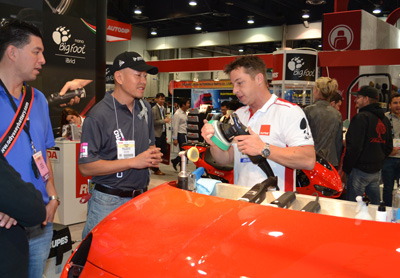
Paul Shafer, 68, died Sunday, March 27, from complications caused by brain cancer. Owner of SA Motorsports located in Anaheim, California, Shafer retired in June 2015 after spending more than 45 years in the automotive aftermarket industry.

Before starting SA Motorsports, he worked for Hooker Headers, Keystone/Dynamark Wheel Company and was a partner in TWE/Performance Plus.

Shafer is survived by his wife Elizabeth (Bertie).

Thu, 03/31/2016 - 11:11

sierra

This is the ’17 GMC Sierra Denali HD 3500 caught testing in the Rockies.

The HD trucks will adopt a look similar to the ones introduced on the 1500s for 2016, complete with a taller and bolder front end and a new hood scoop that reveals the pickup is equipped with the latest version of the current 6.6L V8 turbodiesel. It will be comprehensively modified to unseat the Ford Super Duty in efficiency and hauling capacities, pushing it comfortably over the 425 hp mark, and at least 860 lb.-ft. of torque. An eight-speed automatic transmission is also likely to become standard, but the 10-speed unit may not be far behind.

The revised HD trucks are supposed to last until 2020 or so, when the next-generation GM pickups will adopt a more aluminum-intensive architecture to reduce weight, also carrying downsized engines for better efficiency.

Expect to see the ’17 Sierra HD by the summer.
sierraPhoto credit: Brian Williams, SpiedBilde

Thu, 03/31/2016 - 11:11

sierra

This is the ’17 GMC Sierra Denali HD 3500 caught testing in the Rockies.

The HD trucks will adopt a look similar to the ones introduced on the 1500s for 2016, complete with a taller and bolder front end and a new hood scoop that reveals the pickup is equipped with the latest version of the current 6.6L V8 turbodiesel. It will be comprehensively modified to unseat the Ford Super Duty in efficiency and hauling capacities, pushing it comfortably over the 425 hp mark, and at least 860 lb.-ft. of torque. An eight-speed automatic transmission is also likely to become standard, but the 10-speed unit may not be far behind.

The revised HD trucks are supposed to last until 2020 or so, when the next-generation GM pickups will adopt a more aluminum-intensive architecture to reduce weight, also carrying downsized engines for better efficiency.

Expect to see the ’17 Sierra HD by the summer.
sierraPhoto credit: Brian Williams, SpiedBilde

Thu, 03/31/2016 - 11:11

sierra

This is the ’17 GMC Sierra Denali HD 3500 caught testing in the Rockies.

The HD trucks will adopt a look similar to the ones introduced on the 1500s for 2016, complete with a taller and bolder front end and a new hood scoop that reveals the pickup is equipped with the latest version of the current 6.6L V8 turbodiesel. It will be comprehensively modified to unseat the Ford Super Duty in efficiency and hauling capacities, pushing it comfortably over the 425 hp mark, and at least 860 lb.-ft. of torque. An eight-speed automatic transmission is also likely to become standard, but the 10-speed unit may not be far behind.

The revised HD trucks are supposed to last until 2020 or so, when the next-generation GM pickups will adopt a more aluminum-intensive architecture to reduce weight, also carrying downsized engines for better efficiency.

Expect to see the ’17 Sierra HD by the summer.
sierraPhoto credit: Brian Williams, SpiedBilde

Thu, 03/31/2016 - 11:11

sierra

This is the ’17 GMC Sierra Denali HD 3500 caught testing in the Rockies.

The HD trucks will adopt a look similar to the ones introduced on the 1500s for 2016, complete with a taller and bolder front end and a new hood scoop that reveals the pickup is equipped with the latest version of the current 6.6L V8 turbodiesel. It will be comprehensively modified to unseat the Ford Super Duty in efficiency and hauling capacities, pushing it comfortably over the 425 hp mark, and at least 860 lb.-ft. of torque. An eight-speed automatic transmission is also likely to become standard, but the 10-speed unit may not be far behind.

The revised HD trucks are supposed to last until 2020 or so, when the next-generation GM pickups will adopt a more aluminum-intensive architecture to reduce weight, also carrying downsized engines for better efficiency.

Expect to see the ’17 Sierra HD by the summer.
sierraPhoto credit: Brian Williams, SpiedBilde

Thu, 03/31/2016 - 11:11

sierra

This is the ’17 GMC Sierra Denali HD 3500 caught testing in the Rockies.

The HD trucks will adopt a look similar to the ones introduced on the 1500s for 2016, complete with a taller and bolder front end and a new hood scoop that reveals the pickup is equipped with the latest version of the current 6.6L V8 turbodiesel. It will be comprehensively modified to unseat the Ford Super Duty in efficiency and hauling capacities, pushing it comfortably over the 425 hp mark, and at least 860 lb.-ft. of torque. An eight-speed automatic transmission is also likely to become standard, but the 10-speed unit may not be far behind.

The revised HD trucks are supposed to last until 2020 or so, when the next-generation GM pickups will adopt a more aluminum-intensive architecture to reduce weight, also carrying downsized engines for better efficiency.

Expect to see the ’17 Sierra HD by the summer.
sierraPhoto credit: Brian Williams, SpiedBilde

Thu, 03/31/2016 - 11:11

sierra

This is the ’17 GMC Sierra Denali HD 3500 caught testing in the Rockies.

The HD trucks will adopt a look similar to the ones introduced on the 1500s for 2016, complete with a taller and bolder front end and a new hood scoop that reveals the pickup is equipped with the latest version of the current 6.6L V8 turbodiesel. It will be comprehensively modified to unseat the Ford Super Duty in efficiency and hauling capacities, pushing it comfortably over the 425 hp mark, and at least 860 lb.-ft. of torque. An eight-speed automatic transmission is also likely to become standard, but the 10-speed unit may not be far behind.

The revised HD trucks are supposed to last until 2020 or so, when the next-generation GM pickups will adopt a more aluminum-intensive architecture to reduce weight, also carrying downsized engines for better efficiency.

Expect to see the ’17 Sierra HD by the summer.
sierraPhoto credit: Brian Williams, SpiedBilde

Thu, 03/31/2016 - 11:11

sierra

This is the ’17 GMC Sierra Denali HD 3500 caught testing in the Rockies.

The HD trucks will adopt a look similar to the ones introduced on the 1500s for 2016, complete with a taller and bolder front end and a new hood scoop that reveals the pickup is equipped with the latest version of the current 6.6L V8 turbodiesel. It will be comprehensively modified to unseat the Ford Super Duty in efficiency and hauling capacities, pushing it comfortably over the 425 hp mark, and at least 860 lb.-ft. of torque. An eight-speed automatic transmission is also likely to become standard, but the 10-speed unit may not be far behind.

The revised HD trucks are supposed to last until 2020 or so, when the next-generation GM pickups will adopt a more aluminum-intensive architecture to reduce weight, also carrying downsized engines for better efficiency.

Expect to see the ’17 Sierra HD by the summer.
sierraPhoto credit: Brian Williams, SpiedBilde

Thu, 03/31/2016 - 10:53

By Jon Wyly

sdc

Google has announced that it requires full compliance on its Global Trade Identification Numbers (GTIN) requirement for most products to qualify for inclusion on Google Shopping feeds. The GTIN-12 is used in the United States and Canada and is encoded into 12-digit UPC Barcodes. After May 16, Google will begin to show “item level disapprovals” for products that don’t meet the requirement. That is, you will need to meet the GTIN requirements to continue serving ads for your products through Google. And this doesn’t just mean the items with out GTINs will be excluded, but rather if a certain modest percentage of items don’t comply, the entire data feed will be rejected.

An initial look at the industry data repository operated by the SEMA Data Co-op (SDC) shows that roughly 25% of the parts managed and stored in the SDC system are missing GTINs. In some cases they are hit-and-miss; in other cases, the manufacturer has made a conscious decision not to invest in GTINs.

Well, the game has now officially changed, and it’s time to fill in those blanks and get compliant on GTINs, not just for Google, but also for the countless retailers that have the same requirement. Rest assured, Google’s stand will be the tip of the iceberg, creating an ideal opportunity for others who have been “flexible” on GTINs to firm up their position as well.

So, how do you fix this situation? It’s pretty simple actually. If you are a large manufacturer in need of several thousand or more GTINs, you need to contact GS1—a neutral, non-profit standards organization that has managed GTINs globally since that first scan back in 1974. There you can sign up for your own unique identifier and purchase your GTINs. If you are already an existing subscriber through GS1, then get those blanks filled in as soon as possible!

But what about the smaller manufacturer that needs 50, 100, 500 or a couple thousand GTINs and can’t afford a unique subscription through GS1? Well, that’s where your SEMA-member benefits kick in! Since its inception, the SDC has been an official source of GS1 GTINs, which have been offered at a price of $1 each, with no minimum purchase requirement.

Now, in response to Google’s requirement, the SDC is committed to providing up to 2,500 official GS1 GTINs to any SDC-member company (that has never worked directly with GS1) at no charge. 

If you are an SDC supplier member and need GTINs, contact our data lab at 888-958-6698, ext. 40 and get started today. If you are not yet an SDC member, then contact Jim Graven, director of membership at JimG@SemaDataCoop.org or 888-958-6698, ext. 4 for information on this and many other benefits of joining the SDC.

Don’t delay—your sales depend on it.

More information can be found on Google.

Thu, 03/31/2016 - 10:53

By Jon Wyly

sdc

Google has announced that it requires full compliance on its Global Trade Identification Numbers (GTIN) requirement for most products to qualify for inclusion on Google Shopping feeds. The GTIN-12 is used in the United States and Canada and is encoded into 12-digit UPC Barcodes. After May 16, Google will begin to show “item level disapprovals” for products that don’t meet the requirement. That is, you will need to meet the GTIN requirements to continue serving ads for your products through Google. And this doesn’t just mean the items with out GTINs will be excluded, but rather if a certain modest percentage of items don’t comply, the entire data feed will be rejected.

An initial look at the industry data repository operated by the SEMA Data Co-op (SDC) shows that roughly 25% of the parts managed and stored in the SDC system are missing GTINs. In some cases they are hit-and-miss; in other cases, the manufacturer has made a conscious decision not to invest in GTINs.

Well, the game has now officially changed, and it’s time to fill in those blanks and get compliant on GTINs, not just for Google, but also for the countless retailers that have the same requirement. Rest assured, Google’s stand will be the tip of the iceberg, creating an ideal opportunity for others who have been “flexible” on GTINs to firm up their position as well.

So, how do you fix this situation? It’s pretty simple actually. If you are a large manufacturer in need of several thousand or more GTINs, you need to contact GS1—a neutral, non-profit standards organization that has managed GTINs globally since that first scan back in 1974. There you can sign up for your own unique identifier and purchase your GTINs. If you are already an existing subscriber through GS1, then get those blanks filled in as soon as possible!

But what about the smaller manufacturer that needs 50, 100, 500 or a couple thousand GTINs and can’t afford a unique subscription through GS1? Well, that’s where your SEMA-member benefits kick in! Since its inception, the SDC has been an official source of GS1 GTINs, which have been offered at a price of $1 each, with no minimum purchase requirement.

Now, in response to Google’s requirement, the SDC is committed to providing up to 2,500 official GS1 GTINs to any SDC-member company (that has never worked directly with GS1) at no charge. 

If you are an SDC supplier member and need GTINs, contact our data lab at 888-958-6698, ext. 40 and get started today. If you are not yet an SDC member, then contact Jim Graven, director of membership at JimG@SemaDataCoop.org or 888-958-6698, ext. 4 for information on this and many other benefits of joining the SDC.

Don’t delay—your sales depend on it.

More information can be found on Google.