

2018 SEMA Show Booth Space Available Here
The 2018 SEMA Show takes place Tuesday–Friday, October 30–November 2, in Las Vegas.
Thu, 01/18/2018 - 12:50
Thu, 01/18/2018 - 12:50
2018 SEMA Show Booth Space Available Here
The 2018 SEMA Show takes place Tuesday–Friday, October 30–November 2, in Las Vegas.
Thu, 01/18/2018 - 11:18
Compiled by SEMA Editors
Flying Lizard Announces Changes for 2018
Flying Lizard Motorsports will return to the Pirelli World Challenge (PWC) in 2018 for its second season of competition in the GTS class. For the first time since 2014, the team will field two full-season Audi R8 LMS GT4 entries, driven by Mike Hedlund and Adam Merzon. Ryan Eversley will join Merzon in the Case-it Racing by Flying Lizard Motorsports entry for the five SprintX race weekends.
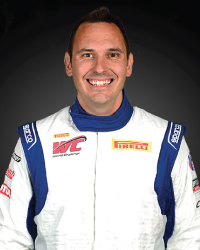 | 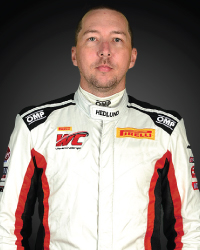 | 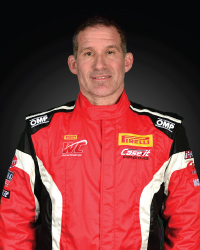 |
| Ryan Eversley | Mike Hedlund | Adam Merzon |
Hedlund first joined Flying Lizard at Sonoma Raceway in 2016. He has since been a re-occurring driver with the program, taking part in the 2016 overall win at the 25 Hours of Thunderhill, and again the following year with the 2017 Toyo Tires GT Challenge class win. Hedlund will race the 45 Flying Lizard Motorsports liveried Audi R8 LMS GT4 for the entirety of the season.
Merzon joins Flying Lizard Motorsports fresh off winning the 2017 Pirelli Challenge SprintX GTS Pro/AM Driver Championship. Merzon has competed in the GRAND-AM Road Racing Association, American Le Mans Series, and IMSA WeatherTech SportsCar championship, where he earned a second-place finish at the 2017 Rolex 24 At Daytona with BAR1 Motorsports.
IMSA and Pirelli World Challenge driver Eversley is slated to join Merzon for the SprintX events. Eversley won his debut PWC race in 2010, and most recently earned a second-place finish during the SprintX Round 8 at Utah Motorsports Campus with co-driver Tom Dyer. The team will take delivery of the new cars in February and will immediately get to work to make them race-ready in anticipation of the season opener in March. The 2018 Pirelli World Challenge championship battles begin March 9–11, at the Grand Prix of St. Petersburg on the streets of St. Petersburg, Florida. For more information, visit www.world-challenge.com.
"Terracross" Off-Road Series to Join MAVTV Lineup
 The first of the seven, one-hour TerraCross episodes will air Saturday, February 3, at 1:00 p.m. (EST), and re-air at 4:00 p.m. the same day. |
Terracross is an emerging, short-course off-road sport, best described as Supercross on four wheels. Terracross will join the MAVTV Motorsports Network lineup in February for a limited series of programs, highlighting the unique excitement of close quarter, side-by-side UTV racing. The first of the seven, one-hour episodes will air Saturday, February 3, at 1:00 p.m. (EST), and re-air at 4:00 p.m. the same day. Those air times will be in effect for the other programs in the series on February 10, February 24, March 10, March 24, April 7 and April 21. Hubert Rowland of Lascassas, Tennessee; Ross Robinson of Sisters, Oregon; Sarah Price of Canyon Lake, California; former Supercross champion Damon Bradshaw of McCall, Idaho; and Lucas Oil Off Road Racing Series star Ronnie Anderson of Vallejo, California, are among the drivers competing.
Old Bridge Township Raceway Cancels Drag Racing Events
Old Bridge Township Raceway Park in Englishtown, New Jersey, has informed the NHRA that it will no longer host any drag-racing events at its facility, effective immediately. This includes the 49th Annual NHRA Summernationals, which was scheduled to take place in June.
“NHRA drag-racing events have been held at the track in Englishtown for almost 50 years,” said NHRA president, Glen Cromwell. “The Summernationals have played an important part in our heritage and we hope that fans in the area will try to make it to another one of our events. Our focus remains on making the NHRA Mello Yello Drag Racing Series a memorable experience for our fans, racers, sponsors, partners and tracks.”
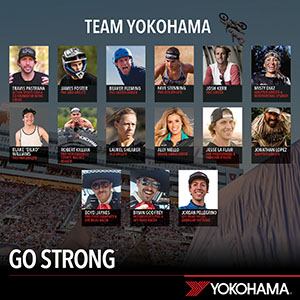 Yokohama has assembled “Team Yokohama,” an all-star lineup of drivers, lifestyle athletes and influencers to be brand ambassadors and expand the tire maker’s connection to new audiences. |
Team Yokohama is Ready to “Go Strong”
Yokohama Tire’s “Go Strong” mantra now has several new voices. The tire maker has assembled “Team Yokohama,” an all-star lineup of drivers, lifestyle athletes and influencers to be brand ambassadors and expand Yokohama’s connection to new audiences. They include: Misty Diaz, adaptive athlete and motivational speaker; Beaver Fleming, pro skateboarder; James Foster, pro BMX athlete; Brian Godfrey, motorsports pro and off-road racer; Boyd Jaynes, pro photographer and off-road racer; Josh Kerr, pro surfer; Robert Killian, pro obstacle course racing (OCR) athlete; Jesse La Flair, pro freerunning and parkour athlete; Jonathan Lopez, adaptive athlete; Ally Mello, brand ambassador; Travis Pastrana, action sports star and co-founder of Nitro Circus; Jordan Pellegrino, off-road racer, GenRight Off Road; Laurel Shearer, OCR athlete; Faye Stenning, pro OCR athlete; and Blake “Bilko” Williams, pro FMX athlete.
LIQUI MOLY Enters IMSA Series With Turner Motorsport
LIQUI MOLY has entered the IMSA WeatherTech SportsCar Championship with Turner Motorsport. It is the German oil specialist’s largest sponsorship investment in the United States. The sponsorship agreement comes a couple weeks prior to the 24 Hours of Daytona. There, Turner Motorsport will start with a BMW M6 GT3 in LIQUI MOLY livery.
Thu, 01/18/2018 - 11:18
Compiled by SEMA Editors
Flying Lizard Announces Changes for 2018
Flying Lizard Motorsports will return to the Pirelli World Challenge (PWC) in 2018 for its second season of competition in the GTS class. For the first time since 2014, the team will field two full-season Audi R8 LMS GT4 entries, driven by Mike Hedlund and Adam Merzon. Ryan Eversley will join Merzon in the Case-it Racing by Flying Lizard Motorsports entry for the five SprintX race weekends.
| | |
| Ryan Eversley | Mike Hedlund | Adam Merzon |
Hedlund first joined Flying Lizard at Sonoma Raceway in 2016. He has since been a re-occurring driver with the program, taking part in the 2016 overall win at the 25 Hours of Thunderhill, and again the following year with the 2017 Toyo Tires GT Challenge class win. Hedlund will race the 45 Flying Lizard Motorsports liveried Audi R8 LMS GT4 for the entirety of the season.
Merzon joins Flying Lizard Motorsports fresh off winning the 2017 Pirelli Challenge SprintX GTS Pro/AM Driver Championship. Merzon has competed in the GRAND-AM Road Racing Association, American Le Mans Series, and IMSA WeatherTech SportsCar championship, where he earned a second-place finish at the 2017 Rolex 24 At Daytona with BAR1 Motorsports.
IMSA and Pirelli World Challenge driver Eversley is slated to join Merzon for the SprintX events. Eversley won his debut PWC race in 2010, and most recently earned a second-place finish during the SprintX Round 8 at Utah Motorsports Campus with co-driver Tom Dyer. The team will take delivery of the new cars in February and will immediately get to work to make them race-ready in anticipation of the season opener in March. The 2018 Pirelli World Challenge championship battles begin March 9–11, at the Grand Prix of St. Petersburg on the streets of St. Petersburg, Florida. For more information, visit www.world-challenge.com.
"Terracross" Off-Road Series to Join MAVTV Lineup
The first of the seven, one-hour TerraCross episodes will air Saturday, February 3, at 1:00 p.m. (EST), and re-air at 4:00 p.m. the same day. |
Terracross is an emerging, short-course off-road sport, best described as Supercross on four wheels. Terracross will join the MAVTV Motorsports Network lineup in February for a limited series of programs, highlighting the unique excitement of close quarter, side-by-side UTV racing. The first of the seven, one-hour episodes will air Saturday, February 3, at 1:00 p.m. (EST), and re-air at 4:00 p.m. the same day. Those air times will be in effect for the other programs in the series on February 10, February 24, March 10, March 24, April 7 and April 21. Hubert Rowland of Lascassas, Tennessee; Ross Robinson of Sisters, Oregon; Sarah Price of Canyon Lake, California; former Supercross champion Damon Bradshaw of McCall, Idaho; and Lucas Oil Off Road Racing Series star Ronnie Anderson of Vallejo, California, are among the drivers competing.
Old Bridge Township Raceway Cancels Drag Racing Events
Old Bridge Township Raceway Park in Englishtown, New Jersey, has informed the NHRA that it will no longer host any drag-racing events at its facility, effective immediately. This includes the 49th Annual NHRA Summernationals, which was scheduled to take place in June.
“NHRA drag-racing events have been held at the track in Englishtown for almost 50 years,” said NHRA president, Glen Cromwell. “The Summernationals have played an important part in our heritage and we hope that fans in the area will try to make it to another one of our events. Our focus remains on making the NHRA Mello Yello Drag Racing Series a memorable experience for our fans, racers, sponsors, partners and tracks.”
Yokohama has assembled “Team Yokohama,” an all-star lineup of drivers, lifestyle athletes and influencers to be brand ambassadors and expand the tire maker’s connection to new audiences. |
Team Yokohama is Ready to “Go Strong”
Yokohama Tire’s “Go Strong” mantra now has several new voices. The tire maker has assembled “Team Yokohama,” an all-star lineup of drivers, lifestyle athletes and influencers to be brand ambassadors and expand Yokohama’s connection to new audiences. They include: Misty Diaz, adaptive athlete and motivational speaker; Beaver Fleming, pro skateboarder; James Foster, pro BMX athlete; Brian Godfrey, motorsports pro and off-road racer; Boyd Jaynes, pro photographer and off-road racer; Josh Kerr, pro surfer; Robert Killian, pro obstacle course racing (OCR) athlete; Jesse La Flair, pro freerunning and parkour athlete; Jonathan Lopez, adaptive athlete; Ally Mello, brand ambassador; Travis Pastrana, action sports star and co-founder of Nitro Circus; Jordan Pellegrino, off-road racer, GenRight Off Road; Laurel Shearer, OCR athlete; Faye Stenning, pro OCR athlete; and Blake “Bilko” Williams, pro FMX athlete.
LIQUI MOLY Enters IMSA Series With Turner Motorsport
LIQUI MOLY has entered the IMSA WeatherTech SportsCar Championship with Turner Motorsport. It is the German oil specialist’s largest sponsorship investment in the United States. The sponsorship agreement comes a couple weeks prior to the 24 Hours of Daytona. There, Turner Motorsport will start with a BMW M6 GT3 in LIQUI MOLY livery.
Thu, 01/18/2018 - 10:35
By SEMA Editors
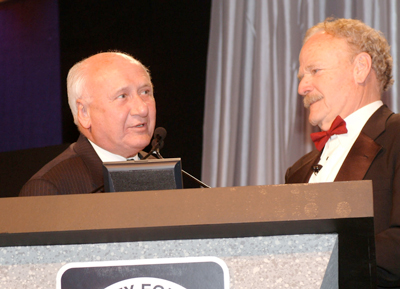 Don Crassweller (left) receives a SEMA Ambassador of the Year honor from Dave McClelland during the 2005 SEMA Show. |
Don Crassweller passed away January 5 at the age of 82. Crassweller, founder of Crassweller Media, was a longtime SEMA member and a member of SEMA’s councils and committees.
As an active recruiter for the association, Crassweller received the SEMA Ambassador of the Year honor in 2005 for recruiting the most members within one year.
Arrangements for Crassweller are under the direction of the Trident Society of Rancho Mirage, California.
Thu, 01/18/2018 - 10:17
By SEMA Editors
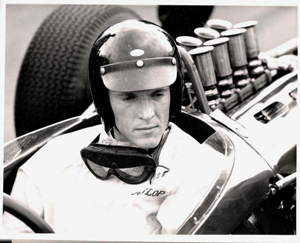 Legendary American racer, team owner and car constructor Dan Gurney, who won four F1 grand prix in addition to races in IndyCar, NASCAR, Trans-Am and Can-Am, and finished second twice at the Indianapolis 500, passed away. He was 86. |
 In 2016, Gurney (left) received the Peter Bryant Challenger Award. Photo credit: Ed Justice Jr. |
Dan Gurney, the first driver to win in Formula One, IndyCar and NASCAR, died Sunday, January 14, of complications from pneumonia. He was 86. His wife, Evi, announced his death in a statement distributed by All American Racers Inc.
“With one last smile on his handsome face, Dan drove off into the unknown just before noon today,” said the statement signed by Evi Gurney, the Gurney family and AAR teammates. “In deepest sorrow, with gratitude in our hearts for the love and joy you have given us during your time on this earth, we say, ‘Godspeed.’”
During the ’60s, Gurney enjoyed considerable success overseas, including winning four Formula One World Championship Grand Prix events and sharing the winning car in the ’67 Le Mans 24 Hours with A.J. Foyt, plus the ’60 Nürburgring 1000-km with Stirling Moss.
But he also won at home, claiming seven United States Auto Club-sanctioned National Championship events in the late ’60s; five out of the six 500-mile NASCAR stock races held at the Riverside, California, road course between ’63–’68; numerous events in the SCCA Can-Am and Trans-Am series; and even the first professional road racing series ever conducted in the United States—the inaugural USAC Road Racing championship in ’58.
Gurney also drove in nine consecutive Indianapolis 500-mile races between ’62–’70—finishing second, second and third in the final three—and was the winning manufacturer three times.
Funeral arrangements are private, and the family asks that in lieu of flowers, donations be made to the Hoag Hospital Foundation in Newport Beach, California. Those who want to express their sentiments may write a note to eagleracingcarsusa@aarinc.com.
Gurney is survived by his wife Evi, sons Alex, Justin, Jimmy, Danny and Dan Jr., and eight grandchildren.
Thu, 01/18/2018 - 09:25
By Kyle Cheng
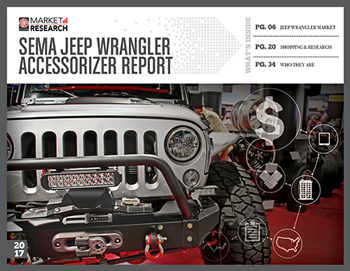 The “SEMA Jeep Wrangler Accessorizer Report” profiles owners of ’91–’17 Jeep Wranglers (TJ and JK) to help you understand the people who modify their Jeeps and make better decisions around your product, sales and marketing strategies. |
Today, more than 60% of TJ and JK Wrangler owners modify their Jeeps with specialty-equipment parts. This translates to approximately 1.3 million customized vehicles in the United States. Additionally, 68% of Jeep accessorizers purchase their first accessory within three months of acquiring their vehicle.
Want to learn more about your business opportunity in the Wrangler market? Check out the “SEMA Jeep Wrangler Accessorizer Report” today. This report profiles owners of ’91–’17 Jeep Wranglers (TJ and JK) to help you understand the people who modify their Jeeps and make better decisions around your product, sales and marketing strategies.
This report also helps answer the following questions:
- How many Jeep Wrangler owners go off-roading?
- How often does an accessorizer work on his or her Jeep?
- Where do Jeep owners and accessorizers buy their parts? In store? Online?
- What are the demographics of these Jeep enthusiasts, owners and accessorizers?
To learn more and download the “SEMA Jeep Wrangler Accessorizer Report”, visit www.sema.org/research.
Thu, 01/18/2018 - 09:25
By Kyle Cheng
The “SEMA Jeep Wrangler Accessorizer Report” profiles owners of ’91–’17 Jeep Wranglers (TJ and JK) to help you understand the people who modify their Jeeps and make better decisions around your product, sales and marketing strategies. |
Today, more than 60% of TJ and JK Wrangler owners modify their Jeeps with specialty-equipment parts. This translates to approximately 1.3 million customized vehicles in the United States. Additionally, 68% of Jeep accessorizers purchase their first accessory within three months of acquiring their vehicle.
Want to learn more about your business opportunity in the Wrangler market? Check out the “SEMA Jeep Wrangler Accessorizer Report” today. This report profiles owners of ’91–’17 Jeep Wranglers (TJ and JK) to help you understand the people who modify their Jeeps and make better decisions around your product, sales and marketing strategies.
This report also helps answer the following questions:
- How many Jeep Wrangler owners go off-roading?
- How often does an accessorizer work on his or her Jeep?
- Where do Jeep owners and accessorizers buy their parts? In store? Online?
- What are the demographics of these Jeep enthusiasts, owners and accessorizers?
To learn more and download the “SEMA Jeep Wrangler Accessorizer Report”, visit www.sema.org/research.
Thu, 01/18/2018 - 09:21
Gaspar “Gas” Ronda, best known for drag racing a series of Mustangs during the early evolution of the Funny Car, passed away at the age of 91 in October.
https://www.sema.org/sema-news/2018/01/sharp-dressed-man
Thu, 01/18/2018 - 09:21
Gaspar “Gas” Ronda, best known for drag racing a series of Mustangs during the early evolution of the Funny Car, passed away at the age of 91 in October.
https://www.sema.org/sema-news/2018/01/sharp-dressed-man