

The RPM Act of 2017 needs your support. Even if you wrote to Congress in 2016, SEMA urges all race fans and businesses to take action again. Go to www.sema.org/RPM to support the RPM Act of 2017 and secure the future of racing today!
Thu, 01/11/2018 - 10:34
Thu, 01/11/2018 - 10:34
The RPM Act of 2017 needs your support. Even if you wrote to Congress in 2016, SEMA urges all race fans and businesses to take action again. Go to www.sema.org/RPM to support the RPM Act of 2017 and secure the future of racing today!
Thu, 01/11/2018 - 10:02
By Zane Clark
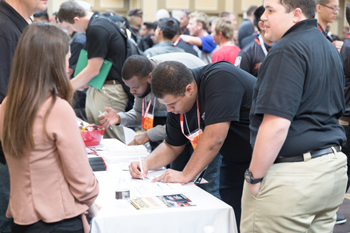 Hundreds of high-school and college students and industry employers are expected to attend the transportation career fair to be held March 16, at the SEMA Garage in Diamond Bar, California. |
SEMA will partner with the Collision Repair Education Foundation and the TechForce Foundation to host a transportation (collision, auto service, heavy duty, etc.) career fair March 16, at the SEMA Garage in Diamond Bar, California. Hundreds of high-school and college students and industry employers are expected to attend the event. Don’t miss out on this opportunity to meet with these students.
Event Details:
8:30 a.m.–2:00 p.m. – Event open to students to attend and meet industry employers.
Company Participation:
$1,000 – Company is provided a table and a copy of the student résumé registration list.
Register your company for this event by emailing brandon.eckenrode@ed-foundation.org.
Thu, 01/11/2018 - 10:02
By Zane Clark
Hundreds of high-school and college students and industry employers are expected to attend the transportation career fair to be held March 16, at the SEMA Garage in Diamond Bar, California. |
SEMA will partner with the Collision Repair Education Foundation and the TechForce Foundation to host a transportation (collision, auto service, heavy duty, etc.) career fair March 16, at the SEMA Garage in Diamond Bar, California. Hundreds of high-school and college students and industry employers are expected to attend the event. Don’t miss out on this opportunity to meet with these students.
Event Details:
8:30 a.m.–2:00 p.m. – Event open to students to attend and meet industry employers.
Company Participation:
$1,000 – Company is provided a table and a copy of the student résumé registration list.
Register your company for this event by emailing brandon.eckenrode@ed-foundation.org.
Thu, 01/11/2018 - 10:02
By Zane Clark
Hundreds of high-school and college students and industry employers are expected to attend the transportation career fair to be held March 16, at the SEMA Garage in Diamond Bar, California. |
SEMA will partner with the Collision Repair Education Foundation and the TechForce Foundation to host a transportation (collision, auto service, heavy duty, etc.) career fair March 16, at the SEMA Garage in Diamond Bar, California. Hundreds of high-school and college students and industry employers are expected to attend the event. Don’t miss out on this opportunity to meet with these students.
Event Details:
8:30 a.m.–2:00 p.m. – Event open to students to attend and meet industry employers.
Company Participation:
$1,000 – Company is provided a table and a copy of the student résumé registration list.
Register your company for this event by emailing brandon.eckenrode@ed-foundation.org.
Thu, 01/11/2018 - 10:02
Compiled by SEMA Editors
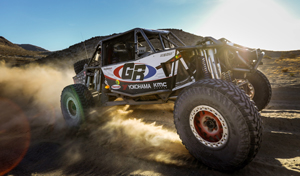 Yokohama Tire is teaming up with GenRight Off Road to compete in the 2018 Ultra4 series in the 4400 Unlimited Class. |
Yokohama Tire Sponsoring the GenRight Off-Road Race Team
Yokohama Tire has announced it is teaming up with GenRight Off Road to compete in the 2018 Ultra4 series in the 4400 Unlimited Class. Driver Jordan Pellegrino, who is stepping up in class after several years in the Ultra4 Stock Mod Class, will take over racing duties for his dad—GenRight’s President Tony Pellegrino—and make his Ultra4 Racing 4400 Unlimited Class debut in the first race of the season: King of the Hammers, February 2–10 in Johnson Valley, California. Besides the racing sponsorship, Yokohama will also activate its partnership with GenRight at a number of Jeep enthusiast events across the country.
Thu, 01/11/2018 - 10:02
Compiled by SEMA Editors
Yokohama Tire is teaming up with GenRight Off Road to compete in the 2018 Ultra4 series in the 4400 Unlimited Class. |
Yokohama Tire Sponsoring the GenRight Off-Road Race Team
Yokohama Tire has announced it is teaming up with GenRight Off Road to compete in the 2018 Ultra4 series in the 4400 Unlimited Class. Driver Jordan Pellegrino, who is stepping up in class after several years in the Ultra4 Stock Mod Class, will take over racing duties for his dad—GenRight’s President Tony Pellegrino—and make his Ultra4 Racing 4400 Unlimited Class debut in the first race of the season: King of the Hammers, February 2–10 in Johnson Valley, California. Besides the racing sponsorship, Yokohama will also activate its partnership with GenRight at a number of Jeep enthusiast events across the country.
Thu, 01/11/2018 - 08:43
Compiled by SEMA Editors
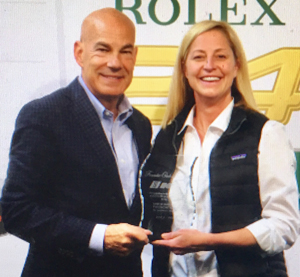 Amy Jo Osborn, co-founder of the Austin Hatcher Foundation, presented the award to IMSA President Scott Atherton in recognition of the sanctioning body’s assistance in generating nearly $2.5 million in contributions to the foundation from 2009–2017. |
Austin Hatcher Foundation Presents Founder Club Member Award to IMSA
The Austin Hatcher Foundation for Pediatric Cancer has presented the Founder Club Member Award to longtime partner the International Motor Sports Association (IMSA). The ceremony was held at Daytona International Speedway during the “Roar Before the Rolex 24” test sessions held prior to IMSA’s season-opening sports car event—the Rolex 24 At Daytona, January 27–28. Amy Jo Osborn, co-founder of the Austin Hatcher Foundation, presented the award to IMSA President Scott Atherton in recognition of the sanctioning body’s assistance in generating nearly $2.5 million in contributions to the foundation from 2009–2017. That span started during the era of the American Le Mans Series (ALMS), which was sanctioned by IMSA; the Austin Hatcher Foundation was the longtime Official Charity of the ALMS. The relationship continued in 2014 when the ALMS merged with the GRAND-AM Rolex Series under a revamped IMSA organization. Since then, the foundation has been an IMSA charity. In recent years the foundation has expanded its presence in both the motorsports and automotive industries via a partnership with Goodguys Rod & Custom Association and in becoming a member of the SEMA Cares family of charities. In addition, the foundation conducts visits to children’s hospitals across the United States in IMSA race markets, bringing its signature Diversionary Therapy program to assist young cancer patients and their families.
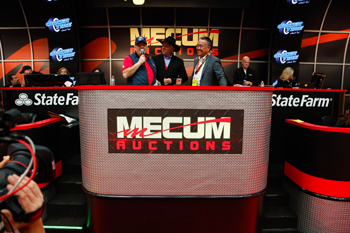 Dana Mecum, Mecum Auctions’ founder and president, announces a sponsorship with Coker Tire during the Kissimmee, Florida, auction. |
Coker Tire Named Exclusive Tire and Wheel Sponsor of Mecum Auctions
Coker Tire has announced it has signed an exclusive tire and wheel sponsorship agreement with Mecum Auctions. Kicking off with this week’s 10-day, 3,200-car auction at Osceola Heritage Park in Kissimmee, Florida, the new partnership will include on-site booth displays at each of the 18 stops along the 2018 Mecum schedule, commercial spots and dedicated air time during coverage offering perspectives about auction vehicles equipped with Coker tire products. Coker Tire will be on hand at Mecum auctions nearly every month of 2018. The next three Mecum auctions will take place in Las Vegas, January 23–27; Los Angeles, February 16–17; and Kansas City, Missouri, March 16–17. Nearly every Mecum car auction will be broadcast on NBCSN in most markets.
R&R Marketing Consultants Inc. Signs Agreement to Represent MAGLITE
R&R Marketing Consultants (RRMCI) has recently signed a manufacturer’s representative agreement with Mag Instrument Inc. The new relationship will allow RRMCI the opportunity to represent the MAGLITE line in the aftermarket auto industry throughout the United States.
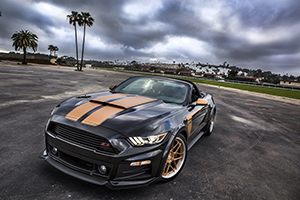 The Goodguys 2017 Ford Mustang Giveaway car was designed by Eric Brockmeyer and built by American Legends Hot Rods and Muscle Cars and Drew Brothers Customs. |
Goodguys Announces 2017 Ford Mustang Giveaway Winner
Tennessee’s Guy Ford was named the winner of the Goodguys 2017 Ford Mustang Giveaway car, December 13, at the Goodguys corporate headquarters in Pleasanton, California. He was one of 21 finalists in the running to win the car. Eric Brockmeyer designed the car’s look and feel, which features a Roush Performance front fascia, Defenderworx wheel flares, and 3M vinyl graphics. Baer brakes are tucked inside B-Forged 767 Touring Series wheels (20x9-in. and 20x10-in.), finished in a Copper Nugget Matte center with brushed outer barrels. BFGoodrich tires provide road handling. Other features include a V6 engine backed by a six-speed transmission, plus a voice-activated navigation system, sporty interior, illuminated sill plates and more. American Legends Hot Rods and Muscle Cars and Drew Brothers Customs handled the build.
Meyer Distributing Announces Harlingen, Texas, Location
Meyer Distributing Inc. has announced the addition of its Harlingen, Texas, location. The cross-dock will have a direct, next-day feed from Meyer’s Dallas distribution hub.
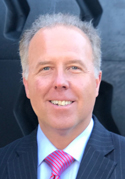 Jeff Barna |
Yokohama Tire Corp. Announces Major Corporate Changes
Yokohama Tire Corp. (YTC) has announced three major organizational promotions effective immediately. Hideto Katsuragawa, who was named YTC chairman, is a Yokohama Rubber Co. Ltd. (YRC) board member and senior managing corporate officer. He remains president and CEO of Yokohama Corp. of North America (YCNA). Shinichi Takimoto, also a YRC corporate officer, was named CEO of YTC, Yokohama Tire Canada and Yokohama Tire Mexico S. de R.L. de C.V. Jeff Barna, who joined YTC in January 2017 as COO, was named YTC president. Barna’s expanded role will now include oversight of the company’s OE sales, export sales and human resource functions, which complements his current responsibilities of sales, marketing, product management, supply chain/logistics, project management and business analytics.
In addition, Barna has announced five promotions. Bruce Besancon was named vice president of OTR sales. Dan Funkhouser has been promoted to vice president of commercial sales and will report to Barna. Larry Kull has accepted the role of vice president of consumer sales and will report to Barna. Andrew Zeisser is now the new vice president of OEM sales and will report to Barna. Fardad Niknam has been promoted to senior director of consumer product planning and product marketing.
Turn 14 Distribution Adds Cosmis Racing Wheels to Line Card
Turn 14 Distribution has expanded upon its wheel offerings with the addition of Cosmis Racing Wheels to its line card.
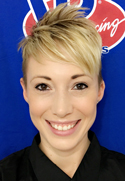 Tiffany Boone |
Boone Named Business Development Representative, Consumer Products for VP Racing Fuels
VP Racing Fuels Inc. has announced the appointment of Tiffany Boone as business development representative to support the company’s growing retail consumer products team. Born and raised in St. Louis, Boone started her career in banking, investments and trust services at Commerce Bank, where she worked with business-development officers to onboard new accounts and develop new products and services for Commerce’s clientele. Most recently she spent several years as national sales manager for a plastic manufacturing company in the St. Louis area. In her current position, Boone will be responsible for VP’s Consumer Products Midwestern U.S. sales region.
Have some company news you would like to share? Let us know and the news may appear in an upcoming issue of SEMA eNews. Send your items for consideration to editors@sema.org.
Thu, 01/11/2018 - 08:07
SEMA President and CEO Chris Kersting discusses what SEMA has been focusing on to help the growth of the industry.
Thu, 01/11/2018 - 08:07
SEMA President and CEO Chris Kersting discusses what SEMA has been focusing on to help the growth of the industry.