Sat, 08/01/2020 - 11:50

SEMA News—August 2020

REQUIRED READING

By Juan Torres

Young and Innovative

Since 2013, the SEMA Launch Pad program has given young entrepreneurs, students and business owners age 18–39 an opportunity to launch their products into the $44.6 billion automotive aftermarket industry. The top 15 participants in this year’s program have moved on to the online voting stage of the competition (www.sema.org/launchpad).

In addition to pitching their products at the annual SEMA Show before a panel of iconic judges, the top-five vote-getters often benefit from media interest and attention. Below are some of the publications that have covered the competition, which awards the winner a prize package that includes $10,000 and exhibit space at the annual SEMA Show.
 

Telegraph HeraldTelegraph

Reporter Erica Lyons wrote a piece on Wesley Poole, president of Forged Authority. Thanks to his company’s modular frame-rail, which can accommodate a number of attachments in seconds with a single pin, Poole was a top-10 finalist in the 2019 Launch Pad competition.


National Oil and Lube News

Oil and Lube News

Toby Chess has penned installments of his “Kool Tools” article for several years now, and it’s a report that members of the collision industry eagerly await each year. At the 2019 SEMA Show, Chess teamed with Kye Yeung and Amber Alley to walk the entire floor and find tools that could save shops time and money.


Traction

Traction

Hot Rod editor Johnny Hunkins’ new-products report from last year’s SEMA Show was picked up by MSN, giving maximum exposure to the 30-plus parts highlighted in the article. Hunkins went as far as predicting the types of products he’d expect to see at the 2020 Show.


Heard on Social Media

“BuiltRight Industries, the 2019 SEMA Launch Pad winner, is making 3-D-printed face shields to help with the coronavirus effort.”Auto Care Week/The Greensheet, via Twitter

“At the @SEMASHOW Launch Pad product competition today in Las Vegas, Reid Lunde earned $10,000 for his weatherproof Kaizen Relay product.”—Fender Bender, via Twitter

“SEMA has recognized Dyme PSI as a semifinalist in the 2020 SEMA Young Executive Network (YEN) Launch Pad competition alongside 14 of the most innovative companies in the United States.”Motorsporters, via Facebook

“The Launch Pad is a competition designed to help and support young entrepreneurs in the automotive aftermarket. All 15 semifinalists will receive complimentary SEMA memberships.”—12 Volt News, via Twitter


Sat, 08/01/2020 - 11:47

SEMA News—August 2020

INTERNATIONAL

Selling to Saudi Arabian Buyers

Meeting New Testing Requirements

By Linda Spencer

Saudi Buyers Chart
SALEEM-SABER certificate of conformity issuance flow chart.

Selling product to Saudi customers or want to begin doing so? Distributors are reporting increased Saudi customs enforcement for imported products. From toys to cosmetics to automotive aftermarket products, every shipment imported into Saudi Arabia is required to be accompanied by the correct documentation.

The Saudi government has begun enforcing a new product safety program known as SALEEM, and U.S. suppliers have begun hearing of these new requirements from their distributors as a result. During a March trip to Riyadh and Dammam, Saudi Arabia, SEMA News learned that local distributors were struggling to learn the new system and were concerned about the costs associated with complying.

SEMA recently sponsored a webinar to provide U.S. manufacturers with information on the program. Joel Molina, international trade specialist at the North America office of conformity assessment body SGS, spoke at the webinar on the details. SGS is one of the testing agencies approved by the Saudi government. (Molina’s contact information is included at the end of this article along with a link to all six assessment bodies.) Below are some details of the program.

  • The compliance conformity program is known by the name SALEEM, and the electronic platform in which products are registered is known as SABER.
  • The Saudi Standards, Metrology and Quality Organization (SASO) is the standard-setting body for a wide range of products, including auto parts, and is the lead agency on the SABER SALEEM program.
  • On the opposite page is a list of products covered by technical standards. If your products are on the list, third-party testing is required. If your products are not on the list, it is recommended that you double-check that this is the case with a certification body. (A list of approved certification bodies and a list of regulated products by HS code are available on the www.sema.org/international webpages.) The certification body can work with SASO to confirm if a technical regulation exists for your product.
  • Third-party testing is required on regulated products. Only a Saudi-government-approved testing agency can be used. In addition, certain aftermarket products require a factory audit.
  • The government specifically notes that many auto parts are not covered, including chassis, engines, differentials and gear boxes.
  • If it is confirmed that your products are not covered by a technical regulation, a self-certification by the importer is sufficient. So called “non-regulated products” do not require the services of a technical body but rather the completion of a self-certification form by the importer.
  • SABER is the online portal used to register both regulated and unregulated products and the required shipping documents for all imports. Once the Saudi distributor registers the company on the SABER portal (only a Saudi-based business can enter the required information onto the online system), all products to be imported are to be registered as well. This task may be performed directly by the importer or by hiring the certifying body to do so. The portal can be accessed by importers, SASO-approved certification bodies and Saudi customs officials.
  • Many U.S. suppliers arrange for the testing and thus own the data, and its contents can be kept proprietary, shared only with government officials. The U.S. manufacturer selects one or more distributors as desired, with each needing to register on the SABER site but if the manufacturer handled the testing authorized importers can refer to the completed test data. Conversely, if a distributor arranges the test, each distributor carrying the U.S. supplier’s product will need to arrange its own testing.
  • There are four standards that cover most but not all specialty automotive product technical regulations: auto spare parts, lubricants, tires and batteries.
  • To submit a regulated product for importation, the importer initiates the certification request by first registering the product(s) into the SABER system, including product details and the appropriate HS code, and selecting the chosen SASO-approved certification body to carry out any required third-party testing. If the product meets the requirements of the technical regulation, an approval certificate is issued and the importer is then issued a shipment certificate. Each shipment requires a unique shipping certificate. The entire process is done online through the SABER system.
  • Regulations: https://saber.sa/home/regulations.
  • Approved certifying bodies: The SASO SABER website lists six approved testing agencies with a North American presence. The list is located at https://saber.sa/home/cborganizations.

Selected Automotive Products Covered Under Saudi Technical Regulations

AirbagsElectric WiringPulleys
AlarmsEngine CoolantRadiators
AlternatorsFilters–AirRearview Mirrors
Ball JointsFilters–FuelRims
BatteriesFilters–OilSeat Belts
BeltsGlass–WindshieldShock Absorbers
Brake LiningsHead SupportSpark Plugs
BumpersIgnition CoilsTie Rods
Child-Restraint SystemsLightingTires
Control ArmsLubricantsWheel Bearings
Door Locks and Door HingesMotor OilWindow Washing Systems

*This list was compiled by SEMA, drawing from relevant Saudi technical regulations. If your product does not appear on this list, confirm with a compliance body. SGS is one such entity. The full list of the six approved bodies is available at www.saber.sa.

SABER SALEEM Resources

Joel Molina
International Trade Specialist
SGS North America Inc.
305-639-0028
joel.molina@sgs.com
www.sgs.com

The full list of the six Saudi government-approved certifying bodies is available at www.saber.sa. More information on the Saudi SABER SALEEM system, including a recording of a recent SEMA webinar on the testing requirements, is available at www.sema.org/international. For questions, contact Linda Spencer at lindas@sema.org.

Upcoming SEMA International Programs

Overseas Business Development Trips:

  • SEMA Middle East (Abu Dhabi, United Arab Emirates/Riyadh, Saudi Arabia), March–April 2021
  • SEMA Australia (Melbourne, Australia), May 2021
  • SEMA Nordic (Stockholm, Sweden), September 2–7, 2021

2020 SEMA Show:

  • International Networking
  • International Roundtables, Monday, November 2
  • International Happy Hour, Wednesday, November 4

2020 PRI Trade Show:

  • International Networking
  • International Happy Hour, Friday, December 11
  • International Roundtable, Friday, December 11
Sat, 08/01/2020 - 11:29

SEMA News—August 2020

LEGISLATIVE AND TECHNICAL AFFAIRS

Replica Cars—

It’s Back to the Future Time

By Stuart Gosswein

Mustang
Revology’s ’68 Mustang GT 2+2 Fastback R Spec.

The industry’s reaction in 2015 to enactment of the replica car law could be described in two words: giddy enthusiasm. Companies would soon be able to produce and sell new turnkey vehicles that resembled classic vehicles produced at least 25 years ago. Passage of the law had taken just four years following the bill’s introduction—a relatively short period on Capitol Hill—but who knew that it would take five years of lobbying and a lawsuit before companies could begin selling replica cars?

The wait for the National Highway Traffic Safety Administration to issue a regulation to implement the law has been agonizingly slow. A draft rule wasn’t issued until this past January. It is expected to be finalized by November 2020, if not sooner, allowing companies to register with the agency and begin sales. In anticipation of that action, this article provides an overview of the law and why it was needed.

In the ’60s, the National Highway Traffic Safety Administration created a system for regulating companies that mass-produced millions of automobiles. However, the agency never created a second system for businesses that made a small number of vehicles each year—whether that number was one, 50 or 1,000. While other countries developed regulations that recognized the unique challenge of creating a custom-made vehicle, the United States did not.

Replica
The Superformance MKIII-R, a modern take on the iconic Cobra.

Despite the regulatory roadblocks, there has been a niche market for companies to sell unique vehicles. It is called the “kit-car” market, whereby a manufacturer sells an incomplete automobile, frequently pre-assembled, and a buyer installs the engine/transmission, thereby transforming the parts into a motor vehicle. While states usually regulate hobbyist-built kit cars by the model year they resemble, the National Highway Traffic Safety Administration viewed a manufacturer-completed replica car to be a current model-year vehicle, making it nearly impossible for a company to offer a turnkey car.

SEMA helped craft legislation introduced in Congress in 2011 to create a separate regulatory system for low-volume vehicle manufacturers. The bill adopted the kit-car approach for regulatory oversight whereby the completed automobiles are subject to all federal safety standards for equipment (tires, lighting, glass, etc.) but not vehicle-based standards. Low-volume vehicle manufacturers (under 5,000 worldwide production) may take advantage of the law and sell up to 325 turnkey replica cars a year in the United States.

Popular kit car models in recent years have been ’30s-era hot rods and ’60s-era Cobras. However, there are no restrictions for the type of replica cars to be sold beyond the 25-year limitation. Further, the law applies to the appearance of the vehicle, so the cars may incorporate new platforms and high-performance equipment under the hood.

Jeep
ICON’s unique FJ40 is ready for the open road.

The vehicles will also be clean cars that meet current model-year emissions standards. That will be achieved through the installation of engine packages approved by the U.S. Environmental Protection Agency (EPA) or by the California Air Resources Board (CARB) for vehicles produced or sold in California. SEMA and industry representatives worked with both agencies to develop guidelines and regulations governing the engine packages. Most of the engine packages will be supplied by the larger vehicle and original-equipment manufacturers.

While SEMA and the industry celebrate the approaching start to the replica car program, the road to success has been unexpectedly long and tortuous. Eager customers began placing orders in 2016, as companies geared up for production. Some companies built new facilities and placed orders with part suppliers. Instead of sales, however, the lengthy delay imposed significant economic pain. SEMA sued the National Highway Traffic Safety Administration in 2019 for failure to issue a regulation in a timely fashion. The suit had its intended effect, helping spur issuance of the proposed rule and soon-to-be-released final rule.

When the replica car law finally takes effect, SEMA will welcome the opportunity for customers to buy their dream cars and for low-volume manufacturers to rejoice in making those dreams come true.

DeLorean
The new and timeless DeLorean.

Low-Volume Motor Vehicle Manufacturers Act” Questions and Answers

Why Is This Law Necessary? Until 2015, all motor vehicle manufacturers were treated the same, regardless of whether a company produced one car or one million. The law directs NHTSA to create a simplified regulatory program that takes into account the unique differences between a company that mass-produces thousands of cars and one that handcrafts a limited number.

What Is a Low-Volume Manufacturer? The law states that a low-volume manufacturer is a company whose annual worldwide production (including by a parent or subsidiary of the manufacturer) is not more than 5,000 motor vehicles each year. These companies will each be able to sell up to 325 “replica” cars annually in the United States.

How Does the Law Define a Replica Vehicle? A replica vehicle resembles the body of another motor vehicle produced at least 25 years ago. The vehicle is produced under a license agreement from the original manufacturer, its successor/assignee, or the current owner of the replicated vehicle’s intellectual property rights. In some instances, the replica car manufacturer may be the current owner (for example, when the original manufacturer no longer exists or the replica car has a distinguishably different appearance and brand name).

How Are Replica Cars Regulated by NHTSA? Replica vehicles are subject to NHTSA’s equipment standards, including lighting, brake hoses, glass and tires. However, the automobiles are exempt from safety standards that apply to motor vehicles (roof crush, side impact, bumper standard, etc.). The exemption recognizes that it is impractical to apply current model-year standards to vehicles designed decades ago or to crash test such vehicles when only a few are being produced.

Factory Five
Factory Five’s all-new second-generation ’33 Hot Rod with the optional ’32 Deluxe nose.

How Are Replica Cars Regulated by the EPA and CARB? Replica cars will meet current model-year emissions standards. The engine package must be approved by the EPA and, if produced or sold in California, by CARB. SEMA and the replica car industry worked with both agencies to develop an EPA guidance document and CARB regulation for recognizing compliant engine packages.

When Will the Program Begin? The program has been on hold while NHTSA drafted a regulation. NHTSA issued a proposed rule in January 2020 and is expected to finalize the rule by the fall of 2020. The rule becomes effective upon publication, which means companies can then file registration applications to be reviewed by NHTSA within 90 days, allowing sales to commence. Companies are also required to register and file annual reports with the EPA and CARB.

How Will This Law Impact Kit-Car Consumers? Hobbyists will still have the freedom to assemble their own vehicles from kits if they prefer, including modern-era cars. The law expands the market of who can purchase a replica car to include those who don’t have the time or skills to complete a kit car. In short, this law means more business opportunities for the industry and more choices for consumers.

Will I Be Able to Title/Register the Car? SEMA has worked with many states to establish specific categories for titling, registering and regulating “kit cars” (e.g., street rods and customs, including replicas and specialty constructed vehicles), which will also apply to turnkey replicas. For more information on the laws in your state, visit the “Titling & Registration” page on the SEMA Action Network’s website at www.semasan.com.

Where Can I Find More Information? Visit www.sema.org/replica.

Sat, 08/01/2020 - 11:29

SEMA News—August 2020

LEGISLATIVE AND TECHNICAL AFFAIRS

Replica Cars—

It’s Back to the Future Time

By Stuart Gosswein

Mustang
Revology’s ’68 Mustang GT 2+2 Fastback R Spec.

The industry’s reaction in 2015 to enactment of the replica car law could be described in two words: giddy enthusiasm. Companies would soon be able to produce and sell new turnkey vehicles that resembled classic vehicles produced at least 25 years ago. Passage of the law had taken just four years following the bill’s introduction—a relatively short period on Capitol Hill—but who knew that it would take five years of lobbying and a lawsuit before companies could begin selling replica cars?

The wait for the National Highway Traffic Safety Administration to issue a regulation to implement the law has been agonizingly slow. A draft rule wasn’t issued until this past January. It is expected to be finalized by November 2020, if not sooner, allowing companies to register with the agency and begin sales. In anticipation of that action, this article provides an overview of the law and why it was needed.

In the ’60s, the National Highway Traffic Safety Administration created a system for regulating companies that mass-produced millions of automobiles. However, the agency never created a second system for businesses that made a small number of vehicles each year—whether that number was one, 50 or 1,000. While other countries developed regulations that recognized the unique challenge of creating a custom-made vehicle, the United States did not.

Replica
The Superformance MKIII-R, a modern take on the iconic Cobra.

Despite the regulatory roadblocks, there has been a niche market for companies to sell unique vehicles. It is called the “kit-car” market, whereby a manufacturer sells an incomplete automobile, frequently pre-assembled, and a buyer installs the engine/transmission, thereby transforming the parts into a motor vehicle. While states usually regulate hobbyist-built kit cars by the model year they resemble, the National Highway Traffic Safety Administration viewed a manufacturer-completed replica car to be a current model-year vehicle, making it nearly impossible for a company to offer a turnkey car.

SEMA helped craft legislation introduced in Congress in 2011 to create a separate regulatory system for low-volume vehicle manufacturers. The bill adopted the kit-car approach for regulatory oversight whereby the completed automobiles are subject to all federal safety standards for equipment (tires, lighting, glass, etc.) but not vehicle-based standards. Low-volume vehicle manufacturers (under 5,000 worldwide production) may take advantage of the law and sell up to 325 turnkey replica cars a year in the United States.

Popular kit car models in recent years have been ’30s-era hot rods and ’60s-era Cobras. However, there are no restrictions for the type of replica cars to be sold beyond the 25-year limitation. Further, the law applies to the appearance of the vehicle, so the cars may incorporate new platforms and high-performance equipment under the hood.

Jeep
ICON’s unique FJ40 is ready for the open road.

The vehicles will also be clean cars that meet current model-year emissions standards. That will be achieved through the installation of engine packages approved by the U.S. Environmental Protection Agency (EPA) or by the California Air Resources Board (CARB) for vehicles produced or sold in California. SEMA and industry representatives worked with both agencies to develop guidelines and regulations governing the engine packages. Most of the engine packages will be supplied by the larger vehicle and original-equipment manufacturers.

While SEMA and the industry celebrate the approaching start to the replica car program, the road to success has been unexpectedly long and tortuous. Eager customers began placing orders in 2016, as companies geared up for production. Some companies built new facilities and placed orders with part suppliers. Instead of sales, however, the lengthy delay imposed significant economic pain. SEMA sued the National Highway Traffic Safety Administration in 2019 for failure to issue a regulation in a timely fashion. The suit had its intended effect, helping spur issuance of the proposed rule and soon-to-be-released final rule.

When the replica car law finally takes effect, SEMA will welcome the opportunity for customers to buy their dream cars and for low-volume manufacturers to rejoice in making those dreams come true.

DeLorean
The new and timeless DeLorean.

Low-Volume Motor Vehicle Manufacturers Act” Questions and Answers

Why Is This Law Necessary? Until 2015, all motor vehicle manufacturers were treated the same, regardless of whether a company produced one car or one million. The law directs NHTSA to create a simplified regulatory program that takes into account the unique differences between a company that mass-produces thousands of cars and one that handcrafts a limited number.

What Is a Low-Volume Manufacturer? The law states that a low-volume manufacturer is a company whose annual worldwide production (including by a parent or subsidiary of the manufacturer) is not more than 5,000 motor vehicles each year. These companies will each be able to sell up to 325 “replica” cars annually in the United States.

How Does the Law Define a Replica Vehicle? A replica vehicle resembles the body of another motor vehicle produced at least 25 years ago. The vehicle is produced under a license agreement from the original manufacturer, its successor/assignee, or the current owner of the replicated vehicle’s intellectual property rights. In some instances, the replica car manufacturer may be the current owner (for example, when the original manufacturer no longer exists or the replica car has a distinguishably different appearance and brand name).

How Are Replica Cars Regulated by NHTSA? Replica vehicles are subject to NHTSA’s equipment standards, including lighting, brake hoses, glass and tires. However, the automobiles are exempt from safety standards that apply to motor vehicles (roof crush, side impact, bumper standard, etc.). The exemption recognizes that it is impractical to apply current model-year standards to vehicles designed decades ago or to crash test such vehicles when only a few are being produced.

Factory Five
Factory Five’s all-new second-generation ’33 Hot Rod with the optional ’32 Deluxe nose.

How Are Replica Cars Regulated by the EPA and CARB? Replica cars will meet current model-year emissions standards. The engine package must be approved by the EPA and, if produced or sold in California, by CARB. SEMA and the replica car industry worked with both agencies to develop an EPA guidance document and CARB regulation for recognizing compliant engine packages.

When Will the Program Begin? The program has been on hold while NHTSA drafted a regulation. NHTSA issued a proposed rule in January 2020 and is expected to finalize the rule by the fall of 2020. The rule becomes effective upon publication, which means companies can then file registration applications to be reviewed by NHTSA within 90 days, allowing sales to commence. Companies are also required to register and file annual reports with the EPA and CARB.

How Will This Law Impact Kit-Car Consumers? Hobbyists will still have the freedom to assemble their own vehicles from kits if they prefer, including modern-era cars. The law expands the market of who can purchase a replica car to include those who don’t have the time or skills to complete a kit car. In short, this law means more business opportunities for the industry and more choices for consumers.

Will I Be Able to Title/Register the Car? SEMA has worked with many states to establish specific categories for titling, registering and regulating “kit cars” (e.g., street rods and customs, including replicas and specialty constructed vehicles), which will also apply to turnkey replicas. For more information on the laws in your state, visit the “Titling & Registration” page on the SEMA Action Network’s website at www.semasan.com.

Where Can I Find More Information? Visit www.sema.org/replica.

Sat, 08/01/2020 - 11:17

SEMA News—August 2020

INDUSTRY NEWS

By Douglas McColloch

Survey: SEMA Member Companies Expect Solid Business for Remainder of 2020

From May 20–29, SEMA conducted a survey of more than 1,800 professionals within the specialty-equipment industry. Despite the disruptions over the past few months, manufacturers, distributors and retailers continue to maintain a positive outlook on the situation, and expect business to pick up now that restrictions are easing.

Survey
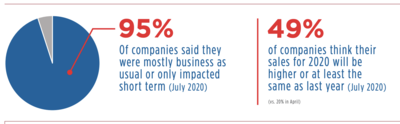
While roughly a quarter of companies expect significantly fewer sales for the remainder of the year, three-quarters of companies report that they still expect sales figures to be better than or similar to those of 2019 or to decline by 20% or less.

While the beginning of April saw 17% of manufacturers, distributors and retailers reporting “mostly business as usual,” that jumped to more than 30% by the end of May. Nearly 90% currently say they are “mostly business as usual” or “impacted short-term, but will get through it.”

The automotive aftermarket utilizes a number of different channels to sell products. Retailers predominantly sell in-store, while manufacturers and distributors sell mostly through wholesale. Many manufacturers also use their company websites for direct sales.

Over the last few months, sales across the industry have been impacted. Because of stay-in-place restrictions, in-person transactions were limited. Consequently, the industry has seen some uptick in online sales. As restrictions ease, however, customers are likely return to shopping in-store and in person.

Overall, the industry is fairly optimistic about sales for the rest of the year. More than half of all manufacturers, distributors and retailers think their Q4 sales will be better or at least the same as last year.

Survey
Companies may not be expecting rapid sales growth in the short term, but a majority—including 50% of retailers—expect to see sales figures improve later in the year to equal or exceed 2019’s sales numbers, with distributors being the most bullish market sector.


Nicole Bradle
Nicole Bradle

Nicole Bradle Joins SEMA as Council Director

Nicole Bradle was hired as SEMA’s new council director. Bradle is the liaison for the Wheel & Tire Council, Emerging Trends & Technology Network and SEMA Businesswomen’s Network.

Bradle was previously the director of member relations at the American Academy of Physical Medicine and Rehabilitation. During her time there, she redesigned the company’s member engagement model; transformed and guided the resident and fellow council; overhauled customer service; and oversaw all member-relations activities, among other responsibilities.

Before the Academy, Bradle spent 11 years at the American Society of Anesthesiology as the conference manager and later as executive director for anesthesia subspecialty societies. As executive director, she partnered with volunteer leaders to advance their missions and build solid leadership structures for future growth.

Airline Discounts Available for the 2020 SEMA Show

SEMA Show organizers have been working with major air carriers to secure discounted airfare for 2020 SEMA Show attendees and exhibitors. Alaska, Delta and United are among the airlines offering up to 10% off on round-trip airfare to Las Vegas.

Alaska Airlines

  • Discount: 7% off published fares.
  • Valid Travel Dates: October 27–November 10, 2020.
  • Online Reservations: www.alaskaair.com and enter discount code ECMD130.
  • Phone Reservations: Group desk at 800-445-4435; a $15 per-person ticketing fee will be applied to phone reservations.

Delta Airlines

  • Discount: Ranges from 5%–10% on full/unrestricted airfares to 2020 SEMA Show (applicable to passengers originating in the United States and Canada only).
  • Valid Travel Dates: October 29–November 11, 2020.
  • Online Reservations: www.delta.com and enter meeting event code NY336 in the box provided on the “Book a Flight” page.
  • Phone Reservations: Delta meeting network reservations at 800-328-1111; no service fee applied to phone reservations.

United Airlines

  • Discount: 5% or more.
  • Valid Travel Dates: October 31–November 9, 2020.
  • Online Reservations: www.united.com and enter offer code ZJCT820881 in the “Promotions and Certificates” box when searching for flights.
  • Phone Reservations: United meetings at 800-426-1122; provide agreement code 820881 and Z code ZJCT. A service fee will be collected per ticket when booking by phone.

Hotel information is now available at www.SEMAShow.com.

Sat, 08/01/2020 - 10:06

SEMA News—August 2020

LEGISLATIVE AND TECHNICAL AFFAIRS

Pouring Salt to Heal Old Wounds

By Stuart Gosswein

Bonneville
Attempting to set a land-speed record as the sun rises on the Bonneville Salt Flats. Photo courtesy: LandSpeed Productions

“Make Bonneville Great Again” is no longer just a cheeky slogan that land-speed racers have printed on hats. SEMA is proud to announce that a joint state/federal program to save the Bonneville Salt Flats has been created to dramatically increase the amount of salt pumped onto those hallowed grounds.

The “Restore Bonneville” program is now officially being implemented by the Utah Department of Natural Resources (DNR) in coordination with the U.S. Bureau of Land Management (BLM). The state of Utah and Congress have both approved funding to kick off the effort. The agencies have signed a memorandum of understanding that outlines the shared interest and commitment of BLM and DNR to work together to manage and restore the salt flats.

Located near Wendover on the Utah/Nevada border, the Bonneville salt basin covers an area about 65 mi. long and 25 mi. wide. It is the densely packed salt remnants of an ancient lake bed that formed over thousands of years. Bonneville’s stark and beautiful landscape has been the backdrop for movies, commercials and photos, and it is a magnet for tourists.

Bonneville
Last-minute vehicle checks at the starting line. Photo courtesy: Team Vesco
Bonneville
A vintage racing photo from 1966.

The salt flats have been hallowed grounds for motorsports enthusiasts since 1914, when racers discovered that it was the perfect surface for keeping tires cool and setting land-speed records. While hundreds of records have been set and broken in a variety of automotive classes, the conditions at Bonneville have deteriorated since the ’60s.

Racers were once able to compete on a 13-mi. racetrack at Bonneville, but race sanctioning bodies are now unable to find more than 8 mi. of straightaway. Racing in two opposite directions within one hour has traditionally been required for world records, but that rule has been largely abandoned. The racecourse at Bonneville is not currently long enough for the world’s fastest vehicles to compete. While the conditions at Bonneville have deteriorated significantly over the past few decades, SEMA and the racing community have created a pathway for it to again become a preeminent race venue.

Bonneville
A 1947 Speed Week brochure, which includes a map of the 13½-mi. straightaway.

The Bonneville Salt Flats Racetrack is listed on the National Registry of Historic Places and designated an Area of Critical Environmental Concern and a Special Recreation Management Area. Despite those designations, the salt crust has steadily deteriorated to a maximum thickness measured in inches rather than feet.

Interstate 80 divides the Bonneville basin in half. To the north is a racing venue; to the south is a potash mining operation. The two activities existed in harmony until the ’60s, when the BLM issued leases allowing some of Bonneville’s salt to be legally transferred south through miles of ditches. Potash is extracted from the salt through solar evaporation, and the salt is a waste product of the process.

For decades, the land-speed racing community sounded the alarm that Bonne-ville was shrinking. No tangible response occurred until 1997, when the racing community worked with the mine owner and the BLM on a five-year pilot program to pump the processed salt brine onto Bonneville during the winter months. An average of 1.2 million tons of salt a year were transferred during that time.

Studies confirmed that Bonneville’s salt crust began to thicken, and the brine aquifer beneath the surface also improved. In more recent years, however, the pumping levels have been around 0.3 to 0.6 million tons or less—not enough to change Bonneville’s status as endangered.

Bonneville

A 2009 photo of three different types of vehicles at the starting line (from left), the Speed Demon streamliner, the Dripps & Gibby Racing roadster, and the Kelly & Hall belly tank. Photo courtesy: LandSpeed Productions
Bonneville
A view from Dave Spangler’s driver’s seat in the Turbinator II which will exit the 2018 racing venue at 503 mph and become the world’s fastest wheel-driven vehicle.

SEMA, the Save the Salt Coalition and other organizations and companies seeking to restore Bonneville have worked closely with government officials and the mine owner, Intrepid Potash, to create an expanded 10-year salt-pumping program. An agreement has been signed, and the program details are being finalized.

Building on the success of the earlier 1997–2002 initiative, the upcoming 10-year Restore Bonneville program will increase the volume of salt to be pumped to 1 million tons per year or more. Program results will be closely monitored and analyzed over the 10-year period, with the intent of making it a permanent program. Listed below are highlights of the Restore Bonneville program.

  • The program will be funded through annual appropriations from the BLM and the state of Utah.
  • Over the next two or three years, Intrepid will increase its pumping volumes by making infrastructure upgrades, including but not limited to rebuilding wells, relining and covering water ditches, relining processing ponds, and installing new pipes and pumps.
  • The overall cost of the program will be around $50 million over 10 years. The bulk of the money will come from federal and state appropriations, but the racing community will make meaningful contributions as well, and Intrepid will donate the value of the salt.
  • Congress appropriated up to $4 million for Restore Bonneville in fiscal year 2020, and the Utah State Legislature approved $1 million for this year to create the program.
  • SEMA and the Save the Salt Coalition will continue to work with the U.S. Congress, Trump Administration and state of Utah to continue funding and implementing the program.


SEMA and Bonneville
       Want to Help a Treasured Speedway

SEMA’s roots are firmly planted at Bonneville. Member products and sponsored race teams have helped set scores of world records on the naturally occurring racetrack. When SEMA was formed in 1963, the then-titled Speed Equipment Manufacturers Association represented companies producing performance equipment for many land-speed trailblazers. In subsequent years, the industry blossomed, and the renamed Specialty Equipment Market Association expanded beyond the race and performance markets to embrace the entire distribution chain, including manufacturers, distributors, retailers and marketers.

Founding SEMA members such as Ansen, B&M, Cragar, Edelbrock, Eelco Manufacturing, Grant Industries, Halibrand, Hedman, Isky Racing Cams, JE Pistons, Milodon, Mooneyes, Schiefer Manufacturing, Trans-Dapt, Weber Speed Equipment and Weiand have been joined by scores of other companies that produce high-performance parts. Whether it is a ’32 hot rod, a ’60s musclecar, a streamliner or anything in between, Bonneville has long been the proving ground for many SEMA-member companies and their customers.
       

The Save the Salt Foundation is a 501(c)(3) nonprofit organization whose mission is to protect the Bonneville Salt Flats and to promote its history and motorsports legacy. Funds collected by the foundation will be applied only to the 10-year Bonneville restoration program. Contributions are deductible to the extent allowed by law.

Want to help restore this treasured speedway? To make an online donation, visit www.savethesalt.org.


Sat, 08/01/2020 - 10:06

SEMA News—August 2020

LEGISLATIVE AND TECHNICAL AFFAIRS

Pouring Salt to Heal Old Wounds

By Stuart Gosswein

Bonneville
Attempting to set a land-speed record as the sun rises on the Bonneville Salt Flats. Photo courtesy: LandSpeed Productions

“Make Bonneville Great Again” is no longer just a cheeky slogan that land-speed racers have printed on hats. SEMA is proud to announce that a joint state/federal program to save the Bonneville Salt Flats has been created to dramatically increase the amount of salt pumped onto those hallowed grounds.

The “Restore Bonneville” program is now officially being implemented by the Utah Department of Natural Resources (DNR) in coordination with the U.S. Bureau of Land Management (BLM). The state of Utah and Congress have both approved funding to kick off the effort. The agencies have signed a memorandum of understanding that outlines the shared interest and commitment of BLM and DNR to work together to manage and restore the salt flats.

Located near Wendover on the Utah/Nevada border, the Bonneville salt basin covers an area about 65 mi. long and 25 mi. wide. It is the densely packed salt remnants of an ancient lake bed that formed over thousands of years. Bonneville’s stark and beautiful landscape has been the backdrop for movies, commercials and photos, and it is a magnet for tourists.

Bonneville
Last-minute vehicle checks at the starting line. Photo courtesy: Team Vesco
Bonneville
A vintage racing photo from 1966.

The salt flats have been hallowed grounds for motorsports enthusiasts since 1914, when racers discovered that it was the perfect surface for keeping tires cool and setting land-speed records. While hundreds of records have been set and broken in a variety of automotive classes, the conditions at Bonneville have deteriorated since the ’60s.

Racers were once able to compete on a 13-mi. racetrack at Bonneville, but race sanctioning bodies are now unable to find more than 8 mi. of straightaway. Racing in two opposite directions within one hour has traditionally been required for world records, but that rule has been largely abandoned. The racecourse at Bonneville is not currently long enough for the world’s fastest vehicles to compete. While the conditions at Bonneville have deteriorated significantly over the past few decades, SEMA and the racing community have created a pathway for it to again become a preeminent race venue.

Bonneville
A 1947 Speed Week brochure, which includes a map of the 13½-mi. straightaway.

The Bonneville Salt Flats Racetrack is listed on the National Registry of Historic Places and designated an Area of Critical Environmental Concern and a Special Recreation Management Area. Despite those designations, the salt crust has steadily deteriorated to a maximum thickness measured in inches rather than feet.

Interstate 80 divides the Bonneville basin in half. To the north is a racing venue; to the south is a potash mining operation. The two activities existed in harmony until the ’60s, when the BLM issued leases allowing some of Bonneville’s salt to be legally transferred south through miles of ditches. Potash is extracted from the salt through solar evaporation, and the salt is a waste product of the process.

For decades, the land-speed racing community sounded the alarm that Bonne-ville was shrinking. No tangible response occurred until 1997, when the racing community worked with the mine owner and the BLM on a five-year pilot program to pump the processed salt brine onto Bonneville during the winter months. An average of 1.2 million tons of salt a year were transferred during that time.

Studies confirmed that Bonneville’s salt crust began to thicken, and the brine aquifer beneath the surface also improved. In more recent years, however, the pumping levels have been around 0.3 to 0.6 million tons or less—not enough to change Bonneville’s status as endangered.

Bonneville

A 2009 photo of three different types of vehicles at the starting line (from left), the Speed Demon streamliner, the Dripps & Gibby Racing roadster, and the Kelly & Hall belly tank. Photo courtesy: LandSpeed Productions
Bonneville
A view from Dave Spangler’s driver’s seat in the Turbinator II which will exit the 2018 racing venue at 503 mph and become the world’s fastest wheel-driven vehicle.

SEMA, the Save the Salt Coalition and other organizations and companies seeking to restore Bonneville have worked closely with government officials and the mine owner, Intrepid Potash, to create an expanded 10-year salt-pumping program. An agreement has been signed, and the program details are being finalized.

Building on the success of the earlier 1997–2002 initiative, the upcoming 10-year Restore Bonneville program will increase the volume of salt to be pumped to 1 million tons per year or more. Program results will be closely monitored and analyzed over the 10-year period, with the intent of making it a permanent program. Listed below are highlights of the Restore Bonneville program.

  • The program will be funded through annual appropriations from the BLM and the state of Utah.
  • Over the next two or three years, Intrepid will increase its pumping volumes by making infrastructure upgrades, including but not limited to rebuilding wells, relining and covering water ditches, relining processing ponds, and installing new pipes and pumps.
  • The overall cost of the program will be around $50 million over 10 years. The bulk of the money will come from federal and state appropriations, but the racing community will make meaningful contributions as well, and Intrepid will donate the value of the salt.
  • Congress appropriated up to $4 million for Restore Bonneville in fiscal year 2020, and the Utah State Legislature approved $1 million for this year to create the program.
  • SEMA and the Save the Salt Coalition will continue to work with the U.S. Congress, Trump Administration and state of Utah to continue funding and implementing the program.


SEMA and Bonneville
       Want to Help a Treasured Speedway

SEMA’s roots are firmly planted at Bonneville. Member products and sponsored race teams have helped set scores of world records on the naturally occurring racetrack. When SEMA was formed in 1963, the then-titled Speed Equipment Manufacturers Association represented companies producing performance equipment for many land-speed trailblazers. In subsequent years, the industry blossomed, and the renamed Specialty Equipment Market Association expanded beyond the race and performance markets to embrace the entire distribution chain, including manufacturers, distributors, retailers and marketers.

Founding SEMA members such as Ansen, B&M, Cragar, Edelbrock, Eelco Manufacturing, Grant Industries, Halibrand, Hedman, Isky Racing Cams, JE Pistons, Milodon, Mooneyes, Schiefer Manufacturing, Trans-Dapt, Weber Speed Equipment and Weiand have been joined by scores of other companies that produce high-performance parts. Whether it is a ’32 hot rod, a ’60s musclecar, a streamliner or anything in between, Bonneville has long been the proving ground for many SEMA-member companies and their customers.
       

The Save the Salt Foundation is a 501(c)(3) nonprofit organization whose mission is to protect the Bonneville Salt Flats and to promote its history and motorsports legacy. Funds collected by the foundation will be applied only to the 10-year Bonneville restoration program. Contributions are deductible to the extent allowed by law.

Want to help restore this treasured speedway? To make an online donation, visit www.savethesalt.org.


Sat, 08/01/2020 - 09:32

SEMA News—August 2020

LEGISLATIVE AND TECHNICAL AFFAIRS

Honorable Discharge

Four-Wheeled Veterans Welcomed Home With New Roles in the Hobby

By Colby Martin

Military
The modern Humvee (aka High Mobility Multipurpose Wheeled Vehicle, HMMWV) has reached an age that technically qualifies it for vintage designation. Opportunities exist for the industry to serve enthusiasts seeking pure restoration as well as personalized equipment options beyond factory reproductions.

When it comes to the collector-vehicle market, military vehicles are not what first spring to mind. The notion of rides originally mass produced to aid the armed forces becoming collector’s items may seem rather strange. However, countless examples were manufactured by popular automakers such as the Big Three, whose iconic offerings are coveted to this day by brand loyalists. While getting one’s hands on one of those prized vehicles may be tough, titling and registering them for street use is often tougher.

Automobiles decommissioned by the U.S. government have captivated generations. Upon retirement from service, their ability to evoke national pride and serve as living history is undeniably powerful. These machines have been defined by most jurisdictions as vehicles manufactured by or under the direction of the U.S. Armed Forces for off-road use and later authorized for sale to civilians. Examples desired by collectors include the Pinzgauer, Kaiser Jeep M715, half-track and DUKW (Duck). Today, even the modern Humvee (also known as the High Mobility Multipurpose Wheeled Vehicle, HMMWV) has reached an age that technically qualifies it for vintage designation.

Although organized groups of hobbyists and publications dedicated to this segment have existed for decades, military collectibles have been on the rise in recent years. The internet has enabled instant global access to specialized information and support unthinkable not long ago. It should come as no surprise that there has been a surge of interest in the genre among the auto-enthusiast community. Enthusiasts know that acquiring such treasures is no easy feat but, if successful, can place them in a rare group of collectors who own the most unique vehicle on the block.

Still, military surplus vehicles are tougher to license than standard automobiles because each state government makes its own rules and regulations regarding titling. In several states, there is no allowance for any military vehicle registration and operation on public roads. Even when these vehicles can be titled, many states limit their use to special occasions such as parades, car shows, club activities, exhibits, tours and occasional pleasure driving.

Legislatures have responded to the recent trend by introducing proposals aimed at redefining existing laws to apply to vintage military surplus vehicles. Other proposals attempt to expand the number of types of military vehicles allowed to be registered or create ways for enthusiasts to increase often-limited personal usage allowances.

Military
Ex-military offerings are favorites for the truck/SUV crowd as well as off-roaders and overlanders seeking to stand out from the pack. Originally built for the Swedish armed forces, this customized ’56 Volvo TP21 by Eddie’s Rod & Custom earned a top-40 spot in the 2019 SEMA Battle of the Builders at last year’s SEMA Show.

A fresh version of SEMA-model legislation has been drafted to aid the registration of former military vehicles. By way of background, the SEMA Action Network (SAN) has crafted unique solutions to combat common auto-related difficulties nationwide in the form of model bills, which are templates that offer turnkey legislative fixes to vehicle-related policies and laws suffering behind the times. As a result of success with proactive legislation, SEMA-model bills have created reasonable and practical solutions for specific issues like this topic. Enactment of pro-hobby model language into state law creates new opportunities for the growth of the market segment across the country and protects enthusiasts from outdated and unfriendly laws.

Pro-hobby legislation related to military vehicles was introduced this year in several state legislatures. Fans of former military vehicles in West Virginia celebrated the signing of a new law to display an alternate registration insignia as opposed to a traditional license plate. The law preserves the accurate display of these vehicles’ military design and markings and protects the aesthetic contours. Versions of SEMA-model legislation to allow for the titling and registration of former military vehicles were also pending in Kansas and Michigan at press time.

In addition, other military-vehicle initiatives were approved by state legislatures in 2019. The governors of Nebraska, Nevada and Texas each signed laws allowing qualified military vehicles to be registered and operated on public roadways. Tennessee passed a measure that exempts historic military vehicles from the requirement to display a traditional license plate. Other attempts were made in several state sessions last year that were ultimately
unsuccessful.

So how can businesses take advantage of the decommissioned surplus market? As in other facets of the hobby, vehicles are purchased for both pure restoration and personalized treatments. The specialty-parts industry is uniquely suited to offer components and services to bring back the former glory of these machines in addition to upgraded performance and personalized styling options. Common enhancements such as wheels and tires, specialized bumpers and guards, winches, light bars and other items are desirable equipment options beyond factory reproductions.

As vehicle owners and companies who are directly impacted by such proposals, SAN members are the most important source of knowledge on the subject. Local voices are the most effective in shaping efforts affecting their home turf. Help our industry’s efforts on legislative initiatives like this in your area by visiting www.semasan.com/join to stay informed. Encourage your friends and customers to follow suit. There is no cost or obligation to enlist in the SAN and help shape a bill’s future. SAN forces look forward to supporting more efforts to preserve and enjoy historic former military transport in the future.

Sat, 08/01/2020 - 09:32

SEMA News—August 2020

LEGISLATIVE AND TECHNICAL AFFAIRS

Honorable Discharge

Four-Wheeled Veterans Welcomed Home With New Roles in the Hobby

By Colby Martin

Military
The modern Humvee (aka High Mobility Multipurpose Wheeled Vehicle, HMMWV) has reached an age that technically qualifies it for vintage designation. Opportunities exist for the industry to serve enthusiasts seeking pure restoration as well as personalized equipment options beyond factory reproductions.

When it comes to the collector-vehicle market, military vehicles are not what first spring to mind. The notion of rides originally mass produced to aid the armed forces becoming collector’s items may seem rather strange. However, countless examples were manufactured by popular automakers such as the Big Three, whose iconic offerings are coveted to this day by brand loyalists. While getting one’s hands on one of those prized vehicles may be tough, titling and registering them for street use is often tougher.

Automobiles decommissioned by the U.S. government have captivated generations. Upon retirement from service, their ability to evoke national pride and serve as living history is undeniably powerful. These machines have been defined by most jurisdictions as vehicles manufactured by or under the direction of the U.S. Armed Forces for off-road use and later authorized for sale to civilians. Examples desired by collectors include the Pinzgauer, Kaiser Jeep M715, half-track and DUKW (Duck). Today, even the modern Humvee (also known as the High Mobility Multipurpose Wheeled Vehicle, HMMWV) has reached an age that technically qualifies it for vintage designation.

Although organized groups of hobbyists and publications dedicated to this segment have existed for decades, military collectibles have been on the rise in recent years. The internet has enabled instant global access to specialized information and support unthinkable not long ago. It should come as no surprise that there has been a surge of interest in the genre among the auto-enthusiast community. Enthusiasts know that acquiring such treasures is no easy feat but, if successful, can place them in a rare group of collectors who own the most unique vehicle on the block.

Still, military surplus vehicles are tougher to license than standard automobiles because each state government makes its own rules and regulations regarding titling. In several states, there is no allowance for any military vehicle registration and operation on public roads. Even when these vehicles can be titled, many states limit their use to special occasions such as parades, car shows, club activities, exhibits, tours and occasional pleasure driving.

Legislatures have responded to the recent trend by introducing proposals aimed at redefining existing laws to apply to vintage military surplus vehicles. Other proposals attempt to expand the number of types of military vehicles allowed to be registered or create ways for enthusiasts to increase often-limited personal usage allowances.

Military
Ex-military offerings are favorites for the truck/SUV crowd as well as off-roaders and overlanders seeking to stand out from the pack. Originally built for the Swedish armed forces, this customized ’56 Volvo TP21 by Eddie’s Rod & Custom earned a top-40 spot in the 2019 SEMA Battle of the Builders at last year’s SEMA Show.

A fresh version of SEMA-model legislation has been drafted to aid the registration of former military vehicles. By way of background, the SEMA Action Network (SAN) has crafted unique solutions to combat common auto-related difficulties nationwide in the form of model bills, which are templates that offer turnkey legislative fixes to vehicle-related policies and laws suffering behind the times. As a result of success with proactive legislation, SEMA-model bills have created reasonable and practical solutions for specific issues like this topic. Enactment of pro-hobby model language into state law creates new opportunities for the growth of the market segment across the country and protects enthusiasts from outdated and unfriendly laws.

Pro-hobby legislation related to military vehicles was introduced this year in several state legislatures. Fans of former military vehicles in West Virginia celebrated the signing of a new law to display an alternate registration insignia as opposed to a traditional license plate. The law preserves the accurate display of these vehicles’ military design and markings and protects the aesthetic contours. Versions of SEMA-model legislation to allow for the titling and registration of former military vehicles were also pending in Kansas and Michigan at press time.

In addition, other military-vehicle initiatives were approved by state legislatures in 2019. The governors of Nebraska, Nevada and Texas each signed laws allowing qualified military vehicles to be registered and operated on public roadways. Tennessee passed a measure that exempts historic military vehicles from the requirement to display a traditional license plate. Other attempts were made in several state sessions last year that were ultimately
unsuccessful.

So how can businesses take advantage of the decommissioned surplus market? As in other facets of the hobby, vehicles are purchased for both pure restoration and personalized treatments. The specialty-parts industry is uniquely suited to offer components and services to bring back the former glory of these machines in addition to upgraded performance and personalized styling options. Common enhancements such as wheels and tires, specialized bumpers and guards, winches, light bars and other items are desirable equipment options beyond factory reproductions.

As vehicle owners and companies who are directly impacted by such proposals, SAN members are the most important source of knowledge on the subject. Local voices are the most effective in shaping efforts affecting their home turf. Help our industry’s efforts on legislative initiatives like this in your area by visiting www.semasan.com/join to stay informed. Encourage your friends and customers to follow suit. There is no cost or obligation to enlist in the SAN and help shape a bill’s future. SAN forces look forward to supporting more efforts to preserve and enjoy historic former military transport in the future.

Sat, 08/01/2020 - 09:32

SEMA News—August 2020

LEGISLATIVE AND TECHNICAL AFFAIRS

Honorable Discharge

Four-Wheeled Veterans Welcomed Home With New Roles in the Hobby

By Colby Martin

Military
The modern Humvee (aka High Mobility Multipurpose Wheeled Vehicle, HMMWV) has reached an age that technically qualifies it for vintage designation. Opportunities exist for the industry to serve enthusiasts seeking pure restoration as well as personalized equipment options beyond factory reproductions.

When it comes to the collector-vehicle market, military vehicles are not what first spring to mind. The notion of rides originally mass produced to aid the armed forces becoming collector’s items may seem rather strange. However, countless examples were manufactured by popular automakers such as the Big Three, whose iconic offerings are coveted to this day by brand loyalists. While getting one’s hands on one of those prized vehicles may be tough, titling and registering them for street use is often tougher.

Automobiles decommissioned by the U.S. government have captivated generations. Upon retirement from service, their ability to evoke national pride and serve as living history is undeniably powerful. These machines have been defined by most jurisdictions as vehicles manufactured by or under the direction of the U.S. Armed Forces for off-road use and later authorized for sale to civilians. Examples desired by collectors include the Pinzgauer, Kaiser Jeep M715, half-track and DUKW (Duck). Today, even the modern Humvee (also known as the High Mobility Multipurpose Wheeled Vehicle, HMMWV) has reached an age that technically qualifies it for vintage designation.

Although organized groups of hobbyists and publications dedicated to this segment have existed for decades, military collectibles have been on the rise in recent years. The internet has enabled instant global access to specialized information and support unthinkable not long ago. It should come as no surprise that there has been a surge of interest in the genre among the auto-enthusiast community. Enthusiasts know that acquiring such treasures is no easy feat but, if successful, can place them in a rare group of collectors who own the most unique vehicle on the block.

Still, military surplus vehicles are tougher to license than standard automobiles because each state government makes its own rules and regulations regarding titling. In several states, there is no allowance for any military vehicle registration and operation on public roads. Even when these vehicles can be titled, many states limit their use to special occasions such as parades, car shows, club activities, exhibits, tours and occasional pleasure driving.

Legislatures have responded to the recent trend by introducing proposals aimed at redefining existing laws to apply to vintage military surplus vehicles. Other proposals attempt to expand the number of types of military vehicles allowed to be registered or create ways for enthusiasts to increase often-limited personal usage allowances.

Military
Ex-military offerings are favorites for the truck/SUV crowd as well as off-roaders and overlanders seeking to stand out from the pack. Originally built for the Swedish armed forces, this customized ’56 Volvo TP21 by Eddie’s Rod & Custom earned a top-40 spot in the 2019 SEMA Battle of the Builders at last year’s SEMA Show.

A fresh version of SEMA-model legislation has been drafted to aid the registration of former military vehicles. By way of background, the SEMA Action Network (SAN) has crafted unique solutions to combat common auto-related difficulties nationwide in the form of model bills, which are templates that offer turnkey legislative fixes to vehicle-related policies and laws suffering behind the times. As a result of success with proactive legislation, SEMA-model bills have created reasonable and practical solutions for specific issues like this topic. Enactment of pro-hobby model language into state law creates new opportunities for the growth of the market segment across the country and protects enthusiasts from outdated and unfriendly laws.

Pro-hobby legislation related to military vehicles was introduced this year in several state legislatures. Fans of former military vehicles in West Virginia celebrated the signing of a new law to display an alternate registration insignia as opposed to a traditional license plate. The law preserves the accurate display of these vehicles’ military design and markings and protects the aesthetic contours. Versions of SEMA-model legislation to allow for the titling and registration of former military vehicles were also pending in Kansas and Michigan at press time.

In addition, other military-vehicle initiatives were approved by state legislatures in 2019. The governors of Nebraska, Nevada and Texas each signed laws allowing qualified military vehicles to be registered and operated on public roadways. Tennessee passed a measure that exempts historic military vehicles from the requirement to display a traditional license plate. Other attempts were made in several state sessions last year that were ultimately
unsuccessful.

So how can businesses take advantage of the decommissioned surplus market? As in other facets of the hobby, vehicles are purchased for both pure restoration and personalized treatments. The specialty-parts industry is uniquely suited to offer components and services to bring back the former glory of these machines in addition to upgraded performance and personalized styling options. Common enhancements such as wheels and tires, specialized bumpers and guards, winches, light bars and other items are desirable equipment options beyond factory reproductions.

As vehicle owners and companies who are directly impacted by such proposals, SAN members are the most important source of knowledge on the subject. Local voices are the most effective in shaping efforts affecting their home turf. Help our industry’s efforts on legislative initiatives like this in your area by visiting www.semasan.com/join to stay informed. Encourage your friends and customers to follow suit. There is no cost or obligation to enlist in the SAN and help shape a bill’s future. SAN forces look forward to supporting more efforts to preserve and enjoy historic former military transport in the future.