By Laura Pitts
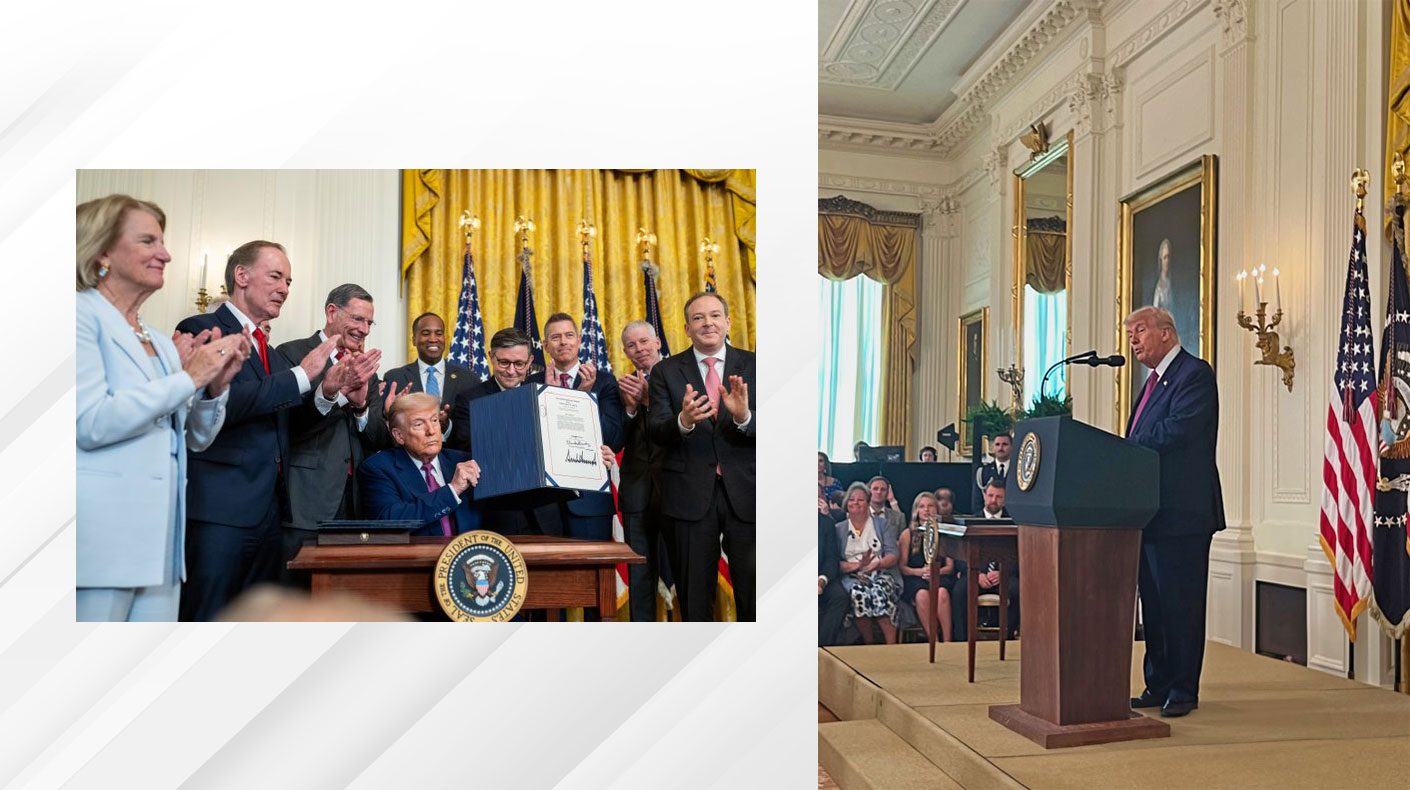
When a sitting president invites you to the White House, it marks a moment of real significance—especially for industries rarely given a seat at the table. The nation's largest automakers may be no strangers to the halls of Washington, D.C., but the same can't be said for the specialty automotive aftermarket's small business owners and manufacturers, tuners, restorers and innovators, and that's part of what makes SEMA's recent invitation to the White House so significant.
On a landmark day on June 12 in Washington, D.C., SEMA CEO Mike Spagnola, SEMA Senior Vice President of Public and Government Affairs Karen Bailey-Chapman and SEMA's Senior Director of Federal Government Affairs Eric Snyder stood among a select group of roughly 100 individuals invited to witness President Donald J. Trump sign a Congressional Review Act (CRA) that effectively overturned California's ban on the sale of new internal combustion engine (ICE) vehicles. It was a historic moment for the automotive world and a pivotal victory for the countless small businesses that make up the heart of SEMA's membership.
While the repeal itself marks a significant policy shift, the weight of SEMA's presence at the East Room signing ceremony cannot be overstated.
"There are rare moments when the president of the United States hosts guests for a public signing ceremony. It is often reserved for major pieces of legislation and a president's priority initiatives," said Bailey-Chapman. "The passage and signing of the CRA that repealed California's EV mandates was a historical moment, and SEMA was invited to be there."
The stakes behind this legislation were enormous. More than one-third of the specialty aftermarket is ICE-dependent, representing more than a $100 billion impact on the U.S. economy and approximately 300,000 jobs. "SEMA brought a unique and credible voice to the table. We were the only group representing small, U.S.-based automotive manufacturers," and it was our job to make sure lawmakers, voters and communities understood what was truly on the line, Bailey-Chapman added.
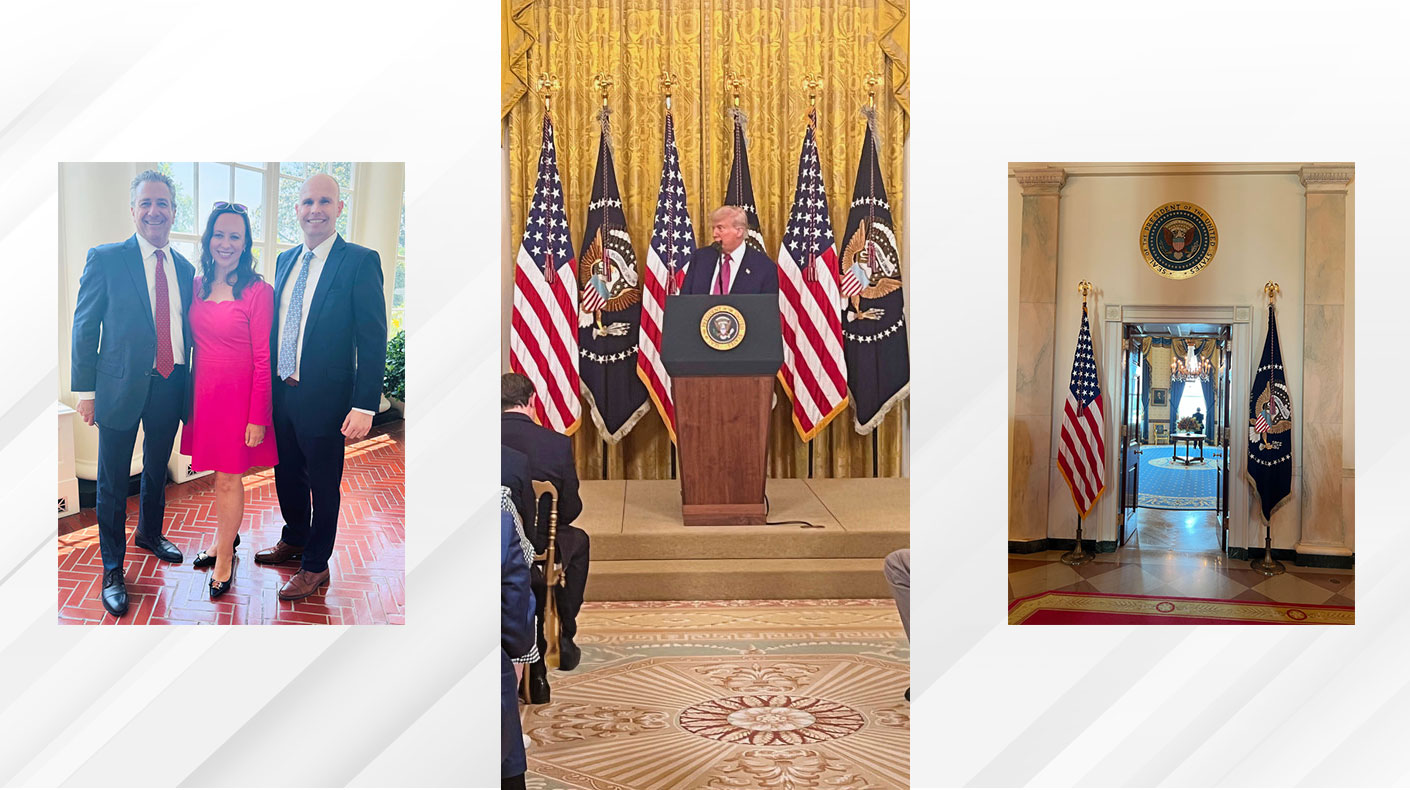
SEMA News recently sat down with Spagnola to hear his perspective on what it was like to walk the halls of the White House on behalf of the specialty aftermarket industry.
SEMA News: What was your reaction when you first got the invitation to the White House?
Mike Spagnola: I was obviously shocked and surprised. I was actually on the way to Sacramento for the SEMA California Rally—literally in the car when I got the call. [For transparency, we] knew there was a possibility SEMA would be invited, but as more time passed, we weren't sure the ceremony was even going to happen. So, when I got the call, it was a real quick turnaround to change my travel plans; it was pretty exciting. Even on the airplane to D.C., I was thinking about the fact that I've never been to the White House. What a prestigious thing it was for SEMA to be invited to the White House to be part of a bill signing ceremony. It's huge, right? It's something we worked on for more than three years. Everybody rallied together to get us to this point, from every SEMA and PRI employee and members who saw that vision. It all came together.
SN: Tell me about SEMA's campaign over the past three years.
MS: America is built on innovation. We shouldn't stifle innovation—we should continue to let it grow. There's a lot of opportunity for electric vehicles (EVs) and hybrid and synthetic fuels, and low-emission fuels; hydrogen certainly has a future. SEMA members and America have all been built on innovation and design. Continuing to foster all technology, rather than the government picking one technology over another, that has always been our position. We really worked hard to get the word across that sweeping EV mandates were neither fair nor responsible to SEMA and its members. We're not against EVs; we think EVs are part of the future and that EV growth for SEMA could be tremendous. So, it was always with a lot of thought as to how we weave our way through the positioning of SEMA to say, "Look, we're for EVs. We just don't think the government should mandate one technology or another." And our message was clearly heard.
SN: What was it like actually stepping into the White House?
MS: We went through four or five different security gates—the security was amazing at their job. We had to get our IDs checked, of course, and our names were on the list, which was pretty exciting. And then just walking into the White House—the pomp and circumstance of it all was just incredible. A member of the military, in their full dress uniform, guided us along the way. There were military bands playing music at every turn; it gave you chills. To see the official portraits of Lincoln, Kennedy, Reagan; the grandeur of everything made me proud to be part of SEMA, proud to be an American. It made me reflect on how I ended up here—all my teachers growing up, from government lessons, auto shop lessons, business lessons—all that came to mind. And the support from SEMA members, staff—I was very reflective and grateful for all of it. I even thought about my family who came from Italy and settled here generations ago, and the steps they took to become American citizens—and it's almost like that culminated in my visit to the White House last month. And interestingly enough, this happened on the same day SEMA announced its new partnership with the Fédération Internationale de l'Automobile (FIA), so it was a big day. [Editor's note: Read the FIA announcement here.]
SN: You mentioned that, politics aside, it was simply incredible to be in the White House among prestigious lawmakers. Can you tell us more about that?
MS: We had to work on both sides of the aisle to get here. There were several senators and congressmen there that we knew. When they're all in one room like that, you realize the inroads we've made with so many people who shape our future. You start to understand the effort that goes into how the sausage is made. But the relationships we've been able to build—there are several legislators who are really car people and businesspeople. They understand how the rules and regulations they make can affect business. That only happens through developing relationships, sharing our story, at times being the squeaky wheel, making sure they understand our position and how their decisions affect our industry and the economic impact of those decisions.
And while it was incredible to be in the White House, the more important thing is that we literally got an act of Congress to change the EV mandate. That rarely happens. You always hear, "It takes an act of Congress"—and we actually did it. That's going to be a highlight of my career. I've been in this industry for 50 years and I never anticipated something like that would happen.
SN: Well said, Mike. Is there anything else to add that we haven't discussed yet?
MS: This isn't the end. This is just the beginning. We don't rest on our laurels; we look to the future. We continue to fight for things that affect our industry. I think we have a stronger voice today than we've ever had. But that doesn't mean we can't get even stronger. Even changes in administrations—elections have consequences. They could work for us or against us. The battle never ends. Even with the current administration, there could be things that come up against us.
SN: That said, what are the next legislative hurdles SEMA is looking at now?
MS: Leno's Law is a state-level program that's had twists and turns and compromises along the way, but it's continuing to move forward. [Editor's note: Read the latest on Leno's Law here]. On the federal level, our three areas to focus on are the Right to Repair and Modify, making the motorsports tax credit permanent, and protecting motorized access to public lands. [Editor's note: Read the latest on Right to Repair and Modify here. Read the latest on the motorsports tax incentive bill here. Read the latest on protecting motorized access to public lands here.]
Sidebar: Beyond the Significance
Beyond the significance of the moment itself, the bill signing also marked a historic legislative milestone. For the first time since the Federal Clean Air Act was enacted in 1963, Congress formally acted to limit California's regulatory reach, drawing a line on the state's ability to impose emissions mandates that extend beyond its own borders. "This wasn't just about electric vehicles," said Karen Bailey-Chapman. "It was about restoring balance.
"The automotive industry has been stuck in a regulatory 'ping-pong' match for nearly two decades," with policies changing every time the White House changes. That's no way to run a business or plan for the future, Bailey-Chapman said. "Congress's passage of the CRA sent a very clear message about California's exemption policy—one that provides the automotive industry more certainty going forward."
And certainty in the market allows innovation to flourish.