

The overland industry, especially in North America, saw a decade-plus of consistent, steady growth followed by double-digit growth for four-plus years. Then the pandemic hit, and after a few months of stagnation, the industry saw nearly two years of vertical growth.
As the pandemic has subsided and the world has recalibrated to the new normal, we’ve witnessed about 2.5 years of declining sales, with more companies, including auto manufacturers, trying hard to attract the overland customer.
Through my experience reporting on this industry for more than 13 years and talking to a wide range of industry leaders for this article, the feeling is that we’re a larger industry than we were in 2019, and may soon see a similar steady growth curve to what the industry was on at that time.
Fritz O’Connor, Iron Man 4x4 America vice president of marketing, says the industry has “contracted since COVID, but is an enthusiastic space filled with enthusiasts.”
“A lot of brands think overlanding is the next big thing, but that was really 2017ish. We’re a decade into overlanding being the next big thing. The growth phase of overlanding stopped at the start of 2022, with everything going down since. We’ve now seen more years in decline than at the peak, which lasted 20ish months. Overlanding is here to stay, but the trend/fad is fading, and we’re no longer in a growth phase but now in the dilution phase,” said Matthew Scott, Adventure Imports and Overland Kitted owner.
“I’m curious [about] the age range [of the overland consumer] and will be concerned if it continues to become an old person with disposable income activity only. [There is] lots of great content on YouTube that I hope is connecting the younger generation to this [overlanding] in the real world,” said Chris Horton, Yakima Products category manager.
Industry Consolidation
While loads of new companies seem to pop up in the overland industry all the time, lately the trend has been big investment firms and larger companies gobbling up industry stalwarts.
Moea Theroux, ARB USA marketing manager, said she has seen "a lot of consolidation. It's good for the consumer because all these conglomerates have to lift their game, and their products need to respond to quality and price points. It forces innovation to stay relevant.”
On the flip side of that coin, Brian Fulton, Goose-Gear CEO said, “Consolidation is terrible for the industry but great for small innovative companies.” He went on to talk about how consolidation has discouraged innovation because some of the big players continue to copy products from the little guys and then spend more on advertising those products.
Scott said, “A lot of new companies are coming into the space, diluting the space, and we might be on the tipping point of consolidation.” He also thinks we could be two years away from some consolidated companies selling off brands or folding as they struggle to stay true to the brand ethos and product positioning that made them desirable in the first place.
Overland Retailers
Scott further observed that “many dealers have pivoted to selling campers and/or trailers, and those are the shops that are surviving.”
I’ve also seen this, as many overland retailers popped up during the COVID-era highs and have since disappeared. Many of those relied almost exclusively on drop-ship programs and quickly realized as the industry cooled that they didn’t have a way to differentiate themselves from the competition and couldn’t survive on such thin margins.
Even though revenue is down almost across the board in the overland space, there are still healthy retailers servicing the overland community. Fulton said, “Smaller guys are selling less and less, and bigger guys with better systems and processes are doing well.”
Overland Product Manufacturers
“Most companies have added direct sales to build revenue and profitability,” said Scott. This is true for all the overland manufacturers that I talked to for this piece: Yakima, ARB, Iron Man 4x4, Goose Gear and Overland Kitted.
While some have done this since the start, others like ARB and Goose Gear, have just added direct sales in the past few years, to the dismay of many retailers, as sales across the industry shrank. That said, both companies emphasized how important their dealership network is for the success of their business and the health of the industry overall.
Industry Seasonality
One aspect of the overland industry that I discovered in my discussions with company executives is just how seasonal it is. Everyone I talked to basically had the same thing to say: Springtime is when the bulk of yearly sales happen, with summer usually being strong as well. A holiday bump can happen but is highly dependent on the products and incentives/sales on offer.
Theroux said, “Usually, in the spring, people start building vehicles to have ready for the summer.” This was reiterated by O’Connor, who said there is “definite seasonality. Early spring is when people start buying to build and go adventure by Memorial Day.”
Overland Events
O’Connor also said, “Events are the canary in the coal mine of where the industry is headed.”
I find that to be true, as events seem to mimic the industry pretty well. For instance, in the past few years, we’ve seen more large shows and fewer smaller ones. We’ve also seen vendor participation at all the shows outpace attendance, although attendee numbers have remained strong. Additionally, we’ve seen more complimentary product companies to the overland space market harder to the industry and attend more of the events.
Seeing the builds and products on offer at the shows and talking with attendees can give great insight into the industry's health. Todd Scott, Yakima Products category manager, says he “talked to more retired-aged adventurers looking to drop cash than younger folks” when he attended Overland Expo Pacific Northwest in June. That is a concerning observation from the perspective of growth in the industry.
Auto Manufacturers’ Influence
One of the biggest trends in the past few years, and one that doesn’t look to be slowing down any time soon, is the automotive OEMs’ focus on building great off-road-capable overland vehicle platforms and supporting those platforms with overland accessories at the dealership. OEMs are also partnering with trusted overland industry companies on factory-built special editions—think ARB with the Tacoma Trailhunter and AEV with the Colorado ZR2 Bison.
“OEMs are really paying attention to the space. It’s good for the consumer because of choices from dealerships and the aftermarket and the better products on offer. Lots of new people to the space get guided from the dealerships/OEMS and/or get inspired for aftermarket upgrades on their own,” said Theroux.
“The influx of new overland-capable vehicles that are dropping right now is going to generate growth in products specific to those vehicles, which in turn sells more tents and awnings. The easy button is to buy from the dealer/manufacturer for the build-out. However, you’re going to pay a premium and might not get the quality you think you’re getting,” said O’Connor. He also went on to say the “strength of the industry is shown and legitimized by the OEMs/dealers” being so invested in the space.
Goose Gear’s Fulton also pointed out that more capable from the factory overland vehicles might help sell aftermarket items like drawer systems, rooftop tents, and other overland accessories that aren’t vehicle performance upgrades. Many of these new vehicles don’t need much on the capability and performance fronts, but can still use some help on the storage and camping fronts.
Builds Starting With Older Vehicles
Inversely, Fulton pointed out that older vehicles are hot again for overland builds. He said, “as the economy cools, people are starting to build their older vehicles, like JKU and older 4Runner.”
With the average new vehicle purchase now above $47,000, and most popular overland vehicles much more than that, consumers are finding ways to get their dream overland machines built. Starting with an older used vehicle can allow for more funds to be used toward modifications and personalizations.
While it has seemed like so many new overland community entrants have bought new vehicles and modified them right away, it’s likely that buyer is much rarer than we might think. As Adventure Import’s Scott pointed out, “Historically, the third buyer is the one to modify a vehicle.” However, it does seem like in recent years more people have built their overland vehicles up before or right after taking first ownership.
More Gear Means Bigger Trucks
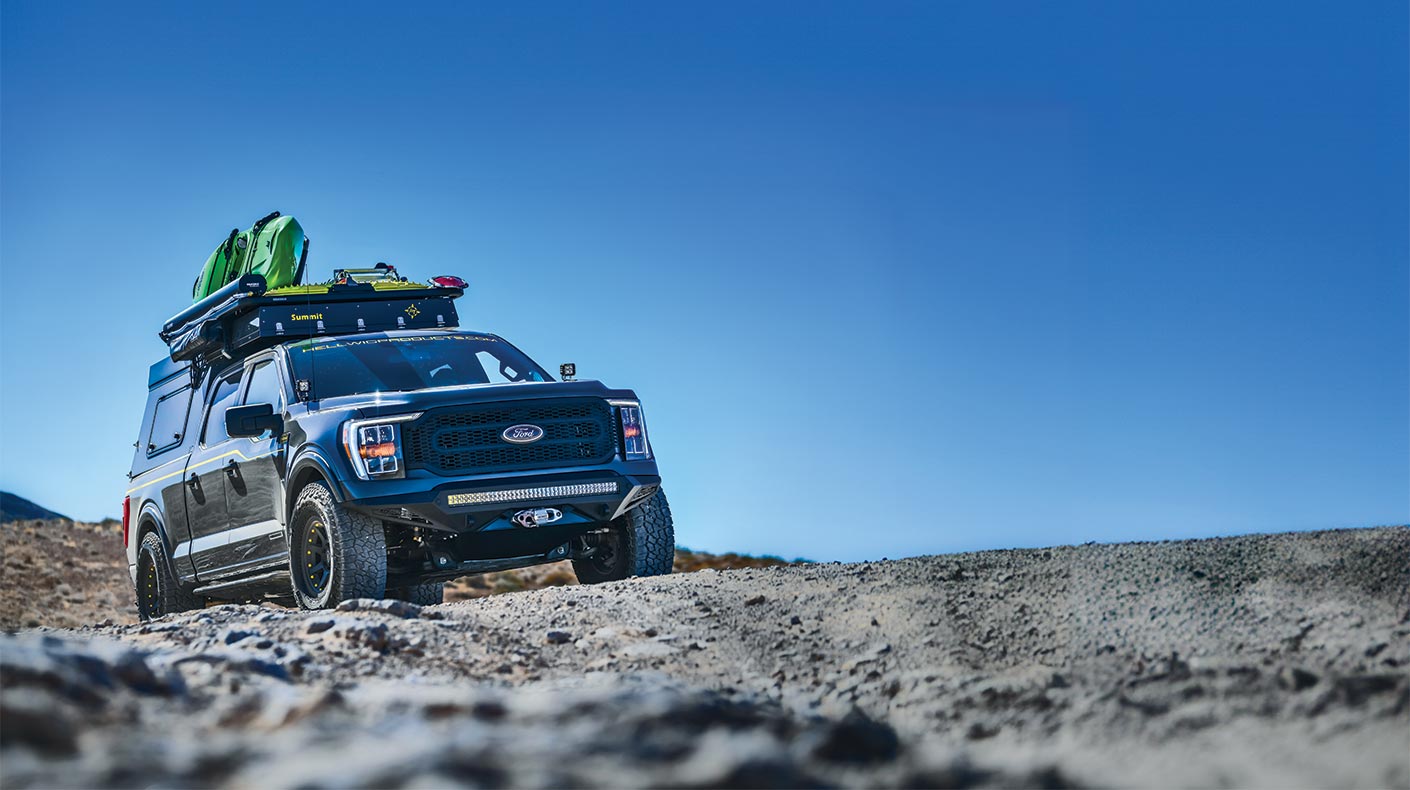
While midsize trucks have been and still are the go-to for most of the world, fullsize trucks have become more popular recently with the North American overland crowd. Bigger trucks offer more carrying capacity and more space. As the trend continues to be carrying more and more gear and being more comfortable out in the wilderness, the fullsize truck just makes sense.
Trucks, in general, are hot in the overland space. Because of that, truck bed racks have also seen an explosion in offerings and innovation in the past few years. Yakima’s Scott said, “Jeeps, FJ Cruisers and 4Runners were less present than in previous years [at Overland Expo Pacific Northwest]. This was the year of the truck and truck rack.”
Product Innovation
O’Connor sees innovation and interest in suspension, bed racks and canopies. He also pointed out that, “We don’t sell consumables, we sell big-ticket durable goods. We have to rely on new people coming into the space, or people finally replacing something [in order to sell products].” Innovation is key to getting new and old overland community members alike excited about purchasing products.
Yakima’s Horton said it’s “all about temperature regulation. Small, portable diesel heaters and AC units are where I have seen the most movement in the past few years. Summers have only become hotter, and cold nights are very common in desert climates or for those winter travelers. I see the shape, size and ability all getting better, but also adding additional features like power storage or even generation for powering items in camp.” He went on to say, “For product categories to be innovative, it can’t just be shopping a supplier catalog to hit a trending consumer ASAP. Instead, brands will have to invest in the user perspective and build products to target them. We could see some more product innovations across categories like rooftop tents in the next two to five years as the brands and the consumers mature.”
Theroux wrapped up our innovation discussion by saying it “must be a solution to a problem that exists versus just being a really good product.” The market is saturated with products, but there is always room for new products that relieve a pain point for consumers.
Rooftop Tents (RTTs)
No discussion of overland trends would be complete without talking about the ultimate overland farkle, the RTT. O’Connor said it “seems like everyone is getting into the RTT game, the market is getting saturated, and it’s not great for the consumer because of the quality.” As of late, it really has seemed like a race to the bottom for RTTs in terms of price and quality. An RTT is a big-ticket vehicle adornment that many consumers want, even though they’re likely to use it just one or two times a year. Because of this, lower price points are highly attractive.
Theroux said, “RTTs are getting bigger and more spacious. So many products are getting bigger and heavier, which is pushing vehicle size larger.” She has also seen a shift from softshell RTT to hardshell because of their quick deployment and other options.
When you see RTTs for sale on websites like Lowe’s and Home Depot, like we have for a few years now, you know overlanding has saturated the market and is likely here to stay.
Political and Economic Influences
There are many factors that could stifle sales in the overland industry. Many of them are not within the control of those in the industry or community.
While the supply chain has mostly rebounded from its pandemic woes, the rising cost of quality raw materials continues to be an issue, especially as various wars continue to rage around the globe. Add in substantially higher shipping rates across the board, and you’ve got a recipe for increased product pricing.
Higher product pricing can be hard for consumers to stomach as they continue to deal with high inflation, continued increases in the cost of living, and political uncertainty. “Political, economic [high inflation, high gas prices], and coming out of the Covid pandemic have stifled big purchases, but this is not unique to the overland industry,” said Theroux. This opinion was reiterated by O’Connor, who noted that “no industry, even overlanding, is immune to people’s economic concerns.”
Brian Fulton, CEO, Goose-Gear, also brings up a great point: A “major issue is closing of trails.” He went on to talk about the continued closing of off-grid camping opportunities in North America, and how easy access to these opportunities are one thing that has fueled the growth in overlanding on the continent. Fulton says that “education is needed,” but doesn’t have a definitive answer for the best way to reach the masses with critical information caring for public lands and the political championing that can keep them open for all to enjoy into the future.
Late 2024 Overland Industry Trends
To sum it all up, the overland industry is currently is experiencing decline, but also still quite healthy. Growth is likely to be seen again in the near future, just not at the exponential rates seen during the pandemic. That possible growth could be hindered as geopolitical events continue to unfold and raise raw-material and shipping costs. We’re also likely to see continued consolidation in the industry, but it’s unclear how that will affect the industry’s health.
New vehicles, especially fullsize trucks, are a hot category, and are driving some of the recent innovation and new product development. Modifying older used vehicles is becoming very popular again, as new vehicle prices continue to rise. Truck racks are a hot category with lots of new players and innovations. The stalwart RTT segment is fully saturated and price point is largely driving much of the sales.
It’s hard for smaller retailers to get a foothold in the industry, and larger retailers continue to expand their product offerings, with many bringing in industry-adjacent off-road-capable RV products. Retailers are also having a hard time competing against manufacturers in the space, as most now offer direct sales. A bulk of overland industry sales happen in the spring, so let’s cross our fingers and toes for a strong first half of 2025.