

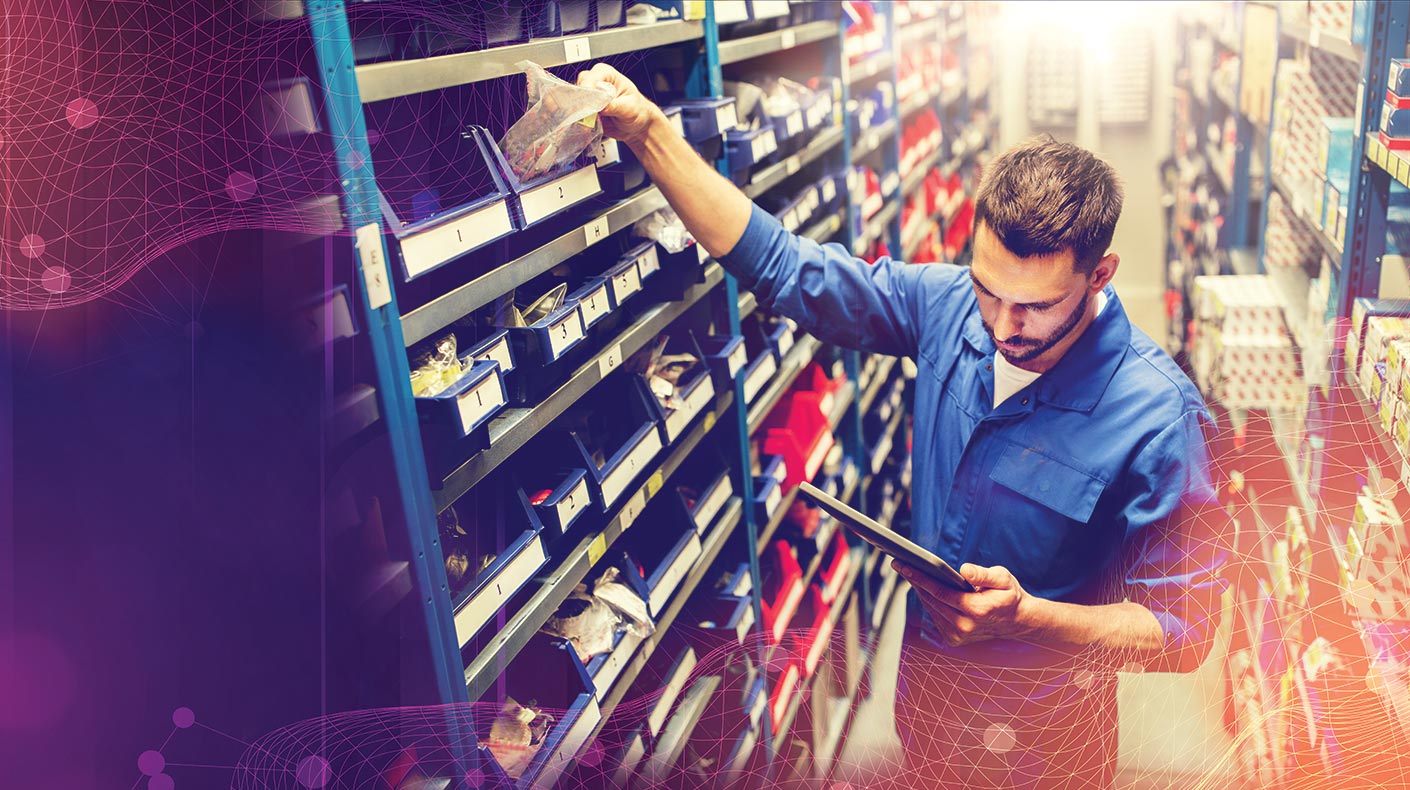
For many consumers, building their rig or Sunday racer begins in the digital world, scouring online retailers and distributors for the right parts and matching applications. To help consumers navigate this vast online marketplace, specialty-equipment manufacturers create extensive datasets for resellers to create product descriptions with specifications.
But where is the standardization for this data? Where can it be housed, and is the information as detailed and accurate as it should be?
Years ago, former SEMA President and CEO Chris Kersting and other association advocates saw that aftermarket manufacturers could vastly improve their appeal to resellers and distributors through standardized product data. So, with the SEMA Board of Directors' approval, the association launched the Data Co-Op, now called SEMA Data, to set the industry standard.
Today SEMA Data (SD) is the largest industry product database for resellers, offering vital data-management services to manufacturers. We spoke with SEMA Vice President of Technology, Data and Strategic Initiative, Gigi Ho to fully understand SD's services and data score system to answer the question you might be asking: "What exactly is SEMA Data?"
A Digital Age
The digital market grows every month, and brands and manufacturers are doing everything they can to optimize their product data for an online market. As Ho explains, “Since COVID, data has skyrocketed in terms of its value. When COVID happened, we couldn't talk to anybody. We couldn't travel outside of our houses. We couldn't gather in groups to exchange ideas. Data was it. Everyone's experience was online, and online sales just went through the roof. Businesses were growing 30% to 60%, depending on the segment that they were in.”
The numbers don’t lie. According to the U.S. Census Bureau, e-commerce sales increased by 43% in 2020 when lockdowns kicked in and everyone shopped from home. E-commerce went from $571.2 billion in 2019 to $815.4 billion in 2020; in 2023, those numbers grew to $1.12 trillion. While 2024's total numbers were yet unreleased as this issue went to press, eMarketer forecasted online sales to reach $1.26 trillion based on quarterly growth. The digital market is growing with the automotive aftermarket.
Ho observes, “They say it takes 16 weeks to form a habit, and we had 52 weeks. We not only formed a habit; it's a muscle. There's no going back. We’re in the digital age. So data has exponentially become more important to every business.”
“This Isn’t What I Ordered”
SD’s mission is to assist manufacturers with data cleanup and housing. The more complete their data is, the more appealing resellers and distributors find it. Consumers want as much information about a product as possible to make sure it is the right fit for their vehicle, but before the consumer sees that data, it’s handled by a reseller.
The SD data experts continually press brands to create the best content and product information for their customers. Being primarily resellers and warehouse distributors, these customers connect their products to consumers who need the best information possible to make an informed purchase.
Mark Dorman, marketing coordinator for CSF Cooling’s racing and performance division, oversees the brand's product datasets. CSF had a bronze SD rating when Dorman came aboard, meaning the brand’s data met the repository’s minimum standards. Understanding the importance of having cleaner data, he challenged himself to bring that score up.
“When I came on, I wanted to get our data score ranked up,” he says. “It's the gamer in me who wants to get a higher score. But I also knew the value of good product data because as someone who worked for a retailer, we could make [share???] much better product descriptions [from] someone with good data versus someone with minimalistic data.”
Dorman successfully brought CSF's data score to platinum, making CSF a Data Excellence brand. “I can definitely say there's less mistakes and fewer inaccuracies on dealer websites. For a while, we just had super-generic product descriptions and generic fitments, so people would get things wrong. We cleaned up a lot of that information, and now we have fewer product listing mistakes, and we have fewer customer issues.” Simple product features and attributes go a long way toward damage control and minimizing dissatisfaction.
Scorecards
It’s not always enough to explain why improving data is vital to a brand’s bottom line—explaining how to improve the data is just as important. SD implements a scorecard system that evaluates the brand’s overall data and content organization to encourage better data management. There are four ranks a brand can score: bronze, silver, gold and platinum. When a company ranks gold or platinum, they are considered a Data Excellence brand.
As Ho explains, “At the bronze level, the fields are at the minimum needed to set up the part number at any business in a POS system or a WD’s ERP system. Part number, price, it's the bare minimum to get the part number set.
“Then silver is expanding on that a little more. Another digital asset, a different description field gets put in, and then it goes up... If you go to Home Depot's website and look at a refrigerator or something similar, you'll see some listings have all kinds of information, some attributes, measurements or whatever. And you'll see others that have a picture and a minimum description. You get some concept of what you're purchasing. That's silver."
Previously, SD’s scorecard used to be measured quantitatively. Meaning there would be 10 buckets to fill on the scorecard. So long as all buckets were filled, your brand would receive a data excellence score. “It was about completeness,” remarks Ho. But even if the individual bucket’s data wasn’t thorough, there was some leeway, and your brand would receive a score. In 2024, Ho wanted that scorecard to carry more tangible impacts, so the SD team worked on new scoring criteria.
“For the 2024 scorecard iteration, you have to be 100% for these super-important fields. No more leeway,” says Ho. “If you're using the same description in all these other boxes, that will not score you. For resellers, it's 180 degrees from five years ago when all the scoring was almost meaningless. Now, they really are looking at what brands are gold or platinum and relying on those scores to know who they can get the best data from.”
Data Excellence
For a brand to receive a platinum score, it must hit 100% in select bronze and silver fields and 100% of all gold fields on the scorecard. Data segments such as digital assets, descriptions, product attributes, pricing, vehicle applications and regulatory information gather qualitative points. A platinum score is not essential, but Ho encourages members to strive for Data Excellence, which are exemplified by cases like Dorman and CSF Cooling.
In fact, SD celebrates the brands and manufacturers who have created datasets that have gone beyond the full completion. The rigorous work it takes within one’s company is recognized through the SEMA Data Excellence Awards.
“Achieving data excellence requires diligence and commitment. We commend the manufacturers who have achieved this significant milestone that benefits the entire industry,” exclaims Ho.
Data excellence brands are awarded trophies at the annual SEMA Show in Las Vegas and receive widespread recognition through SEMA’s digital media and social media outlets. The SEMA Show Banquet Program also feature their names, plus they receive carpet ads in the Featured Products Showcase area and on the Show floor near their booths for extra brand extra exposure and recognition.
Tools and Somebody to Lean On
Companies that become SD members have an arsenal of tools at their disposal, including PartsHub, an easy-to-use data management platform ideal for the smaller brands that may not have the most tech-savvy individuals overseeing their data.
“If you know how to describe your part, if you know what your part fits on, and if you know what to price your part, then you can [work the platform],” Ho points out. “It doesn't require any fancy tech or knowledge around the standards at all. You’re just describing your product, and it creates standardized data.”
In addition to the user-friendly platform, members can also leverage the SD data team whenever the need arises. “There are manufacturers we've signed up that are wonderful and committed, but they're also short-handed,” Ho explains. “They have the information--they have it in their catalog or in their price sheets--but they don't have the manpower to put the information into the formats needed for SD to provide resellers, and that's where our data team comes in.”
Ho points to Garrett Harmola and Aldan American as a good example of a brand with a great product and a smaller operation. Aldan American manufactures American-made coil-over shocks and suspension solutions with a niche in older muscle cars. Harmola is the President of Aldan and acquired the company a few years ago.
She described Harmola as “a wonderful person and committed. He's always in PartsHub, but he doesn't have the bandwidth to manage all the product attributes, features and benefits. He sends information over to our team, and our team catalogs it for him. Then all he has to do is log in, look it over and say, ‘Yeah, that's what I want.’ Or he can make a note on the platform for us to correct or change something and we'll fix it.”
To sum it up, if you can gather and provide the information consistently, then SD will catalog it for you. Provide more information, pictures and videos, and your score will increase. Outsourcing your data management leaves you more time to focus on other essential matters to grow your brand.
Get Your Data Ready Before SEMA Show
To receive a SEMA Data Excellence Award, manufacturers must score gold or platinum by August 1 of any given year and keep that score through the end of October. Ho expresses how intense those weeks leading up to that deadline can be for both SD and member companies.
“It's tough because I was kind of this way in school," she says. "You might say, ‘That deadline is three months out. I got plenty of time.’ Well, it's a lot of information to sort. It's easy to get to bronze, and it's easy to get to silver… but if you want the promotions that we provide to data excellence brands, if you want your brand featured in SEMA publications and at the Shows, then it takes effort and can't be done overnight.
“More conversations can happen earlier in the process than later. By the time June 20 rolls around, everyone's trying to cram in. There's no conversation. We're just trying to process files so they can score them all. It doesn't become a great experience on either side. The personalization is gone.”
Aldan American
After Ho divulged Harmola's success utilizing SD’s Do It With Me (DIWM) services, we contacted him to expand on his personal experience. What made Harmola decide he needed help with data, and what did he get out of SD?
“From the beginning with Aldan, there were price files, image files and product data in many places, but it wasn't consolidated in one source,” he explained. “From there, it just wasn't scalable the way we were building product data [and how it] had been stored.
“What SD allowed us to do is house all our data under one roof and build out the year, make, model, fitments and attributes. That allowed us better communications with our distributors and even to internally store all of our product data needed to make sales.”
Harmola mentioned he knew of a few companies who believe they are getting by just fine without data services. And indeed, most companies are managing their data reasonably well before they become members, but Harmola believes even they could benefit from standardization and data housing with SD.
“I think they could have more sales,” he explains. “They might be getting so many sales, but if they had their part numbers, all the fitness attributes, all that data that distribution networks and customers need, that's where there's value… [Consumers] want as much detail as possible. And I think SD allows manufacturers to know what [information you're missing] and what 100% fulfillment looks like.”
If you’re a manufacturer or reseller and want to learn more about SEMA Data, go to semadata.org.