



By Luis Morales
One of the most significant trends shaping the automotive industry today is the rapid convergence of vehicle technology, connectivity, software and automation. While electrification continues to evolve, the industry’s focus has expanded toward artificial intelligence (AI), software-defined vehicles (SDVs), connected services and increasingly sophisticated advanced driver assistance systems (ADAS). These technologies are no longer limited to premium vehicles. They are becoming standard across nearly every segment, creating both opportunities and challenges for the aftermarket.
ADAS refers to a collection of technologies designed to assist drivers and enhance safety. Features such as automatic emergency braking (AEB), forward collision warning (FCW), adaptive cruise control (ACC), lane-keeping assistance (LKA), blind-spot monitoring (BSM), driver monitoring systems (DMS) and rear cross-traffic alert are now common on new vehicles. What was once considered advanced technology has quickly become mainstream.
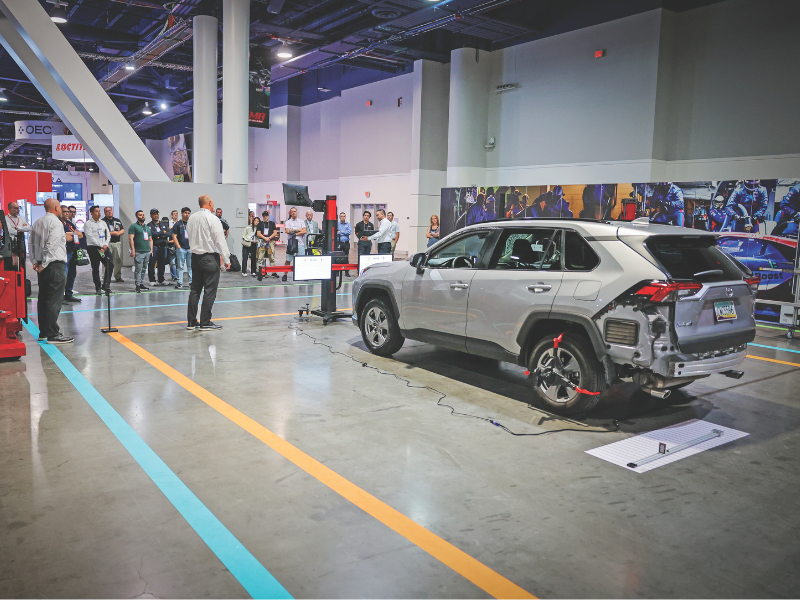
This year’s SEMA ADAS Showcase will feature micro-learning sessions presented by leading-edge industry experts.
The conversation around autonomy continues to generate excitement and confusion. Many consumers associate autonomous vehicles with fully driverless transportation. While that represents the highest level of automation, autonomy actually exists along a broad spectrum. The Society of Automotive Engineers’ J3016 framework defines six levels of driving automation, from Level 0 through Level 5. Most production vehicles sold today remain within SAE Level 2, where the driver must remain engaged and responsible for vehicle operation. However, limited deployments of Level 3 and Level 4 technologies are expanding through pilot programs, commercial fleets and automated mobility services.
The technology enabling these systems continues to advance at an accelerated pace. Vehicle manufacturers now utilize a combination of cameras, radar, ultrasonic sensors, high-definition mapping, GPS positioning and, in some cases, LiDAR. The combination of these components is often referred to as the vehicle’s sensor stack. Unlike traditional vehicle systems, where components were relatively isolated, modern ADAS functionality depends on the continuous interaction between sensors, software and vehicle controls.
This brings us to another increasingly important industry term: the software-defined vehicle. In an SDV architecture, software drives functionality that historically depended primarily on hardware. Vehicle manufacturers can now add, enhance or modify features through software updates, allowing vehicles to evolve throughout their lifecycle. When combined with AI-powered processing, these systems can rapidly interpret data from multiple sensors and determine an appropriate response within fractions of a second.
The Road Toward Standardization
As these technologies continue to mature, the regulatory landscape is evolving as well. During the early stages of ADAS development, regulators largely allowed innovation to drive progress rather than imposing strict standards. This approach accelerated deployment but also resulted in significant variation between manufacturers regarding sensor placement, software logic and system performance.
That period is beginning to change.
Many safety technologies that started as optional features are transitioning toward industry-wide expectations and, eventually, regulatory requirements. The backup camera provides a clear example. Once considered a premium convenience feature, it became mandatory on all new light-duty vehicles sold in the United States. Today, consumers rarely consider a vehicle without one.
ADAS follows a similar trajectory. Automatic emergency braking is becoming one of the foundational technologies shaping future vehicle safety requirements. At the same time, regulators, consumer safety organizations and global assessment programs continue evaluating additional features, including pedestrian detection, cyclist detection, lane-keeping technologies and driver monitoring systems.
It is important to remember that many of these systems are not passive technologies. Their performance depends heavily on sensor placement, calibration and vehicle dynamics. Even seemingly minor changes to ride height, wheel offset, bumper design, body accessories or lighting configurations can alter how sensors perceive their environment.
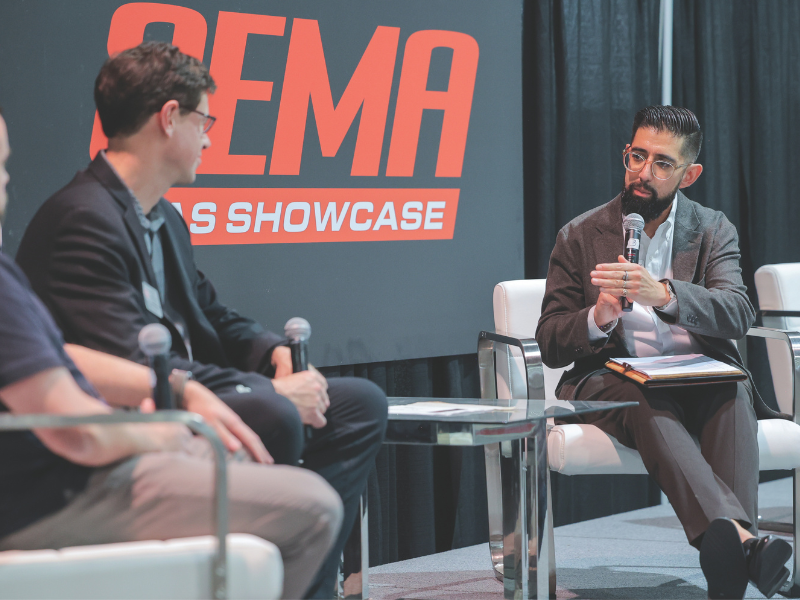
SEMA Director of Vehicle Technology and Product Development Luis Morales (right) at a panel on the FutureTech Live Education Stage at the 2025 SEMA Show.
Why the Aftermarket Should Pay Attention
For the aftermarket industry, this evolution changes the traditional product-development equation.
Historically, companies primarily focused on fitment, durability, performance and aesthetics. While those factors remain critical, ADAS introduces additional considerations. Vehicle modifications now have the potential to influence sensor visibility, system calibration, vehicle dynamics and overall feature performance.
The collision-repair industry has already experienced this transition. Modern repairs frequently require calibration procedures following the replacement of components located near cameras, radar modules or other ADAS hardware. What was once a straightforward repair may now involve sophisticated diagnostic and calibration processes to ensure proper system functionality.
The same reality increasingly applies to vehicle modifications. Understanding sensor locations, sensor fields of view and vehicle-specific software behavior is becoming an essential part of product design and installation planning. As more ADAS features become standard equipment across all vehicle categories, avoiding these considerations will no longer be an option.
One emerging challenge involves the growing use of hidden and distributed sensor architectures. Manufacturers continue integrating sensors behind grilles, windshields, lighting assemblies, emblems and body panels. The hardware is becoming less visible, but its importance is increasing. This makes understanding vehicle architecture more critical than ever before.
The Search for Solutions
Recognizing these challenges, the SEMA Garage continues expanding its research into the relationship between aftermarket modifications and ADAS performance. Over the past several years, research efforts have grown from exploratory testing into a comprehensive program focused on understanding how vehicle modifications influence safety-system behavior.
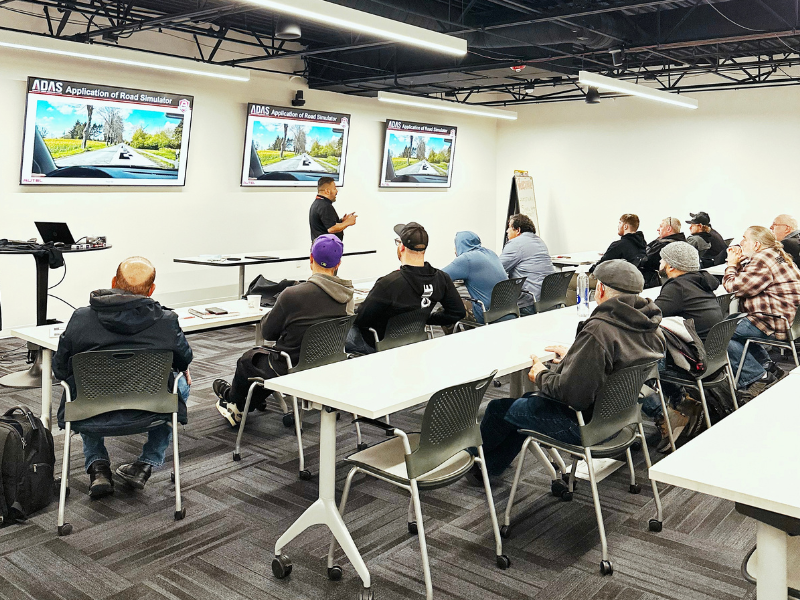
Vehicle modifications now have the potential to influence sensor visibility, system calibration, vehicle dynamics and overall feature performance, making education vital.
Multiple vehicle platforms have been evaluated using common aftermarket modifications across categories such as suspension systems, wheels and tires, exterior accessories and other popular upgrades. Testing includes the activation and measurement of various onboard ADAS features under controlled conditions, allowing data comparisons between stock and modified configurations.
The objective is not simply to identify potential concerns but to provide the industry with actionable information. By understanding how modifications may influence system performance, manufacturers can make more informed engineering decisions, develop installation procedures and support products that align with evolving safety expectations.
As vehicle technology continues advancing, collaboration will remain essential. Vehicle manufacturers, suppliers, regulators, standards organizations and the aftermarket all share a common interest in maintaining safety while preserving consumer choice and innovation.
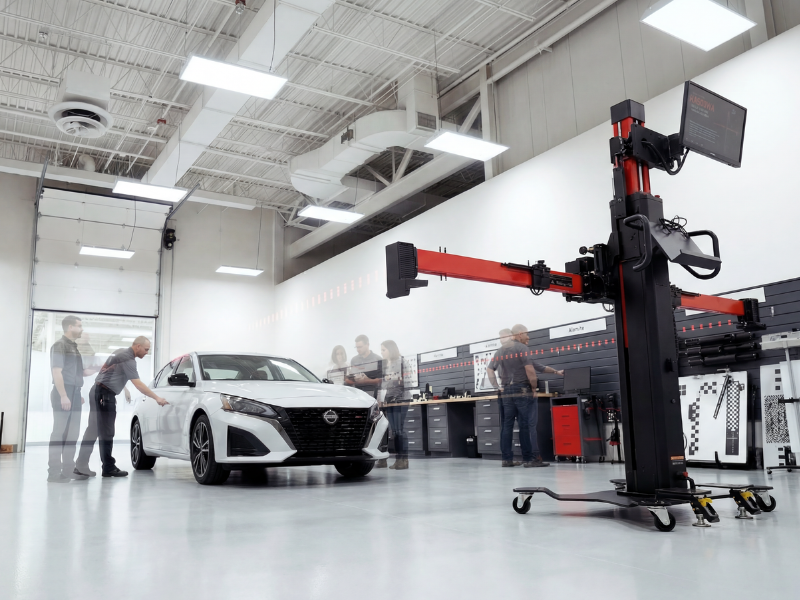
As vehicle technology continues advancing, industry collaboration will remain essential.
The path forward will not always be simple. Vehicle autonomy, AI-driven decision making, connected vehicle ecosystems and software-defined architectures are transforming the automotive landscape at an unprecedented rate. However, these changes also create opportunities for the aftermarket to evolve, innovate and continue delivering the products and experiences enthusiasts value. The future of vehicle technology is already here. Understanding it, adapting to it and helping shape it will define the next chapter of our industry.
Four Facts to Know
1. The SEMA ADAS Show section will be located in the LVCC’s Upper South Hall.
2. The FutureTech Studio (Central Hall) highlights emerging vehicle propulsion, safety and manufacturing technologies.
3. An education stage will present expert speakers on a variety of FutureTech topics throughout Show Week.
4. These two Show sections are ideal places to discover new ideas, products and tools to advance and “future-proof" your business.