

By Jason Chandler
The challenge to build the industry’s next generation of skilled, passionate talent continues to grow across the automotive aftermarket, making the need for hands-on trade education, mentorship, and real-world exposure more important than ever before. This is especially true as technology evolves rapidly and vehicles become more complex.
For many students, getting hands-on with vehicles in a shop is how they learn and discover their passion for the automotive industry.
At Herrin High School in Herrin, Illinois, students are learning real-world automotive skills that go far beyond textbooks. Under the guidance of automotive instructor Tony Almaroad, students work hands-on with actual vehicles—learning everything from basic maintenance and inspections to welding, fabrication, paint, and custom builds. These are the same skills used every day in professional shops across the country.
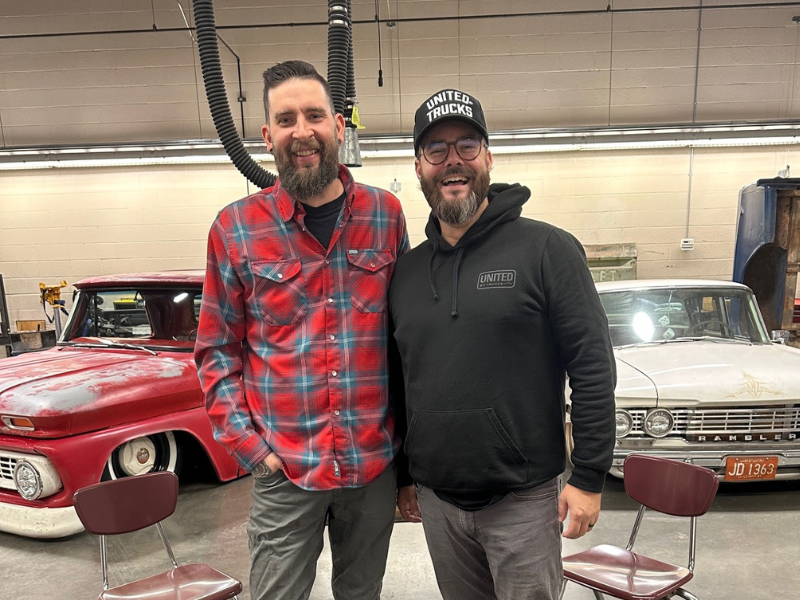
Recently, Robbie Purser from United by Trucks, an automotive media creator and storyteller, visited the class to talk about careers in the automotive world, both inside and outside the shop. Purser shared how his passion for vehicles turned into a career in media, while also recording a live, in-shop conversation with Almaroad about why programs like this are so important for students today.
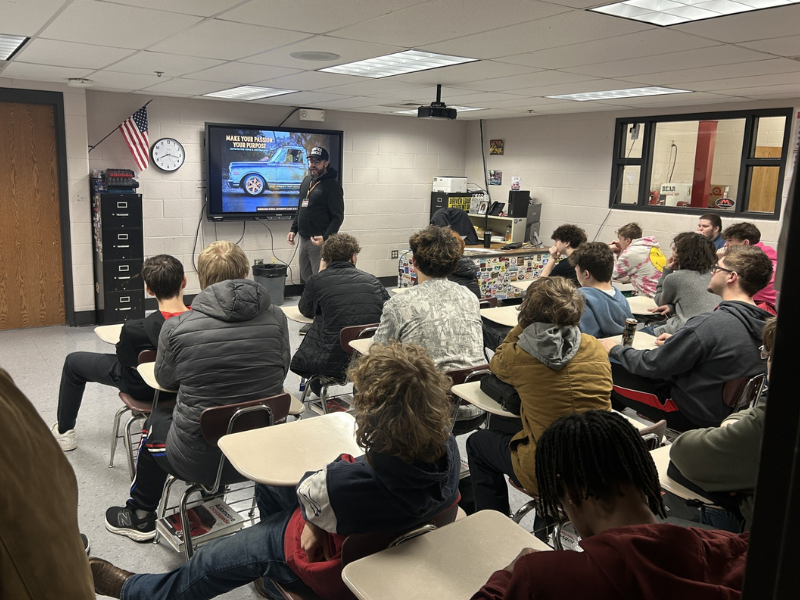
Their discussion highlights something many students don’t always hear: there are multiple paths to success, and working with your hands, learning a trade, and following your interests can lead to rewarding careers.
The video and interview below features Almaroad and Purser discussing why automotive shop classes matter, how skills learned in high school can shape a rewarding future, and how passion, creativity, and hard work can open doors in the automotive industry.
Watch the video:
ARMO: Auto shop programs like the one at Herrin High School are becoming increasingly rare. Why do you both believe hands-on automotive education is more important today than ever for students entering the workforce?
Robbie Purser: Interestingly, the trades programs have been reduced in the high school education programs, while the reliance on trades in the workforce is still prevalent. Generally, from a real-world perspective, the skilled trades programs—including auto shop—have the potential to create some of the most high-paying and rewarding jobs in the workforce. Specifically, auto shop class creates an environment to learn how to work with your hands, think critically, and problem-solve that is valuable in any field.
Tony Almaroad: Not only do the youth get hands-on automotive experience and valuable life skills, but they also get to explore hands-on trades careers that are in demand. In my area, I saw a need to encourage young adults to pursue a career in the automotive industry. Many shops in our area were unfortunately struggling to find experienced employees.
ARMO: Tony, you came into teaching directly from the automotive industry. How has your real-world shop experience shaped the way you prepare students for careers in the trades?
TA: My experience in the automotive collision and hot rod building industry gives the students a real-world perspective of what the industry looks like and where it is going. It also gives them a broad scope of knowledge in many aspects of the automotive trade.
ARMO: Robbie, as someone working in automotive media, what stood out to you about seeing students actively building, fabricating, and problem-solving in a school environment like this?
RP: As someone who strives daily to expand my skillset within a niche expertise, I’m encouraged and inspired by students who are willing to put themselves in an environment to learn something new and then be evaluated on it. These students are learning skills—via the Herrin High automotive class—that can be applied in every aspect of their lives. I was inspired by the hunger these students displayed through their questions and participation while I was onsite.
ARMO: This program exposes students to everything from basic vehicle inspections to welding, fabrication, paint, and drivetrain work. How does that broad exposure help students discover their strengths and career paths?
RP: Having the ability to have a general foundation in each aspect of the automotive skillset can allow the student to determine a specific interest and dive deeper into that interest or allow the student to decide to take those general skills learned and apply them across the board. As those of us who are in the workforce know, it takes many types of skills to run a business, work with others, and generally be successful in a workplace environment. Having multi-faceted exposure to each skill embedded within the automotive space will only make the student a more valuable hire in the workplace.
TA: Giving the students real world experience building hot rods and trucks gives them such a broad exposure to every aspect of the automotive trade. They get the opportunity to figure out what they truly enjoy and are gifted at doing.
ARMO: Many students are taught that success only comes through a traditional four-year college. How do programs like this challenge that mindset and show the value of skilled trades?
RP: As a graduate of a traditional four-year college program, I am one of the unique cases where my degree informed my career path and the knowledge gained was used (prior to media work). Since then, my media skills have been learned, honed, and practiced on the job and in the workforce. As a student enters the trades programs, there is a split level of academics and on-the-job application that, I believe, prepares the student for prospective employment that most four-year college degrees cannot. While many four-year degrees are based in concepts and theory, the trades programs are often based on real-world applications that can provide the student with a much better foundation for success earlier on in their career.
TA: I found my passion in welding and fabricating late into my college years. I thought the best way to change that would be in the high school classroom. I believe by showing the youth many different opportunities within the automotive industry trades that you do not just have to be a traditional mechanic. You can do upholstery work, welding and fabricating, designing, media, sales, etc. The possibilities are endless for them if they pursue it.
ARMO: Tony, the dual-credit program with John A. Logan College allows students to earn college-level experience while still in high school. Why is that kind of early investment critical for long-term success in the trades?
TA: Not only does it look great on the kids’ resume by showing early on that they are committed to the trade, but it also gives the kids the opportunity to have the training without the college expenses. Plus, they can get out into the workforce earlier than most.
ARMO: Robbie, you talked with students about turning passion into purpose. How can automotive media help make careers in the trades more visible, relatable, and aspirational to younger audiences?
RP: As we all know, media—especially videography and photography—has found its place within social media and on websites. It has become the core of any successful brand or company to have some sort of online presence, and media helps deliver. While many young people are on social media and know how to use Google, ChatGPT, etc., they are positioned to enter their field of passion from a unique angle that includes the visual aspect of the passion. Just as I have, young people are increasingly exposed to the ever-changing business landscape via online platforms but are more prepared than previous generations to take advantage of their exposure to online media and it practices and turns their passion into purpose.
ARMO: The projects in this shop—classic trucks, custom builds, and real fabrication—mirror what many SEMA member companies do every day. How does working on real vehicles change a student’s confidence and mindset compared to textbook learning?
TA: Textbooks do have their place, but at the high school level, most students retain the information better with hands-on training. My students would always prefer to be out in the shop than in the classroom. Plus, the real-world experience repairing their own vehicles gives them so much pride and confidence.
ARMO: From scholarships to car shows to after-hours hot rod clubs, this program goes beyond the classroom. How do community support and industry involvement play a role in keeping programs like this alive?
TA: I believe everyone thrives better in a community. If students are protected, supported, and nurtured by parents, teachers, community, and industry members, they have so much more guarantee to succeed.
ARMO: For SEMA members and industry leaders reading this spotlight, what is one action they can take right now to help support, grow, or replicate programs like Herrin High School’s auto shop across the country?
TA: Support at both state and federal levels, each providing grants and CTE funding. It is a vital aspect within trades education. If we continue growing the trades programs, it will ultimately grow the automotive industry and community.