

By Jason Chandler
The future of the restoration industry depends on more than craftsmanship; it depends on education, mentorship, and intentional pathways that introduce young people to viable, rewarding careers in automotive restoration.
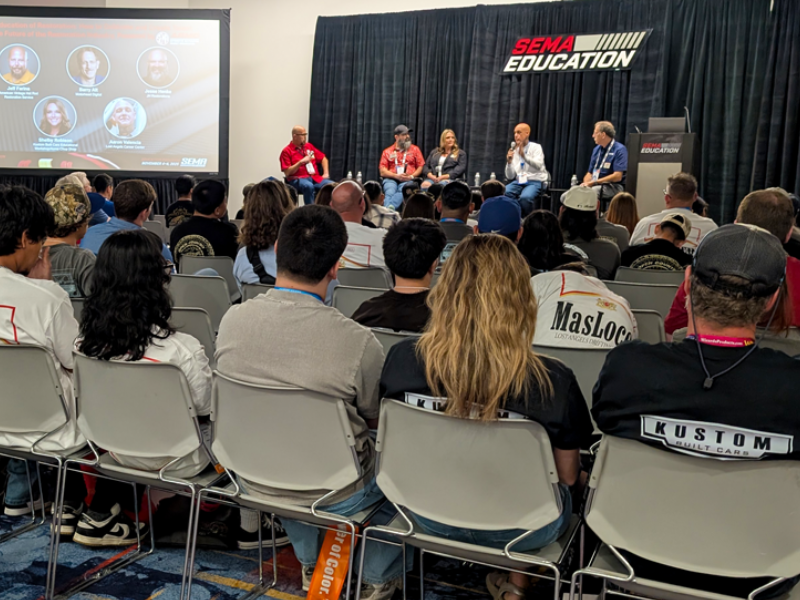
That message was front and center during the 2025 SEMA Show Education session, “The Education of Restoration: How to Cultivate and Create Talent for the Future of the Restoration Industry, Powered by ARMO.”
Moderated by Jeff Farina, president of American Vintage Hot Rod and Restoration Service, the session brought together a diverse group of industry leaders who are actively shaping the next generation of restoration professionals. Panelists included Barry Alt, founder and digital marketing strategist at Motorhead Digital; Jesse Henke, owner of JH Restorations; Shelby Robison, chair and CFO of Kustom Built Cars / Acme Chop Shop; and Aaron Valencia, founder and CEO of Lost Angels Career Center (LACC).
Shaping Future Talent
One of the most impactful aspects of the session was the strong student presence, particularly from LACC. The large turnout of students not only demonstrated growing interest in restoration careers but also reinforced that Valencia and his team are building meaningful, effective programs that resonate with young people. Their engagement throughout the discussion confirmed that hands-on learning, mentorship, and exposure to real-world opportunities are critical to developing future talent.
The conversation expanded beyond a single program, highlighting the broader ecosystem of education currently supporting the industry. Robison shared insights from Kustom Built Cars and their Hot Rod Restoration Workshop, where students gain practical experience while learning the expectations and standards of professional restoration environments. These real-world training models further emphasized that there are already strong, proven programs in place that can be scaled and supported across the industry.
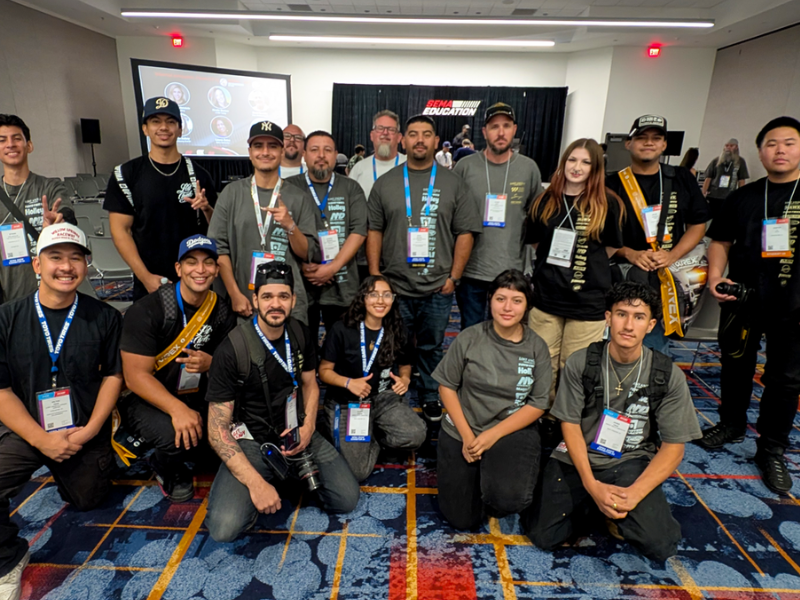
Adding to the momentum, attendees such as Clay Burch and Anna Zander from Ferris State University reinforced the widespread interest in restoration-focused education and the importance of connecting academic programs with industry needs. Their participation underscored that restoration education is no longer a niche program but is a growing priority across multiple institutions and disciplines.
Throughout the discussion, panelists emphasized that attracting young talent requires more than telling the story of the industry. Attracting young talent requires meeting students where they are, showing clear career paths, and demonstrating that restoration offers both creative fulfillment and long-term opportunity. From high school programs to trade schools and collegiate-level involvement, the consensus was clear: the tools to cultivate talent already exist, and collaboration is the key to expanding their impact.
This session reinforced ARMO’s leadership role in youth engagement and workforce development within the restoration industry. By bringing educators, shop owners, marketers, and nonprofit leaders together in one room—and filling it with students—ARMO continues to push the conversation forward and help ensure a strong, sustainable future for the restoration community.
Looking Ahead
As the restoration industry looks toward the future, continued progress will depend on active participation from the businesses that make up our community. ARMO encourages member companies to get involved in youth engagement and workforce development efforts by connecting with your ARMO Select Committee and becoming active members-at-large. By sharing expertise, supporting existing programs, and helping guide the next generation, ARMO members have a direct opportunity to strengthen the talent pipeline and ensure the long-term health of the restoration industry.